
When evaluating powder coating equipment for sale, buyers often focus on price and delivery time. However, field data from 120+ installations shows that overlooked specifications—like oven temperature uniformity or powder reclaim efficiency—cause 80% of post-purchase issues. This guide provides measurable benchmarks for each major component.
Whether you need a complete line or a single curing oven, use these ten checks to create a data-driven request for quotation. Each check includes acceptance criteria and common failure modes.
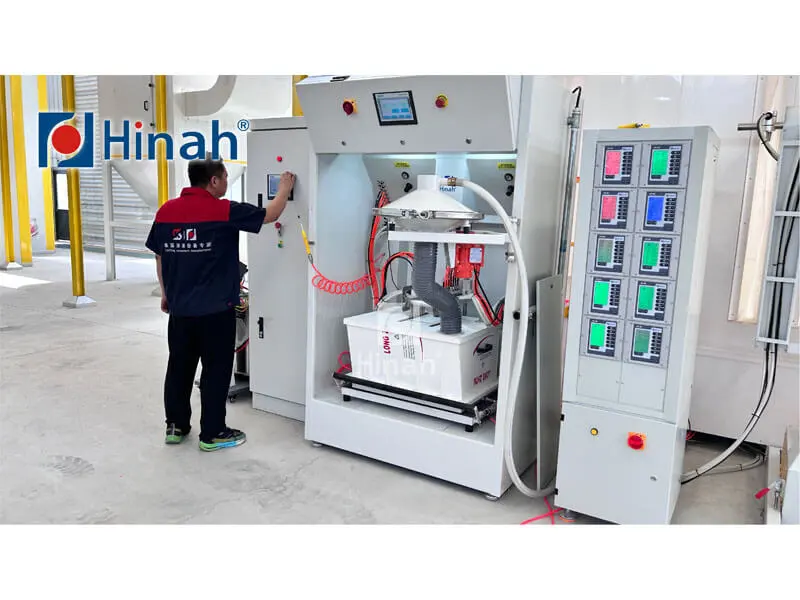
The booth contains overspray and maintains a clean environment. Two configurations dominate the market: open-face (manual) and closed (automatic with part openings).
Face velocity: 0.3–0.5 m/s across the opening. Lower than 0.3 m/s allows powder escape; higher than 0.6 m/s pulls powder from the part.
Material: Stainless steel 304 or 316 for corrosive pretreatments. Powder-coated mild steel is acceptable for dry environments but less durable.
Filter type: Cartridge filters (99.8% efficiency at 0.5 μm) with pulse-jet cleaning. Avoid cyclones alone – they lose fine powder.
Many listings for powder coating equipment for sale include booths with undersized filter areas. Minimum filter area: 10 m² per 10,000 m³/h of airflow.
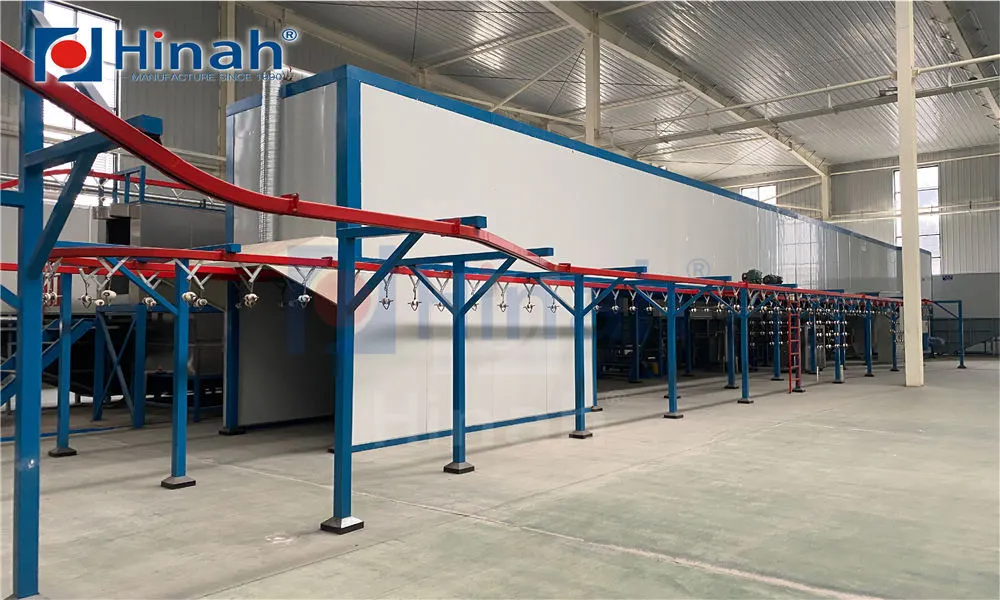
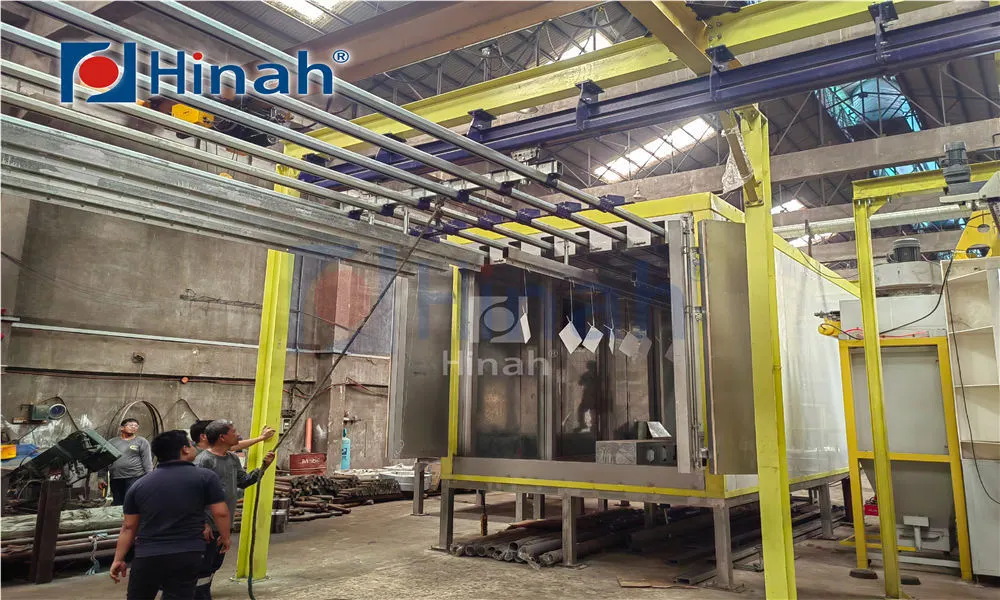
A curing oven is the most critical component for final finish quality. Temperature variation directly causes rejects.
Acceptable uniformity: ±3°C for standard powders, ±1.5°C for architectural or automotive clear coats. Demand a 9-point thermal profile report (ASTM D3451) with data loggers attached to actual parts.
Common failure: The curing oven passes an empty-chamber test but fails with loaded parts. Always request a loaded profile.
Electric ovens provide better uniformity than gas-fired units. A well-designed curing oven from a reputable integrator like HANNA guarantees ±2°C across all zones.
Reclaiming overspray reduces material costs by 30–50%. However, poor recovery design leads to contamination or reduced transfer efficiency.
Recovery efficiency: ≥97% for cartridge systems. Cyclone-only systems recover only 85–90% and lose fine particles.
Sieving: Automatic vibrating sieve with 140–200 μm mesh (100–120 mesh). Manual sieves are labor-intensive and often skipped.
Reclaim ratio: Maximum 30% reclaim mixed with virgin powder. Beyond this, orange peel and flow issues appear.
When inspecting powder coating equipment for sale, ask for the age of filter cartridges. Clogged filters reduce booth airflow and increase powder leakage.
Guns determine transfer efficiency (TE) and film thickness consistency. Two charging technologies exist:
Corona (most common): 60–100 kV, adjustable. High kV improves wrap but risks back-ionization (pinholes) on thick films.
Tribo (friction charging): No external voltage. Better for Faraday cage areas and recoats. Requires specific powder formulations.
Minimum specifications: Microprocessor-controlled powder output (50–500 g/min), programmable gun reciprocators, and quick-release nozzles. A complete powder coating plant typically includes 4–12 guns depending on part width.
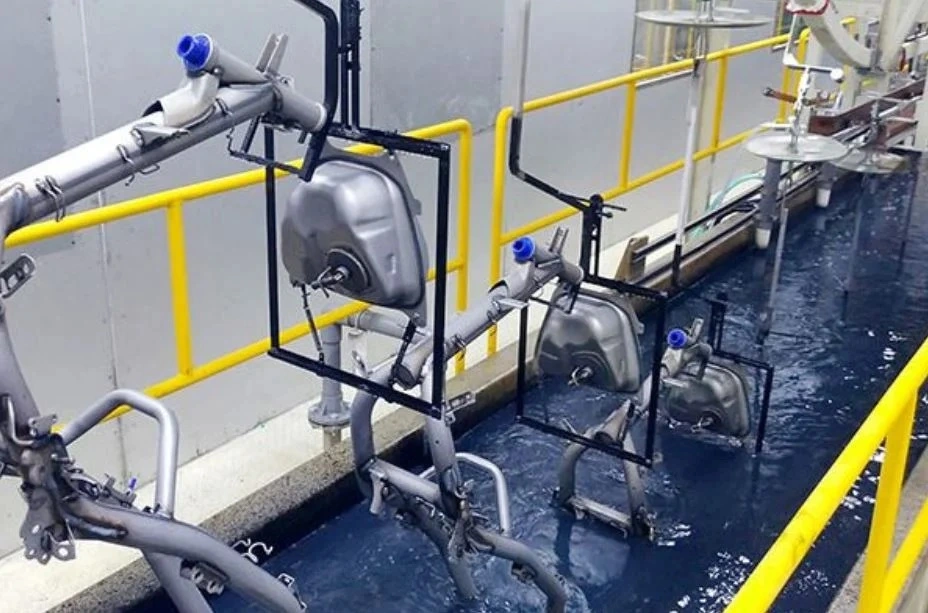
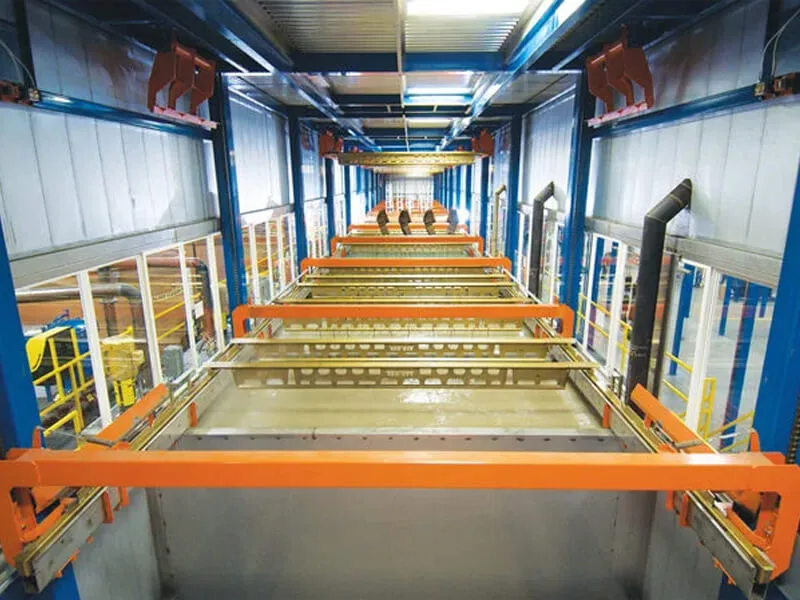
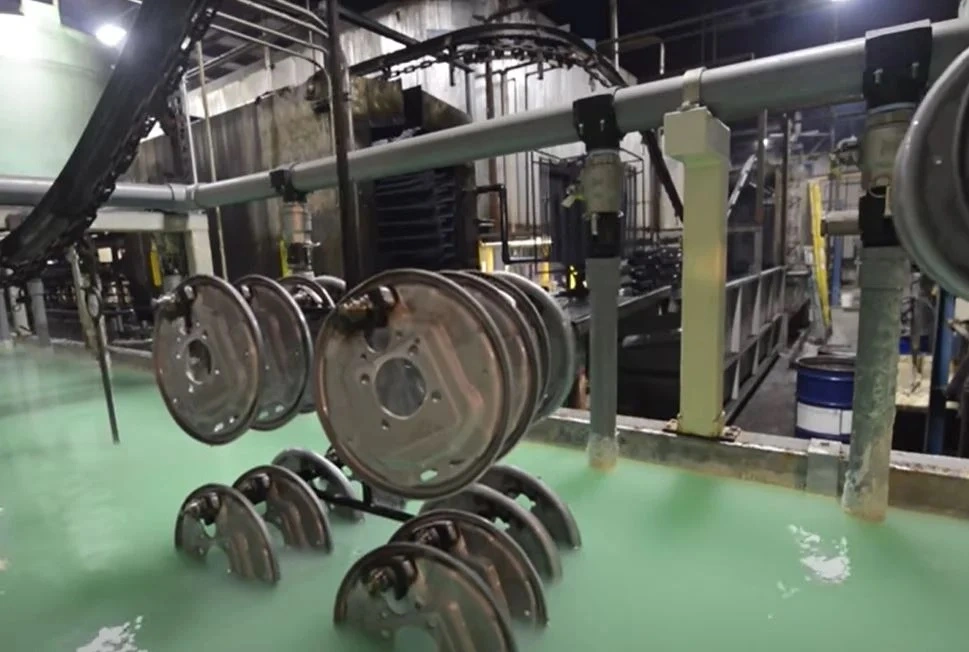
Pretreatment removes oils, rust, and oxides. Insufficient cleaning causes poor adhesion and filiform corrosion.
Minimum stages: 5-stage (alkaline clean, rinse, zinc phosphate, rinse, seal). For aluminum, add a chrome or chrome-free conversion stage.
Drying: After pretreatment, parts must enter a dry-off oven at 100–140°C. Residual moisture causes outgassing pinholes in the curing oven.
Nozzle density: Minimum one nozzle per 150 mm of part height. Clogged nozzles create unwashed stripes.
Many used powder coating equipment for sale listings exclude the pretreatment stage. Budget separately for a washer if your parts require it.
The conveyor ties all stations together. Mismatched speed between washer, booth, and curing oven creates accumulation or gaps.
Type: Monorail (light to medium parts) or power-and-free (heavy parts, accumulation zones).
Load per hanger: Specify 150–200% of your maximum part weight. Overloading causes chain stretching and jams.
Speed range: 1–8 m/min continuously adjustable via VFD.
Critical calculation: Oven length = conveyor speed (m/min) × required cure time (min). Example: 2 m/min × 10 min = 20 m oven. Do not buy a curing oven that is too short for your intended speed.
Operating costs depend heavily on the curing oven’s insulation and heating technology.
Insulation: Mineral wool or ceramic fiber, 150–200 mm thick. External skin temperature should not exceed ambient +15°C at full operation.
Heating: Electric resistance (100% efficient, zero emissions) or gas (lower fuel cost but higher maintenance and permitting).
Heat loss index: ≤5% of total thermal power through walls and seals (ISO 50001).
HANNA provides an energy consumption guarantee with every new curing oven – typically 0.45–0.65 kWh per kg of coated parts.
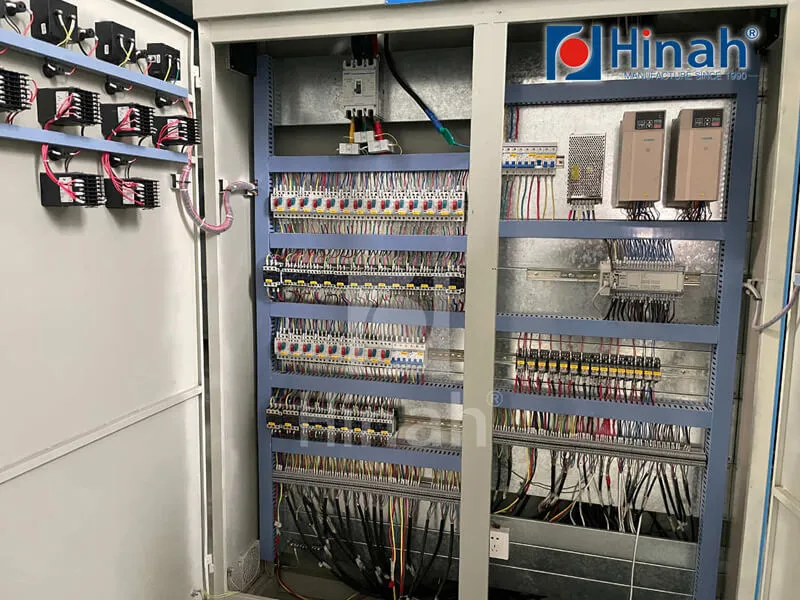
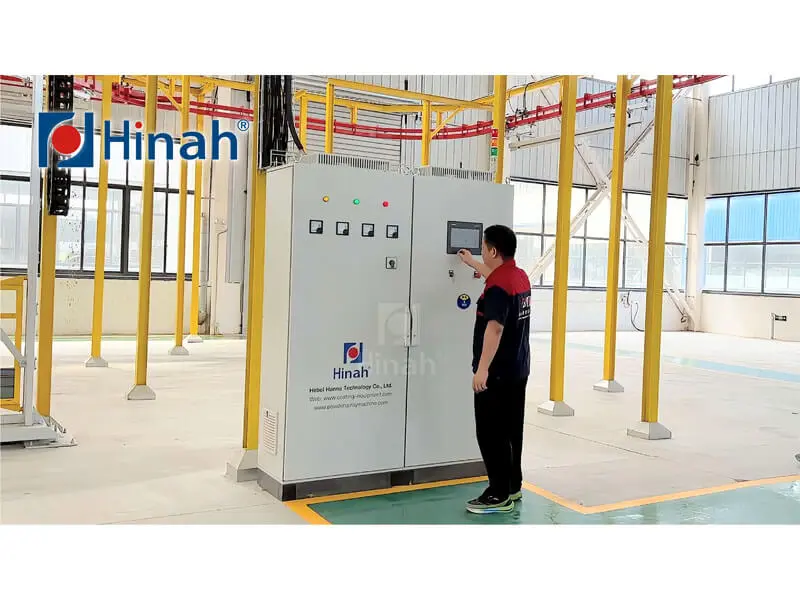
Modern powder coating equipment for sale should include a PLC-based control panel with HMI touchscreen.
Minimum features: Recipe storage for 50+ parts, real-time temperature trending, fault history, and remote access (Ethernet/IP or Modbus).
Oven control: PID loops for each zone, plus independent over-temperature limit controller (safety backup).
Data logging: Records temperature, conveyor speed, and production counts for ISO 9001 traceability.
Without data logging, you cannot prove that your curing oven maintained the required profile during a production run.
Industrial powder lines must meet NFPA 86 (ovens) and NFPA 33 (spray booths). Key safety devices:
Flame detection and purge timers (gas ovens).
Ground fault monitoring on electric heating elements.
Interlocked access doors that shut off heat and conveyors.
Explosion venting for powder booths (if combustible dust present).
Ask for a compliance certificate before purchasing any powder coating equipment for sale. Non-compliant equipment can void insurance and fail local inspections.
Downtime costs money. Ensure the supplier stocks critical spares locally.
Critical spares: Heating elements (for curing oven), fan belts, gun nozzles, filter cartridges, thermocouples.
Lead time: Maximum 5 business days for any part. Avoid suppliers that source only from overseas with 4-week lead times.
Service response: On-site within 48 hours for warranty repairs. HANNA offers a 24/7 remote diagnostics service and regional service centers.
Based on 85 post-installation audits, here are the most common problems with purchased equipment and their fixes.
Cause: Ramp rate in the curing oven exceeds 15°C/min. Fix: Add an IR pre-heat zone to slow initial heating. Cost: $15,000–$30,000 retrofit.
Cause: Undersized fan or clogged filters. Fix: Measure static pressure; replace filters monthly. Also verify that booth face velocity is 0.3–0.5 m/s.
Cause: Gun reciprocators out of sync or worn nozzles. Fix: Install independent gun controllers and use flat-spray nozzles. Retrofits cost $5,000–$12,000.
A complete powder coating plant integration by HANNA resolves these issues through CFD airflow modeling and thermal profiling before shipment.
When comparing powder coating equipment for sale, calculate TCO including:
Energy: Electric curing oven consumes 150–400 kWh/shift. At $0.10/kWh, annual cost $10,000–$27,000.
Powder: For a line coating 500 m²/shift, annual spend ~$156,000. Improving transfer efficiency by 10% saves $15,600/year.
Labor: Automated inline reduces operator count from 3 to 1 per shift – saving $110,000/year.
Maintenance: Budget 3–5% of equipment cost annually for filters, nozzles, and thermocouples.
A mid-range system priced at $280,000 typically achieves payback in 18–24 months.
A1: For a custom-engineered line (pretreatment + booth + curing oven + conveyor), lead time is 14–22 weeks. Standard modular systems ship in 8–12 weeks. Batch equipment (manual booth + batch oven) takes 6–10 weeks. Always request a project schedule with milestones.
A2: Yes, but risks include unknown thermal uniformity, missing documentation, and control system incompatibility. Before purchasing any used curing oven, demand a recent 9-point profile report and a control panel schematic. Budget 15–20% of the purchase price for retrofitting controls and safety devices. HANNA offers certified used systems with a 6-month warranty.
A3: A 6-gun booth with 8m electric curing oven requires 480V/3-phase, 350–500A main breaker. Oven draws 80–150 kW, booth fans 30–50 kW, pretreatment pumps 15–25 kW. Always hire an electrician to verify your existing service capacity. Many buyers need a transformer upgrade costing $15,000–$40,000.
A4: Use this formula: Speed (m/min) = (Distance from washer exit to oven exit in meters) / (Required cure time in minutes). For example, if total distance is 30 m and cure time is 10 min, speed = 3 m/min. Then ensure your curing oven length is at least speed × cure time = 3 × 10 = 30 m. Never buy an oven shorter than this calculation.
A5: For smooth textures, 60–80 μm is typical. For architectural (AAMA 2604), 80–120 μm. Above 150 μm, risk of orange peel and reduced impact resistance increases. Use a magnetic film thickness gauge and measure 5 points per part daily. If your curing oven shows thick spots, adjust gun KV and powder output.
A6: Every 12–18 months for two-shift operation. Signs of wear: pressure drop across filters exceeds 1.5 kPa, visible powder escaping from the exhaust, or reduced face velocity. Keep a spare set on hand. A complete powder coating plant typically uses 8–16 cartridges costing $150–$300 each.
A7: Yes, but requires removing burner tubes, installing tubular heating elements, adding SCR controllers, and often upgrading electrical service. The oven shell and insulation must be in good condition. Conversion costs $25,000–$50,000 for a 6m oven. Payback from lower maintenance and no emissions testing is typically 2–3 years. HANNA performs such retrofits with a 12-month warranty on the new electrical system.
Selecting the right powder coating equipment for sale demands technical diligence. Use the ten checks above to compare vendors, request verifiable data, and simulate your production profile. A well-specified line delivers consistent quality for 15+ years with predictable operating costs.