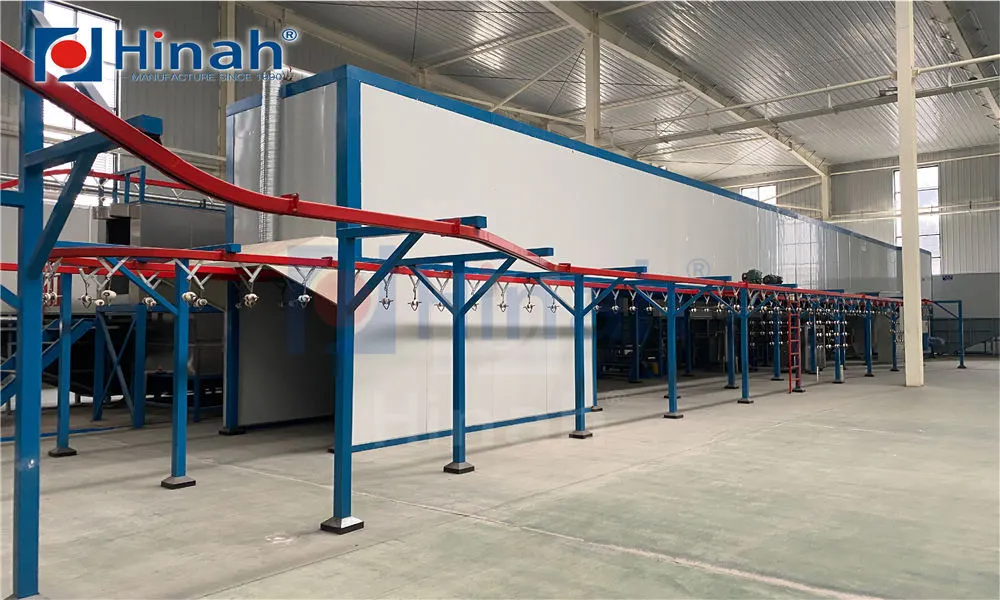


When evaluating a powder coating booth for sale, the purchasing decision extends far beyond initial price or booth dimensions. The booth represents the primary interface between electrostatic application technology, operator safety, material recovery efficiency, and production flexibility. Data aggregated from over 300 finishing operations indicates that poorly specified booths contribute to 22–28% higher powder consumption, increase color change downtime by 40–60 minutes per change, and create persistent compliance risks with NFPA 33 and local air quality regulations. This article dissects the seven technical parameters that separate high-performance systems from commodity offerings, providing quantifiable benchmarks for procurement teams. Drawing on engineering data from HANNA’s installation portfolio, we examine how booth architecture directly impacts first-pass yield, operational costs, and long-term adaptability.
1. Booth Configuration: Open-Face, Cartridge, and Cyclone Systems
The market offers three dominant configurations for a powder coating booth for sale, each suited to specific production profiles:
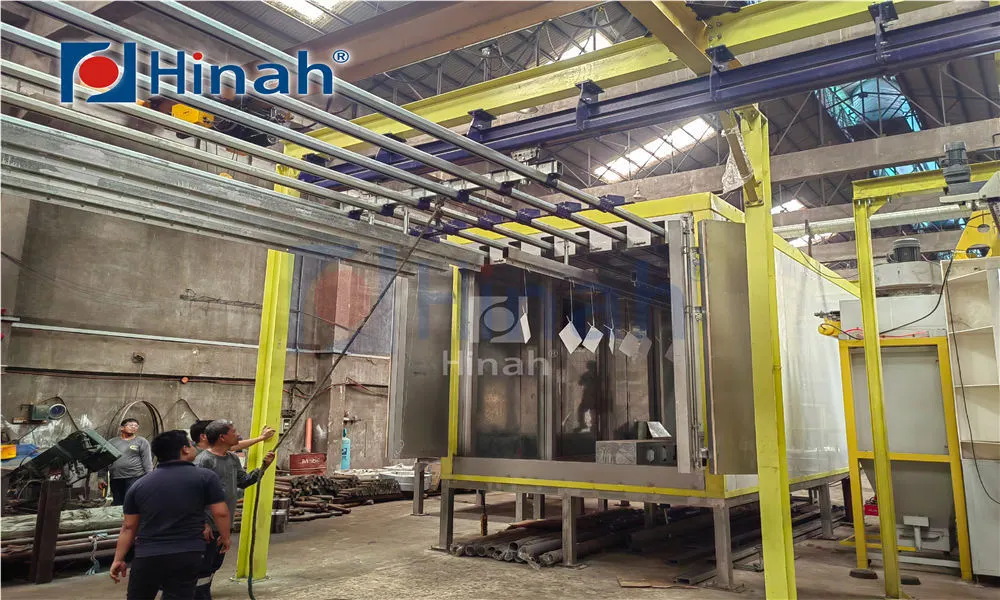
Open-Face (Batch) Booths: Designed for manual coating operations or low-volume, high-mix facilities. Airflow is typically cross-draft or downdraft. While capital costs are lower (typically $25,000–$65,000), transfer efficiency ranges only from 45–60%, and powder recovery requires secondary collection systems. These booths are suitable for job shops with fewer than 10 color changes per week and annual powder consumption below 5,000 kg.
Cartridge Filter Booths: The industry standard for automated and manual high-volume lines. Integrated cartridge filters (typically 12–24 units per booth) provide continuous recovery and classification of reclaim powder. Key specifications include filter media rating (0.3–0.5 micron efficiency) and pulse-jet cleaning systems. Modern cartridge booths achieve 92–98% recovery efficiency and support color change times of 12–20 minutes when equipped with quick-change modules.
Cyclone + Cartridge Hybrid Systems: Used where reclaim powder purity is critical, such as in automotive or architectural coatings. Cyclones separate coarse overspray, while secondary cartridge filters capture fines. This configuration minimizes cross-contamination during color changes and reduces filter loading by 40–50%. However, floor space requirements increase by 30–40% compared to standalone cartridge booths.
For facilities evaluating a powder coating booth for sale, the choice between cartridge and hybrid systems should be driven by color change frequency and quality requirements rather than upfront cost alone.
2. Airflow Engineering: Cross-Draft vs. Downdraft vs. Semi-Downdraft
Airflow pattern directly affects overspray containment, operator visibility, and coating uniformity. Three primary designs dominate:
Cross-draft: Air moves horizontally from the rear of the booth toward the operator. This design is cost-effective but can pull powder toward the operator if face velocity exceeds 100 ft/min. Acceptable for low-volume manual booths.
Downdraft: Air flows vertically from ceiling filters through a grated floor plenum. This pattern provides superior containment and keeps the operator zone clear of overspray. Downdraft booths require raised platforms or pit installations, increasing construction costs by 15–20%, but they reduce operator exposure and improve coating consistency on complex parts.
Semi-downdraft: A hybrid where airflow combines horizontal and vertical vectors. This design balances containment with installation simplicity, making it the preferred choice for 60% of new automated lines.
Face velocity standards for powder booths range from 80 to 120 ft/min (0.4–0.6 m/s). Velocities above this range draw powder away from parts, reducing transfer efficiency; lower velocities risk fugitive powder escaping the booth envelope.
3. Quick-Change Technology: Color Change Efficiency as a Competitive Metric
For job shops and contract coaters, color change time is a direct driver of productive capacity. A powder coating booth for sale equipped with quick-change architecture can transform operational economics:
Cartridge module indexing: Systems with independently movable filter carts reduce changeover from 45–90 minutes to 12–18 minutes.
Automated purge sequences: Programmable logic controllers (PLC) manage gun purging, booth sweep, and filter pulse cycles. Full automation reduces manual labor during changes and ensures repeatability.
Dedicated feed centers: Mobile powder feed hoppers with integrated sieves and supply hoses allow preloading of the next color while the booth is still in production.
Field data from HANNA installations shows that facilities moving from traditional to quick-change booths increase effective line utilization by 18–25% solely through reduced color change downtime, often justifying the incremental capital investment within 12 months.
4. Material of Construction: Steel, Stainless, and Powder Coated Finishes
The booth’s structural material influences durability, cleanability, and static dissipation:
Powder-coated carbon steel: Standard for most booths. Provides adequate durability but requires careful grounding to prevent static buildup. Lifespan typically 10–15 years in controlled environments.
304/316 stainless steel: Specified for food-grade coating, medical devices, or environments with aggressive cleaning chemicals. Stainless construction adds 30–50% to booth cost but eliminates corrosion risks and simplifies sanitation protocols. Increasingly adopted in facilities with high-humidity pretreatment adjacent to spray booths.
Aluminum extrusion framing: Used in modular booth designs for rapid assembly and reconfiguration. Aluminum provides inherent corrosion resistance and is preferred for facilities planning future layout changes.
Booth interior surfaces should have a gloss finish (≤30 gloss units) to minimize powder adhesion and facilitate rapid cleaning. Matte or textured finishes are avoided because they trap powder residues.
5. Safety Systems: NFPA 33 and Explosion Protection
Regulatory compliance is non-negotiable. Any powder coating booth for sale must meet NFPA 33 (Standard for Spray Application Using Flammable or Combustible Materials) and local fire codes. Key safety features include:
Explosion venting: Cartridge filter housings and cyclone collectors must have explosion relief panels sized according to NFPA 68. Relief area calculations account for booth volume and dust class (St-1 for most powder coatings).
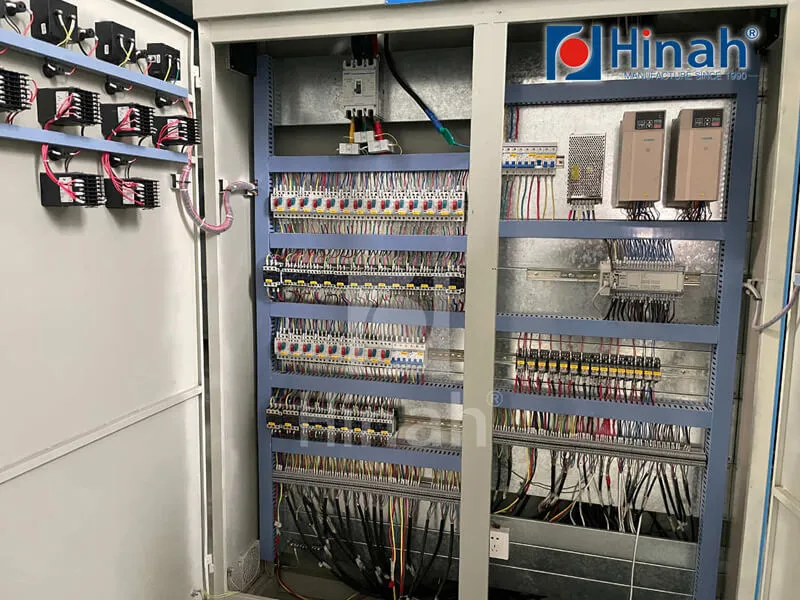
Interlocked systems: The booth control panel must interlock with conveyor drives, spray guns, and ventilation fans. Powder application ceases immediately if airflow drops below setpoint.
Ground monitoring: Continuous verification of booth, conveyor, and gun grounding with automatic shutdown upon loss of ground integrity.
Spark detection (optional): In facilities coating aluminum or magnesium, spark detection systems in ductwork provide additional protection.
HANNA’s booths are designed with integrated safety circuits and third-party certified explosion venting, ensuring compliance documentation is provided with every system.
6. Integration with Automated Application Equipment
The booth must accommodate the application technology—whether reciprocating guns, robotics, or manual stations. Critical integration parameters:
Reciprocator mounting: Booth walls must support vertical reciprocator rails with load capacities exceeding 150 kg per unit. Reinforced mounting points prevent vibration-induced coating variation.
Robotic clearance: For 6-axis robots, booth interior dimensions must provide unobstructed motion envelopes. Minimum clearance of 300 mm around the robot’s maximum reach is recommended.
Gun positioning flexibility: Adjustable gun mounts with both vertical and horizontal articulation allow optimization for varying part geometries.
Pre-engineered integration reduces field installation time by 30–40% and ensures that application equipment operates within optimal electrostatic parameters relative to booth geometry.
7. Total Cost of Ownership: Beyond the Purchase Price
When evaluating any powder coating booth for sale, a 5-year total cost of ownership (TCO) analysis reveals the true economics. For a mid-volume booth processing 500 kg of powder weekly, the TCO breakdown typically is:
Initial capital: 35%
Filter replacement (cartridges): 18% (standard pleated filters require replacement every 12–24 months; nano-coated filters extend life by 50%)
Energy (fan motors, compressed air): 22%
Maintenance labor: 15%
Lost production during color change: 10%
Investing in higher-efficiency filters, quick-change mechanisms, and energy-efficient fan systems (IE3 motors, VFDs) increases initial cost by 12–18% but reduces 5-year TCO by 20–25%, delivering payback within 2–3 years. HANNA provides detailed TCO modeling as part of the specification process.
Industry-Specific Considerations
Different industries impose unique requirements on booth selection:
Automotive wheels and trim: Require high-purity reclaim systems and booths with integrated curing validation ports. Multi-stage filtration ensures that no silicone contaminants compromise finish.
Architectural aluminum: Demands oversized booths (up to 8m length) to accommodate extrusions up to 7.5m. Downdraft airflow with reinforced floor gratings is standard.
Medical devices: Stainless steel construction with HEPA after-filters (99.97% at 0.3µm) to meet ISO 13485 cleanliness standards. Booths designed for cleanroom integration.
Aligning Booth Selection with Production Strategy
The decision to acquire a powder coating booth for sale should be guided by a clear assessment of throughput requirements, color change frequency, and regulatory environment. Facilities that prioritize quick-change architecture, NFPA-compliant safety systems, and robust airflow engineering consistently achieve first-pass yields above 92% and reduce coating material costs by 18–25%. With modular designs and pre-engineered integration options, HANNA delivers booths that scale from single-shift manual operations to multi-robot automated lines. The data confirms that a properly specified booth is not an expense but a strategic asset that directly improves coating quality, operational efficiency, and workplace safety.
Frequently Asked Questions (FAQs)
A1: Standard polyester/cellulose cartridge filters typically last 12–24 months in single-shift operations with proper pulse-jet cleaning. Nano-coated or PTFE membrane filters extend lifespan to 24–36 months. Filter life is heavily influenced by powder type (tribo-charge powders often cause faster loading) and humidity levels; regular differential pressure monitoring (replace when ΔP exceeds 6 inches water column) optimizes replacement intervals.
A2: Booth width should be at least 1.5 times the widest part dimension to allow adequate clearance for gun positioning and airflow. Booth depth (from front to back) must accommodate the part length plus 600–900 mm for gun and reciprocator mounting. For conveyorized systems, the opening height must exceed the tallest part by at least 300 mm. HANNA’s engineering team provides 3D layout simulations to validate sizing before fabrication.
A3: Powder booths operate with higher face velocities (80–120 ft/min vs. 50–80 ft/min for liquid), use dry filtration (cartridge or cyclone) rather than water wash or dry filters, and require explosion venting per NFPA 33. Powder booths also incorporate reclaim systems to recover overspray, whereas liquid booths typically treat overspray as waste. Additionally, powder booths have stricter grounding requirements to maintain electrostatic efficiency.
A4: Retrofitting is feasible but requires evaluation of structural support for reciprocators, airflow capacity (automated lines typically demand higher air volume to handle increased overspray), and control system integration. In many cases, upgrading the booth’s filter capacity and adding reinforced mounting points costs 30–40% of a new automated booth. HANNA offers retrofit packages that include structural reinforcement, upgraded PLC controls, and quick-change filter modules.
A5: Key NFPA 33 provisions include: (1) All electrical equipment within 10 ft of the booth must be rated Class II, Division 1 or 2; (2) Explosion venting or suppression systems for dust collectors; (3) Interlocked ventilation that prevents coating application if airflow is inadequate; (4) Grounding verification systems; (5) Approved fire suppression systems in ductwork if the booth is installed indoors. Compliance documentation should be requested from the booth supplier.
A6: Relative humidity (RH) in the booth should be maintained between 40% and 60%. Below 40% RH, static buildup increases, causing powder to cling to booth walls and reducing transfer efficiency. Above 60% RH, powder absorbs moisture, leading to poor fluidization, clumping, and reduced electrostatic attraction. Climate-controlled makeup air units are recommended for facilities in regions with seasonal humidity extremes.
For detailed technical specifications, compliance guidance, or to explore a powder coating booth for sale tailored to your production requirements, contact HANNA’s finishing equipment specialists for a comprehensive consultation.