
In modern industrial coating operations, the difference between a high-durability finish and a premature coating failure is often determined by a single critical stage: the curing process. A Paint curing oven is not merely a drying chamber; it is a precisely engineered thermal reactor where liquid paints or powder coatings undergo controlled cross-linking, achieving their intended mechanical, chemical, and aesthetic properties. For coating lines targeting automotive components, architectural profiles, or heavy machinery, the performance of the Paint curing oven directly dictates throughput, energy consumption, and the long-term reliability of the finished product. This technical exploration dissects the core principles, design parameters, and advanced solutions that define state-of-the-art curing systems, providing actionable insights for coating professionals.
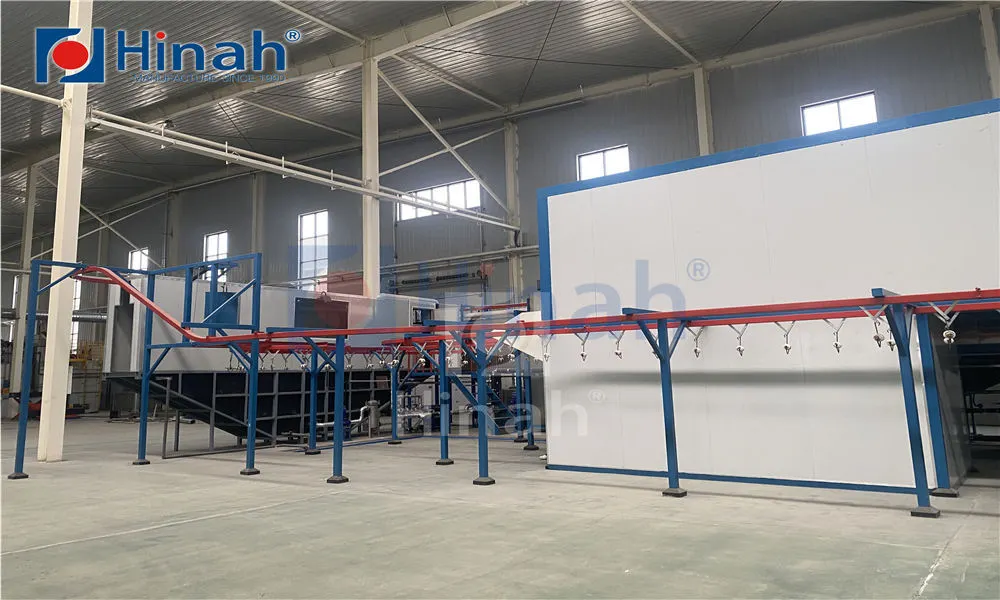
Understanding the underlying chemical transformation is fundamental to optimizing any Paint curing oven. Unlike simple solvent evaporation, thermoset coatings (both powder and liquid) require a precise thermal cycle to initiate polymerization. The substrate must reach a specific metal temperature for a defined dwell time—commonly referred to as the “time-at-temperature” window. For powder coatings, this involves melting, flowing, and chemical cross-linking, typically requiring substrate temperatures between 180°C and 200°C for 10 to 15 minutes. Deviations lead to under-cure (poor adhesion, low impact resistance) or over-cure (color shift, brittleness). Advanced curing systems utilize gradient heating profiles to manage thick substrates with high thermal mass, ensuring the entire part reaches the cure window uniformly.
Designing or retrofitting a curing system requires a holistic view of thermodynamics, airflow mechanics, and production logistics. Below are the pivotal technical parameters that separate high-performance units from outdated, energy-intensive alternatives.
One of the most persistent challenges in industrial curing is maintaining temperature uniformity across the entire product geometry. Temperature variations exceeding ±5°C across the oven chamber can result in inconsistent cross-linking. Modern convection ovens employ strategically placed plenums, adjustable air nozzles, and variable-frequency drives (VFDs) on fans to balance air velocity and temperature distribution. Computational fluid dynamics (CFD) modeling is increasingly used during the design phase to simulate airflow patterns, eliminating cold spots and thermal shadows, especially for complex parts like engine blocks or assembled enclosures.
Choosing between convection, infrared (IR), or hybrid systems depends on substrate geometry, coating chemistry, and line speed.
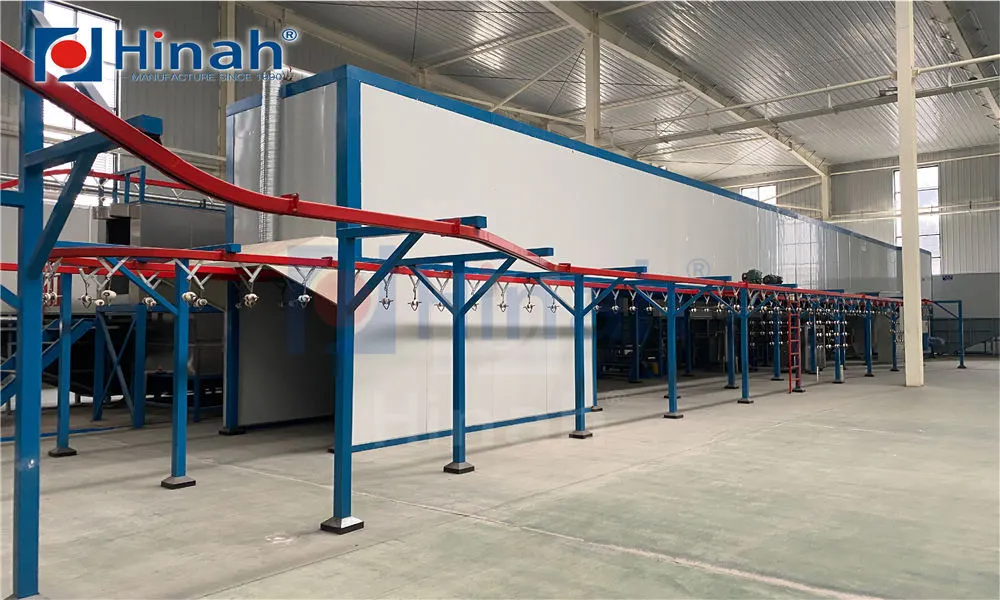
Convection ovens dominate in high-volume lines due to their ability to uniformly heat complex shapes. They rely on recirculated heated air, offering excellent temperature control and are ideal for parts with varying thermal masses.
Infrared (IR) ovens use radiant energy to directly heat the coating and substrate surface. They offer rapid ramp-up times and are highly energy-efficient for flat or simple geometries. Medium-wave and short-wave IR are preferred for powder coatings to achieve quick gelation, preventing drips or sagging.
Combined (hybrid) systems leverage the best of both worlds: IR zones for fast initial melt and convection zones for thorough, uniform cross-linking. This approach significantly reduces oven footprint and energy consumption while maintaining high finish quality.
Energy costs represent a substantial portion of coating line operational expenses. Advanced Paint curing oven designs incorporate multi-layer mineral wool insulation with thicknesses exceeding 150 mm to minimize heat loss. Additionally, integrated heat recovery systems capture exhaust gases to preheat fresh air or supply heat to pre-treatment stages. Implementing modulating burners rather than on/off controls ensures that energy input precisely matches thermal demand, reducing fuel consumption by up to 20-25% in continuous operations.
Different manufacturing sectors impose unique demands on curing equipment. Tailoring oven design to these specific conditions is essential for consistent quality and operational efficiency.
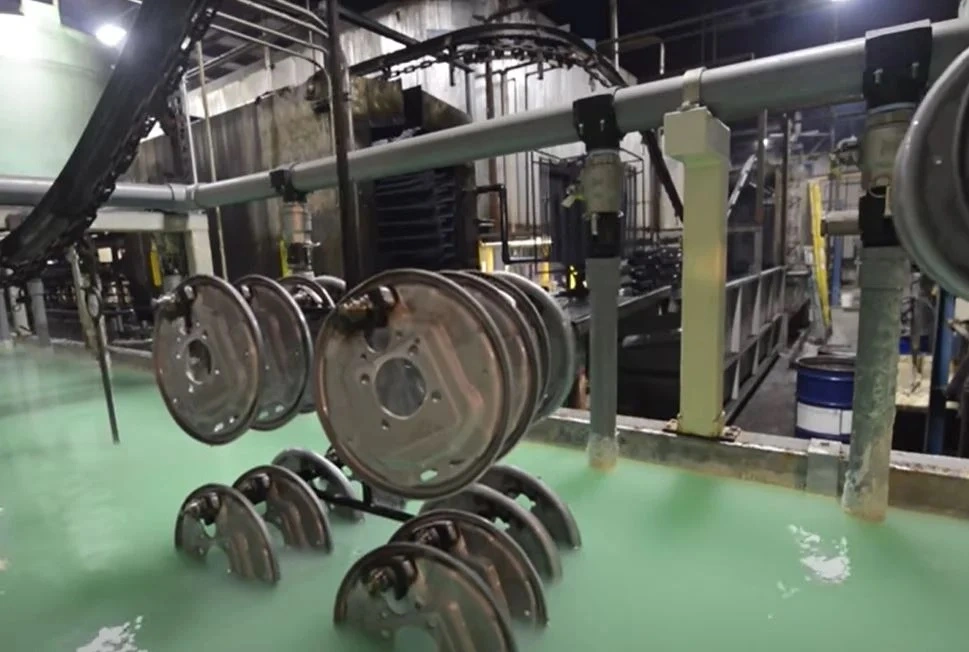
Automotive parts—from chassis components to aluminum wheels—require exceptional coating adhesion and corrosion resistance. High line speeds (up to 8-10 m/min) demand rapid heat transfer. Here, hybrid curing systems with multiple IR zones followed by a convection hold zone are standard. Strict adherence to strict temperature profiles prevents coating degradation on heat-sensitive substrates like aluminum-silicon alloys, while data logging systems ensure traceability for IATF 16949 compliance.
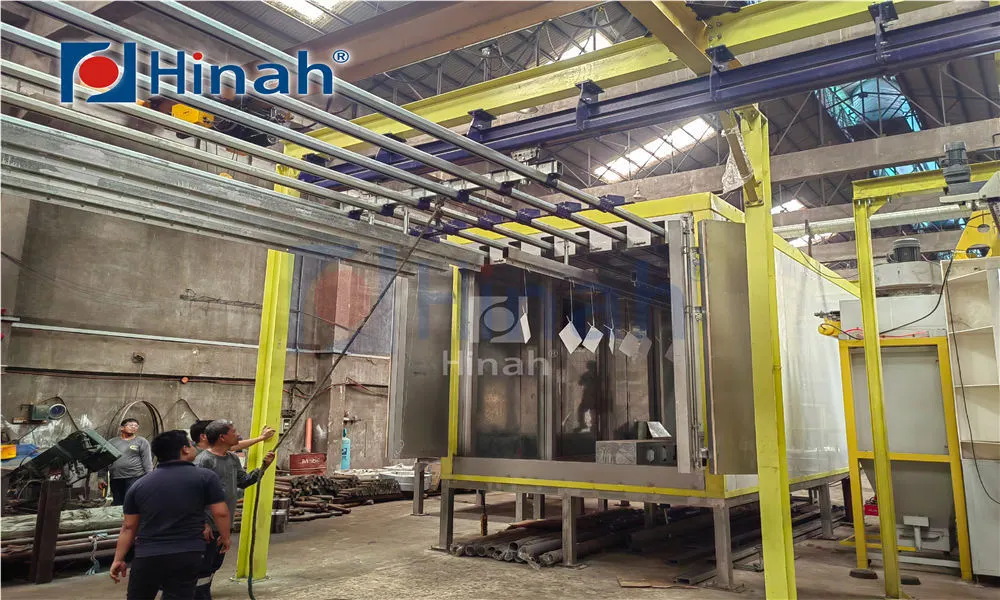
For building facades and window profiles, coating uniformity and color consistency across long extrusions are non-negotiable. Horizontal or vertical curing ovens are used, with vertical systems often preferred for long profiles to avoid handling damage. Achieving consistent airflow along lengths exceeding 6 meters requires sophisticated nozzle arrays and zone-specific temperature controls. Polyester-based powder coatings are standard, requiring precise cure cycles to achieve 70 μm film thickness with exceptional weatherability.
Large, heavy-gauge components such as tractor frames and excavator parts present challenges related to thermal inertia. These parts act as heat sinks, requiring longer soak times. Oven designs for this sector focus on high-volume air recirculation and programmable logic controller (PLC)-managed temperature ramping to ensure that the core of thick weldments reaches cure temperature without overshooting the surface. Anti-oxidation strategies and multi-stage filtration are also critical to prevent contaminants from affecting the finish on premium equipment.
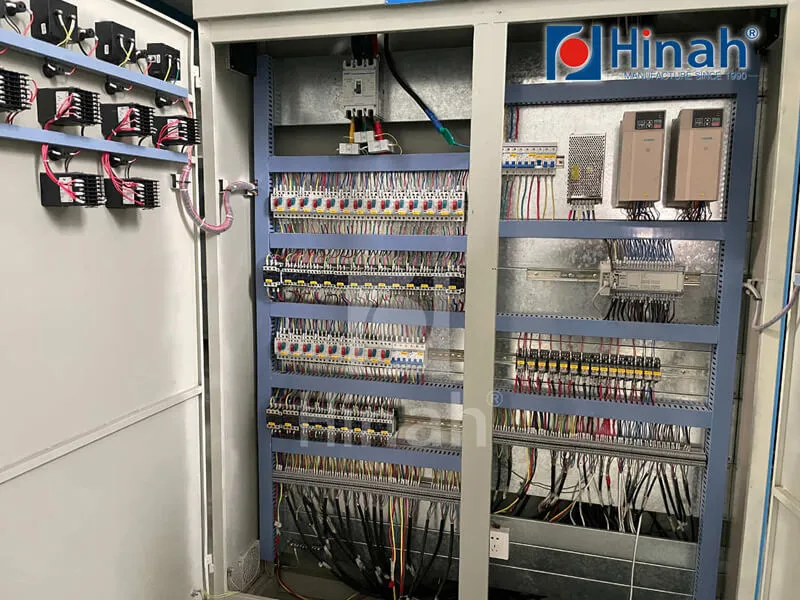
The modern Paint curing oven has evolved into a data-rich asset. Industry 4.0 integration allows for real-time monitoring of key performance indicators (KPIs) including:
Multi-point thermocouple arrays providing cross-sectional temperature profiles.
Continuous emissions monitoring to ensure VOC compliance and combustion efficiency.
Predictive analytics on fan bearings, burner health, and belt tracking to schedule maintenance during planned downtime, reducing unplanned stoppages.
Implementing a digital twin of the thermal process enables operators to simulate recipe changes before physical implementation, drastically reducing setup waste. This level of control is essential for just-in-time manufacturing environments where batch sizes are shrinking, and changeover frequency is increasing.
For coating lines demanding uncompromised quality and operational economy, the integration of a purpose-engineered thermal system is paramount. HANNA specializes in the design, fabrication, and integration of high-performance coating lines, with particular expertise in advanced Paint curing oven solutions. Rather than offering generic equipment, HANNA employs a consultative approach—analyzing substrate geometry, coating type, throughput targets, and existing facility constraints to deliver fully optimized thermal systems. Their portfolio includes modular convection ovens with precision airflow zoning, IR-enhanced hybrid systems for rapid cure, and fully insulated, low-thermal-mass designs that reduce energy consumption by up to 30% compared to conventional units. Each system incorporates industrial IoT connectivity, providing operators with granular visibility into the curing process. By aligning thermal engineering with production goals, HANNA ensures that the curing stage becomes a competitive advantage rather than a bottleneck.
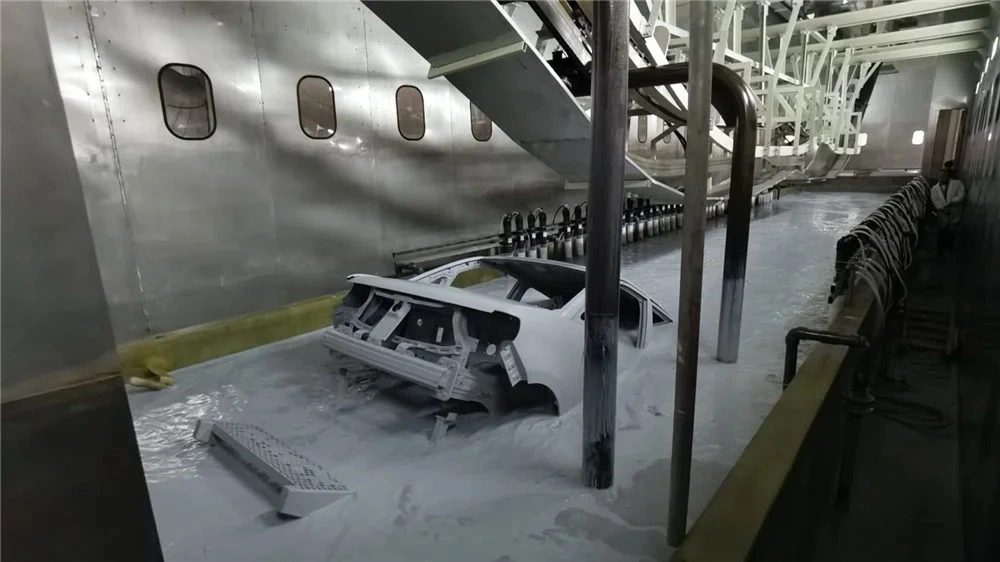
Viewing the Paint curing oven as a simple utility is a missed opportunity. In today’s manufacturing environment, where energy volatility, quality standards, and sustainability pressures converge, the curing oven represents a critical lever for operational excellence. Investments in uniform airflow, advanced insulation, smart controls, and hybrid heating technologies yield measurable returns—reduced rework rates, lower energy bills, extended equipment life, and the ability to meet stringent warranty requirements. Whether upgrading an existing line or specifying a new system, engaging with specialized engineering partners ensures that thermal processing delivers consistent, verifiable results. The science of curing is precise; the equipment must be equally so.
Q1: What is the typical temperature range for a paint curing oven used with powder coatings?
A1: For most industrial powder coatings (epoxy, polyester, hybrid), the recommended substrate temperature ranges from 180°C to 200°C (356°F to 392°F). The part must be maintained within this range for a specific dwell time, typically 10 to 15 minutes, to achieve complete cross-linking. However, low-cure powder formulations are now available that cure at 160°C, which can significantly reduce energy consumption.
Q2: How can I verify that my curing oven is providing uniform temperature across all parts?
A2: The most reliable method is to conduct a temperature uniformity survey (TUS) using a profiling system with multiple thermocouples attached to the product or a test rack. The thermocouples should be placed at various locations (leading, trailing, top, bottom, center). The data logger travels through the oven with the part, providing a detailed thermal profile. This test, often required for quality standards like ISO 9001 or CQI-12, reveals cold zones, ramp-rate issues, and overall oven stability.
Q3: What is the difference between a convection curing oven and an infrared (IR) curing oven?
A3: Convection ovens use heated, recirculated air to transfer heat, providing excellent uniformity for complex shapes but with longer heat-up times. IR ovens use electromagnetic radiation to directly heat the coating and substrate surface, allowing for rapid temperature rise. Convection is ideal for consistent bulk heating, while IR excels in fast gelation and high line speeds. Many modern systems combine both—using IR for quick initial melt and convection for the full cross-linking stage—to balance speed and uniformity.
Q4: What are the common signs of an under-cured coating, and how can it be prevented?
A4: Under-curing symptoms include poor adhesion (coating easily scratches off), reduced impact resistance, poor chemical resistance (swelling or softening in solvents), and lower gloss than specified. To prevent under-cure, ensure that the oven’s temperature control system is calibrated, maintain proper airflow for uniform heat transfer, and regularly use a temperature profiler to confirm that the coldest point on every part reaches the required cure window for the full duration. Regular burner and fan maintenance also prevent performance degradation.
Q5: How can I improve the energy efficiency of an existing curing oven?
A5: Several retrofit strategies can yield significant energy savings: 1) Install variable frequency drives (VFDs) on recirculation fans to optimize airflow without excessive motor load. 2) Improve insulation—adding or replacing door seals and insulating panels reduces heat loss. 3) Integrate a heat recovery system that captures exhaust gases to preheat fresh combustion air or supply heat to the pretreatment washer. 4) Implement zone controls and programmable recipes to avoid overheating during idle or low-production periods. Many facilities achieve a 15-25% reduction in natural gas consumption after these upgrades.
Q6: What maintenance schedule is recommended for industrial curing ovens?
A6: A proactive maintenance schedule includes daily checks of door seals, conveyor chain tension, and safety interlocks. Weekly inspections should involve cleaning air filters, checking burner flame quality, and inspecting thermocouples for drift. Monthly, perform a full combustion system analysis, verify fan belt tensions, and inspect insulation for any signs of degradation. Annually, a full temperature uniformity survey and a combustion safety system recertification are recommended to ensure both process consistency and compliance with safety standards (e.g., NFPA 86).