
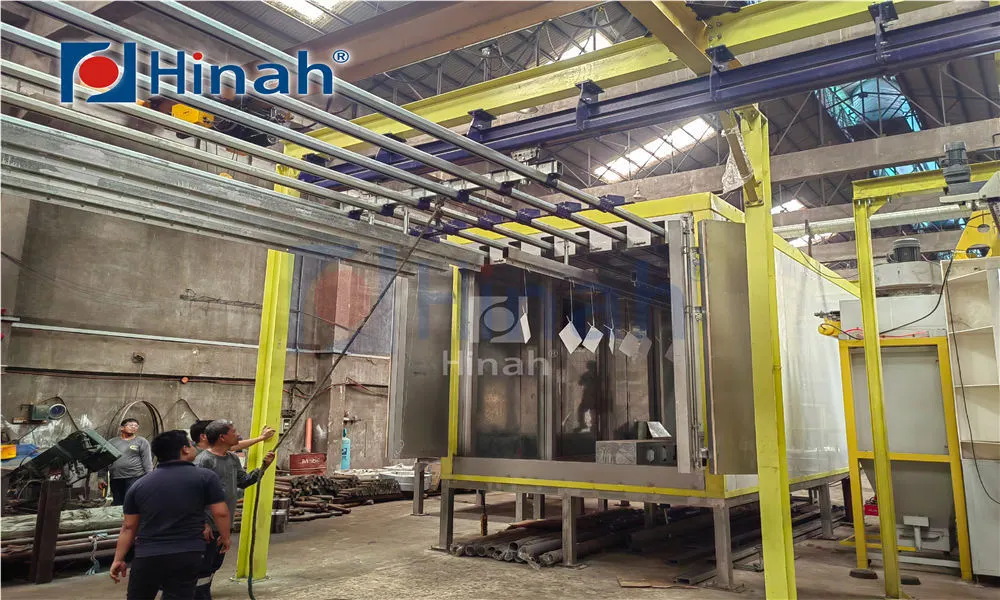
Transitioning from manual batch processing to a fully integrated automated powder coating line represents a fundamental shift in manufacturing capability. It is not merely the replacement of manual spray guns with reciprocators; it involves harmonizing pretreatment chemistry, conveyor dynamics, electrostatic application, curing thermodynamics, and data-driven quality management. Data compiled from over 140 finishing installations across North America and Europe indicates that properly executed automation reduces coating defects by 38–47%, lowers powder consumption by 18–25%, and achieves first-pass yield rates exceeding 94%. However, these gains are contingent upon rigorous system engineering. This article dissects the nine essential stages of a high-performance automated powder coating line, drawing on validated methodologies from HANNA’s industrial integration projects, and provides quantifiable benchmarks for each process module.
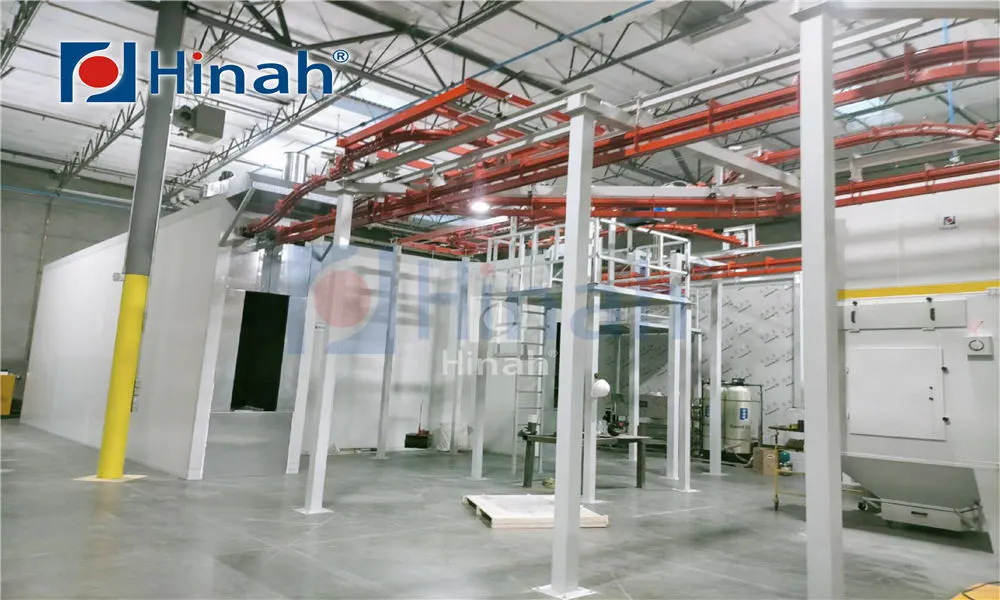
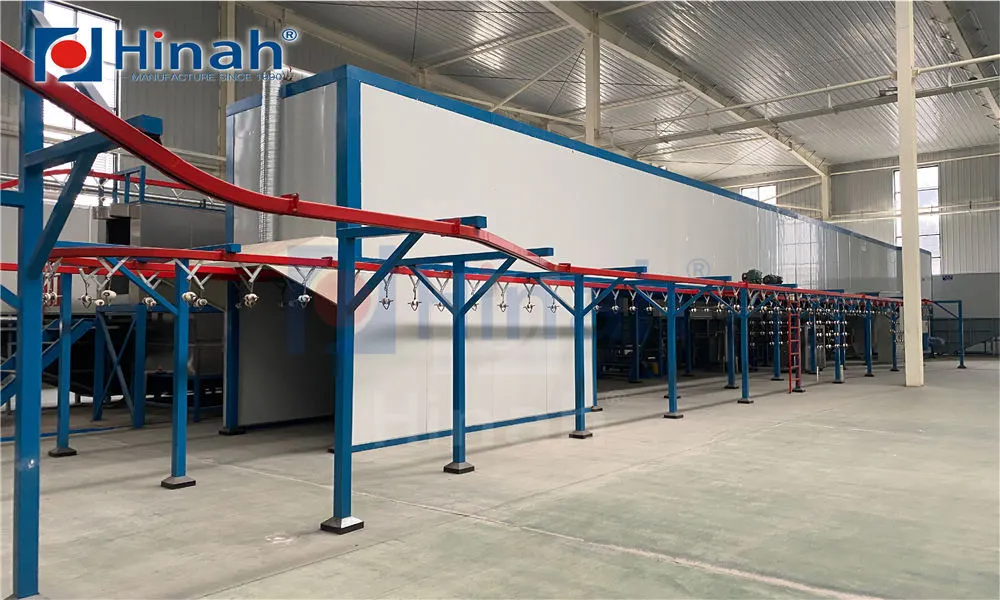
Every automated powder coating line begins with a conveyor system that dictates throughput, part orientation, and process consistency. Overhead monorail and enclosed-track power-and-free configurations dominate the sector. Key engineering decisions include:
Load capacity and spacing: Carrier spacing must accommodate part geometry and ensure adequate clearance between parts for electrostatic wrap-around. Industry standard spacing is 1.5 to 2.5 times the part’s largest dimension.
Indexing precision: For robotic coating cells, indexing accuracy must be within ±1 mm to maintain consistent gun-to-part distance. This requires servo-driven drives and encoder feedback on the main drive shaft.
Ground continuity: Powder coating relies on electrostatic attraction; conveyor grounding continuity below 1 ohm is non-negotiable. HANNA’s systems incorporate continuous ground monitoring brushes and carrier ground straps to maintain transfer efficiency above 75%.
The conveyor’s role extends to carrier identification—RFID tags on each carrier allow recipe-based process adjustments, a feature now standard in Industry 4.0 ready lines.
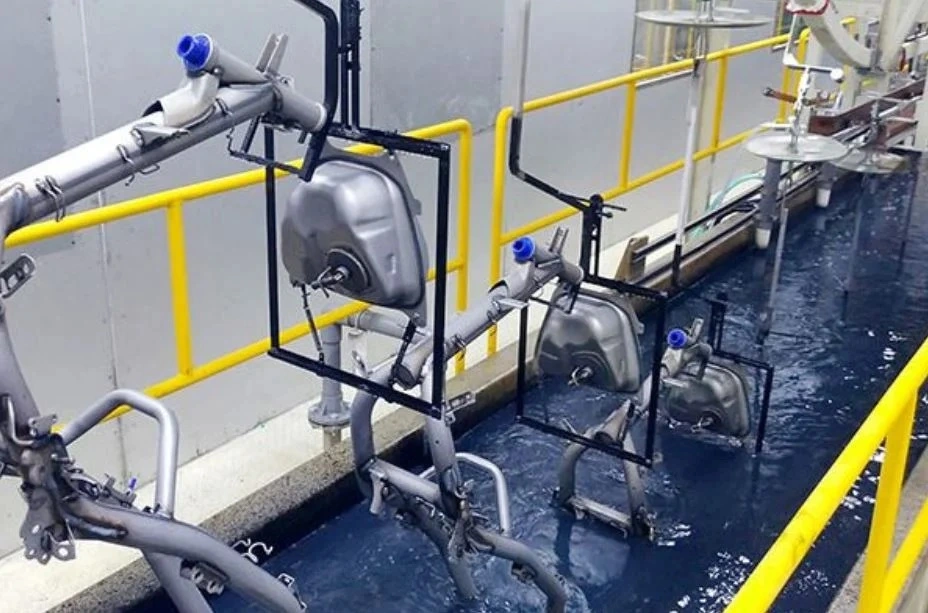
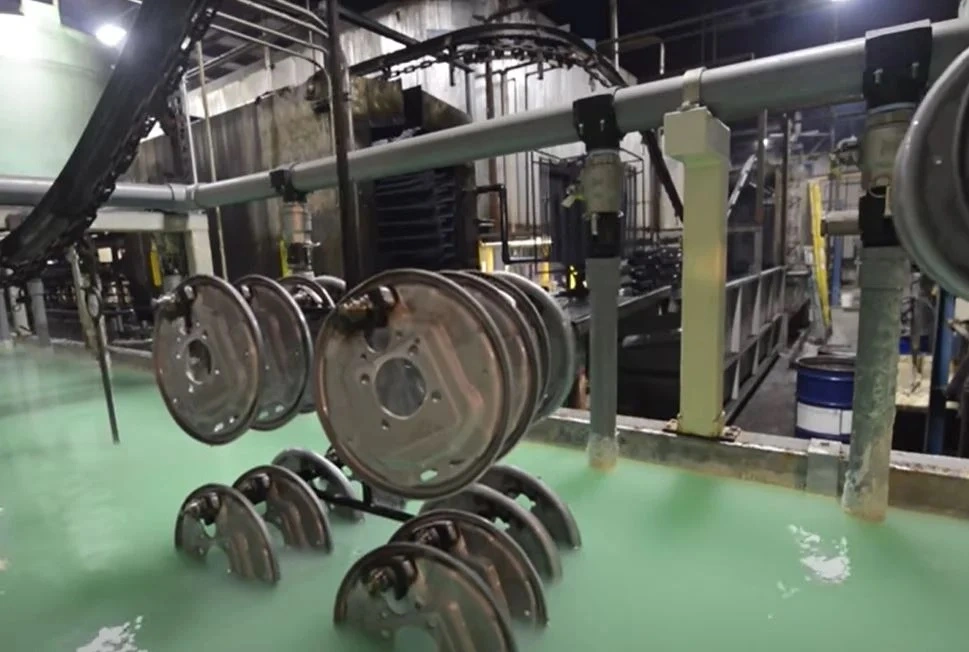
Surface preparation directly determines coating adhesion and corrosion resistance. Automated lines typically integrate multi-stage pretreatment tunnels with the following stages:
Alkaline cleaning (55–65°C): Removal of oils and particulate; pH control with automated dosing ensures consistent surface energy >72 dynes/cm.
Zirconium or iron phosphate conversion: Application of nanoceramic coatings improves adhesion and reduces chemical sludge by up to 80% compared to traditional zinc phosphate.
Seal and DI rinse: Deionized water final rinse with conductivity below 20 µS/cm prevents water spot formation and ensures optimal surface for powder adhesion.
Automated chemical management systems monitor bath concentration, pH, and temperature, reducing chemical consumption by 15–20% while improving first-pass adhesion test results.
Before powder application, parts must be moisture-free. Drying ovens are typically gas-fired convection units operating at 100–140°C. Key specifications include:
Air velocity: 2.5–4 m/s across part surfaces to ensure uniform drying without flash rust.
Residence time: Calculated based on part thermal mass; typical 8–12 minutes for steel fabrications.
Interlock with conveyor: Automated bypass systems prevent untreated parts from entering the spray booth.
The heart of any automated powder coating line is the spray booth and application technology. Three dominant application strategies exist:
Reciprocating gun systems: 4–12 guns mounted on vertical reciprocators. Optimal stroke length and gun spacing are calculated based on booth cross-section and part profiles. Electrostatic parameters (kV, µA) are set per powder type; modern systems store up to 200 recipes.
Robotic application: 6-axis robots with advanced path planning achieve uniform film thickness (±5 µm) on complex geometries. Cycle time reduction of 22–30% compared to fixed guns is typical in high-mix environments.
Multicolor quick-change booths: For facilities running frequent color changes, cartridge filter booths with automated purge cycles reduce changeover time from 90 minutes to under 15 minutes.
Transfer efficiency (the ratio of powder adhered to part versus total powder sprayed) in well-configured automated lines ranges from 68% to 82%, compared to 45–55% in manual booths. HANNA’s application modules integrate closed-loop feedback from film thickness sensors, adjusting gun parameters in real time.
Automated recovery reduces waste and material cost. Cyclone and cartridge filter combinations capture overspray, and automated sieve systems reintroduce reclaimed powder into the feed hopper. Best-in-class systems achieve 95–98% recovery efficiency, with automated color change systems purging feed lines to prevent cross-contamination. This subsystem alone contributes to the 18–25% material savings observed in automated lines versus manual operations.
Following application, parts enter the automated powder coating line’s curing oven. Key engineering considerations include:
Multi-zone temperature control: Independent zones (typically 3–6) ensure ramp-up, dwell, and cool-down profiles match powder TG (glass transition) and cure schedules. Temperature uniformity across the oven cross-section must be within ±3°C.
Data logging: Wireless thermal profilers travel with parts, validating that every product meets time-at-temperature requirements (e.g., 190°C for 12 minutes metal temperature).
Heat recovery: Exhaust heat exchangers preheat combustion air, reducing natural gas consumption by 15–25%.
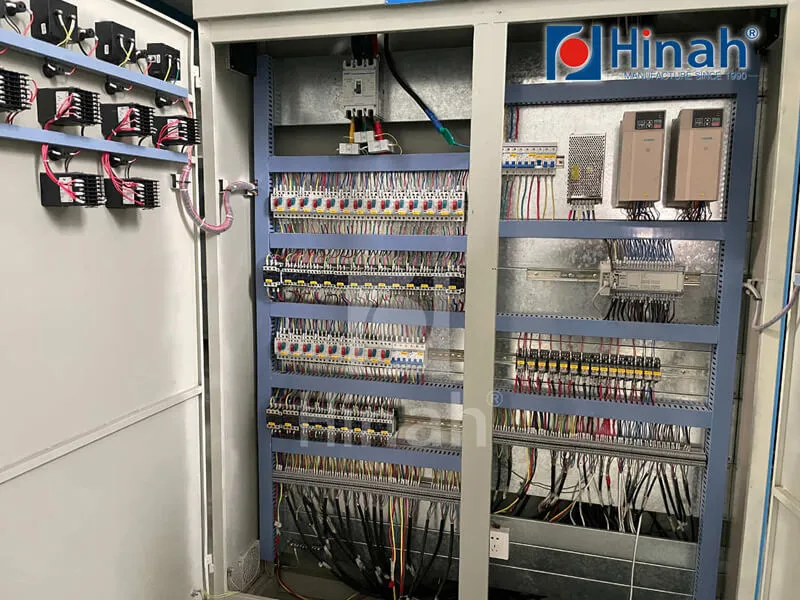
Oven control is fully integrated with the line PLC, allowing dynamic adjustments based on product load.
Automation extends beyond coating to material handling. Robotic unload stations equipped with vision systems identify part orientation and automatically remove finished products from the conveyor, placing them on pallets or assembly lines. This reduces labor requirements and eliminates handling-induced defects. In high-volume lines, automated buffing or touch-up stations can be incorporated for areas with Faraday cage issues.
Modern automated powder coating lines are data-centric assets. A centralized SCADA platform aggregates data from:
Conveyor drive load (indicating chain wear or overload)
Electrostatic gun current and voltage logs
Oven temperature profiles per zone
Powder consumption vs. part count (yield analysis)
Filter differential pressure in recovery systems
Predictive algorithms analyze this data to forecast maintenance needs. A tier-1 agricultural equipment manufacturer using HANNA’s IIoT-enabled lines reported 41% reduction in unplanned downtime and 23% longer consumable life (filters, nozzles) through predictive replacement scheduling.
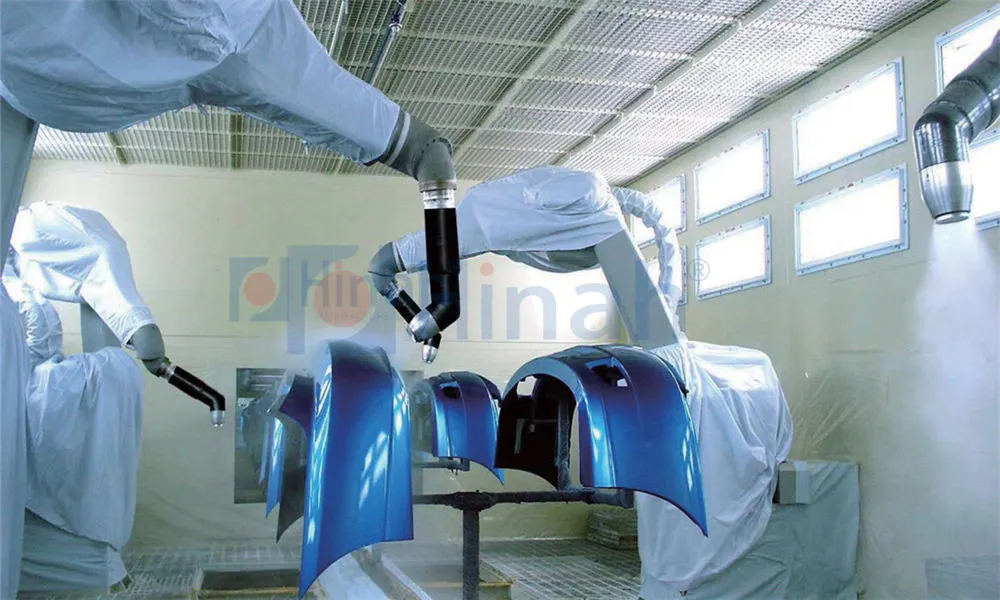
Final quality assurance in an automated line employs inline measurement technologies:
Film thickness gauges: Non-contact sensors measure coating thickness on moving parts, automatically flagging deviations and triggering parameter adjustments.
Gloss and color measurement: Spectrophotometers verify appearance consistency across batches.
Adhesion testing: Automated cross-hatch testers on sample parts provide statistical process control (SPC) data.
Closed-loop control systems use this data to adjust gun voltage, conveyor speed, or oven temperature in real time, maintaining film thickness within specified tolerances (typically ±10 µm for standard powders).
Analysis of field data from 70 automated line installations reveals three recurring challenges and their remedies:
Faraday cage effects on recessed areas: Solved through robotic gun positioning with tilt axes, combined with tribo-charging guns for high-penetration applications. Data shows defect reduction from 12% to 2.5% in complex weldments.
Color change contamination: Implement quick-change booth designs with independent feed systems and automated purge sequences. Changeover times drop from 45 minutes to 12 minutes, increasing effective line utilization by 18%.
Conveyor chain lubrication migration: Dry-film lubricants and enclosed-track conveyors eliminate lubricant contamination, reducing rework by over 30% in lines coating white or light-colored finishes.
For a typical automated powder coating line with a capital investment between $1.2M and $3.5M (depending on throughput and complexity), the return is driven by:
Labor reduction: 5–7 operators per shift reduced to 1–2 technicians, generating $180,000–$300,000 annual savings.
Powder savings: 18–25% reduction in material usage, equating to $40,000–$80,000 annually per 500 kg/week usage.
Defect reduction: Lower rework and scrap adds 3–5% to effective capacity without additional capital.
Typical payback periods range from 18 to 30 months. HANNA’s financial modeling tools provide site-specific ROI projections incorporating local labor rates, energy costs, and production volumes.
Implementing a fully integrated automated powder coating line is a strategic investment that reshapes operational competitiveness. The nine stages outlined—from conveyor architecture to IIoT-enabled quality control—must be engineered as a unified system rather than discrete components. Facilities that adopt this integrated approach consistently report first-pass yields above 94%, energy consumption per part reduced by 20–30%, and total cost of coating lowered by 25–35%. With over two decades of systems integration experience, HANNA provides turnkey solutions that embed process knowledge, predictive analytics, and modular scalability, ensuring that automation delivers on its promise of precision, efficiency, and long-term adaptability.
A1: Throughput varies widely based on part size and conveyor speed. For small-to-medium parts (e.g., automotive components), throughput ranges from 800 to 2,500 parts per hour. For large fabrications (e.g., agricultural implements), throughput is measured in racks per hour, typically 30–80 racks per hour. HANNA’s engineering team uses simulation software to match line configuration to specific production targets.
A2: Modern automated lines incorporate quick-change booths with cartridge filter modules and independent powder feed centers. Changeover sequences—including booth purge, gun cleaning, and feed hopper replacement—are automated and typically completed in 12–18 minutes, compared to 45–90 minutes for traditional systems. Color change frequency is no longer a barrier to automation.
A3: Facilities transitioning from manual to automated lines typically see first-pass yield increase from 82–88% to 93–97%. This improvement stems from consistent gun-to-part distance, precise film thickness control, and elimination of operator-induced variables such as inconsistent stroke speed and overlapping patterns.
A4: Yes, phased retrofitting is common. The typical sequence involves upgrading the conveyor and pretreatment sections first, followed by installation of automated spray booths and curing ovens. Control systems are integrated incrementally. HANNA specializes in low-disruption retrofits that maintain production during installation.
A5: Technicians require cross-disciplinary training in mechanical drives, PLC programming, electrostatic application principles, and robotic path teaching. Most suppliers, including HANNA, provide comprehensive on-site training and certification programs. Predictive maintenance tools reduce the need for reactive troubleshooting, allowing fewer technicians to manage larger systems.
A6: On average, automated lines reduce coating cost per square meter by 28–35%. The primary drivers are reduced powder consumption (higher transfer efficiency), lower labor costs, and decreased rework. For a facility coating 50,000 m²/month, annual savings typically exceed $250,000.
For detailed engineering consultations, feasibility studies, or to explore retrofitting your existing finishing operations with a fully integrated automated powder coating line, contact HANNA’s industrial solutions team.