Industrial finishing lines require reliable, highly repeatable processes to achieve high-quality surface protection on metal components. The selection of heavy-duty powder coating equipment determines the operational speed, powder transfer rates, and overall throughput of high-volume manufacturing lines. Unlike traditional solvent-borne liquid spray lines, solvent-free dry electrostatic coating depends on physical forces and heat-induced chemical polymerization to form a durable barrier on ferrous and non-ferrous substrates. Properly managing this workflow involves understanding the dynamics of electrostatic deposition, powder recovery systems, and heat distribution.
To understand how an automated finish line operates, it is necessary to examine each functional stage in detail. Each component must align with the others to prevent bottlenecks and ensure consistent film thickness.
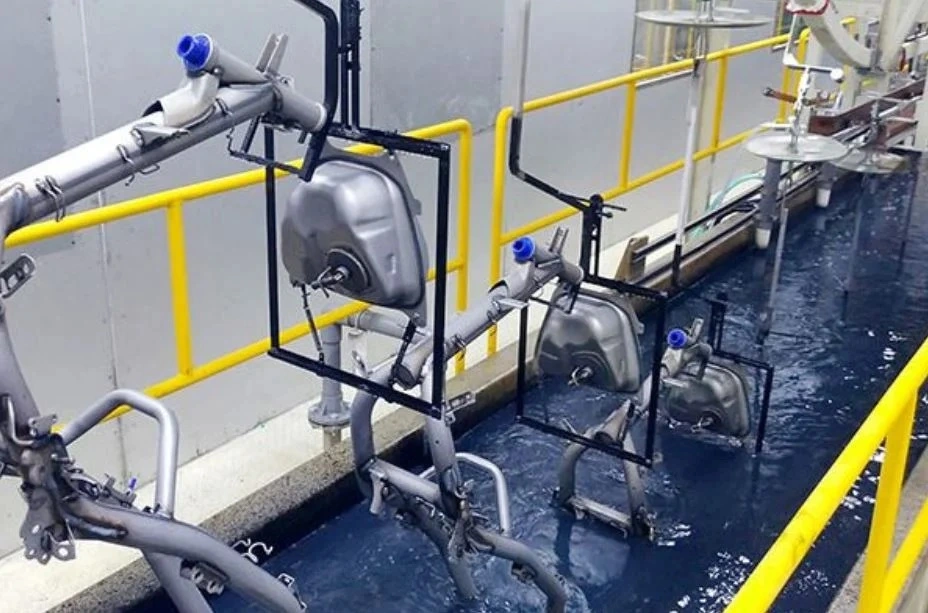
The longevity of a finished surface depends almost entirely on the quality of the substrate preparation. Unprepared metal containing mill scale, fabrication oils, welding residue, or rust will prevent proper adhesion, leading to delamination under mechanical stress.
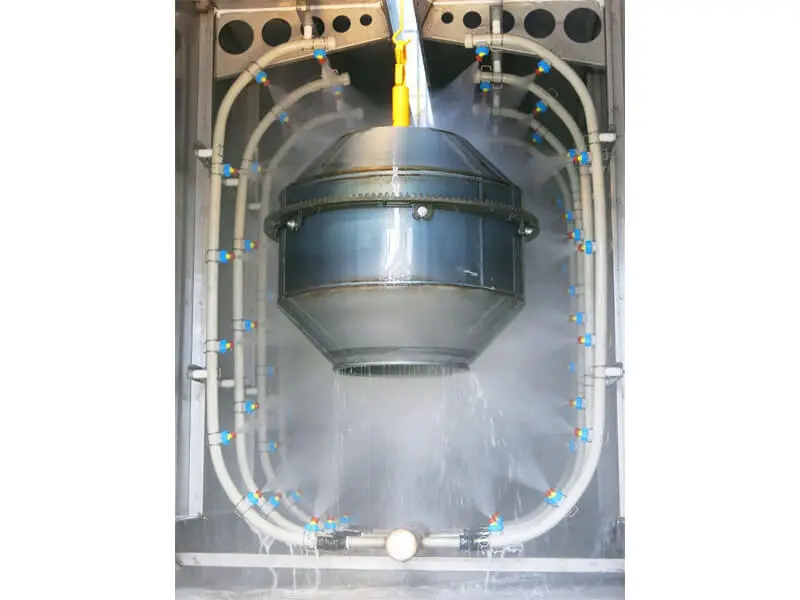
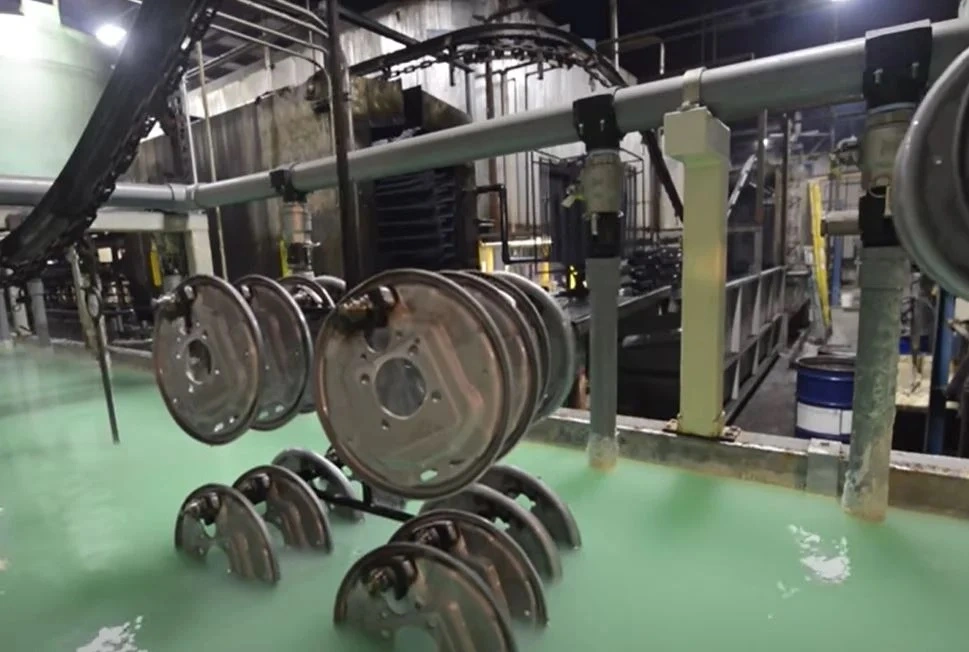
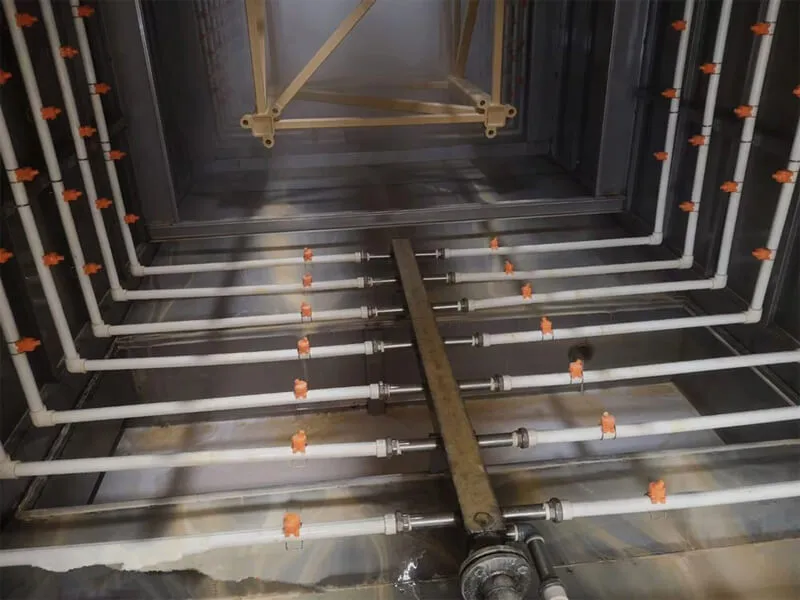
Chemical Spray Washers: Typically organized in three to seven stages. These systems use heated alkaline solutions to strip organic grease and oils, followed by multiple rinse zones using deionized water to prevent salt deposits.
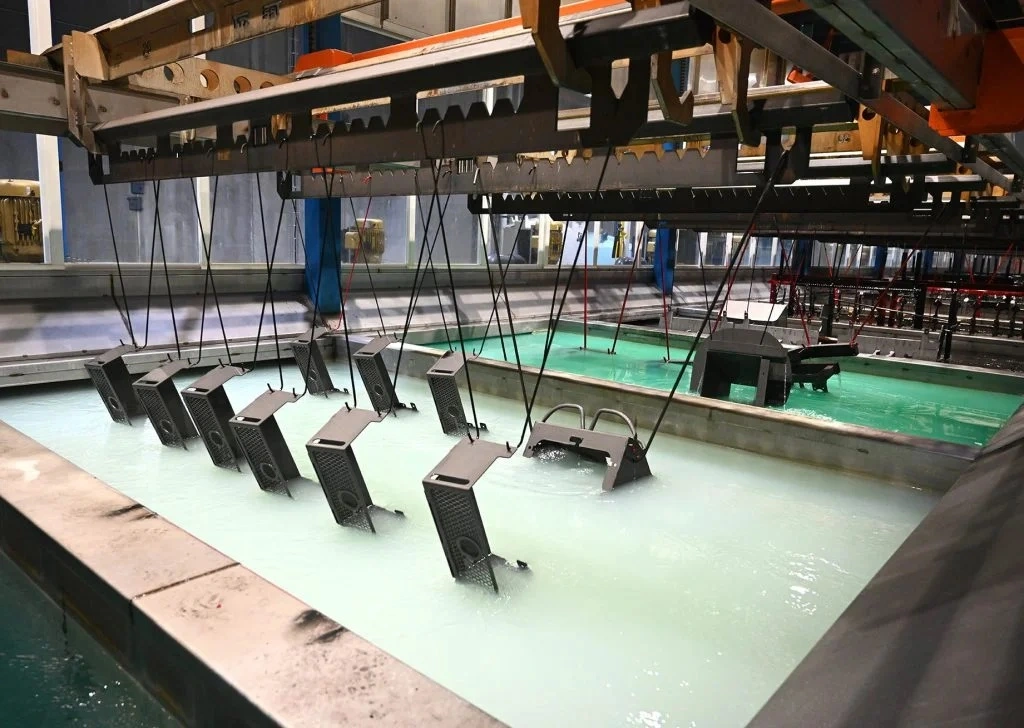
Conversion Coatings: Applying a micro-crystalline layer of iron phosphate, zinc phosphate, or modern zirconium-based agents creates a textured surface topography. This layer enhances the mechanical bonding of the powder and acts as a barrier against moisture intrusion.
Dry-off Ovens: Operating at temperatures between 100°C and 130°C, these ovens quickly evaporate surface moisture. Any moisture carried past this stage can vaporize during the curing process, creating outgassing cavities and pinhole defects.
The deposition process relies on charging dry powder particles so they adhere to a grounded workpiece. The choice of spray guns in powder coating equipment affects film uniformity and cycle times.
Corona Charging: This method uses a high-voltage electrode at the gun tip to ionize the surrounding air. As the powder travels through this ion cloud, it picks up a negative charge. Corona charging is highly effective for high-speed flat-panel applications, though it is prone to back-ionization if the film grows too thick too quickly.
Tribo Charging: This system utilizes mechanical friction. As powder passes through a specialized fluoropolymer tube, friction strips electrons away from the powder particles, giving them a positive charge. Since this process does not generate a strong external electrical field, Tribo charging allows powder to penetrate deep recesses, inner corners, and complex welded structures.
Efficient material containment is a major design priority for clean plant operations. Modern booths maintain continuous negative pressure to prevent airborne powder from escaping into the surrounding plant.
Monocyclone Separators: Designed for operations utilizing multiple colors. The oversprayed powder is drawn into a vertical cylinder where centrifugal forces drive the heavier, reusable powder particles outward and downward. This reclaimed powder is sieved and automatically blended back into the feed hopper, while light fines are directed to the secondary cartridge filter unit.
Cartridge Filter Units: Recommended for dedicated single-color operations. Air is pulled through high-efficiency cartridges that capture up to 99% of airborne powder. For multi-color lines, cleaning these filters is labor-intensive, making cyclone systems a more practical alternative.
Booth Material Selection: Modern systems use non-conductive polypropylene (PP) booth structures instead of traditional stainless steel. PP panels repel charged powder particles, reducing powder accumulation on the booth walls, which facilitates faster color changeovers.
Transfer efficiency refers to the ratio of powder deposited onto the parts compared to the total volume discharged from the spray nozzles. Increasing this ratio directly reduces powder consumption and lowers the volume of overspray handled by the recovery systems.
Maintaining Solid Grounding: Electrostatic attraction requires a low-resistance path to ground. Hanger hooks and conveyor tracks must be kept free of cured powder buildup. A grounding resistance of less than 1 megaohm is the industry standard for safe and efficient powder deposition.
Managing Powder-to-Air Ratios: Delivering powder to the guns requires a steady supply of dry, oil-free compressed air. Fluidized hoppers use a porous bottom plate to introduce low-pressure air, transforming the dry powder into a fluid state. This fluidization ensures an even feed rate to the pumps, preventing pulsing or spitting at the nozzle.
Automated Reciprocators: Positioning the spray guns at a consistent distance from the workpiece is necessary to prevent dry spray or excessive buildup. Advanced system integrators, including HANNA, manufacture heavy-duty reciprocators and multi-axis positioning systems that synchronize with conveyor speeds to ensure uniform gun-to-part distance across the entire rack height.
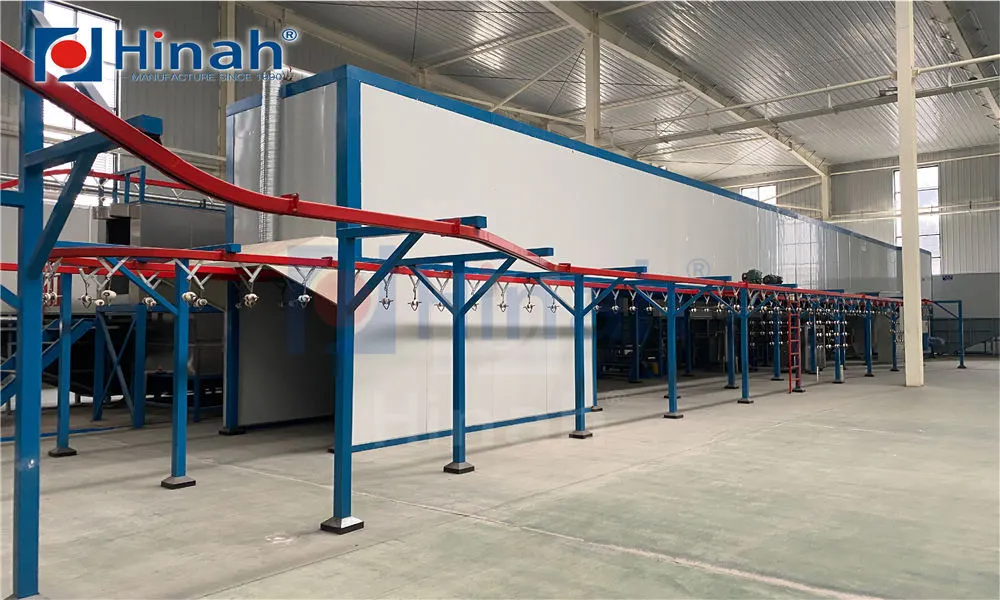
Once the powder has been applied, the workpiece enters the curing oven, where the dry particles undergo thermal cross-linking. Curing ovens must be engineered to deliver uniform heat across different material thicknesses.
Convection Curing Ovens: These ovens utilize high-velocity air circulating through internal ductwork to transfer heat to the substrate. The key to high-performance curing is maintaining a uniform temperature profile throughout the entire length of the oven chamber. This requires regular Temperature Uniformity Surveys (TUS) using multi-channel data loggers to verify that all areas remain within specified thermal limits.
Infrared (IR) Pre-heating: Incorporating IR zones before the main convection oven can quickly melt and gel the powder on heavy steel sections. This rapid gelling prevents the powder from being blown off by high-velocity convection air and reduces the overall footprint of the curing line.
Heat Exchanger Design: Modern industrial ovens employ indirect-fired burners to prevent combustion by-products, such as nitrogen oxides and sulfur compounds, from entering the curing chamber. These compounds can react with certain powder chemistries, causing yellowing, loss of gloss, or poor surface finish. High-quality powder coating equipment must feature durable stainless-steel combustion chambers and high-efficiency heat exchangers to maximize thermal output while maintaining absolute air purity.
Industrial operations must proactively address coating defects to keep reject rates low.
Orange Peel Surface Defects: Characterized by an uneven, textured finish resembling citrus skin. This is often caused by applying the powder too thick, excessive voltage leading to premature back-ionization, or an incorrect temperature ramp-up speed in the curing oven. If the powder melts and begins to cross-link before it has fully flowed out, the surface remains uneven.
Intercoat Adhesion Failure: Occurs when multiple layers are applied, or when the powder is applied over an incompatible base coat. This failure is typically traced back to either incomplete curing of the base layer or surface contamination between coating stages.
Cratering and Pinholes: These small voids are caused by outgassing from the substrate, often seen on cast aluminum or galvanized steel. Using specialized outgassing-forgiving powders or extending the pre-heat phase can help air escape before the powder gels.
Far-end Recess Starvation: When coating deep boxes or channels, the Faraday cage effect prevents powder from reaching the internal corners. To counteract this, operator adjustments should include lowering the gun voltage, increasing the powder-to-air feed ratio, or using Tribo-charging powder coating equipment.
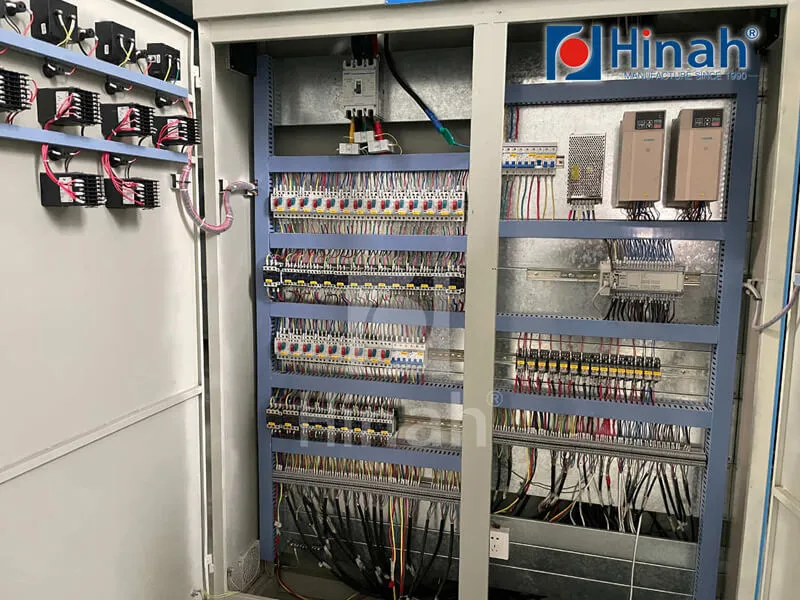
Integrating smart controls and automation into finishing lines is standard practice for modern manufacturing facilities.
PLC and HMI Integration: A centralized control panel allows operators to save and load specific process parameters for different part profiles. Settings such as electrostatic voltage, current limits, atomizing air pressure, and conveyor speed can be adjusted with a single command.
Part Scanning Sensors: Optical light barriers or laser scanners positioned at the booth entrance detect the dimensions and orientation of incoming parts. The control system uses this data to activate only the relevant spray guns and adjust reciprocator strokes, reducing unnecessary overspray.
Dense-Phase Powder Delivery: Unlike traditional venturi pumps that require high-velocity air, dense-phase pumps move a high volume of powder using a low volume of air. This results in a softer spray pattern, higher transfer efficiency, and reduced wear on internal pump components.
Complete Line Solutions: Companies like HANNA customize industrial finishing systems, integrating pre-treatment washers, automated drying ovens, advanced electrostatic application booths, and curing zones into a continuous, highly productive workflow. Implementing synchronized line automation minimizes human error and maximizes consistent finish quality across large production runs.
Q1: What causes the Faraday cage effect and how can it be resolved?
A1: The Faraday cage effect is caused by electrostatic field lines seeking the closest grounded point, which directs the charged powder particles to the outer edges of a recessed structure rather than inside its corners. To resolve this, operators can lower the electrostatic voltage (kV) to reduce the strength of the field, increase the gun-to-part distance, or switch to a Tribo-charging system, which charges powder through friction without creating a strong external electrical field.
Q2: What are the main benefits of a monocyclone recovery system in multi-color operations?
A2: A monocyclone system uses high-speed centrifugal force to separate reusable powder from fine waste particles. It enables quick color changeovers because the inner walls of the cyclone can be cleaned rapidly without replacing expensive filter elements. Reclaimed powder is directed to a continuous sieving unit for immediate reuse, keeping powder waste to a minimum.
Q3: How does substrate thickness affect the configuration of the curing oven?
A3: Heavy metal substrates require longer times to reach the required Part Metal Temperature (PMT) compared to thin-gauge metals. To ensure proper curing, the oven must be divided into multiple heating zones with independent temperature controls, or an infrared pre-heater must be placed before the convection oven to bring the thick substrate up to gel temperature quickly.
Q4: Why is air filtration and drying important for powder application?
A4: Compressed air must be clean and free of moisture and oil. Moisture in the air line causes powder to clump, leading to pump blockages and gun spitting. Oil contamination reduces transfer efficiency and causes severe surface defects like craters and fish-eyes on the cured finish. High-performance lines require refrigerated air dryers and multi-stage coalescing filters.
Q5: What is the difference between iron phosphate and zirconium pre-treatment?
A5: Iron phosphate requires higher operating temperatures, usually between 45°C and 60°C, and produces a moderate amount of chemical sludge that requires frequent tank cleaning. Zirconium pre-treatment operates at room temperature, produces virtually no sludge, reduces environmental waste, and provides equivalent or superior corrosion protection on multi-metal lines including steel and aluminum.
Optimizing an industrial finish line requires precise equipment selection and system integration tailored to your specific production volumes and part geometries. To improve your finishing efficiency, contact our application specialists at HANNA to discuss your custom project requirements and obtain a detailed engineering proposal.