
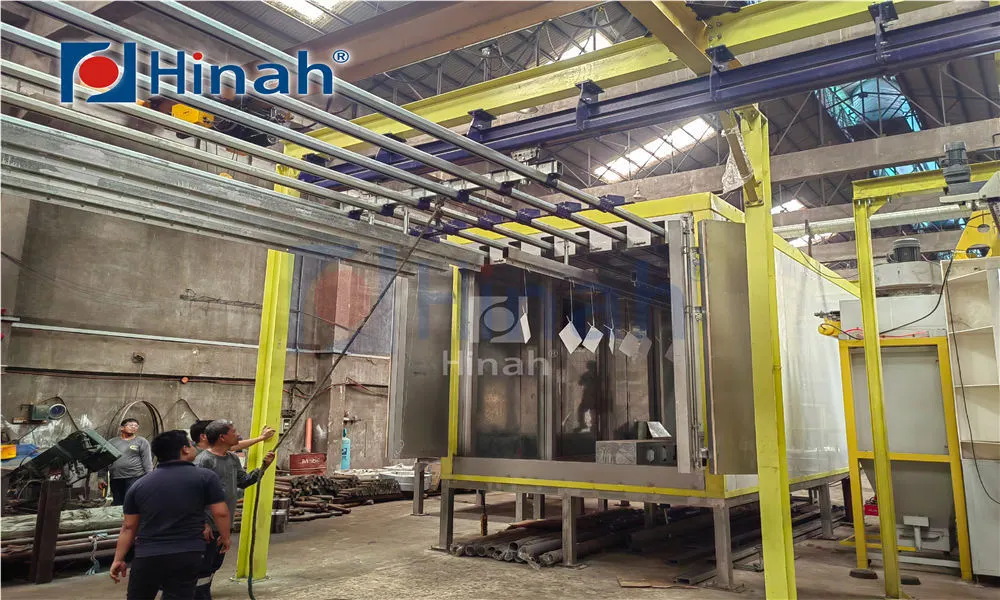
In the shift toward Industry 4.0, the finishing industry has witnessed a paradigm shift from manual spraying to fully integrated, sensor-driven systems. Automated powder coating is no longer a luxury reserved for high-volume manufacturers; it is a critical necessity for any operation seeking repeatability, material efficiency, and rigorous compliance with environmental standards. As a B2B content strategist and a specialist with over two decades in powder application engineering, I have observed that the gap between a standard coating line and a high-performance automated system lies not in the machinery alone, but in the orchestration of kinetics, thermodynamics, and digital control. This article provides a granular analysis of why automation defines the future of powder coating, focusing on technical architecture, ROI validation, and the elimination of common process bottlenecks.
For operations managers and C-suite executives evaluating capital expenditure, the decision to transition to automated powder coating involves a complex matrix of throughput, quality consistency, and labor dependency. Here, we dissect the components that constitute a world-class automated system, supported by data from recent industrial installations and material science advancements.
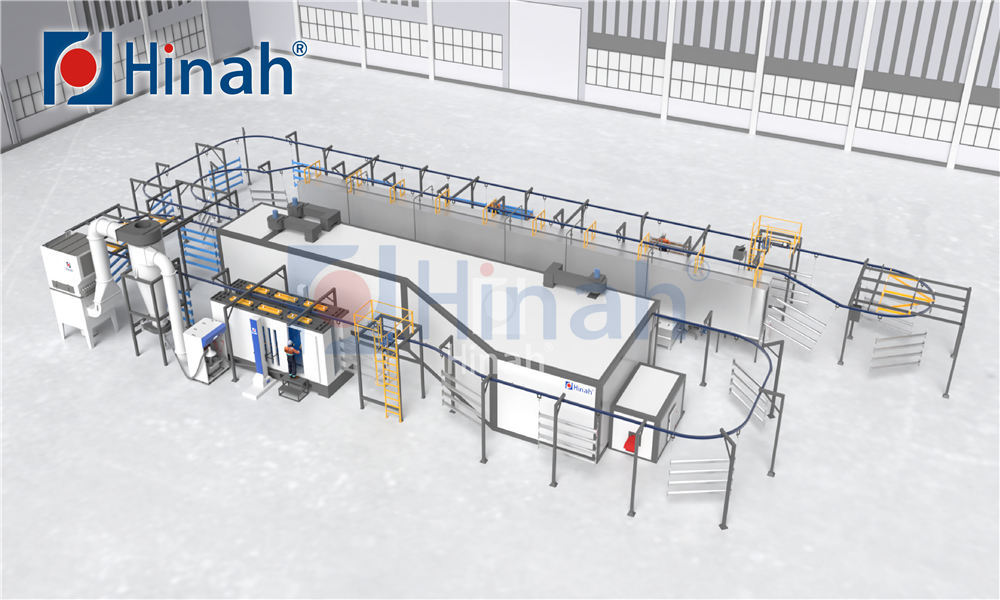
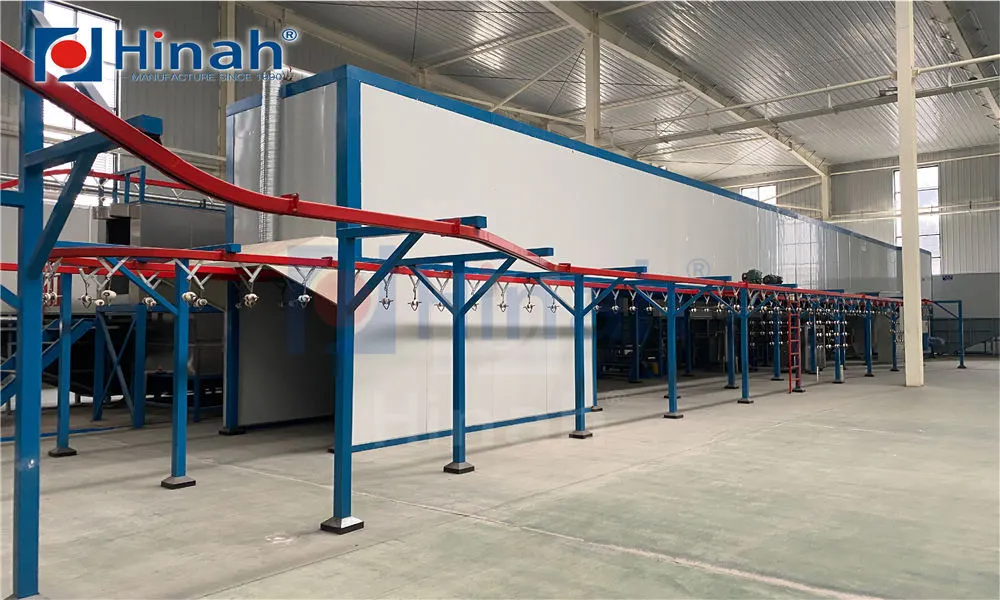
Unlike manual booths that rely on operator skill, automated systems integrate reciprocators, high-efficiency cyclone recovery units, and predictive curing ovens. The architecture is built on three pillars: application precision, material recovery, and thermal uniformity.
Modern automated lines utilize CNC-controlled reciprocators equipped with high-speed oscillating drives. The key metric here is transfer efficiency (TE). While manual spraying typically achieves TE rates between 40% and 60%, automated systems utilizing electrostatic field optimization and part recognition software consistently achieve 75% to 85% TE. This is achieved through:
3D Laser Profiling: Sensors map the geometry of each hanging part, adjusting gun trajectories and KV/µA settings in real-time to avoid the Faraday cage effect on recessed areas.
Density Feedback Loops: Closed-loop powder feed centers that maintain a constant cloud density irrespective of hopper levels, ensuring film build consistency within ±5 microns.
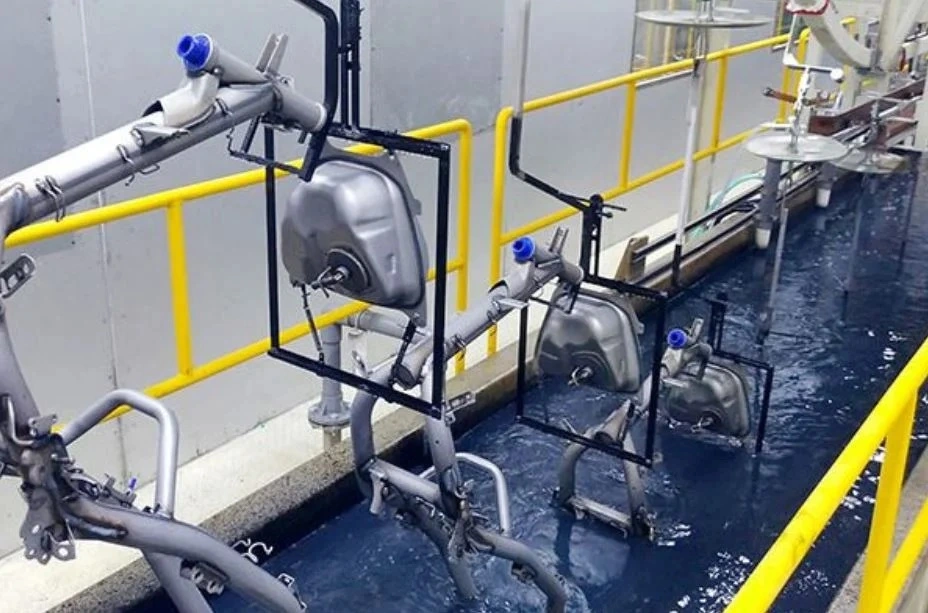
Multi-Axis Robotics: For complex geometries (e.g., automotive wheels or agricultural equipment), 6-axis articulated robots provide the angular flexibility necessary to coat intricate cavities without manual touch-up.
Material waste is the single largest variable cost in powder coating operations. Automated powder coating lines equipped with high-efficiency cyclone separators and cartridge filter systems reclaim up to 98% of overspray. The critical technical advancement here is the "color change" cycle. Traditional lines faced downtime of 45–90 minutes per color change. Modern automated booths utilize:
Rapid Color Change Modules: Automated purge sequences that clean feed hoses, pumps, and guns in under 90 seconds.
Integrated Sieving: Post-recovery sieving systems (vibratory or ultrasonic) that remove agglomerates and contaminants before reintroducing reclaimed powder to the feed center, maintaining first-pass yield.
For manufacturers running high-mix, low-volume production, this automation translates directly to increased OEE (Overall Equipment Effectiveness). A case study from a Midwest agricultural implement manufacturer documented a 32% reduction in material costs after switching to an automated cyclone recovery system, with payback achieved in 11 months.
The decision to invest in automated powder coating infrastructure is typically driven by three critical pain points: labor dependency, quality inconsistency, and energy inefficiency in curing.
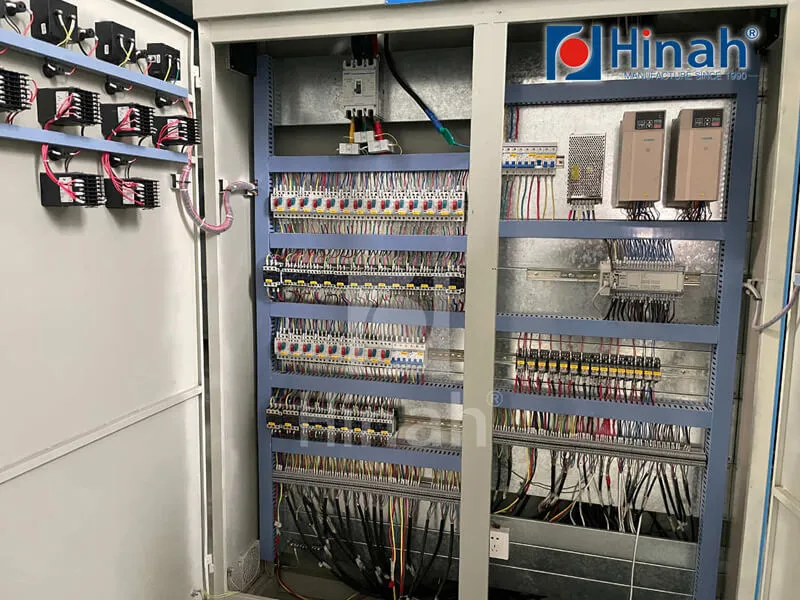
The finishing industry faces a generational skills gap. Manual coating requires years of training to achieve muscle memory for consistent film thickness and pattern overlap. Automation eliminates this variable. By integrating programmable logic controllers (PLCs) with recipe management, a single technician can oversee multiple lines. Moreover, automated systems reduce ergonomic injuries associated with repetitive spraying, lowering workers' compensation claims and improving workforce retention.
In manual operations, rework rates of 8–12% are considered "acceptable" in many mid-tier shops. In automated lines utilizing vision systems and consistent applicator parameters, first-pass yield typically exceeds 95%. The technical reasoning lies in environmental control. Automated booths integrate:
Climate Control Integration: Maintaining booth humidity below 60% RH to prevent moisture-induced powder clumping.
Automated Conveyor Indexing: Ensuring consistent part spacing to avoid electrostatic interference between adjacent parts, a common source of back ionization defects.
Furthermore, automated curing ovens with zone temperature profiling (e.g., IR pre-gel followed by convection cure) ensure that the thermoset polymers achieve full cross-linking without under-cure (poor adhesion) or over-cure (color fade/brittleness).
When calculating return on investment for an automated powder coating system, it is essential to move beyond the simplistic "labor reduction" model. A comprehensive financial model includes:
Material Savings: With TE increasing from 50% to 80%, a facility consuming 50,000 kg of powder annually at $8/kg saves approximately $120,000 per year.
Energy Reduction: Automated curing ovens equipped with variable frequency drives (VFDs) and predictive heating cycles reduce natural gas/electricity consumption by 15–25% compared to manually operated ovens that maintain constant peak temperature regardless of load.
Scrap Reduction: Reducing rework from 10% to 3% on a production volume of 1 million parts annually saves not just material, but also the labor and energy associated with stripping and recoating.
HANNA has documented that clients implementing fully integrated automated powder coating lines typically see a capital payback period between 18 and 24 months, with lifecycle cost savings extending into the millions over a decade of operation.
The versatility of modern automated systems allows for deployment across diverse industrial sectors, each with unique technical requirements.
For profiles up to 40 feet, automated longitudinal reciprocators combined with multi-gun arrays ensure uniform coating on complex cross-sections. The Qualicoat standard demands consistency in gloss and thickness; automation ensures that certification is maintained batch after batch.
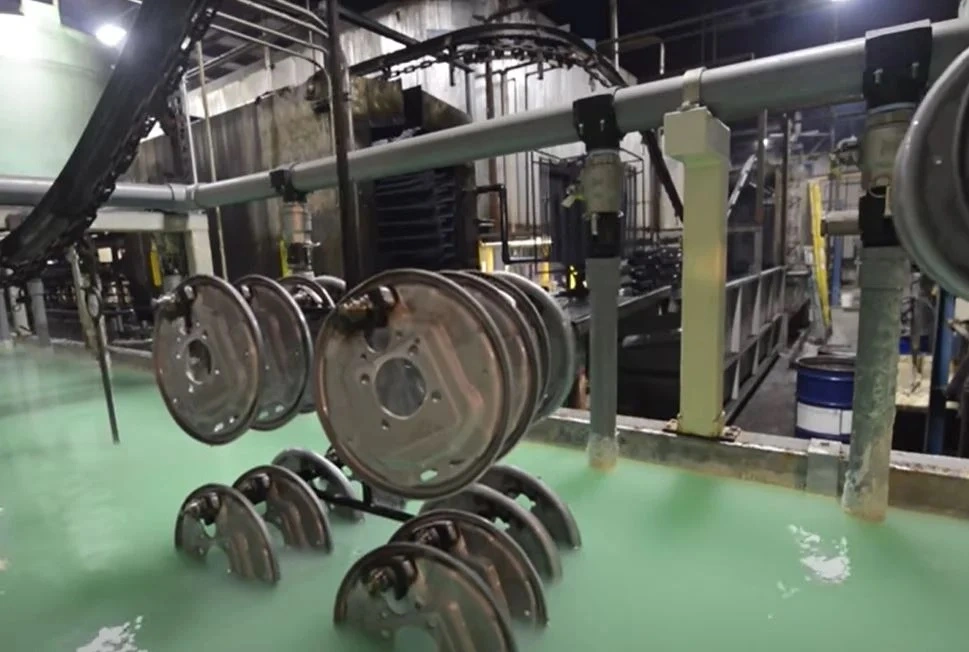
From wheels to underbody components, the automotive sector demands traceability. Automated systems are now integrated with Manufacturing Execution Systems (MES) to log parameters for every part—critical for OEM compliance and warranty reduction.
For parts weighing up to 5 tons, heavy-duty conveyors and robotic arms with extended reach allow for automated coating without the safety risks associated with manual spraying in confined spaces. The ability to apply TGIC-free or super-durable polyester powders via automation ensures corrosion resistance in harsh environments (C5-M classifications).
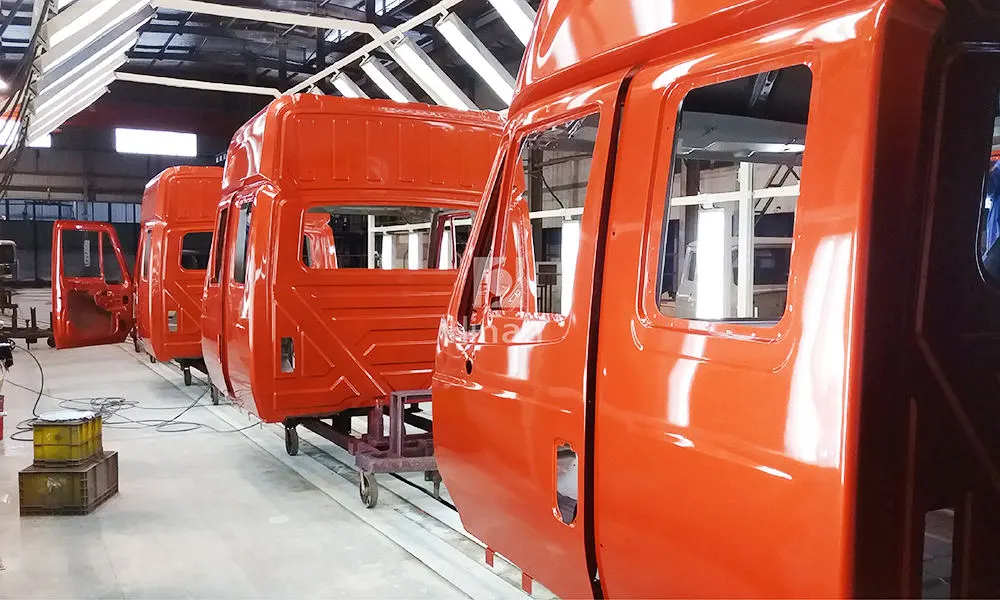
The next frontier in automated powder coating lies in predictive analytics. Sensors on gun tips, booth airflows, and oven burners now feed data into cloud-based platforms. This allows for:
Predictive Maintenance: Algorithms detect voltage decay in generators or clogging in filters before a line stoppage occurs.
Real-Time Film Build Monitoring: Non-contact laser thickness gauges placed post-cure provide feedback loops that automatically adjust applicator parameters, ensuring conformity to ISO 12944 or SSPC standards without manual QC delays.
Companies like HANNA are at the forefront of this integration, offering turnkey solutions where the mechanical infrastructure (booths, ovens, conveyors) is harmonized with software platforms. Their approach ensures that the transition to automation does not create data silos but rather unifies the finishing line into a cohesive, measurable asset within the smart factory ecosystem.
In conclusion, the adoption of automated powder coating is a strategic decision that transcends operational efficiency. It is a commitment to quality consistency, environmental stewardship (through reduced waste and energy consumption), and scalability. As coating technologies evolve toward low-temperature cures and ultra-thin film formulations, automation will be the only viable method to maintain the precision these advanced materials demand. For manufacturers aiming to secure their competitive advantage in the next decade, the path is clear: automate, optimize, and integrate.
Q1: What is the typical film thickness variation in an automated powder coating system compared to manual spraying?
A1: Manual spraying typically yields a film thickness variation of ±15–25 microns, often leading to "orange peel" or excessive material usage. In contrast, a properly calibrated automated powder coating line utilizing closed-loop feedback and precision applicators achieves film build consistency within ±3 to ±5 microns. This uniformity ensures optimal mechanical properties and reduces the risk of out-of-specification rejects.
Q2: How does automation handle the "Faraday cage" effect on complex parts with deep recesses?
A2: Advanced automated systems combat the Faraday cage issue through two methods: first, by utilizing multi-axis robotic arms that approach recessed areas at optimal angles (often 45–60 degrees) rather than perpendicularly; second, by integrating high-voltage control systems that modulate the electrostatic charge based on distance. Some systems also employ triboelectric charging guns in specific zones, which are less susceptible to back ionization in recessed geometries.
Q3: What are the infrastructure requirements for retrofitting an automated powder coating line into an existing facility?
A3: Retrofitting requires a detailed audit of three core areas: 1) Conveyor system load capacity and tracking accuracy—automation requires consistent part indexing; 2) Electrical infrastructure—robotics and PLCs require clean power with minimal harmonic distortion; 3) Booth footprint—automated systems often require larger booths to accommodate reciprocator travel and safe maintenance access. Specialists like HANNA provide modular systems that can be integrated with existing curing ovens to minimize downtime during transition.
Q4: Can an automated powder coating line effectively handle short runs and frequent color changes?
A4: Yes. Modern automated lines are specifically designed for high-mix, low-volume scenarios. Rapid color change booths utilize "box-in-box" design principles where the powder feed center, guns, and recovery system are isolated. With automated purge sequences, color changes can be completed in under 2–3 minutes, compared to 30–60 minutes for manual booths. This allows manufacturers to run batches as small as 50 parts economically.
Q5: What is the measurable impact on energy consumption when upgrading to an automated curing oven?
A5: Automated ovens equipped with modulating burners and zone-specific thermocouples reduce energy consumption by 18–25% on average. The savings come from: (a) reducing idle temperature setpoints during conveyor gaps; (b) using infrared pre-heat zones to shorten the overall dwell time; and (c) implementing predictive algorithms that adjust airflow based on part mass. For a medium-sized line operating two shifts, this translates to annual energy savings of $25,000–$45,000 depending on regional utility rates.
For engineering consultation or to simulate ROI projections for your specific finishing line, visit HANNA’s industrial solutions portal to access detailed technical specifications and case studies on high-efficiency automated powder coating systems.