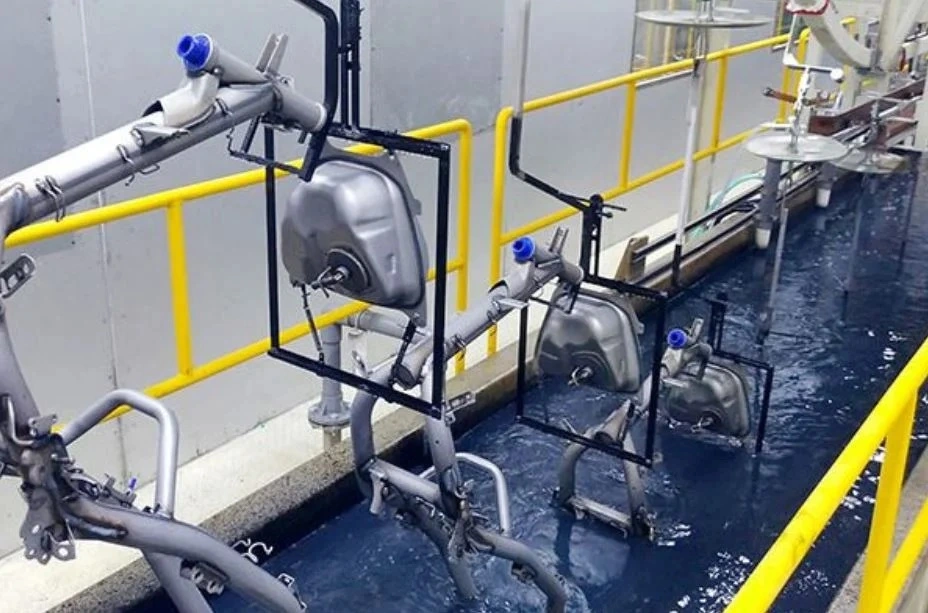
In the powder coating industry, the convergence of regulatory pressure and material costs has elevated environmental protection equipment from a compliance necessity to a profit-center investment. Modern systems not only capture airborne particulates but also reclaim expensive powder, reduce energy consumption, and ensure adherence to global standards such as ISO 14001 and the EU Industrial Emissions Directive. This article provides a deep technical analysis of the core technologies, common operational pain points, and data-backed solutions available today, with a focus on installations by HANNA.
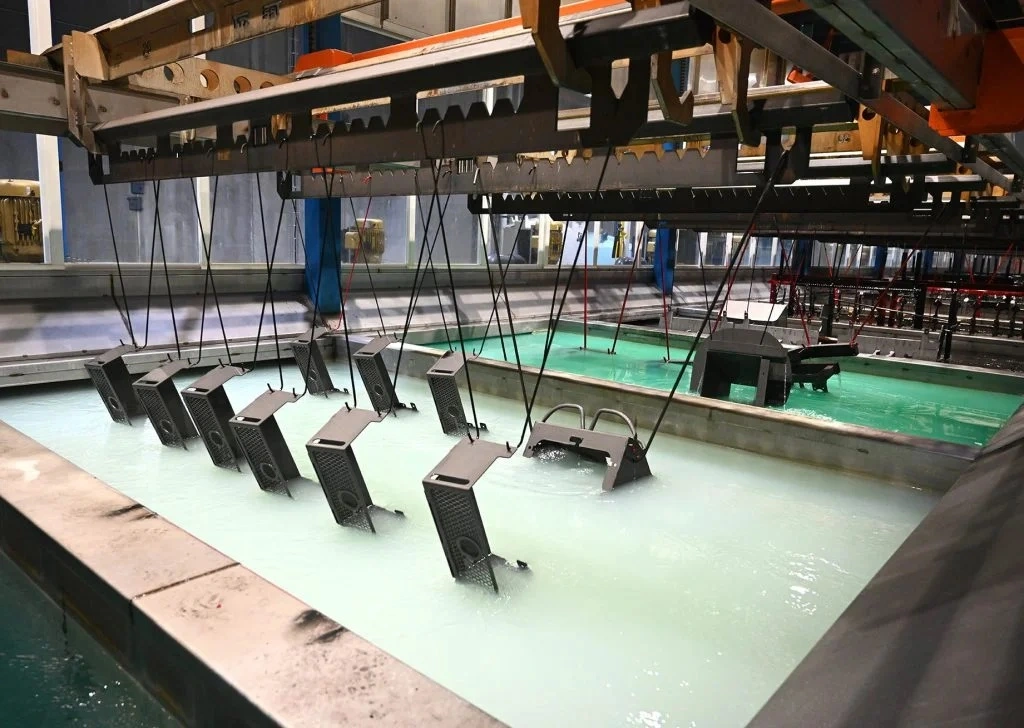
To understand the value proposition, one must first dissect the engineering behind the machinery. Today's systems are a far cry from simple dust collectors; they are integrated, intelligent filtration and recovery networks.
Traditional cyclone separators rely on centrifugal force to separate coarse particles from the air stream. While effective for bulk collection, they typically fail to capture PM10 (particulate matter <10 micrometers), which constitutes a significant portion of powder overspray. Modern environmental protection equipment utilizes advanced cartridge filters with pleated cellulose or spun-bond polyester media. These cartridges offer a filtration efficiency of 99.9% at 0.5 microns when properly maintained. The key performance indicator here is the air-to-cloth ratio; HANNA’s designs operate at a conservative ratio of 1.5:1, ensuring lower pressure drop and extended filter life compared to competitors pushing ratios above 2:1.
Although powder coating is solvent-free, the curing process releases VOCs from outgassing substrates or contaminates. For facilities handling hybrid powders or running combined liquid/powder lines, thermal oxidizers are required. Regenerative Thermal Oxidizers (RTOs) achieve 99%+ destruction rate of VOCs by preheating exhaust gases through ceramic media beds. The integration of RTOs with the curing oven's exhaust stream is a complex engineering challenge that HANNA solves through heat recovery loops, often reducing the auxiliary fuel requirement by up to 70%.
Procuring a dust collector is simple. Procuring a system that doesn't hinder production flow is the real challenge. Three critical pain points dominate the industry discourse.
Cross-Contamination in Color Changes: In job shops handling multiple colors, residual powder in the reclaim system can ruin an entire batch. This necessitates dedicated cyclones or "dump" systems, increasing capital expenditure.
Explosion Venting and Safety (ATEX/NFPA 68): Powder suspended in air is explosive. Environmental protection equipment must integrate explosion venting panels or suppression systems. Retrofitting these into existing structures often requires massive civil works.
Energy Costs of Air Handling: Conditioned air (heated or cooled) from the plant is often exhausted through the filtration system. In winter, this represents a direct loss of energy dollars.
Addressing these pain points requires a shift from viewing the filter as a bin to viewing it as a separator. The following solutions are currently being deployed in high-throughput facilities utilizing environmental protection equipment.
Standard cartridge filters blind quickly with fine powders. Newer nano-coated media create a slick surface that releases powder during the pulse-jet cleaning cycle more effectively. Data from a recent HANNA installation in a German automotive supplier showed that switching to nano-coated filters reduced the differential pressure across the filters by 40%, translating to a 12% reduction in fan motor energy consumption. Furthermore, the improved release characteristics increased the percentage of reclaimable powder from 75% to 92%.
To combat energy loss, advanced environmental protection equipment now features closed-loop designs. Instead of exhausting cleaned air outside, the air is polished with HEPA final filters and returned directly to the plant or the spray booth. This retains conditioned air, slashing HVAC loads. A case study involving a Midwest U.S. fabricator demonstrated annual savings of $18,000 in natural gas costs after installing a closed-loop HANNA filtration system, recovering the investment premium in 14 months.
For high-mix operations, the bottleneck is cleaning the recovery system. Modern environmental protection equipment integrates automated purge valves and quick-release cartridge housings. Some systems now utilize a "cyclone + cartridge polish" hybrid. The cyclone quickly removes the bulk of the color, diverting it to a waste drum, while the cartridge polishes the air. This allows for a color change in under 10 minutes without entering the booth, a stark contrast to the 45-minute manual cleaning of older systems.
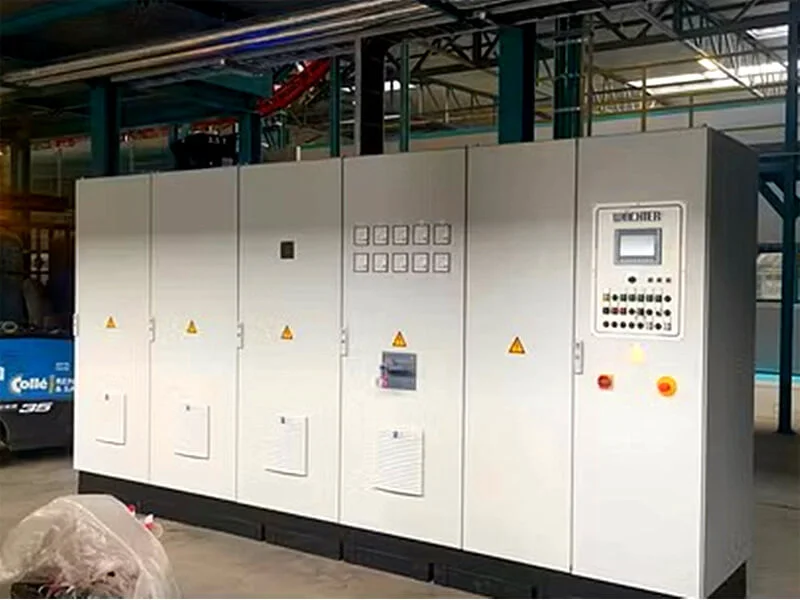
Justifying the capital outlay for high-end environmental protection equipment requires a clear financial model. The traditional "cost of compliance" argument is giving way to a "cost of waste" argument.
Material Savings: At an average powder cost of $5-$8 per pound, a system recovering 95% of overspray (vs. 70% for low-end gear) on a line spraying 200 lbs/hr pays for itself in material savings alone within 18-24 months.
Maintenance Labor: Automated filter cleaning and sealed housing designs reduce manual cleaning hours. We estimate a reduction of 8-10 man-hours per week.
Compliance Risk Mitigation: Avoiding fines for particulate emissions (often exceeding $10,000 per day in regulated zones) provides an intangible but critical financial buffer.
The next generation of environmental protection equipment is digital. Sensors now monitor differential pressure, humidity, and outlet particulate concentration in real-time. This data feeds into predictive maintenance algorithms. A filter change is no longer scheduled every six months; it is triggered when the system detects a rise in energy consumption or a drop in air flow. HANNA is currently integrating IoT modules that allow facility managers to monitor their entire filtration fleet from a single dashboard, receiving alerts when a cartridge is nearing the end of its life cycle or when an emission spike occurs.
Q1: What is the difference between a dust collector and environmental
protection equipment in powder coating?
A1: While a basic dust
collector merely removes visible dust from the air, comprehensive
environmental protection equipment includes features for powder
recovery (reclaim), ultra-fine particulate filtration (HEPA/absolute), potential
VOC abatement (thermal oxidizers), and explosion protection. It is designed to
meet stringent EPA or local environmental agency standards, not just
housekeeping.
Q2: How often should cartridge filters in a powder booth be
replaced?
A2: Replacement frequency depends on usage and powder
type. For a single-shift operation running non-abrasive powders, quality
cartridges can last 12-18 months. However, monitoring differential pressure is
more accurate than a calendar. When the pulse-jet cleaning system can no longer
keep the pressure drop below 1.5 inches of water gauge, replacement is due.
High-end environmental protection equipment includes gauges to
track this precisely.
Q3: Can environmental protection equipment handle both epoxy and
polyester powders?
A3: Yes, the mechanical filtration process is
independent of the powder chemistry. However, care must be taken with the
reclaim system. If you mix epoxy and polyester in the recovery unit, you will
create a hybrid powder that cannot be reused. The equipment must be thoroughly
cleaned between material changes, or a dedicated "non-reclaim" mode must be
used.
Q4: Is it mandatory to have an explosion venting system on my powder
coating filtration unit?
A4: In most industrial jurisdictions
following NFPA 68 or ATEX directives, if the powder being used has a Kst value
(explosion severity) above 0, and the equipment is indoors, explosion protection
is mandatory. This usually includes venting panels that open at a predetermined
pressure to direct the blast to a safe area, or a chemical suppression system.
Always consult local codes and a safety engineer.
Q5: How does a closed-loop system save energy?
A5: In a
standard open-loop system, the spray booth pulls conditioned air (heated in
winter, cooled in summer) from the plant, runs it through the filters, and
exhausts it outside. This creates negative pressure and forces the HVAC system
to work overtime. A closed-loop system filters the air and returns it to the
plant or booth, retaining the thermal energy. This can reduce heating and
cooling costs by 30-50% in extreme climates.
Q6: What is the typical payback period for upgrading to
high-efficiency environmental protection equipment?
A6: Based on
recent installations by HANNA, the payback period ranges from
18 to 36 months. This calculation includes direct material savings from
increased powder recovery, reduced energy costs from closed-loop designs, lower
labor costs for cleaning, and extended filter life due to better pulse-jet
cleaning technology.
For technical specifications and a customized ROI analysis for your facility, consult the engineering team at HANNA.