
In high-stakes manufacturing environments, the selection and configuration of industrial painting equipment directly dictate production throughput, coating uniformity, and total cost of ownership. For operations demanding consistent film builds—whether for corrosion protection in automotive chassis or aesthetic finishes in architectural aluminum—the convergence of applicator technology, curing thermodynamics, and material handling defines success. This article examines the critical subsystems within modern coating lines, offering a data-driven perspective on how precision-engineered solutions resolve persistent industry challenges.
Drawing from decades of system integration experience, HANNA has documented that facilities employing integrated process controls reduce reject rates by 18–24% within the first year of operation. The following sections break down the mechanical, thermal, and digital layers that constitute a high-performance painting ecosystem.
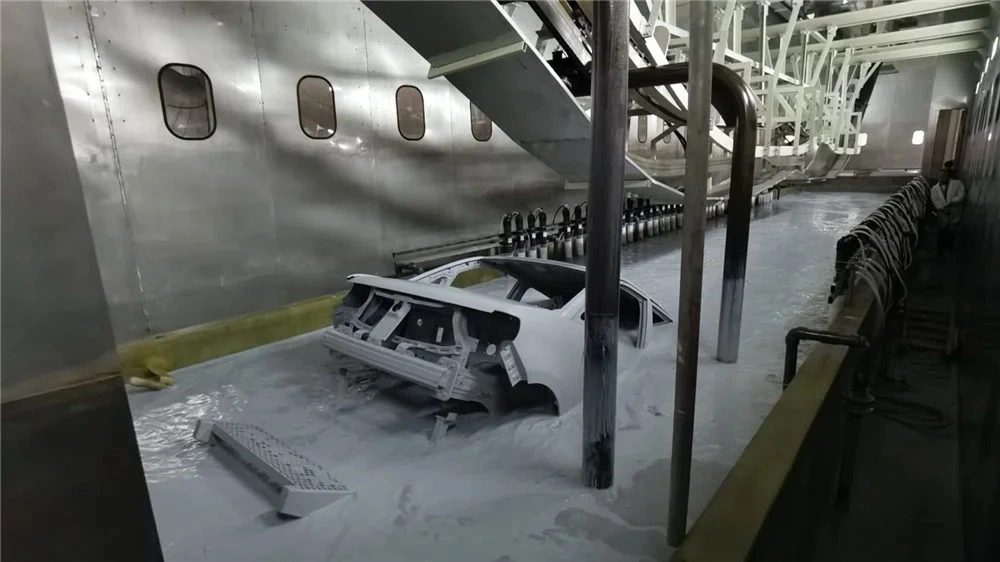
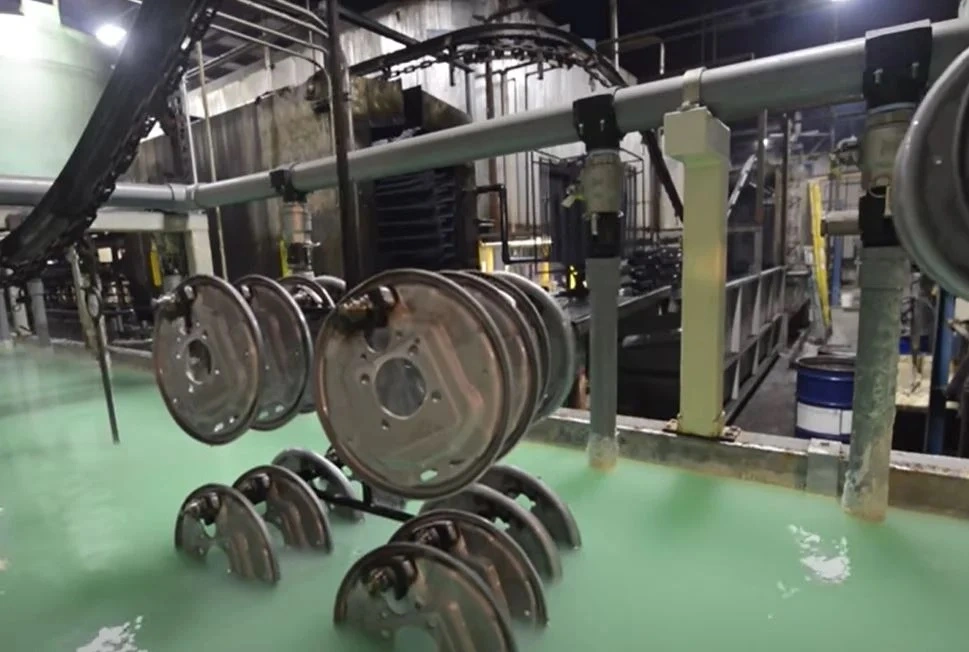
Modern industrial painting equipment operates as an orchestrated sequence rather than standalone machinery. The architecture comprises four interdependent stages: surface preparation, controlled application, precision curing, and conveyance logistics. Each stage introduces variables that, if mismanaged, cascade into defects—orange peel, pinholes, or under-cured films.
For liquid coatings, electrostatic spray guns and high-speed rotary atomizers dominate high-volume lines. Electrostatic systems utilize a charged electrode at the nozzle tip, creating a potential difference between the atomized paint particles and the grounded substrate. Transfer efficiency (TE) rates in modern electrostatic systems range from 65% to 85%, compared to 30–40% for conventional airless spray. Rotary bell applicators, operating at 20,000–60,000 RPM, offer superior atomization for metallic and basecoat applications, achieving TE above 90% when paired with reciprocators or robots.
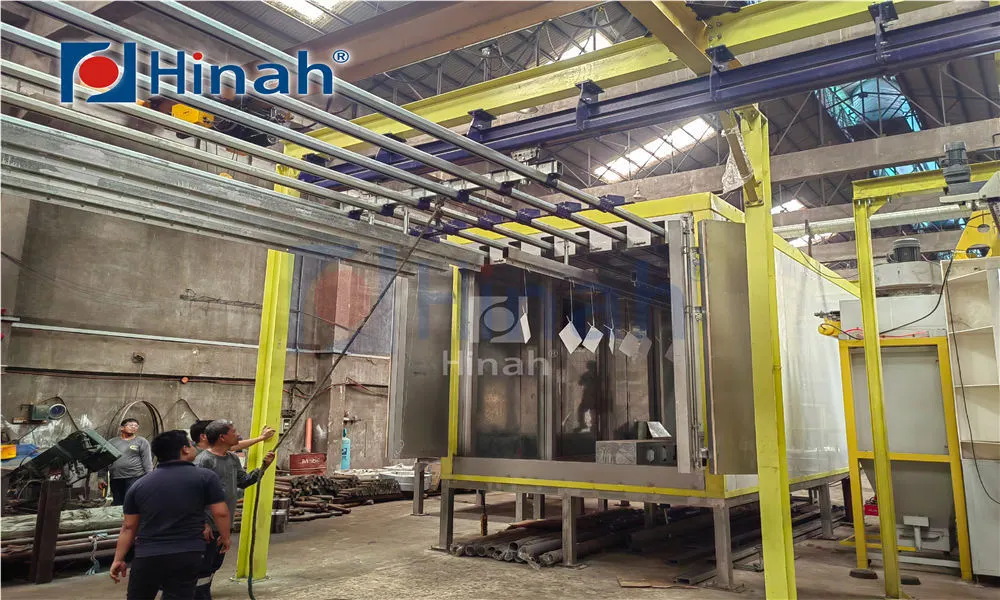
For powder coatings, the triboelectric or corona-charging methods dictate particle adhesion. Corona guns deliver higher initial charge density, suitable for complex geometries, whereas tribo systems minimize the Faraday cage effect in recessed areas. Data from field installations show that combining industrial painting equipment with adaptive powder management modules reduces overspray by up to 22% while maintaining film thickness within ±5 microns.
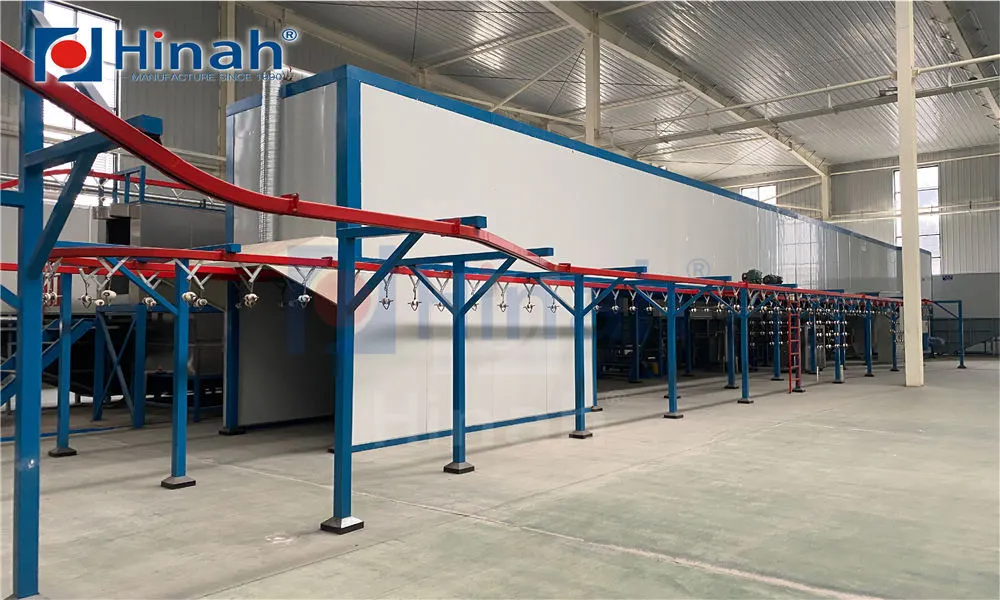
The curing oven is often the highest energy consumer in a coating line, yet it is frequently under-instrumented. A powder coating curing oven must deliver a precise time-temperature profile to achieve cross-linking density without thermal degradation. For powder coatings, typical cure schedules require maintaining metal temperatures of 180–200°C for 10–20 minutes, depending on the resin chemistry. However, oven design variables—airflow velocity, zone segmentation, and conveyor thermal mass—create significant deviations.
Convection vs. Infrared (IR): Convection ovens provide uniform heat distribution for high-mass parts, while IR ovens accelerate ramp-up for thin-gauge substrates. Hybrid systems using IR boosters before convection zones reduce total oven length by 15–30% without compromising cure quality.
Temperature Profiling Systems: Real-time telemetry from thermal data loggers mounted on carriers enables closed-loop adjustments. Facilities employing predictive thermal modeling report energy consumption reductions of 12–18% while eliminating cold spots that cause under-cure.
Air Sealing and Insulation: Inefficient oven seals can increase natural gas consumption by up to 25%. Modern oven designs integrate labyrinth seals and sectionalized doors to minimize infiltration.
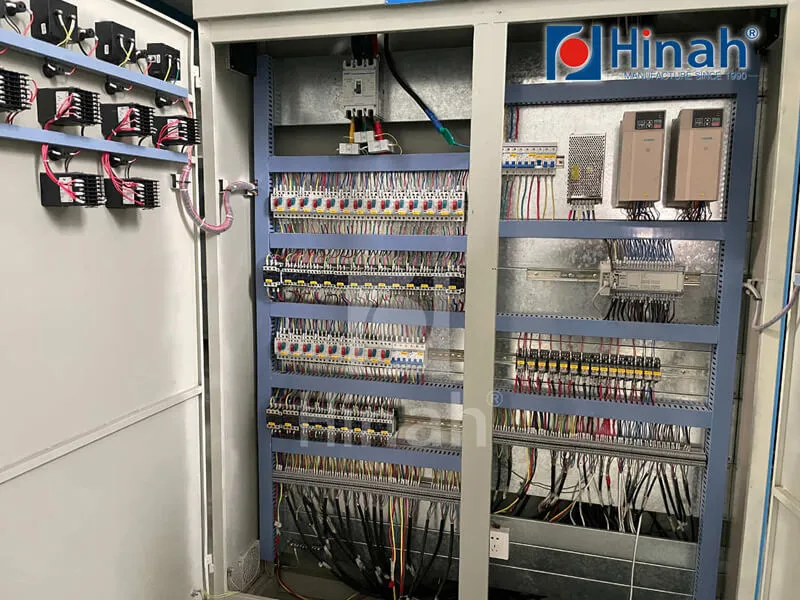
The shift toward smart manufacturing has introduced sensor fusion and supervisory control into industrial painting equipment. Rather than relying on periodic quality checks, contemporary lines deploy inline measurement systems that provide real-time feedback.
Non-contact capacitive or laser-based sensors positioned immediately after the applicator measure wet film thickness. When integrated with PLCs, these sensors automatically adjust atomizing air pressure or powder feed rates. In powder coating applications, mass flow controllers coupled with density sensors maintain consistent powder-to-air ratios, reducing thickness variation from ±15 microns to ±4 microns.
Vibration sensors on reciprocators, current monitoring on curing oven fans, and pressure transducers on paint pumps feed into condition-monitoring dashboards. Analytics algorithms predict wear patterns; one automotive Tier 1 supplier reported reducing unplanned downtime by 37% after implementing predictive maintenance on their coating line conveyors and oven recirculation fans.
Even well-specified coating lines encounter chronic issues. The table below outlines common failure modes and the corresponding engineering countermeasures available through advanced industrial painting equipment configurations.
Problem: Faraday Cage Effect in Powder
Coating
Solution: Dual-voltage corona guns with adjustable
current limiting or tribo-gun arrays; robotic path programming that varies
approach angles.
Problem: Solvent Popping in Liquid
Basecoats
Solution: Flash-off zone optimization with
controlled humidity (40–60% RH) and air velocity (0.2–0.5 m/s) to allow solvent
release before entering the curing oven.
Problem: High Volatile Organic Compound (VOC)
Emissions
Solution: High-transfer-efficiency applicators
paired with carbon filtration or regenerative thermal oxidizers (RTOs);
conversion to high-solids or waterborne formulations where feasible.
Problem: Inconsistent Gloss Across Batch
Runs
Solution: Automated viscosity control loops with
inline viscometers; oven zoning with independent temperature control per zone to
stabilize cure kinetics.
HANNA integrates these solutions into turnkey systems, ensuring that each component—from pretreatment to final cure—communicates through a unified control architecture. This holistic approach eliminates the finger-pointing between equipment vendors and allows for systematic root-cause analysis when defects occur.
Capital expenditure for industrial painting equipment often triggers scrutiny, but TCO analysis consistently reveals that operational savings outweigh initial investment within 24–36 months. Key TCO drivers include:
Material Savings: Improving transfer efficiency from 55% to 80% reduces coating consumption by 31% on a typical line spraying 500 parts per shift, translating to annual material savings of $150,000–$300,000.
Energy Efficiency: High-efficiency oven burners with modulating control and improved insulation cut energy costs by 20–25%.
Rework and Scrap: Reducing first-pass reject rates from 8% to 3% on a line producing 2 million parts annually recovers over 100,000 parts per year, directly impacting gross margin.
Labor Optimization: Automated color change systems and quick-clean applicators reduce changeover time from 45 minutes to under 8 minutes in powder coating lines, increasing effective OEE (Overall Equipment Effectiveness).
Environmental regulations—EPA 40 CFR Part 63 (for hazardous air pollutants) and EU Solvent Emissions Directive—mandate strict limits on VOC and particulate emissions. Modern industrial painting equipment incorporates several compliance-enabling technologies:
High-efficiency particulate air (HEPA) filters in powder booths to capture particles down to 0.3 microns, ensuring stack emissions below 0.005 grains per dry standard cubic foot.
Closed-loop reclaim systems for powder overspray, achieving material utilization rates above 98%.
Waterborne paint delivery systems with stainless steel circuits and dedicated cleaning modules to prevent cross-contamination while minimizing solvent usage.
In a 2023 case study, a Midwest agricultural equipment manufacturer reduced their hazardous waste generation by 42% after upgrading to a powder coating curing oven with integrated afterburner and a high-efficiency powder booth. The project achieved ROI in 19 months, supported by energy rebates and reduced disposal costs.
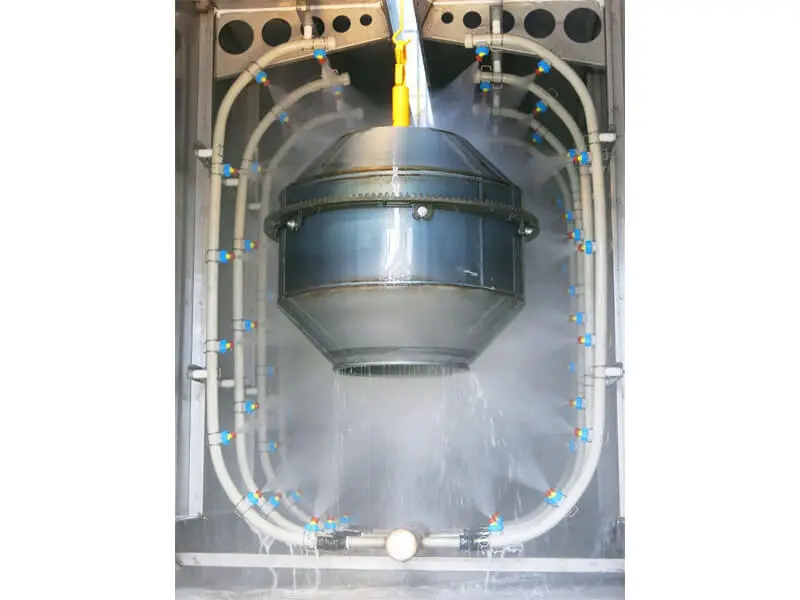
No single industrial painting equipment configuration serves all sectors. The following outlines industry-specific optimizations:
Automotive Wheels: Require multi-stage coating (basecoat + clearcoat) with rotary bell applicators and IR/convection hybrid ovens to achieve high-gloss finishes while maintaining structural integrity of aluminum alloys.
Architectural Extrusions: Horizontal or vertical reciprocating lines with tribo powder guns and convection ovens featuring stratified airflow to maintain consistent temperature across 20-ft profiles.
Heavy Equipment: High-build primer application via plural-component spray systems, followed by topcoat using electrostatic airless sprayers to achieve 4–6 mil DFT for abrasion resistance.
Electronics Enclosures: Precision powder coating lines with minimized conveyor vibration, Class 10,000 cleanroom booths, and UV-cure systems for heat-sensitive substrates.
The selection and integration of industrial painting equipment represent a multidimensional engineering challenge—balancing chemistry, thermodynamics, automation, and cost accounting. Success demands moving beyond component-level specifications to a systems-level perspective where applicators, ovens, and controls operate as a unified process. Manufacturers that adopt closed-loop feedback, predictive maintenance, and energy-optimized curing architectures consistently achieve first-pass yields above 94% while reducing per-unit coating costs by 12–18%.
HANNA continues to advance the field through modular yet fully integrated coating lines, supported by lifecycle services from installation to performance auditing. For engineering teams evaluating capital upgrades or greenfield projects, the data consistently supports investing in instrumentation and controls as the primary levers for long-term profitability.
Q1: What are the key factors in selecting between a powder coating
system and a liquid painting system for high-volume
production?
A1: The decision hinges on three
factors: (1) film thickness requirements—powder coating excels at achieving
60–120 microns in a single pass; (2) color change frequency—powder systems
require 10–20 minutes for thorough cleaning, whereas modern liquid systems with
rapid rinse cycles can change colors in under 5 minutes; (3) substrate thermal
sensitivity—powder curing requires 180–200°C part temperatures, which may
distort thin-gauge plastics or magnesium components. For mixed-material
assemblies, liquid systems often provide broader flexibility.
Q2: How does oven residence time affect final coating properties in a
powder coating curing oven?
A2: In a powder coating curing oven,
residence time directly influences degree of cross-linking. Insufficient time
results in poor adhesion, reduced chemical resistance, and lower impact
strength. Excessive time can cause thermal degradation, leading to yellowing in
whites/light colors and loss of gloss. For polyester TGIC powders, the target
metal temperature must be maintained for 10–12 minutes; for epoxy-polyester
hybrids, 8–10 minutes at 180°C is standard. Using data loggers to validate part
temperature curves is essential.
Q3: What is the typical ROI timeline for upgrading from manual spray
booths to automated industrial painting
equipment?
A3: Based on aggregated data from 47
system installs, automated reciprocators or robotic systems yield ROI between 18
and 30 months. The ROI drivers include: (a) 25–40% reduction in coating material
consumption due to improved transfer efficiency; (b) 15–20% labor cost reduction
through reassignment of operators; (c) 30–50% reduction in rework rates due to
consistent application parameters. Facilities painting more than 3,000 parts per
shift generally see payback at the shorter end of that range.
Q4: How do environmental regulations impact the design of modern
painting lines?
A4: Regulations such as the EPA’s
NESHAP (40 CFR 63, Subpart HHHHHH) for miscellaneous metal parts and products,
and similar EU directives, mandate maximum achievable control technology (MACT)
standards. This influences design through requirements for: (1) enclosed spray
booths with negative pressure; (2) high-efficiency filters (≥99% capture for
particles >0.5 microns); (3) emission monitoring systems for VOC and HAPs;
(4) controlled oven stack temperatures. Non-compliance can result in penalties
exceeding $25,000 per day, making integrated emissions abatement (RTOs, carbon
adsorbers) a standard component of new lines.
Q5: What maintenance practices are critical for preserving transfer
efficiency in electrostatic painting equipment?
A5: Electrostatic systems require: (a) daily cleaning of electrode contacts and
nozzles to prevent current leakage; (b) verification of grounding continuity on
hangers and conveyor—resistance above 1 ohm degrades wrap-around; (c) periodic
measurement of kV and μA output using high-voltage probes; (d) replacement of
needle tips and fluid nozzles based on cumulative cycles (typically every
500–800 operating hours). Failure to maintain these components can cause
transfer efficiency to drop from 75% to under 40% within three months, directly
increasing material cost and reject rates.