
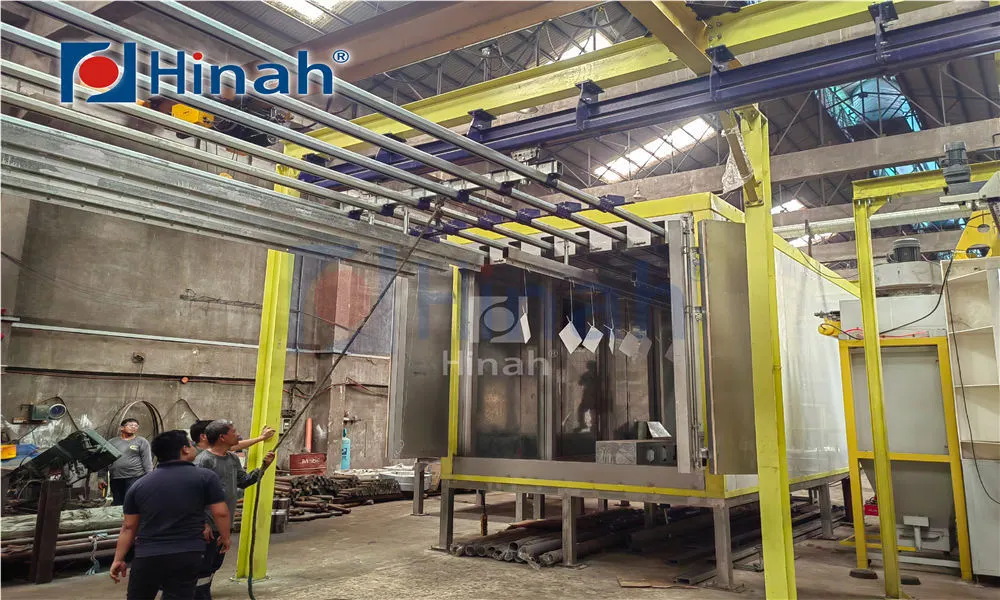
Selecting among powder coating equipment suppliers involves far more than comparing booth sizes or gun voltages. For manufacturing operations where coating quality directly affects corrosion resistance, aesthetics, and warranty claims, the decision determines throughput stability, material efficiency, and total cost of ownership for the next decade. This article provides a framework rooted in process engineering, examining how suppliers differentiate through application science, oven thermodynamics, reclaim system architecture, and digital integration.
HANNA has engineered turnkey coating lines across automotive, architectural, and industrial segments, consistently observing that the most successful installations prioritize technical depth in supplier selection over initial capital cost alone. The following sections outline the critical evaluation criteria that separate component assemblers from true system integrators.
Many powder coating equipment suppliers offer standalone components—spray guns, recovery modules, curing ovens—but lack the engineering capability to optimize their interaction. A coating line is a thermodynamic and electrostatic system, not a collection of parts. When a supplier treats each element independently, common failures emerge: powder feed inconsistencies due to undersized reclaim cyclones, temperature gradients from poorly positioned oven nozzles, or transfer efficiency degradation from mismatched gun-to-reciprocator geometry.
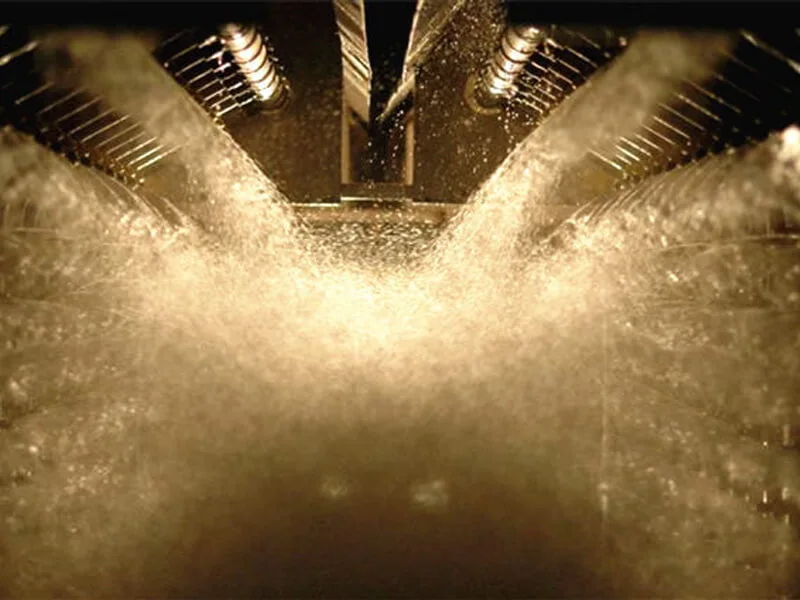
Modern powder application demands precision in charge delivery. Corona guns, the industry standard, utilize a high-voltage electrode to ionize air, charging particles as they exit the nozzle. However, uncontrolled current can lead to back-ionization—a phenomenon where accumulated charge repels incoming powder, causing orange peel or pinhole defects. Advanced powder coating equipment suppliers incorporate current-limiting circuits and adjustable kV/μA curves. Field data shows that adaptive voltage controls reduce film thickness variation from ±18 microns to ±5 microns on complex geometries, directly lowering material consumption by 12–15%.
Triboelectric guns offer an alternative for Faraday cage applications, relying on friction charging without external electrodes. A competent supplier will provide both technologies and guide selection based on part geometry, powder chemistry, and required film builds rather than defaulting to a single platform.
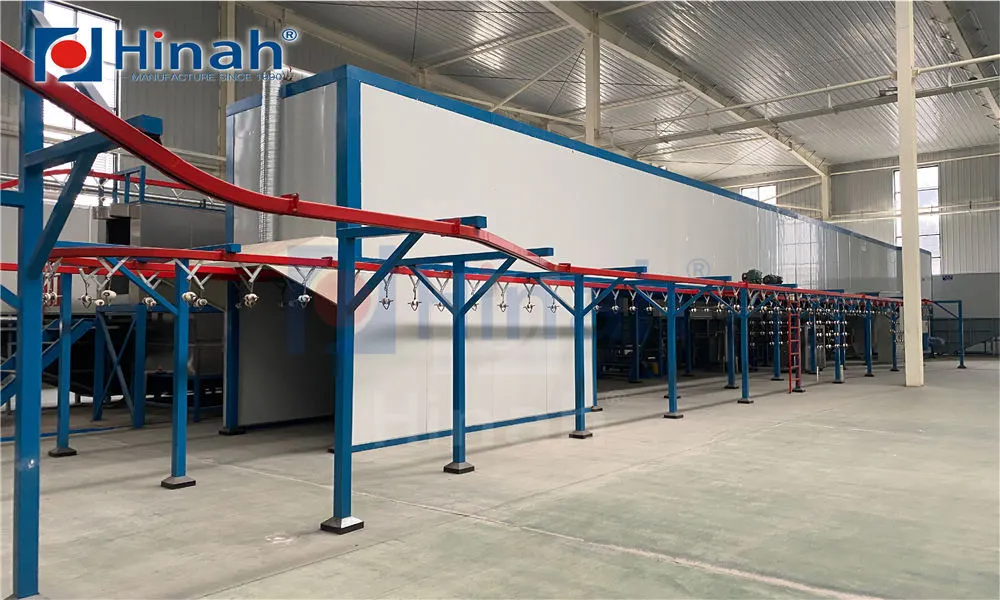
The curing oven represents 40–55% of a powder coating line’s energy consumption, yet it is often the least scrutinized component during supplier evaluation. High-quality powder coating equipment suppliers provide detailed computational fluid dynamics (CFD) analysis for oven airflow, ensuring velocity uniformity across the part cross-section. Without this, zones of low airflow create under-cured sections, while high-velocity jets can disturb powder before gelation.
Convection Oven Design: Recirculation rates should exceed 12 air changes per minute to maintain temperature homogeneity. Suppliers that offer sectionalized zones with independent temperature and airflow control enable precise cure profiles for mixed-product lines.
Infrared (IR) Integration: IR boosters positioned before convection zones reduce ramp time for heavy-gauge parts. For substrates with varying thermal mass, zoning with medium-wave and short-wave IR emitters allows targeted heating without overshooting temperature-sensitive areas.
Data-Logging Requirements: Reputable suppliers include or specify thermocouple-equipped rack systems for validating part temperature curves during commissioning. Cure schedules must be verified against powder technical data sheets (TDS), not merely oven setpoints.
Energy efficiency metrics differentiate suppliers. Oven shell construction with 4-inch mineral wool insulation, modulating gas burners, and automated damper control can reduce natural gas consumption by 20–28% compared to entry-level designs. Over a 10-year horizon, this difference often exceeds the initial equipment premium.
Powder overspray management directly impacts operational cost. Cyclone and cartridge filter systems each offer distinct advantages. Cyclone separators achieve 95–98% recovery efficiency for coarse powders but struggle with fines (particles <10 microns), which can alter powder chemistry if reintroduced without filtration. Cartridge systems capture fines effectively but require pulse-cleaning optimization to maintain pressure drop below 1.5 inches water column.
Sophisticated powder coating equipment suppliers implement multi-stage reclaim with sieve screens (typically 100–140 mesh) to remove agglomerates, ensuring recycled powder maintains particle size distribution within ±10% of virgin material. Color-change time is another critical metric. For suppliers offering modular booth designs with quick-release cartridge banks and sweep-down conveyors, changeovers can be reduced from 45 minutes to under 12 minutes, boosting overall equipment effectiveness (OEE) for job-shop operations.
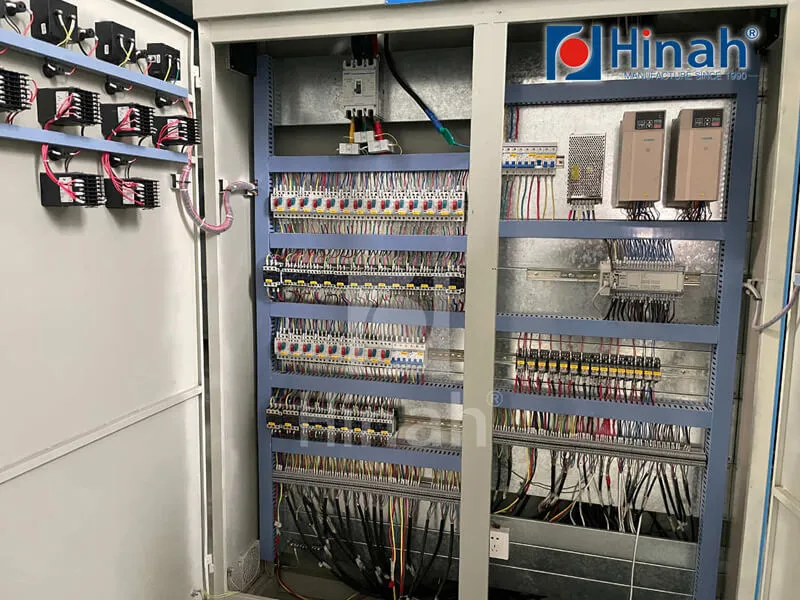
Digitalization separates commodity suppliers from engineering partners. The most capable powder coating equipment suppliers embed supervisory control and data acquisition (SCADA) systems that monitor and log key process variables (KPVs): gun kV/μA, powder output (g/min), booth pressure differentials, oven zone temperatures, and conveyor speed. This data enables:
Closed-Loop Film Thickness Control: Non-contact sensors positioned post-application measure film thickness and automatically adjust powder feed rates or gun trajectories.
Predictive Maintenance Alerts: Vibration sensors on fan bearings, pressure transducers on pulse-jet systems, and current monitoring on conveyor drives trigger service notifications before failures occur.
Traceability: Batch-level data logging links coating parameters to finished part quality, supporting ISO 9001 and automotive IATF 16949 requirements.
In a 2024 installation at a Midwest agricultural equipment manufacturer, a fully integrated system from HANNA reduced first-pass reject rates from 7.2% to 2.1% within six months, attributed primarily to closed-loop powder flow control and real-time oven profiling.
Chronic problems in powder coating lines often trace back to inadequate supplier engineering. The table below outlines common issues and the technical capabilities required from powder coating equipment suppliers to resolve them.
Pain Point: Faraday Cage Penetration in Deep
Recesses
Solution: Suppliers must offer guns with
adjustable current (≤20 μA) or tribo options, plus robotic path programming that
varies approach angles and standoff distances.
Pain Point: Orange Peel from Over-Curing or Incorrect
Flow
Solution: Oven zoning with ±3°C accuracy and
part-temperature tracking; suppliers providing cure simulation software during
design phase.
Pain Point: Inconsistent Film Build on Hanging
Parts
Solution: Reciprocator stroke programming with
variable speed zones; supplier-provided simulation of electrostatic field
distribution using finite element analysis (FEA).
Pain Point: High Powder Carry-Out to Exhaust
Filters
Solution: Booth airflow design with velocity
profiling (typically 60–80 fpm face velocity) and plenum balancing to minimize
turbulence that strips powder from parts.
Capital cost for a powder coating system typically accounts for only 20–30% of total lifecycle expenditure. The remaining 70–80% comprises material consumption, energy, maintenance, and rework. Competent powder coating equipment suppliers provide detailed lifecycle cost models that project:
Material Utilization: Systems with transfer efficiency ≥85% and reclaim efficiency ≥95% reduce powder purchases by 18–25% annually.
Energy Intensity: High-efficiency oven designs lower BTU per pound of processed parts; suppliers should provide guaranteed energy consumption figures based on part throughput and thermal mass.
Maintenance Intervals: Components such as gun power supplies, oven recirculation motors, and conveyor drives should have documented MTBF (mean time between failures). Suppliers that publish MTBF data demonstrate confidence in their engineering.
When evaluating powder coating equipment suppliers, request references for similar applications and, where possible, visit operational lines. Observe not only the equipment but also the supplier’s post-installation support—spare parts availability, remote diagnostics response times, and field service engineer competency.
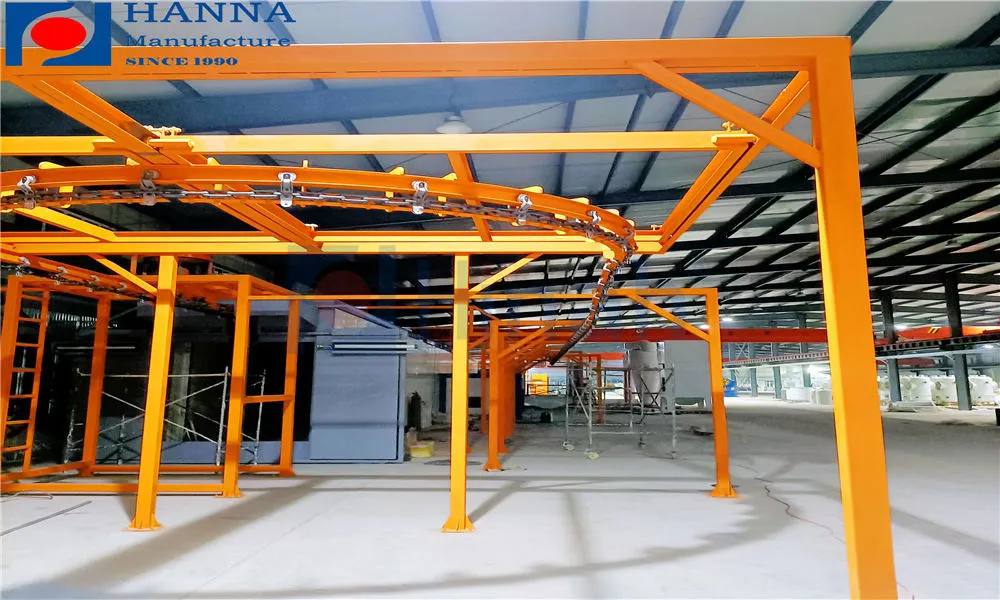
Different industries demand specialized configurations. Suppliers with deep sector expertise tailor designs accordingly:
Automotive Alloy Wheels: Require high-speed reciprocators (up to 2.5 m/s) and curing ovens with rapid ramp capability to prevent flow defects on clearcoats.
Architectural Extrusions (AAMA 2604/2605): Horizontal or vertical lines with tribo guns and curing ovens featuring stratified airflow to maintain profile temperature uniformity within ±5°C over 24-foot lengths.
Heavy Equipment (Construction, Agriculture): High-film-build applications (3–6 mils) with multi-gun arrays and robust reclaim systems designed for high-overspray conditions.
Medical/Electronics Enclosures: Class 10,000 cleanroom-compatible booths with HEPA filtration and curing systems validated for zero outgassing or biocompatibility requirements.
Even the best individual components underperform when integration is fragmented. A supplier that offers a unified control platform—where booth, oven, conveyor, and powder management systems communicate through a single human-machine interface (HMI)—simplifies troubleshooting and reduces training overhead. Powder coating equipment suppliers that provide turnkey integration assume single-point responsibility, eliminating the coordination gaps that often delay commissioning and erode line performance.
HANNA exemplifies this integrated approach, combining electrostatic applicators, custom-engineered ovens, and proprietary control software into systems that achieve first-pass yields exceeding 94% across diverse manufacturing environments. The company’s lifecycle support includes operator training, remote performance monitoring, and annual process audits to sustain efficiency gains.
The choice of powder coating equipment suppliers fundamentally shapes a manufacturer’s ability to control coating cost, consistency, and compliance. Organizations that prioritize technical depth—evaluating suppliers on application science, thermal engineering, digital integration, and documented lifecycle data—consistently achieve lower total cost and higher operational agility. As coating lines become increasingly integrated with factory-wide digital systems, the supplier’s role evolves from equipment vendor to long-term process partner.
Q1: What technical documentation should I request when evaluating
powder coating equipment suppliers?
A1: Request the
following: (1) CFD reports for oven airflow uniformity; (2) electrostatic field
simulations for Faraday cage coverage; (3) certified material utilization
studies from similar installations; (4) MTBF data for key components (guns,
power supplies, conveyor drives); (5) detailed electrical and compressed air
consumption estimates. Suppliers unable to provide these often lack engineering
depth.
Q2: How do I verify a supplier’s claimed transfer efficiency (TE) for
powder coating systems?
A2: Transfer efficiency
claims should be validated through part-specific testing. A rigorous method
involves weighing parts before and after coating over a defined period,
measuring powder consumption, and calculating TE = (powder deposited / powder
consumed) × 100%. Independent third-party audits or witnessed testing at a
supplier’s lab are recommended. Reputable suppliers guarantee TE in the contract
with specific part geometry conditions.
Q3: What is the typical payback period for upgrading to a
high-efficiency powder coating curing oven?
A3: Based on data from 30+ retrofits, upgrading from a standard convection oven to a
high-efficiency design with modulating burners, enhanced insulation, and zone
control yields payback between 18 and 30 months. The primary drivers are natural
gas savings (20–28%), reduced scrap from better cure uniformity (3–7% reduction
in reject rates), and lower maintenance costs. Facilities running two shifts or
more typically see shorter payback.
Q4: How do powder coating equipment suppliers accommodate frequent
color changes in high-mix operations?
A4: Suppliers
address color-change frequency through: (a) quick-change cartridge filter
modules with sweep-down conveyors; (b) mobile powder feed centers that can be
pre-loaded with different colors; (c) automated purge sequences that clean hoses
and guns in under 5 minutes. For operations with more than four color changes
per shift, suppliers often recommend multiple booths or a single booth with
parallel feed centers to minimize downtime.
Q5: What are the critical questions to ask during a supplier
reference call?
A5: Focus on: (1) “Did the system
achieve guaranteed transfer efficiency and energy consumption targets?” (2) “How
responsive was the supplier’s service team for troubleshooting?” (3) “What was
the actual color-change time versus promised?” (4) “Were spare parts available
for critical components?” (5) “Did the supplier’s commissioning team provide
adequate operator training?” Reference calls that yield specific quantitative
answers (e.g., “TE hit 87% after tuning”) are more valuable than qualitative
statements.