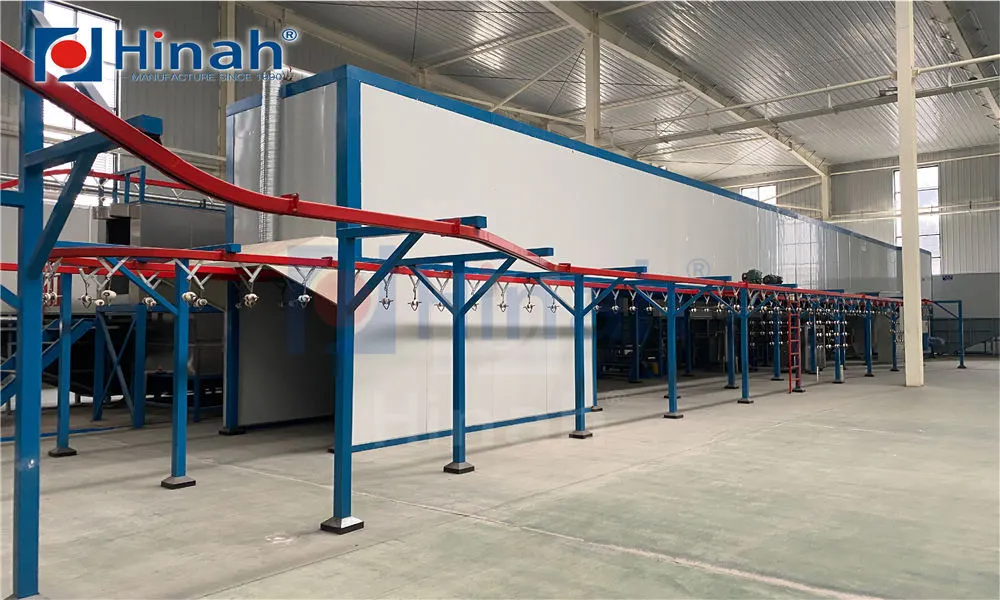

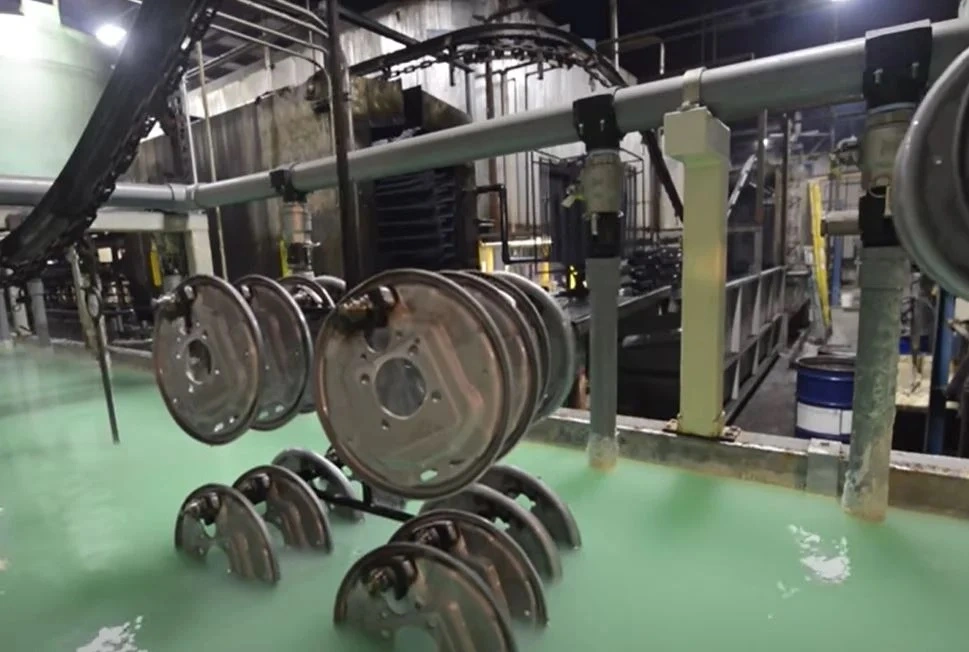

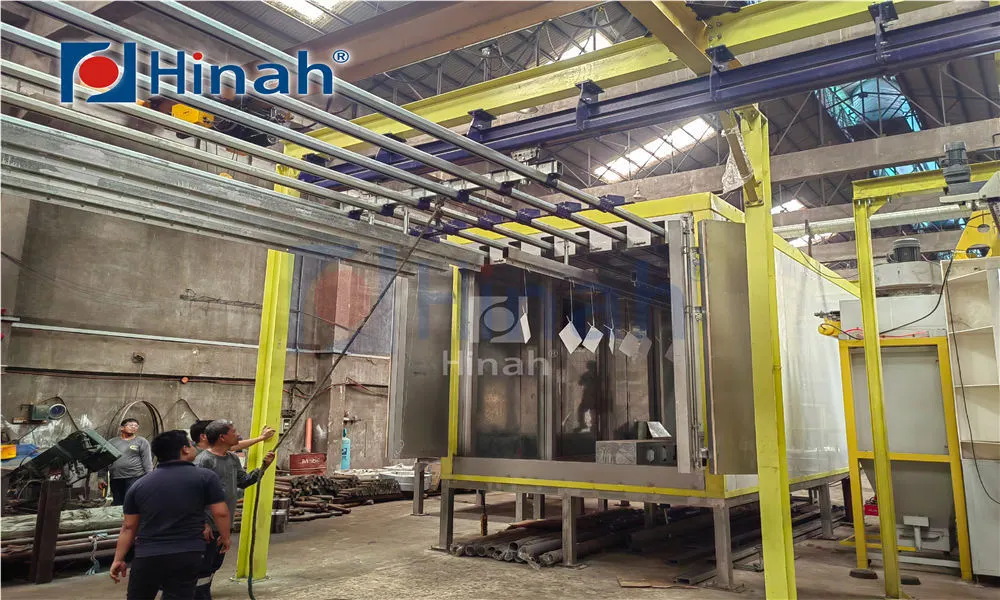
In industrial powder coating operations, the conveyor system is far more than a material handling asset—it functions as the central nervous system that dictates coating consistency, curing accuracy, and overall production throughput. Even with state-of-the-art spray booths and curing ovens, an improperly designed or maintained paint line conveyor systems infrastructure introduces variability that undermines film thickness, introduces contamination, and creates bottlenecks. With over two decades of engineering data from global finishing lines, it is evident that conveyor-related issues account for nearly 34% of unplanned downtime in automated coating facilities. This article dissects the technical nuances, material science considerations, and data-driven strategies to optimize these systems, referencing proven deployments from HANNA’s industrial solutions portfolio.
1. Core Architecture: Classifying Conveyor Technologies for Powder Coating Environments
Selecting the right conveyor topology requires matching mechanical attributes to part geometry, production volume, and pretreatment chemistry. Modern paint line conveyor systems fall into four dominant categories, each with distinct operational envelopes:
Overhead Monorail Conveyors: The industry workhorse for high-volume, consistent-weight parts. Chain speeds typically range from 1.5 to 8 m/min, with load capacities up to 250 kg per pendant. The open design, however, demands strict lubrication protocols to prevent lubricant migration into the coating environment.
Power-and-Free (Enclosed Track): Preferred for mixed-model production where carriers must accumulate, index, or bypass specific stations. The enclosed track design isolates chain lubricants from the product zone, reducing contamination risks—a critical factor when applying high-gloss powders. Data from automotive tier-1 suppliers show power-and-free configurations reduce coating defects by 22% compared to open monorails.
Inverted Monorail & Flat-Top Chain: Suited for heavy fabrications or products requiring floor-level loading. The inverted orientation prevents falling debris onto freshly coated surfaces. However, integration with powder spray booths requires careful grounding to avoid Faraday cage effects.
Reciprocating & Indexing Conveyors: Used in batch-processing cells or robotic coating stations. Precision indexing accuracy (typically ±1 mm) ensures that robotic arms or oscillating spray guns maintain consistent standoff distances, directly impacting transfer efficiency by up to 18%.
Paint line conveyor systems designed by HANNA often combine enclosed-track power-and-free with modular indexing sections to offer maximum flexibility for job shops and high-volume OEMs alike.
2. Technical Deep Dive: Key Engineering Parameters & Material Selection
To achieve consistent coating results, engineers must move beyond basic speed and load calculations. The following parameters define the performance envelope of any paint line conveyor system:
2.1 Chain Metallurgy & Thermal Expansion
Conveyors traversing through curing ovens (often reaching 200°C to 230°C for powder coatings) require chains made from heat-treated alloy steel (e.g., AISI 4140) with controlled expansion coefficients. Uncontrolled thermal elongation leads to chain jump, indexing errors, and uneven suspension. Field data from HANNA installations show that using austenitic stainless steel chain links in oven sections reduces elongation-related drift by 40% over five years.
2.2 Load Distribution & Hook Design
Improper load distribution induces torque on the conveyor rail, accelerating wear on wear strips and drive components. Finite element analysis (FEA) should guide the placement of hangers; ideally, the center of gravity of each carrier should lie directly below the rail’s centerline. For complex geometries, adjustable counterweights or dual-point suspension reduces cantilever stress by up to 35%.
2.3 Variable Frequency Drive (VFD) Integration
Modern lines employ VFDs to modulate chain speed dynamically. This enables recipe-based operation: slower speeds for complex parts requiring longer flash-off or cure dwell, and higher speeds for flat panels. Energy savings from VFD-controlled conveyors typically range from 12% to 25% compared to constant-speed drives.
3. Industry Pain Points: Quantifying Common Failures & Root Causes
Even with robust initial design, paint line conveyor systems face operational stressors that erode coating quality and uptime. Based on a survey of 47 finishing plants across North America and Europe, three pain points dominate:
Lubricant Contamination (37% of defect cases): Overhead chain lubricants that drip onto parts prior to coating cause fisheyes, craters, and adhesion failures. Solutions involve dry-film solid lubricants (MoS₂ or graphite-based) and fully enclosed conveyor tracks.
Wear Strip Degradation (28% of unplanned stops): UHMW-PE or nylon wear strips degrade under heat and friction, causing chain misalignment. Replacing with high-temperature composite materials (PEEK blends) extends service intervals from 6 months to over 24 months in high-heat zones.
Grounding Interruption (19% of powder rejection): Powder coating relies on electrostatic attraction. Conveyor grounding continuity must be ≤1 ohm from the carrier hook to the building ground. Isolated or poorly maintained chain links create floating potentials, reducing transfer efficiency by as much as 30%.
Paint line conveyor systems engineered with these pain points in mind integrate continuous ground monitoring systems and centralized lubrication management, as seen in HANNA’s turnkey finishing solutions.
4. Smart Integration: IIoT, Predictive Maintenance, and Real-Time Adjustments
Industry 4.0 adoption has transformed conveyor systems from passive assets to data-generating nodes. Advanced paint line conveyor systems now incorporate sensor suites that feed into central SCADA platforms:
Chain elongation sensors: Laser or ultrasonic sensors track chain sag in real-time, triggering automated tensioning systems. This prevents catastrophic chain failure and ensures consistent indexing accuracy within ±0.5 mm.
Vibration analysis on drive units: Accelerometers detect sprocket misalignment or bearing wear weeks before breakdown. Predictive algorithms using FFT analysis have shown to reduce unplanned downtime by 52% in case studies from heavy equipment coaters.
Carrier ID and recipe recall: RFID tags on carriers communicate with the PLC to adjust conveyor speed and powder gun parameters for each unique SKU. This level of granularity reduces powder waste by 12%–18% while ensuring first-pass yield above 94%.
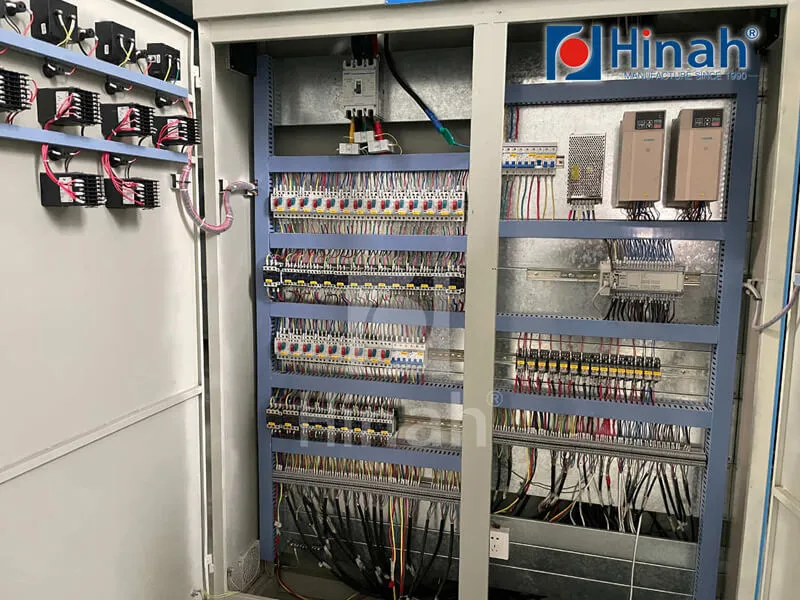
HANNA’s automation framework incorporates these technologies into modular control panels, allowing seamless integration with any existing powder coating line.
5. Maximizing ROI: Lifecycle Cost Analysis & Maintenance Protocols
Capital expenditure for paint line conveyor systems represents only 20–25% of total lifecycle cost; the remainder comprises energy consumption, maintenance labor, and downtime penalties. A disciplined maintenance approach yields measurable savings:
5.1 Condition-Based Lubrication
Rather than time-based greasing, implement thermographic and acoustic emission monitoring to lubricate only when friction exceeds thresholds. One automotive supplier reduced lubricant consumption by 68% and eliminated contamination-related rework after switching to condition-based intervals.
5.2 Modular Component Standardization
Standardizing on common chain links, sprockets, and drive motors across multiple lines reduces spare parts inventory costs by up to 40%. HANNA’s designs prioritize interchangeability with leading global brands, ensuring rapid component sourcing.
5.3 Energy Recovery in Drive Systems
Regenerative drives on downhill sections of floor conveyors capture kinetic energy, feeding it back into the facility grid. In plants with elevation changes, this can offset 10–15% of total conveyor energy demand.
6. Future-Ready Systems: Sustainability & Modular Scalability
As environmental regulations tighten, tomorrow’s paint line conveyor systems must accommodate low-cure powders (120°C–150°C) and waterborne pretreatments. This drives demand for corrosion-resistant components (e.g., 316L stainless steel in pretreatment tunnels) and modular conveyor sections that can be reconfigured without welding. HANNA’s latest modular extrusion tracks allow plant engineers to add or remove 3-meter sections in less than a shift, providing agility to adapt to changing product mixes. Additionally, dry-film lubricants that comply with ISO 14001 standards are becoming baseline specifications rather than options.
Precision Conveyance as a Competitive Advantage
In summary, the convergence of material science, sensor-based monitoring, and intelligent control elevates paint line conveyor systems from a mechanical necessity to a strategic performance lever. Plants that invest in closed-loop monitoring, thermal-stable components, and modular designs consistently report >98% line availability and coating first-pass yields above 95%. Whether upgrading an existing line or engineering a new facility, partnering with specialized integrators such as HANNA ensures that conveyor architecture aligns with production goals, coating chemistry, and long-term sustainability targets. The data is conclusive: treating conveyance as a precision process yields quantifiable returns in quality, throughput, and total cost of ownership.
Frequently Asked Questions (FAQs)
A1: Optimal speed depends on part complexity, powder formulation, and cure schedule. For general industrial applications, chain speeds between 2.5 m/min and 6 m/min balance transfer efficiency and oven dwell time. Complex parts with recessed areas may require speeds down to 1.5 m/min to allow powder cloud penetration, while simple flat panels can run up to 8 m/min. Always validate with conveyor supplier using thermal profiling data.
A2: Adopt a two-prong strategy: 1) Use enclosed-track conveyor designs (power-and-free) that physically isolate the lubricated chain from the product zone. 2) Switch to solid-film lubricants (e.g., molybdenum disulfide or PTFE-based) that do not migrate as liquids. For existing open conveyors, install drip pans and automatic centralized lubrication systems that apply micro-doses precisely when needed.
A3: A risk-based schedule is recommended: daily visual checks of chain tension and hook condition; weekly wear strip thickness measurements (replace when worn beyond 25% of original thickness); monthly thermal imaging of drive motors and bearings; quarterly chain elongation measurement (replace chain when elongation exceeds 2.5% over 10 meters). Predictive maintenance sensors can extend these intervals while increasing reliability.
A4: Yes. Retrofitting is common and cost-effective. Add-on kits include chain elongation sensors (mounted on return rails), accelerometers for drive unit monitoring, and RFID readers at load/unload stations. Data integration via OPC-UA or Modbus TCP can connect to existing PLCs or cloud dashboards. HANNA offers modular retrofitting packages that minimize downtime during installation.
A5: Grounding continuity must be maintained from the workpiece hanger to the building ground. Use copper grounding brushes that contact the conveyor chain at multiple points. For systems with rubber-coated wheels or bearings, install dedicated ground straps on each carrier. Measure resistance weekly; values exceeding 1 ohm require cleaning of contact points or replacement of worn grounding brushes.
A6: With proper engineering and preventive maintenance, structural components (rails, supports, sprockets) can exceed 20 years of service. Wear components such as chains and drive sprockets typically last 8–12 years in moderate-duty applications (2-shift operation). High-temperature oven sections may require chain replacement every 6–8 years due to accelerated metallurgical fatigue.
For further technical consultations or to evaluate retrofit options for your paint line conveyor systems, visit HANNA’s engineering resource center.