
In high-volume manufacturing, the powder coating line is no longer a mere finishing stage—it is the definitive barrier between a component and field failure. For operations targeting automotive Tier 1 compliance, architectural extrusions with 25-year warranties, or heavy machinery exposed to corrosive environments, the coating line must function as a precision-engineered system. This article dissects the technological architecture of a modern powder coating line, focusing on thermodynamic profiling, conveyor kinematics, and statistical process control (SPC) methodologies that separate world-class finishing shops from job shops struggling with rework rates exceeding 12%.
With over 18 years of experience commissioning turnkey finishing systems across North America and the EU, I have observed that the gap between a functional line and a profitable line lies in the integration of pretreatment chemistry with curing oven homogeneity. Here, we will move beyond superficial throughput calculations to explore the physics of Faraday cage penetration, film build consistency, and the digital integration required for Industry 4.0 compliance. HANNA has been at the forefront of this integration, providing engineered solutions that reduce energy consumption while elevating first-pass yield to 98.5% in recent installations.
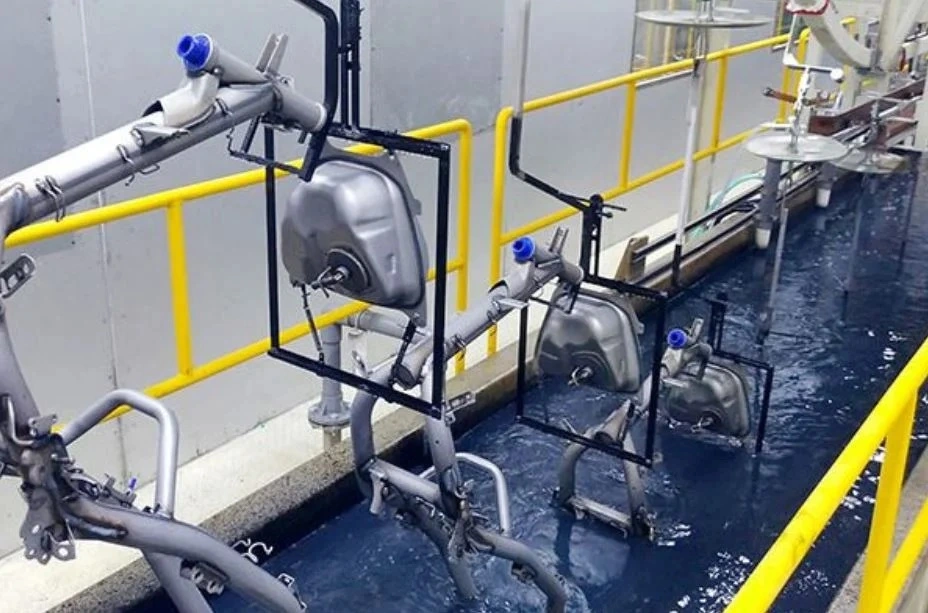
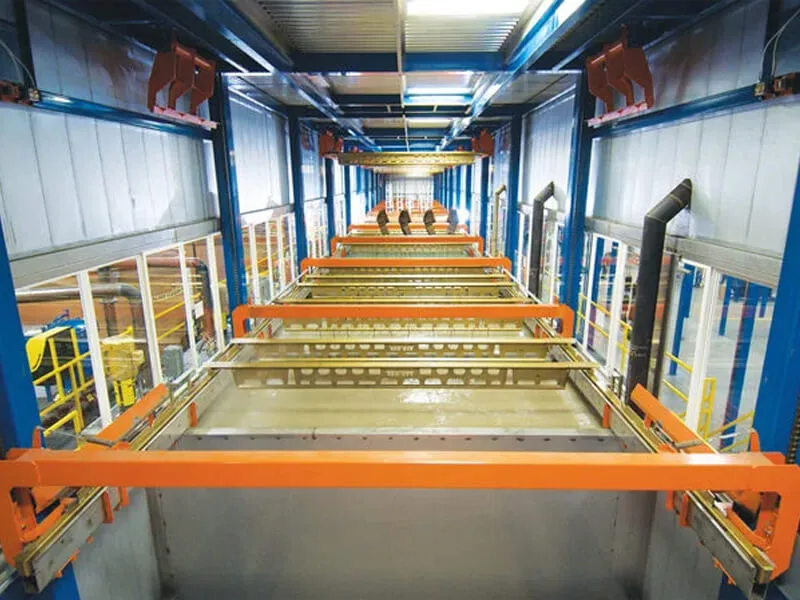
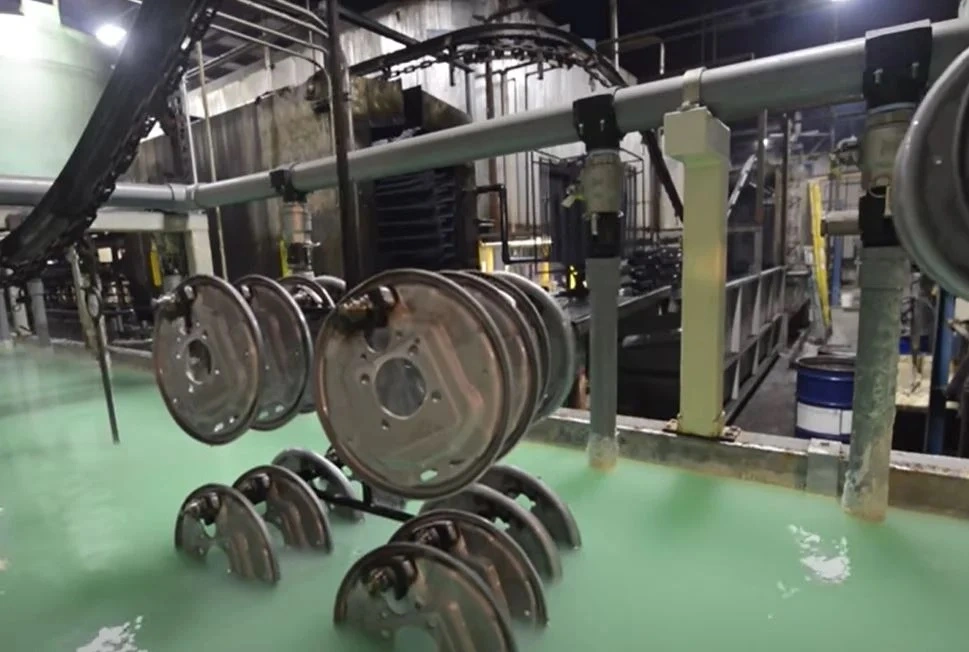
Approximately 70% of field coating failures—such as filiform corrosion undercutting or osmotic blistering—originate from inadequate pretreatment rather than the powder formulation itself. A sophisticated powder coating line integrates a multi-stage pretreatment tunnel that must be calibrated to the substrate’s metallurgy and the part’s final service environment.
For ferrous substrates, the industry is shifting from traditional iron
phosphate to zirconium-based nano-ceramic coatings. While iron phosphate offers
a standard 0.2–0.6 g/m² coating weight, zirconium chemistries provide a 0.1–0.3
g/m² amorphous conversion layer with superior adhesion on mixed-metal
assemblies. The selection criteria should be dictated by:
• **Salt Spray
Requirements:** Iron phosphate typically delivers 240–500 hours to white rust
(ASTM B117). Zirconium, when combined with a sealed powder topcoat, consistently
exceeds 1,000 hours.
• **Energy Constraints:** Zirconium processes operate at
ambient to 40°C, reducing natural gas consumption by up to 40% compared to iron
phosphate heaters set at 55–65°C.
• **Effluent Treatment:** Zirconium systems
produce no heavy metal sludge, lowering hazardous waste disposal costs by nearly
35% annually.
Modern lines are adopting hybrid pretreatment modules where the chemical dosing is controlled by conductivity sensors and pH meters tied to the PLC. This ensures that the chemical bath remains within a strict window of ±5% concentration, preventing streaking or under-conversion that leads to adhesion loss.
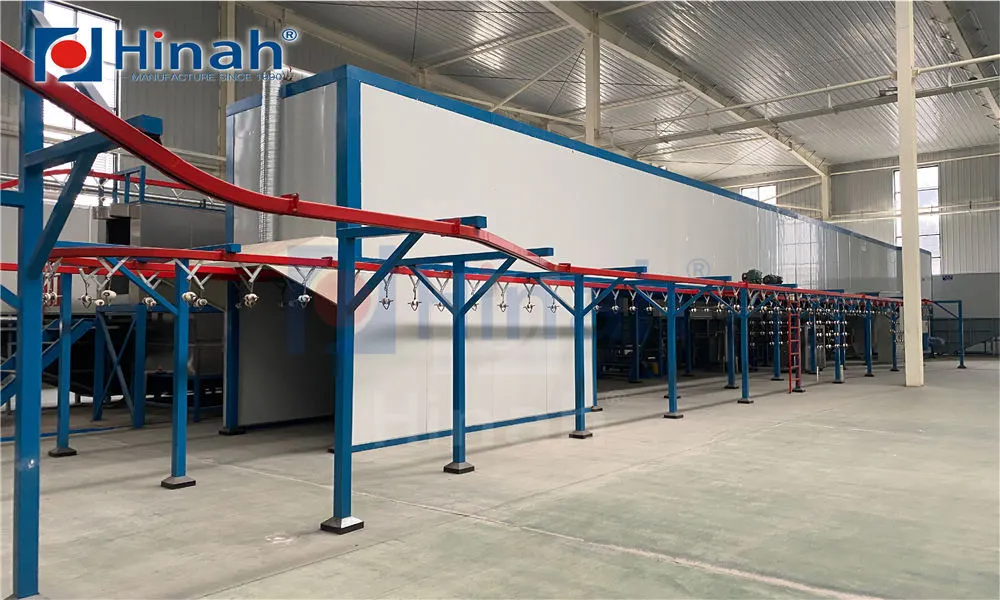
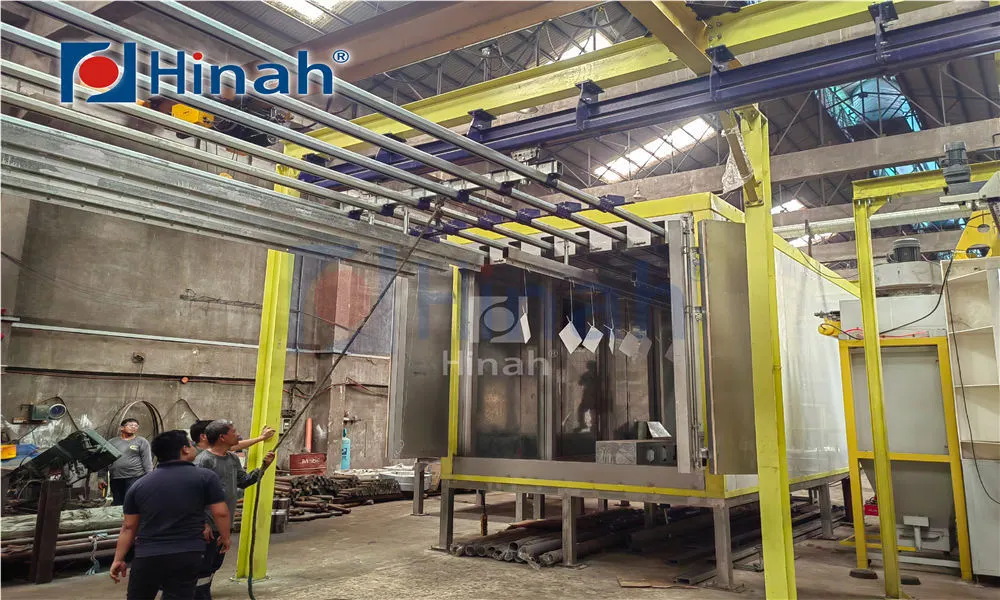
The conveyor is the circulatory system of any powder coating line. The decision between an overhead monorail, power-and-free, or inverted conveyor dictates not only throughput (parts/hour) but also coating consistency. For high-density parts like automotive wheels or compressor housings, an inverted conveyor eliminates the risk of contaminant fallout from above, which is a common source of surface defects.
Key engineering parameters to model include:
Linear Speed vs. Hang Density: A common fallacy is increasing line speed to boost output. In reality, the curing oven dwell time is fixed by the substrate thermal mass. For 3mm aluminum extrusions, the oven dwell time must be 12–15 minutes at 200°C metal temperature. Increasing speed without reducing part spacing results in under-cured polymer, leading to poor mechanical properties (low reverse impact resistance).
Indexing Accuracy: In power-and-free systems, accumulation zones allow for “batch within a continuous” processing. This enables masking operations or heavy part loading without stopping the entire line. For complex geometries, indexing accuracy within ±5mm ensures that reciprocating guns maintain a consistent standoff distance (150–250mm), critical for penetrating recessed areas.
Load Bar Design: Part fixturing accounts for 25% of coating variability. We recommend using spring-loaded contacts on grounding points to ensure zero electrical resistance. A floating ground system, integrated by HANNA in their modular systems, reduces Faraday cage effect failures by ensuring the part maintains a consistent electrostatic charge throughout the booth cycle.
The application booth is where theoretical chemistry meets practical physics. The objective is to achieve a film thickness of 60–80 microns (for architectural) or 80–120 microns (for anti-corrosion) with a standard deviation of less than 8 microns across the entire part geometry.
Corona charging remains the industry standard for high-speed flat panels. However, for re-entrant profiles or components with deep recesses, tribo-charging systems offer superior penetration. Tribo guns charge the powder through friction, eliminating the free ions that cause “back ionization” (a defect resembling orange peel) when coating thick sections. A hybrid line often integrates both technologies on the same reciprocator axis, allowing operators to switch between 80kV corona guns for large surfaces and tribo guns for complex geometries without stopping the powder coating line.
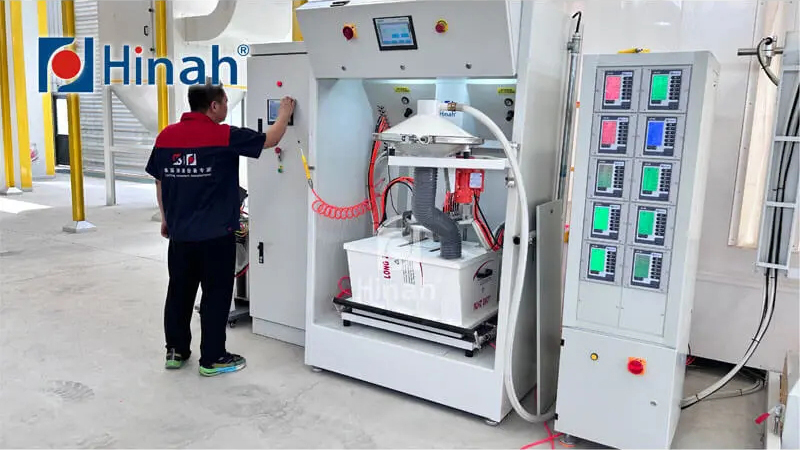
For contract coaters, changeover time is the primary constraint on profitability. Legacy lines require 45–60 minutes for a full color change. Modern high-efficiency lines utilize: • **Booth Geometry:** Compact, stainless-steel cyclone booths with sweep air nozzles that reduce contamination zones. • **Feed Center Automation:** Quick-release fluidizing hoppers with integrated suction lances that purge the system in under 3 minutes. • **Cartridge Filter Optimization:** Using cellulose-ester media with pulse-back cleaning cycles synchronized to the spray sequence reduces cross-contamination below 0.5%, enabling “like-color” changes in under 10 minutes.
Data from recent audits show that reducing color change time from 40 minutes to 12 minutes increases effective utilization of the powder coating line by 18–22%, directly impacting the bottom line.
The curing oven is the single largest energy consumer, accounting for 35–50% of operational costs on a powder coating line. The transition from gas-fired to infrared (IR) or hybrid IR/convection ovens is gaining traction due to precision control.
For thick-walled parts (cast iron, >10mm wall thickness), a pure convection oven with high-velocity air nozzles (20–30 m/s) is essential to overcome the thermal lag. However, for thin-gauge sheet metal, IR ovens offer a distinct advantage: they cure the powder via radiative heat transfer in 4–6 minutes rather than 12–18 minutes, dramatically reducing floor space requirements and energy expenditure.
Critical performance indicators for oven profiling include:
Ramp Rate: The substrate must reach the cure temperature (typically 180–200°C) within 5 minutes to prevent “gassing” (outgassing from castings or porous substrates).
Zone Control: Multi-zone ovens with independent burners allow for a “ramp-hold-cool” profile. For aluminum substrates, a slow ramp rate prevents thermal distortion, while a sudden drop in temperature (quenching) can induce residual stress in the coating.
Data Logging: IATF 16949 compliance demands that every part passing through the powder coating line has traceable temperature data. Implementing 6-channel thermocouple dataloggers on daily audits ensures that no “cold spots” exist in the oven profile, which is a leading cause of under-cure adhesion failure.
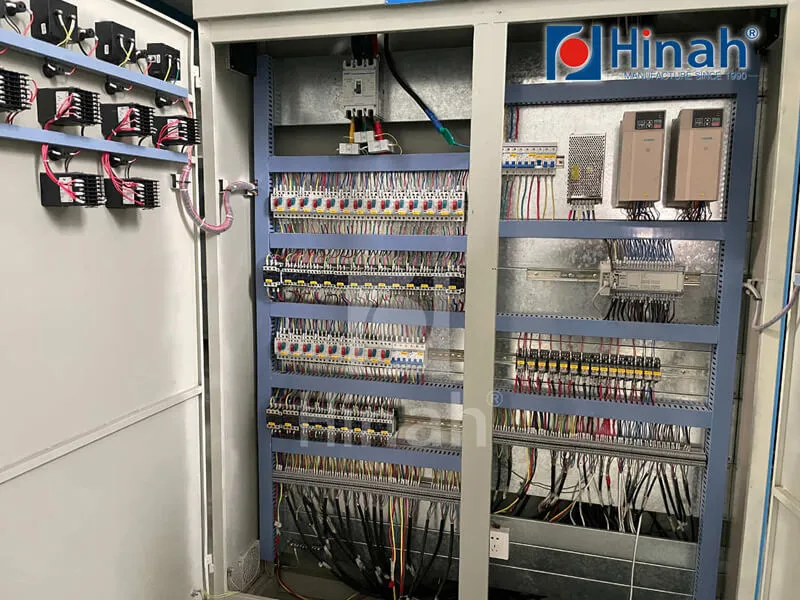
The modern powder coating line is a data-rich environment. Advanced manufacturing execution systems (MES) now integrate with the line’s PLC to provide real-time OEE (Overall Equipment Effectiveness) dashboards. Predictive algorithms monitor parameters like: • **Triboelectric Gun Current:** A drop in microamperes indicates worn electrodes or a grounding fault, predicting a potential Faraday cage penetration issue before it manifests as rejects. • **Air Knife Pressure:** In pretreatment, variations in air knife pressure (target 5–7 bar) directly correlate to residual moisture post-drying, which causes pinholes in the final cure. • **Powder Hopper Fluidization:** Humidity sensors within the hopper prevent caking; if relative humidity exceeds 60%, the system automatically adjusts the fluidizing air temperature to maintain flowability.
By implementing these IoT modules, manufacturers can transition from reactive maintenance to condition-based maintenance, reducing unplanned downtime by an average of 27%, according to a 2023 industry benchmarking study.
Even with optimized equipment, defects occur. However, a systematic root cause analysis (RCA) eliminates guesswork. The following table outlines common defects and their precise engineering origins within the powder coating line:
Orange Peel: Caused by improper melt viscosity. Often due to the powder being stored in high humidity or the oven zone 1 temperature being 15-20°C too low, preventing proper flow before gelation.
Pinholes/Outgassing: Typically originates from porous substrates (castings) or excessive moisture in the pretreatment drying tunnel. Solution: Pre-heat cycle in oven zone 1 before powder application to vent volatiles.
Dirt Inclusions: Over 80% of dirt defects come from the curing oven convection currents dragging particles from the floor or from deteriorated oven seals. Positive pressure oven design and HEPA-filtered cooling tunnels are the standard mitigation.
Edge Pullback: Occurs when the film thickness at sharp edges exceeds 150 microns, causing shrinkage stress. Correction involves optimizing the reciprocator speed to reduce build-up on leading edges.
Viewing the powder coating line as a collection of standalone components (pretreatment, booth, oven) rather than a unified thermodynamic and electrostatic system is the primary reason many finishing operations fail to achieve ROI targets. The engineering shift involves moving from “run-to-failure” to a harmonized system where the conveyor speed dictates the chemical dwell time, the powder formulation matches the oven’s heat ramp capabilities, and digital sensors provide predictive data rather than post-mortem analysis.
Investing in modular, Industry 4.0-ready infrastructure, such as the systems engineered by HANNA, allows manufacturers to adapt to changing substrate requirements and environmental regulations without undergoing a full line overhaul. In the current manufacturing landscape, where energy costs fluctuate and quality standards tighten, the precision of your finishing line directly correlates to your market reputation.
For operations looking to benchmark their current performance, start by analyzing your first-pass yield (FPY). If your FPY is below 95%, the financial impact of rework—including labor, powder waste, and energy—likely exceeds the capital expenditure required for targeted upgrades to your powder coating line. The technology to achieve zero-defect finishing is available; the challenge lies in the precise integration of these engineering principles.
Q1: What is the ideal conveyor speed for a new powder coating line
when processing mixed parts?
A1: There is no
universal “ideal” speed; it is determined by the “thermal mass” of the heaviest
part and the dwell time required in the pretreatment and cure ovens. A common
engineering approach is to set the line speed based on the cure schedule of the
heaviest substrate (e.g., 12 minutes at 200°C metal temperature). You then
adjust the hang density to ensure lighter parts do not travel too fast through
the pretreatment chemistry. Using a variable frequency drive (VFD) with preset
recipes for different product families is standard practice to balance
throughput without compromising chemical dwell times.
Q2: How can we reduce Faraday cage effect on complex geometries
without slowing down the line?
A2: The Faraday cage
effect is best mitigated through a combination of gun technology and grounding.
First, implement tribo-charging guns in specific zones for recessed areas—these
avoid the free ions that cause repulsion. Second, upgrade your grounding system.
A poor ground (above 1 megaohm resistance) will exacerbate wrap-around failure.
Consider using high-voltage, low-current generators (70-100 kV, 20-30 µA) with
automatic current limiting to push powder into deep recesses without causing
back ionization. Adjusting the reciprocator speed to allow slower traversal over
complex sections also improves penetration without reducing overall line
speed.
Q3: What are the signs that my curing oven is under-performing before
I see visible defects?
A3: Relying on visual
inspection is reactive. Use a datalogger with real-time thermocouples placed on
the part surface. Early indicators of oven under-performance include: (1) a drop
in “ramp rate” beyond 2°C per minute from baseline, (2) increased deviation
between zone thermocouples (more than 10°C variance), and (3) higher gas
consumption per square foot coated, indicating that the burners are
overcompensating for heat loss. If the substrate does not reach 80% of the cure
temperature within the first third of the oven, you are likely in a “thermal
deficit” that will lead to under-cure.
Q4: How does humidity affect powder coating line efficiency, and how
can we control it?
A4: High ambient humidity (above
65%) significantly degrades powder fluidization and electrostatic charge
transfer. Moisture causes the powder to clump, leading to inconsistent film
build and reduced first-pass transfer efficiency (TE), which can drop from 65%
to 45%. Control measures include: (1) installing a closed-loop HVAC system for
the spray booth that maintains 22-24°C and 45-55% RH, (2) using dry, oil-free
compressed air (dew point below -40°F) for powder fluidization and gun
atomization, and (3) storing powder in temperature-controlled rooms to prevent
moisture absorption.
Q5: What is the realistic ROI timeline for retrofitting an older
powder coating line with a Fast Color Change (FCC)
booth?
A5: For a job shop performing 3-5 color
changes per shift, retrofitting to an FCC booth typically yields ROI within
12-18 months. The calculation is based on “recovery of downtime.” If a legacy
line requires 45 minutes per change and the FCC system reduces that to 12
minutes, you recover 33 minutes per change. With 4 changes per day, that’s 132
minutes (2.2 hours) of additional production daily. If your line generates
$500/hour in contribution margin, that adds over $1,000/day in productive
capacity. When factoring in reduced powder waste (FCC systems reduce purge
losses by up to 60%), the payback period shortens significantly.