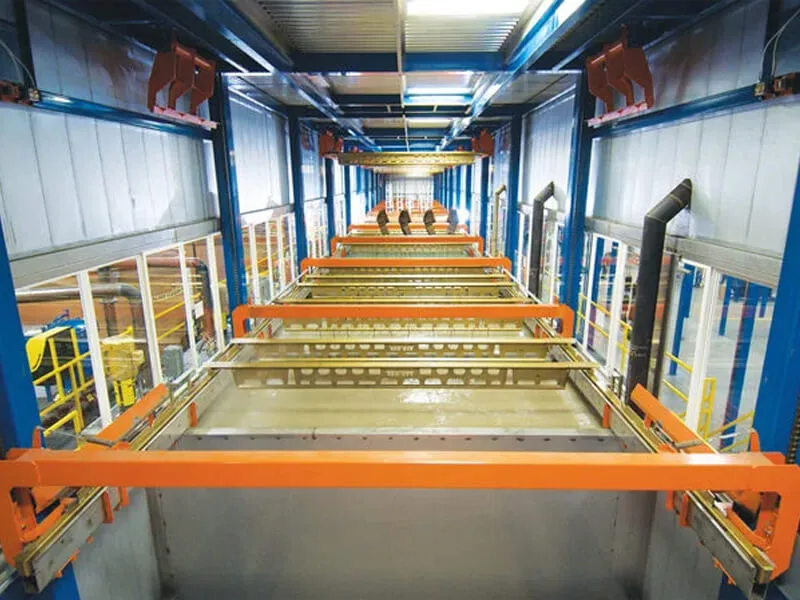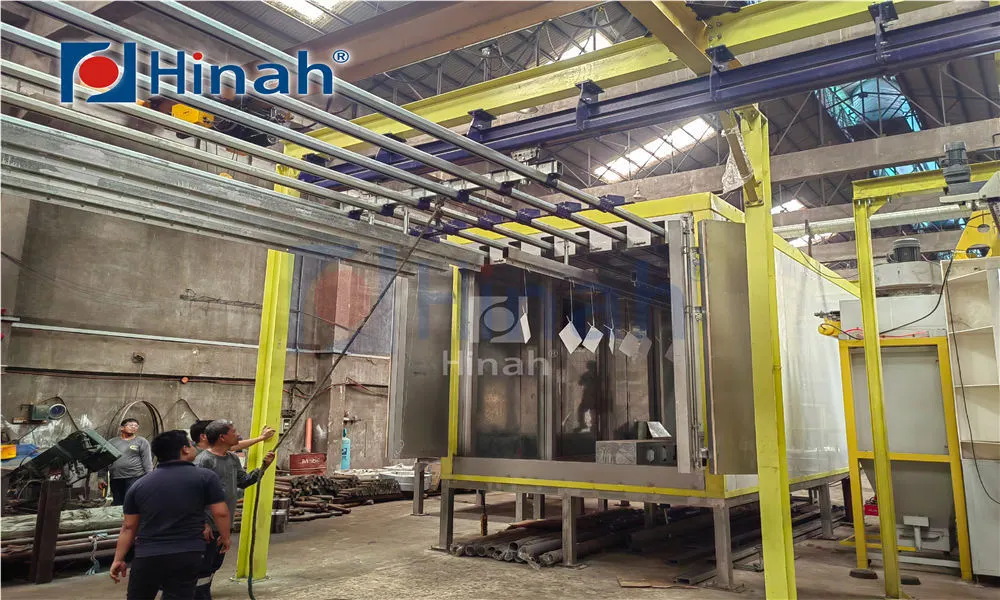
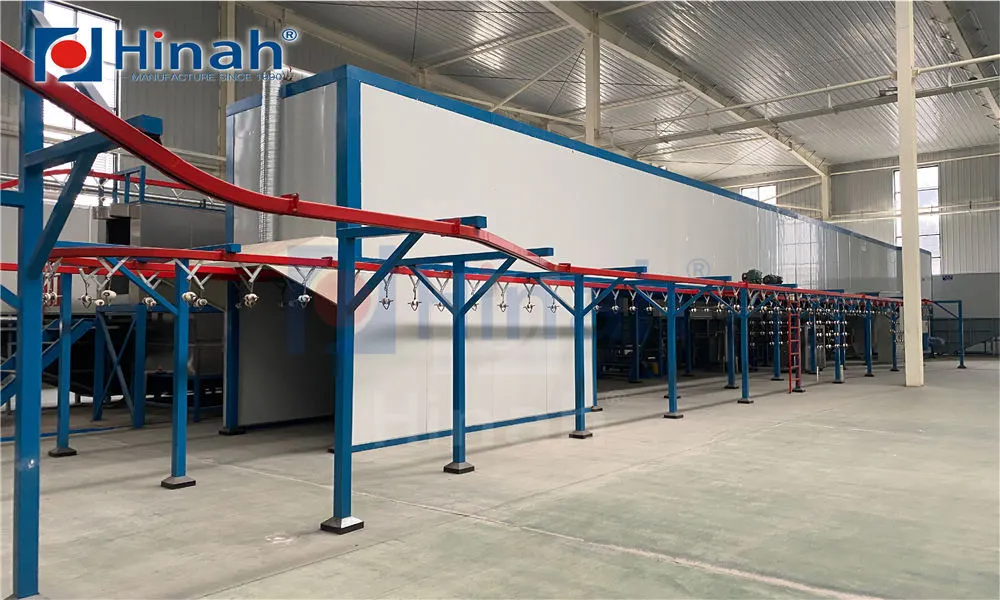
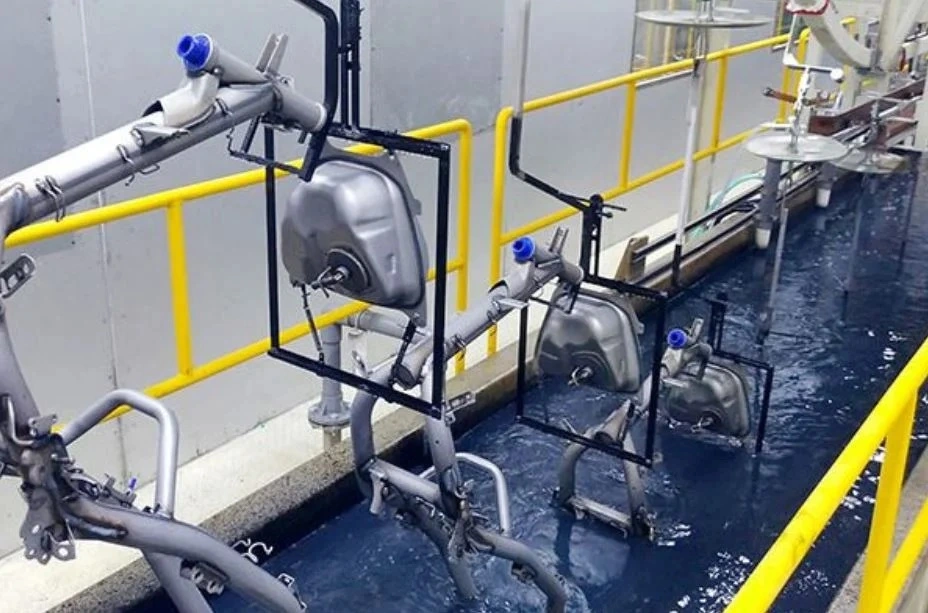
In high‑volume powder coating and liquid paint operations, the conveyor curing oven is the heart of the production line. It provides the precisely controlled thermal environment needed to crosslink coatings on parts as they move continuously through the oven. This article examines the engineering principles, configurations, and performance factors of modern conveyor curing ovens, with insights from HANNA’s decades of experience in designing custom finishing systems.
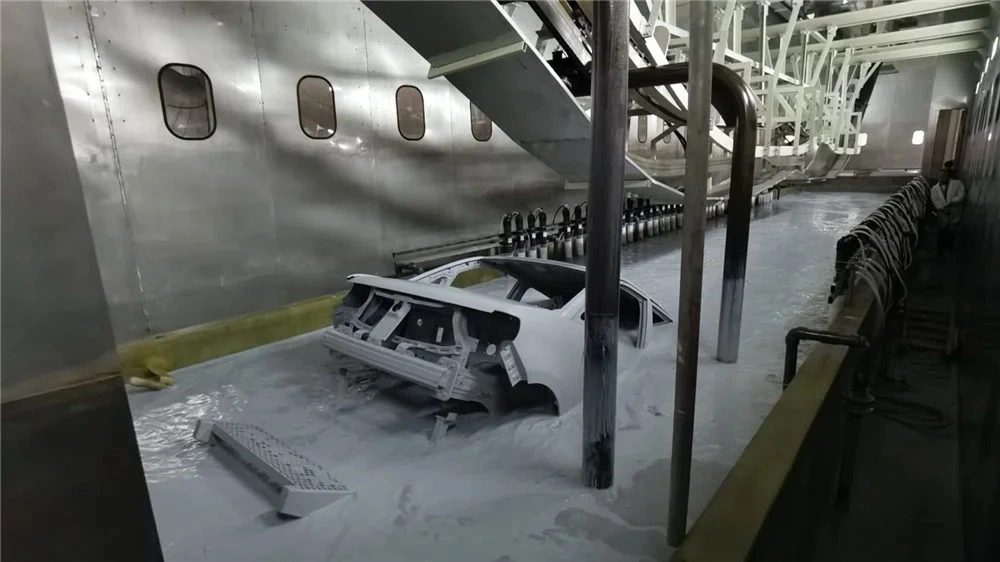
A conveyor curing oven is a tunnel‑like enclosure through which parts are transported on a conveyor (overhead, floor‑mounted, or chain‑on-edge). Hot air is circulated at high velocity to transfer heat to the parts, raising them to the required curing temperature (typically 160–220 °C for powder coatings) and holding them there for the specified dwell time (usually 10–30 minutes). The conveyor speed, oven length, and temperature profile are matched to achieve complete crosslinking.
Most conveyor ovens use forced convection. Gas burners or electric heaters warm the air, which is then propelled by high‑CFM fans through plenums and nozzles directed at the parts. Air impingement velocities of 10–30 m/s break the boundary layer, ensuring rapid heating. Some ovens incorporate infrared (IR) boosters at the entrance to quickly gel the coating, preventing contamination. Convection ensures uniform heating even for complex shapes, while IR can accelerate heating of flat surfaces.
Insulated panels – Typically 100–150 mm thick mineral wool or ceramic fibre, with interlocking joints to minimise heat loss.
Heating system – Direct‑fired gas burners (most common), indirect‑fired (for clean atmosphere), electric coils, or thermal oil heat exchangers.
Air recirculation fans – High‑temperature centrifugal fans (up to 300 °C) that move large air volumes (e.g., 20,000 m³/h per zone).
Conveyor system – Overhead trolley, power‑and‑free, belt, or chain conveyor that carries parts through the oven.
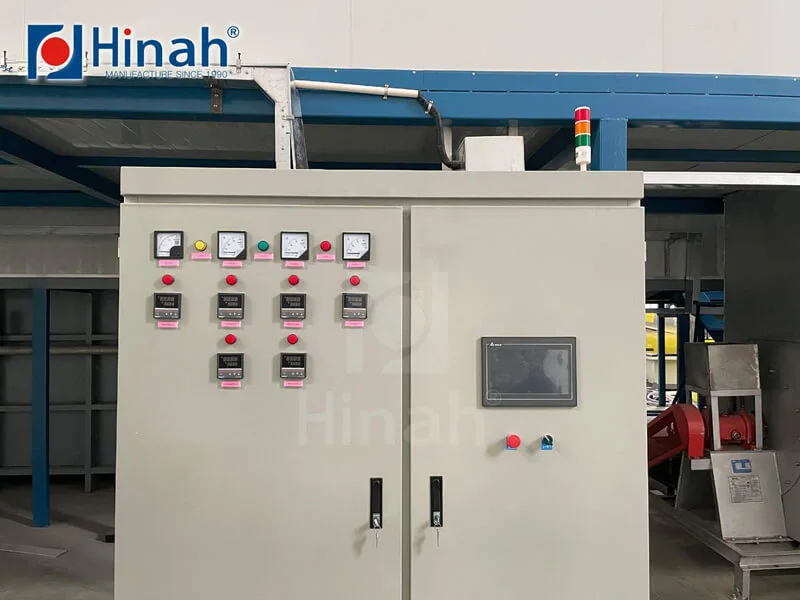
Control system – PLC with PID temperature control, zone‑wise monitoring, and data logging for quality traceability.
The choice of oven configuration depends on part geometry, production rate, and available floor space.
Straight‑through tunnel ovens – Parts enter at one end and exit at the opposite end. Simple design, suitable for long parts and high volumes.
Multi‑pass (switchback) ovens – The conveyor makes several passes inside a compact footprint, increasing dwell time without lengthening the oven. Ideal for space‑constrained plants.
Humpback / arched ovens – Used when parts hang low and need clearance; the oven rises in the middle to accommodate tall parts.
Combination IR/convection ovens – IR zones at the entrance rapidly raise part temperature, followed by convection zones for thorough crosslinking. This hybrid design can shorten overall oven length by 30–40 %.
HANNA engineers all these types, using CFD modelling to optimise airflow and thermal uniformity.
To achieve consistent coating quality, a conveyor curing oven must maintain tight control over several variables.
Industry standards (e.g., ISO 13924) require that the air temperature across the working zone be within ±3 °C of setpoint. Variations can cause under‑cure in cooler spots (leading to poor adhesion or soft film) or over‑cure in hot spots (yellowing, brittleness). Uniformity is achieved by balanced duct design, multiple zone controls, and proper insulation. HANNA validates every oven with a temperature distribution test (TDT) using 20+ thermocouples.
The oven must deliver enough heat to raise the substrate to cure temperature within the available time. Heavy parts (e.g., castings, thick fabrications) act as heat sinks and require longer dwell times or higher convection velocities. Engineers calculate the heat load based on part mass, specific heat, and production rate to size burners and fans correctly.
Conveyor curing ovens are energy‑intensive. Key efficiency measures include:
High‑density insulation to minimise shell losses.
Variable frequency drives (VFDs) on fans to match airflow to actual load.
Heat recovery from exhaust air (e.g., using recuperators to preheat combustion air or incoming parts).
Optimised conveyor openings with air seals or vestibules to reduce infiltration.
Modern ovens from HANNA incorporate these features, often achieving 20–35 % lower energy consumption compared to older designs.
Conveyor curing oven systems are used in virtually every sector that applies organic coatings:
Automotive – Curing e‑coat primer, primer‑surfacer, and clearcoat on car bodies, as well as components like wheels, chassis parts, and engine blocks.
Architectural aluminium – Extrusions for windows, curtain walls, and cladding are powder coated and cured in long, straight‑through ovens.
Appliances – Refrigerator panels, washing machine drums, and HVAC cabinets are cured on high‑speed lines.
General industry – Agricultural machinery, electrical enclosures, furniture, and thousands of fabricated metal parts.
Coil coating – Continuous steel or aluminium strips are cured in flotation ovens at speeds exceeding 100 m/min.
Even well‑designed conveyor ovens can face operational issues. Here are common problems and how to address them.
Complex parts may shield some areas from direct air impingement. Solution: use adjustable nozzles or “air rotation” systems that periodically reverse airflow direction. CFD analysis helps design duct layouts that minimise shadows.
Volatiles released during curing can condense on cooler parts or oven walls, leading to defects. Adequate exhaust (maintaining slight negative pressure) and regular cleaning schedules are essential. Some ovens incorporate catalytic oxidisers to destroy VOCs while recovering heat.
High‑temperature bearings and chains require specialised lubricants that do not outgas or contaminate parts. Automatic lubrication systems extend conveyor life and reduce downtime.
Periodic temperature profiling with travelling data loggers is necessary to verify that every part reaches the required metal temperature. Software tools can analyse the data and flag deviations. HANNA offers remote monitoring systems that track oven performance in real time and alert operators to drift.
When investing in a new oven, engineers must evaluate several factors beyond price.
Production requirements – Throughput (parts per hour), part size and weight, and required dwell time determine oven length and heat input.
Coating type – Powder, liquid, or e‑coat each have specific cure windows (temperature and time). Some coatings require very tight temperature control.
Fuel availability – Natural gas is often the lowest operating cost, but electric may be chosen for clean rooms or where gas is unavailable.
Floor space – Multi‑pass or combination IR/convection designs can fit shorter footprints.
Compliance – Local emissions regulations may dictate exhaust treatment. Ovens must meet safety standards (NFPA, EN 746).
HANNA provides comprehensive technical consultations, including heat load calculations, layout drawings, and ROI analyses to help clients select the optimal conveyor curing oven for their needs.
Q1: What is the difference between a batch oven and a conveyor curing
oven?
A1: A batch oven processes discrete loads in a stationary
chamber; parts are loaded, heated, then unloaded. A conveyor
curing oven operates continuously, with parts moving through on a
conveyor. Conveyor ovens are essential for high‑volume production where parts
flow without interruption.
Q2: How do I determine the required oven length?
A2: Oven
length is calculated from line speed and required dwell time: Length = line
speed × dwell time + allowances for entrance/exit transitions. For example, if
line speed is 2 m/min and dwell time is 20 min, the heated length must be at
least 40 m. Additional space may be needed for vestibules and thermal
expansion.
Q3: What is the typical energy consumption of a conveyor curing
oven?
A3: Energy use depends on part mass, temperature, and
insulation. A typical medium‑size oven curing 2 tonnes/hour of steel parts might
consume 300–500 kW of thermal energy (gas) and 50–100 kW of electricity for
fans. Energy recovery can reduce this by 20–30 %. HANNA offers energy‑saving
packages customised to each line.
Q4: How often should a conveyor curing oven be
maintained?
A4: Preventive maintenance should be performed
quarterly, including fan bearing lubrication, belt/chain tensioning, cleaning of
air filters and nozzles, and calibration of thermocouples. Burner safety systems
require annual certification. Modern ovens with predictive sensors can schedule
maintenance based on actual wear.
Q5: Can a conveyor curing oven be retrofitted to improve energy
efficiency?
A5: Yes, many older ovens can be upgraded. Common
retrofits include adding VFDs to fans, improving insulation, installing heat
recovery units, and upgrading burners to higher‑efficiency models. HANNA conducts energy audits
and provides retrofit solutions with typical payback periods of 1–3 years.
Q6: What causes uneven cure across the width of the
oven?
A6: Uneven airflow distribution is the most common cause. It
can result from blocked nozzles, imbalanced fan output, or poor duct design. A
temperature uniformity test identifies cold or hot zones. Adjusting dampers or
modifying ductwork usually resolves the issue.
Q7: How do I ensure that heavy parts reach cure
temperature?
A7: Heavy parts require longer heat‑up time. Use
travelling thermocouples attached to the actual part to measure its temperature
profile. If the part does not reach the required temperature within the oven,
you may need to reduce line speed, increase oven temperature (within coating
limits), or add IR pre‑heating.