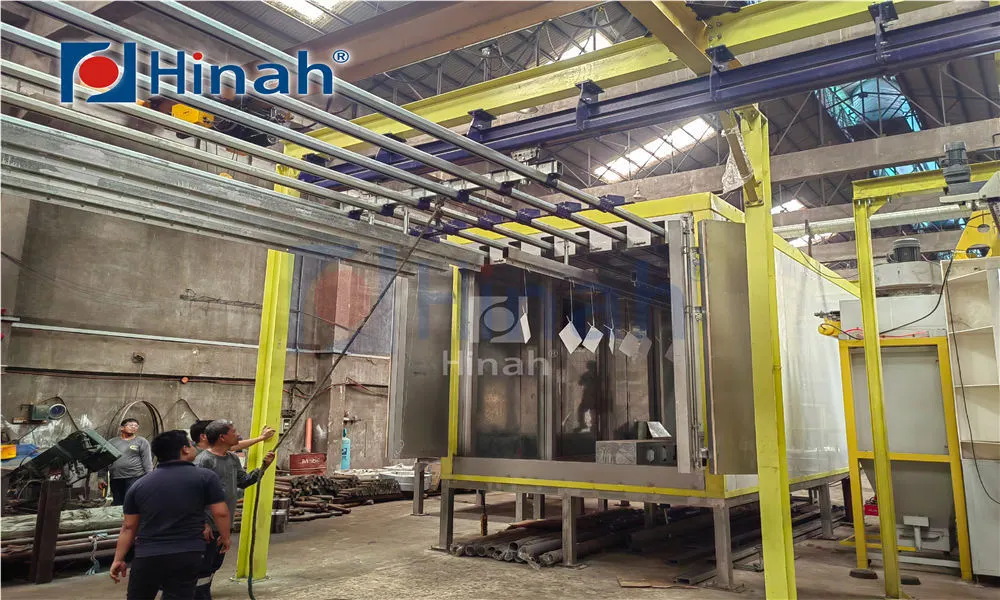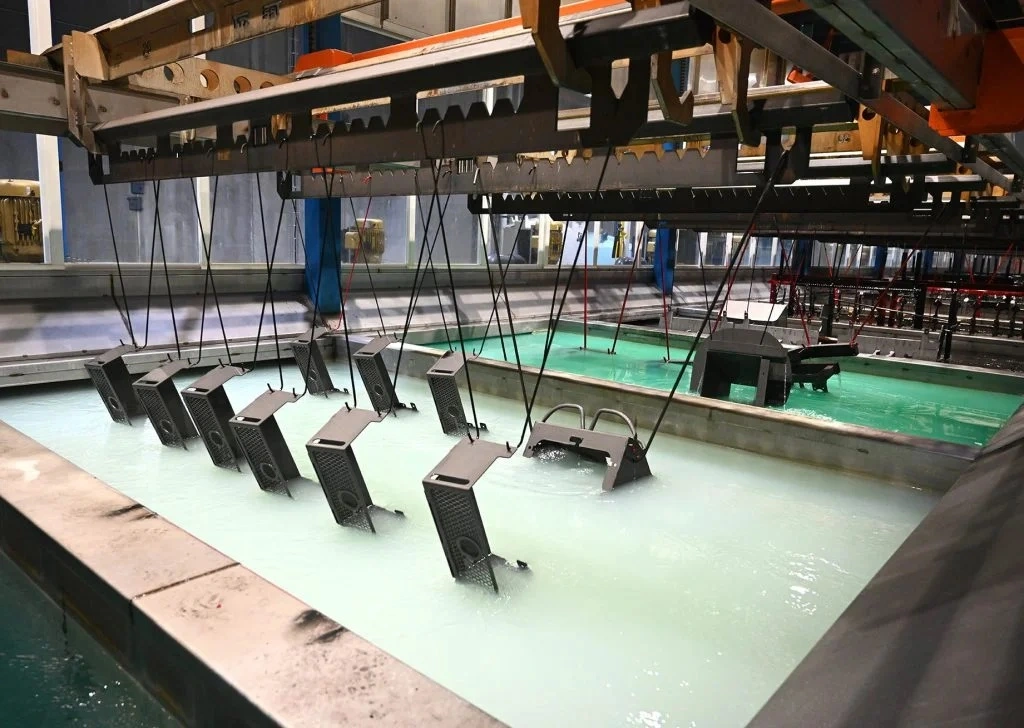
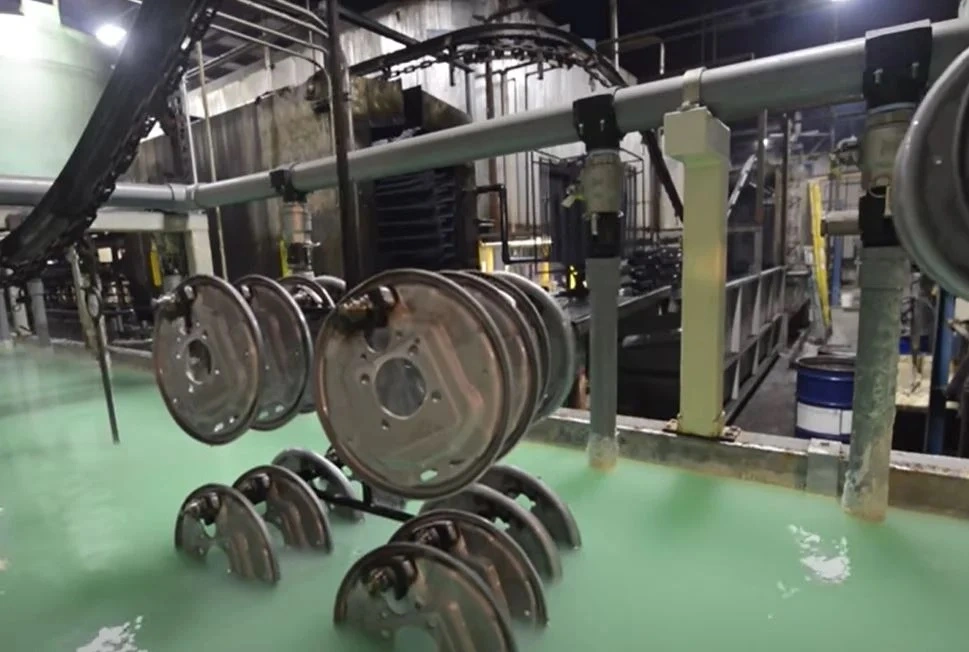
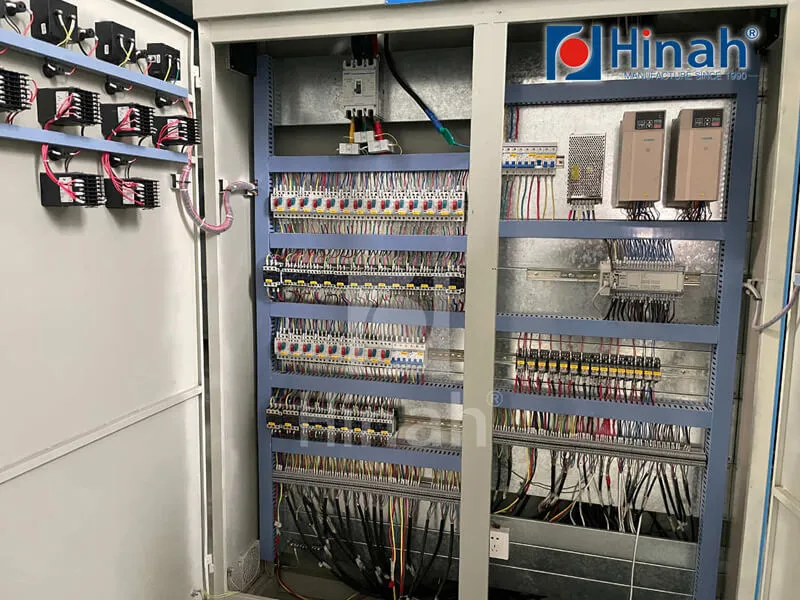

A Paint line conveyor is the backbone of any automated coating operation. It determines throughput, coating consistency, and uptime. A poorly specified conveyor leads to uneven film build, part collisions, and excessive maintenance.
This guide provides seven engineering criteria to evaluate any conveyor system. We cover chain selection, drive configurations, environmental resistance, and integration with washers, dry-off ovens, and curing zones. Each point includes measurable benchmarks.
HANNA designs conveyors that operate 8,000 hours per year with less than 1% unscheduled downtime. Let's examine the technical details.
The first decision for any Paint line conveyor is whether to suspend parts from above or carry them on a flat belt or slat. Each has distinct advantages.
Overhead trolley conveyors: Best for hanging parts with complex shapes. They free the floor space and allow drainage from wash sections. Maximum load per trolley: 50–250 kg.
Inverted (floor-mounted) conveyors: Suitable for heavy parts (up to 1,000 kg per carrier). The chain runs in a floor channel. Access for loading/unloading is easier.
Slat or belt conveyors: Used for flat parts that cannot be hung. However, they collect overspray and require frequent cleaning.
Overhead systems dominate automotive and general finishing lines because they maximize accessibility for robotic or manual spray guns. Inverted conveyors are preferred for heavy agricultural or construction equipment.
The conveyor chain passes through five aggressive zones: pre-treatment washer (acid/alkaline), dry-off oven (up to 150°C), spray booth (overspray and solvents), curing oven (180–220°C), and cooling tunnel. Each zone attacks chain materials differently.
For a Paint line conveyor exposed to high temperatures and chemicals, specify:
Chain links: Stainless steel 304 for washer sections; carbon steel with manganese phosphate for dry zones.
Bearings: Sealed ball bearings with high-temperature grease (operating range -20°C to 250°C).
Pins and bushings: Through-hardened alloy steel (60 HRC) to resist wear from abrasive powder residue.
Request a corrosion test report: 500 hours salt spray (ASTM B117) with no red rust. HANNA provides chain samples for customer validation.
Conveyor drives include fixed-speed, variable frequency drive (VFD), and servo-controlled indexing. For continuous coating lines, VFDs are standard. For batch or robotic cells, indexing accuracy matters.
Key parameters:
Position repeatability: ±2 mm for robotic painting; ±5 mm for manual booths.
Speed range: 1–8 m/min for most lines. Higher speeds require longer ovens.
Acceleration/deceleration: 0.2 m/s² to prevent part sway on overhead carriers.
Ask the manufacturer for a drive sizing calculation based on total chain pull (including friction, incline, and live load). Undersized drives cause stalling and uneven coating.
Standard continuous conveyors cannot stop individual carriers. For lines with offline stations (inspection, rework, load/unload), a Paint line conveyor with power & free (P&F) design allows accumulation.
In P&F systems, a continuously moving power chain pulls free trolleys via pusher dogs. When a trolley stops, the power chain continues sliding under it. Benefits:
Batching: Accumulate parts before the spray booth while the oven runs continuously.
Maintenance: Isolate a section without stopping the whole line.
Buffer zones: Store up to 30% more carriers without increasing line speed.
P&F conveyors cost 40–60% more than continuous types but pay back through higher utilization. For high-mix lines, they are nearly mandatory.
The conveyor must survive inside spray washers (high humidity, 60–70°C) and curing ovens (180–220°C). Common failures include chain elongation, lubricant breakdown, and bearing seizure.
Solutions for oven sections:
Use high-temperature chain lubricant (graphite or PTFE-based) rated for 250°C continuous. Apply automatically via drip or spray system.
Install chain take-up units with load cells to monitor elongation. Replace chain when elongation exceeds 2% of original length.
For ovens longer than 30 m, divide the conveyor into multiple independently driven zones with thermal expansion joints.
In washer sections, avoid open bearings. Specify sealed, lubricated-for-life bearings with stainless steel housings. Coating plant engineers often overlook these details, leading to six-month bearing failures.
Calculate the maximum live load: weight of all parts on the conveyor plus hangers. For overhead conveyors, typical ratings are 50, 150, or 250 kg per trolley. Trolley spacing ranges from 300 mm to 1,200 mm.
Hook design affects coating coverage:
Avoid blind holes or recesses that trap liquid during pre-treatment.
Use spring-loaded or cam-lock hooks to prevent rotation in the spray booth.
For heavy parts, use two-point suspension to keep the part stable.
Part spacing (center-to-center distance) must be at least 1.5 times the part width to avoid shadowing from spray guns. For ovens, spacing should allow airflow between parts.
A Paint line conveyor typically runs 6,000–8,000 hours per year. Planned maintenance prevents unplanned stops. Design features that reduce maintenance hours:
Central lubrication system with automatic metering points for all chain pins and bearings.
Inspection windows on chain returns and drive units.
Quick-release pins on trolley wheels for fast replacement.
Condition monitoring tools:
Chain wear sensor: measures elongation in real time via encoder and load cell.
Vibration sensors on drive motors (alerts when bearing frequencies exceed 4.5 mm/s RMS).
Thermal camera ports above oven sections to check bearing temperatures without shutdown.
HANNA supplies conveyors with pre-wired sensor ports and a basic SCADA display for wear trends. This reduces unplanned downtime by an average of 45% in documented installations.
A1: Chain pull (in Newtons) = (total live weight + chain weight) × coefficient of friction + incline force. For overhead conveyors with trolley bearings, friction coefficient is 0.03–0.05. For floor-mounted inverted conveyors, use 0.15–0.20. Add 20% safety margin. Most manufacturers provide a chain pull calculation sheet upon request with your layout drawing.
A2: With proper high-temperature lubricant (graphite-based applied every 8 hours), carbon steel chain lasts 25,000–35,000 hours. Stainless steel chain lasts 40,000–50,000 hours but costs 2.5x more. Chain elongation of 2.5% is the replacement threshold. Regular wear measurements (every 1,000 hours) extend life by early detection of misalignment.
A3: Conversion is possible but requires replacing the chain, trolleys, and adding a separate power track. Existing drive and take-up units may need upgrades. For lines shorter than 100 m, a new P&F conveyor often costs less than retrofitting. HANNA offers a free feasibility study with cost comparison.
A4: Sway occurs when the natural pendulum frequency matches conveyor vibrations. Reduce sway by: 1) Using twin-track conveyors with two parallel chains and a rigid crossbar; 2) Adding anti-sway stabilizers (spring-loaded guides) at the booth entrance; 3) Keeping acceleration below 0.2 m/s². For very long parts, reduce conveyor speed or increase hanger rigidity.
A5: Minimum per ANSI/ASME B20.1: pull-cord emergency stops every 30 m along the conveyor, zero-speed switch on the drive shaft, chain break detector (proximity sensor on tail sprocket), and guarding at all nip points. For ovens, add a high-limit temperature interlock that stops the conveyor if oven temperature exceeds setpoint by 10°C.
Selecting the right Paint line conveyor requires balancing load capacity, environmental resistance, and maintenance access. Generic conveyors often fail in aggressive coating environments, leading to costly downtime.
Contact the engineering team at HANNA for a free conveyor layout review. Provide your part weights, dimensions, production rate (parts/hour), and process temperatures. We will return a detailed conveyor specification, chain pull calculation, and 5-year TCO projection within 7 business days.
Send your inquiry now: https://www.autocoatinglines.com/contact.html – or call our B2B hotline for immediate consultation.