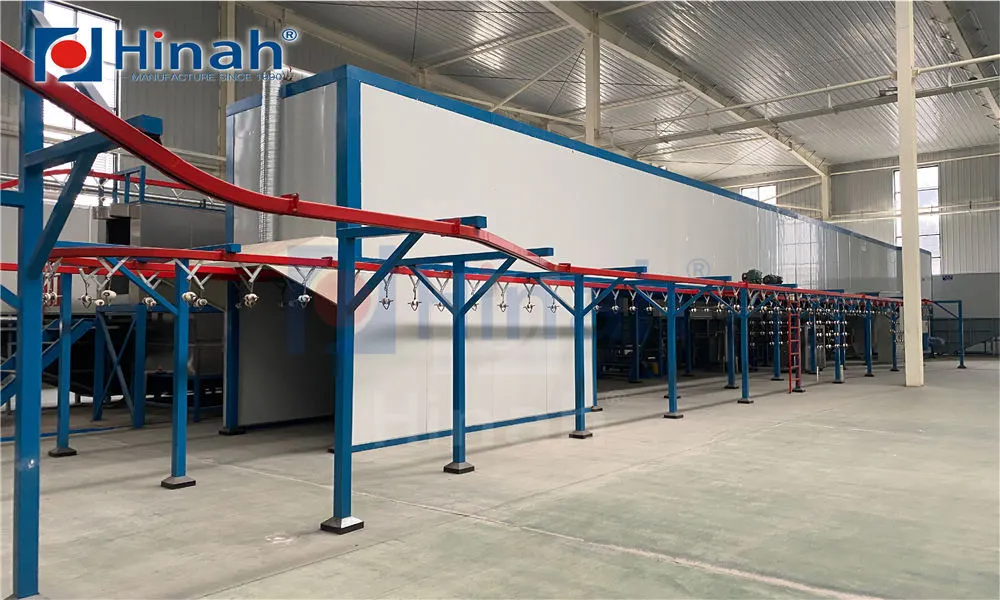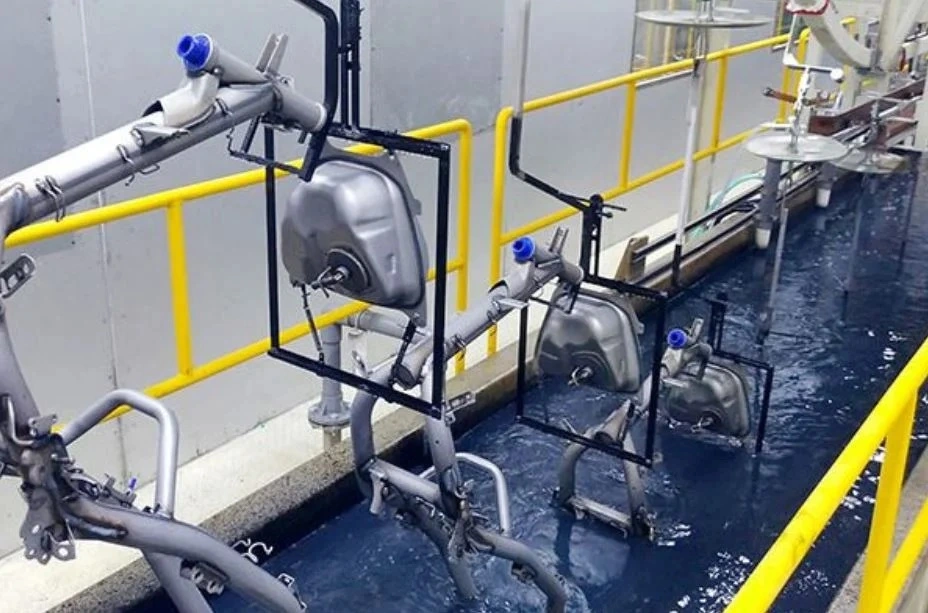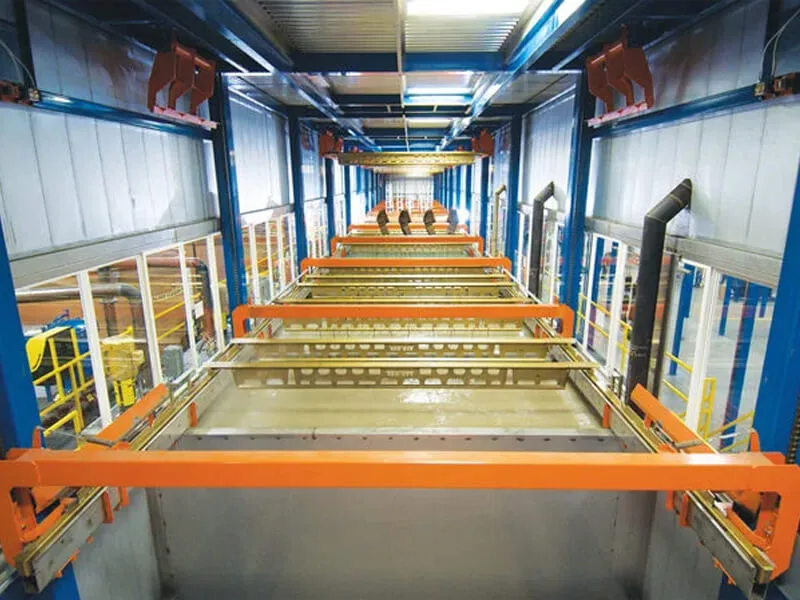

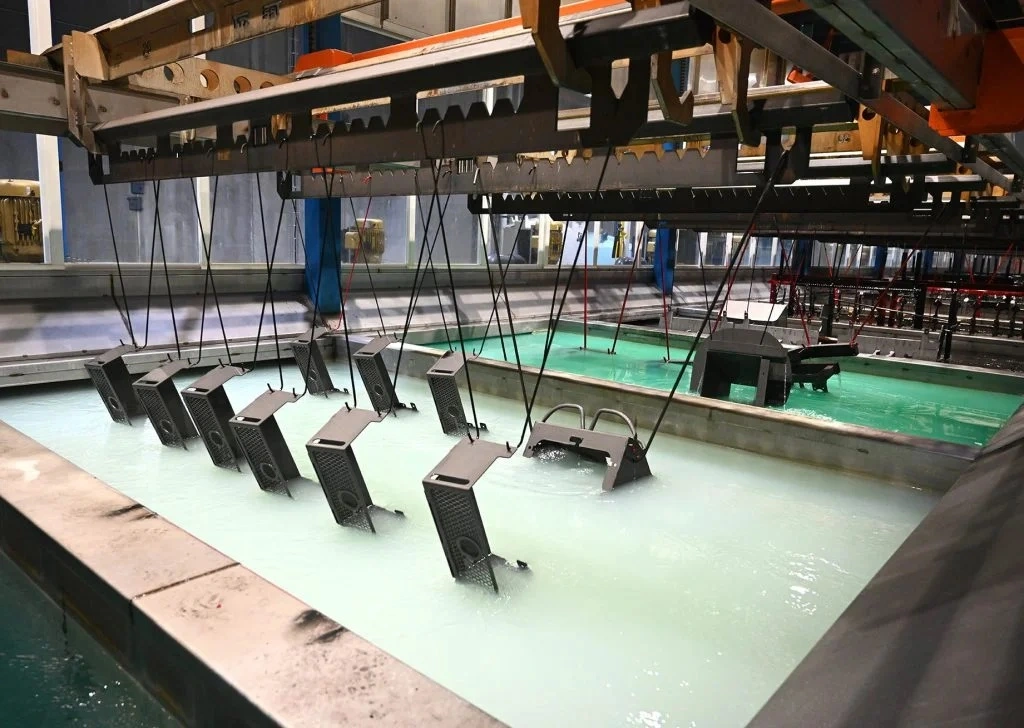

Investing in a complete finishing system demands more than comparing brochure specifications. The most competent powder coating line manufacturers differentiate themselves through validated process engineering—from chemical pretreatment to final cure. HANNA has engineered over 200 integrated lines for first-tier automotive suppliers, architectural extruders, and heavy equipment fabricators. This guide provides a measurable audit framework for plant managers and process engineers.
1. Pretreatment System Integration and Chemical Process Control
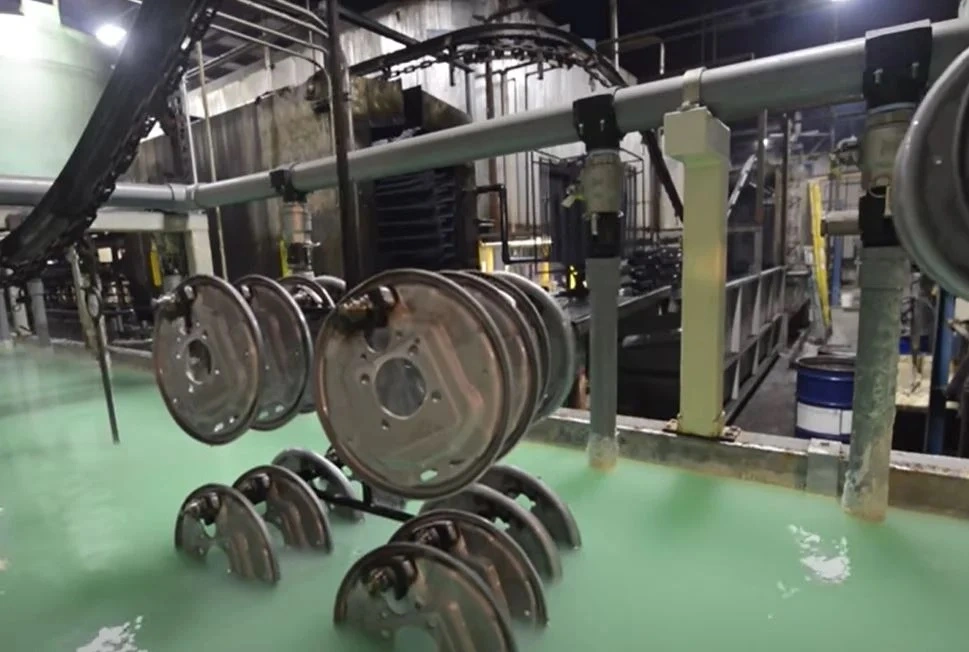
A powder coating line’s long-term adhesion and corrosion resistance start with surface preparation. When evaluating powder coating line manufacturers, request specific data on their pretreatment module design:
Stage configuration: Minimum 5-stage (clean, rinse, conversion coating, DI rinse, passivation) for ferrous substrates; 7-stage for aluminum with chrome-free Ti/Zr.
Spray nozzle coverage: Computational fluid dynamics (CFD) reports showing uniform impingement on complex geometries.
Bath life management: Automated conductivity and pH dosing systems with remote telemetry. HANNA’s lines integrate real-time bath monitoring, reducing chemical consumption by 22% in a recent agricultural equipment installation.
Drying oven interface: Non-contact infrared sensors to verify part surface temperature (minimum 110°C) before powder application.
Leading powder coating plant integrators provide validated test panel results per ASTM B117 (salt spray) and GM 9505P cyclic corrosion standards.2. Powder Application Booth Selection: Recovery Efficiency and Color-Change Speed
Application booths directly impact material usage and production flexibility. Competent powder coating line manufacturers offer three booth architectures:
Cartridge filter booths: 95–98% recovery efficiency for single-color high-volume lines. Require pulsed reverse jet cleaning.
Cyclone + cartridge booths: Up to 99% recovery with automatic color change under 15 minutes. Essential for job shops with frequent changeovers.
Mobile modular booths: Roll-out designs for multi-color lines; each booth dedicated to one color.
Technical validation point: Ask suppliers for a video demonstration of a full color-change cycle including purge air volume (minimum 4 m³/s) and booth wall coating (non-stick fluoropolymer). HANNA’s booth designs include quick-release floor grates and static-dissipative PVC curtains, reducing changeover to 8 minutes for a Midwest tier-2 automotive supplier.
3. Curing Oven Thermal Uniformity and Energy Performance
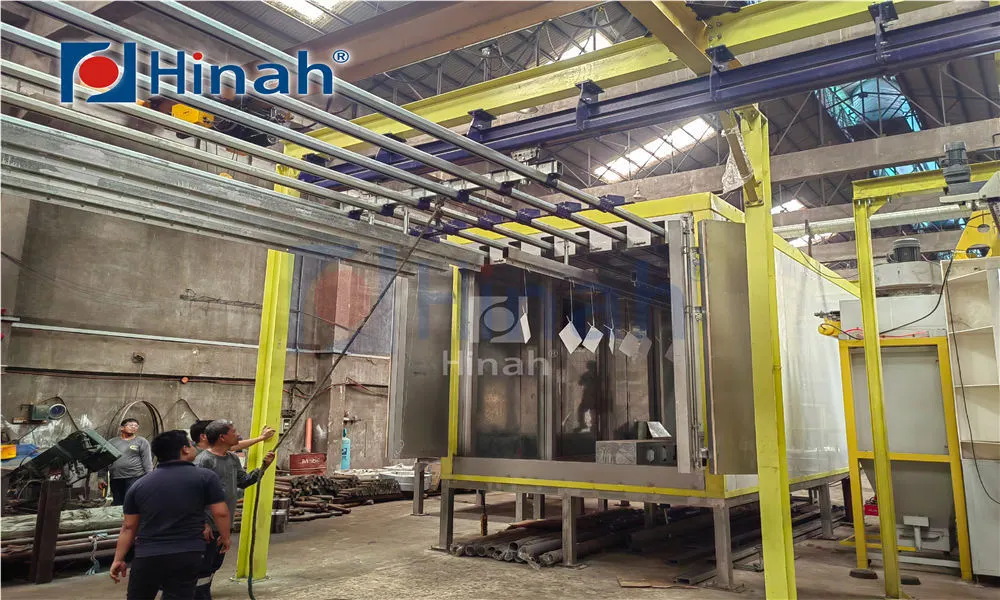
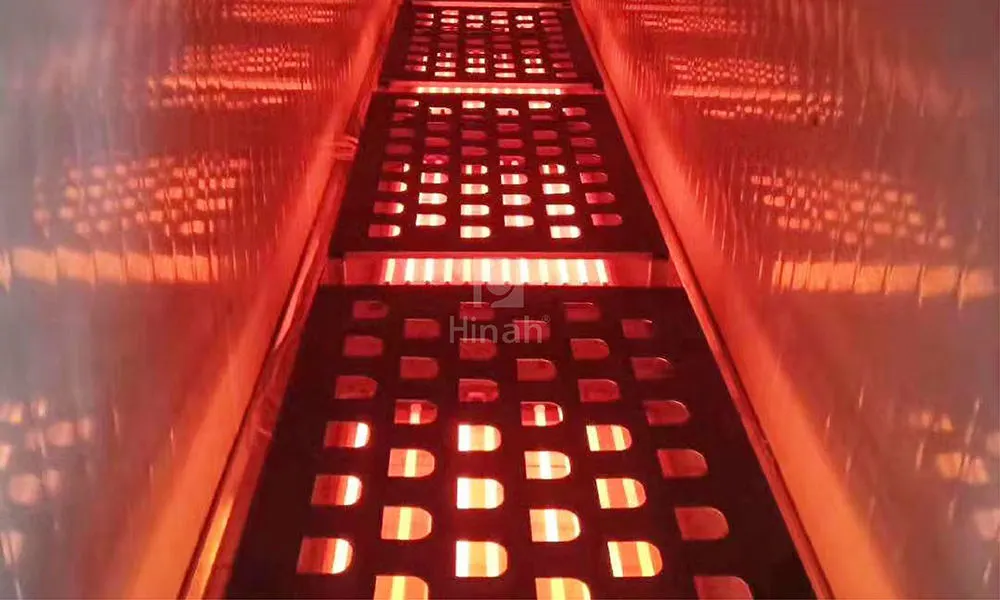
The curing oven determines final coating cross-linking density. Among powder coating line manufacturers, only those performing live thermal mapping under load should be shortlisted. Key specifications:
Temperature uniformity: ±3°C for decorative finishes, ±5°C for functional coatings per AMS 2750E.
Ramp-rate control: Ability to reach 200°C within 8 minutes for convection ovens; IR zones achieving 80% of setpoint in 45 seconds.
Insulation and air seals: 150mm rock wool with zero thermal bridges; continuous door seals maintaining <2% leakage.
Exhaust heat recovery: Plate exchangers reclaiming 60–70% of flue gas energy.
HANNA’s powder coating plant includes a 24-point wireless thermocouple system during commissioning, providing a certified uniformity report. One architectural line in Dubai reduced reject rates from 7% to 0.9% after upgrading to HANNA’s multi-zone convection oven.
4. Conveyor System Design for Part Geometry and Throughput
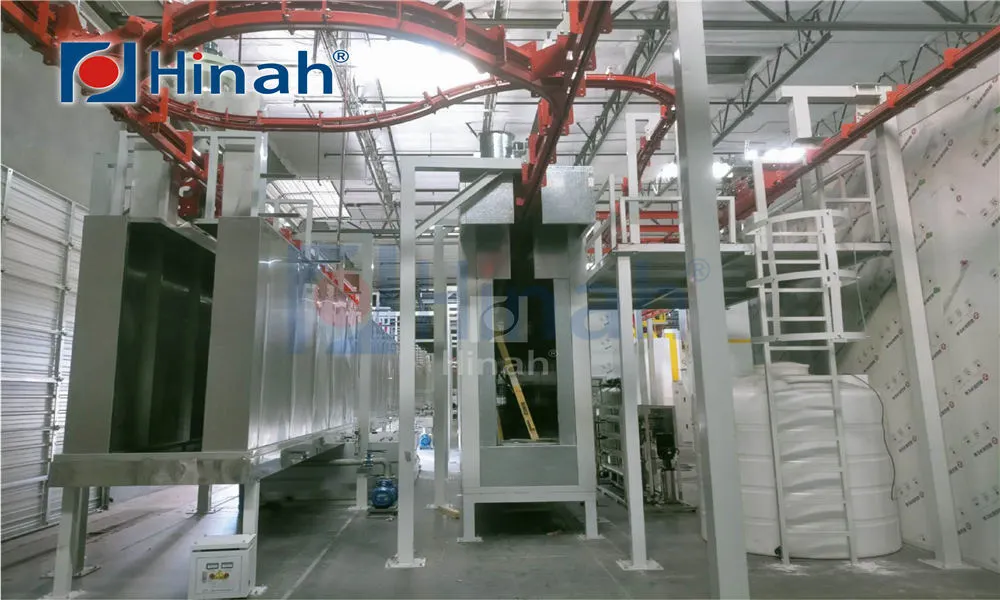
Overhead or skid conveyors must maintain consistent line speed while resisting powder buildup and oven heat. Expert powder coating line manufacturers analyze:
Load capacity per hanger: Dynamic load ratings (not static) with safety factor of 1.5.
Chain lubrication: High-temperature dry film lubricants (operational to 220°C).
Variable frequency drives (VFDs): Speed regulation within ±0.5% for consistent dwell times.
Zone control: Independent speed zones for pretreatment dip tanks vs. oven entry.
HANNA engineers use conveyor simulation software to predict accumulation zones and chain wear points. For a heavy machinery client, this modeling extended chain life from 18 to 44 months.
5. Control Architecture and Industry 4.0 Readiness
Modern lines require full traceability. Top powder coating line manufacturers deliver:
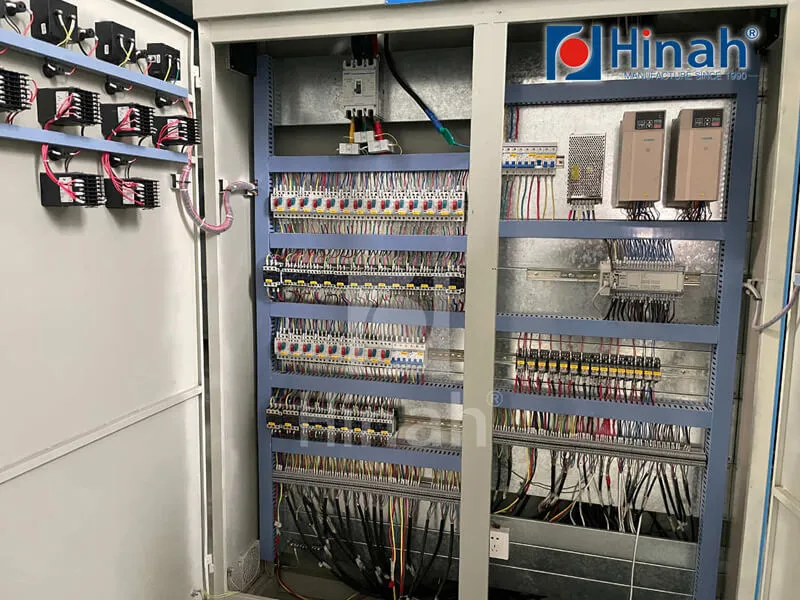
PLC-based HMI (Siemens, Allen-Bradley, Beckhoff) with recipe management for 500+ SKUs.
Remote diagnostics: VPN access and predictive alerts for filter clogging, bearing vibration, or burner flame failure.
Data logging: Compliant with ISO 9001:2015 and IATF 16949; CSV export for SPC analysis.
Optional MES integration: REST API to upload cure curves and consumption data to ERP systems.
HANNA’s control platform includes a “process window” dashboard showing real-time oven uniformity, booth recovery efficiency, and pretreatment chemical levels – accessible via any web browser.
6. Industry-Specific Solutions: Automotive, Architectural, Heavy-Duty
Generic line designs fail in specialized environments. Experienced powder coating line manufacturers customize based on application:
Automotive wheels & trim: Multi-axis reciprocators for wheel barrels, IR boosters for thick rim sections. HANNA’s automotive lines include part-specific masking stations with laser-guided positioning.
Architectural aluminum: Horizontal or vertical continuous lines with side-to-side air nozzles to prevent sagging on 7m profiles. A European extruder achieved AAMA 2604 compliance after HANNA redesigned their oven airflow.
Heavy machinery: Hybrid IR/convection ovens with oversized chain drives (up to 2-ton capacity) and walk-in maintenance platforms.
7. Maintenance Accessibility and Spare Parts Strategy
Downtime costs average $5,000–$20,000 per hour in automotive finishing. Reliable powder coating line manufacturers design for rapid service:
Modular panel construction: Allows section replacement without welding.
Quick-access doors: On ovens, booths, and pretreatment tunnels.
Local spare parts consignment: Critical items (burners, fans, nozzles, thermocouples) stored on-site.
HANNA provides a 5-year spare parts catalog with part numbers and exploded-view diagrams. For a Midwest job shop, this reduced mean time to repair (MTTR) from 14 hours to 3.5 hours.
8. Financial Justification: Total Cost of Ownership (TCO) Models
Beyond initial capital expenditure, thorough powder coating line manufacturers provide TCO projections including:
Energy consumption: kWh per square meter coated. HANNA’s lines typically achieve 0.8–1.2 kWh/m².
Powder transfer efficiency: 65–70% with manual guns; 85–90% with automatic reciprocators and booth recovery systems.
Maintenance cost per operating hour: Based on historical data from similar installations.
Changeover labor and material waste: Quantified for each color change.
HANNA offers a free TCO calculator as part of the proposal phase, benchmarked against 280 installed lines worldwide.
9. Why HANNA is Recognized Among Powder Coating Line Manufacturers
HANNA differs from generic powder coating line manufacturers through performance contracts and lifecycle support. Key differentiators:
Pre-commissioning virtual acceptance: Using digital twins, clients validate line performance before any steel is cut.
Low-NOx burner systems: Meeting SCAQMD Rule 1146 and EU Ecodesign without external abatement.
Global field service: 48-hour on-site response for critical failures, plus AR remote assistance.
Performance guarantees: Contractually bound first-pass yield (>98%) and energy consumption (within ±5% of simulation).
Frequently Asked Questions (FAQ)
Q1: What is the typical lead time for a complete powder coating line
from engineering to commissioning?
A1: For a fully customized line
(pretreatment + booth + oven + conveyor), reputable powder coating
line manufacturers require 24–36 weeks. HANNA offers a 20-week accelerated
program using modular sub-assemblies and parallel factory acceptance testing
(FAT).
Q2: How can I verify a supplier’s powder transfer efficiency claim
before purchase?
A2: Request a live test using your part geometry
and powder type. Measure input powder weight versus coated part weight
difference. Independent powder coating
plant audits should show 85%+ efficiency with automatic guns. HANNA provides
a recorded test video with each proposal.
Q3: What are the most frequent causes of coating rejects related to
line design?
A3: Three main issues: (1) Inadequate pretreatment
rinsing causing salt bloom under coating, (2) uneven oven temperature leading to
orange peel or under-cure, (3) poor booth airflow pulling contamination onto
parts. HANNA’s line designs include validation protocols for each stage.
Q4: Can an existing manual powder line be retrofitted to fully
automatic?
A4: Yes, through phased upgrades. First add automatic
reciprocators and a booth with recovery, then integrate conveyor speed control
and oven zoning. HANNA offers retrofitting audits that prioritize ROI –
typically automatic guns pay back in 9–14 months through powder savings.
Q5: What certifications should buyers demand from powder coating line
manufacturers?
A5: ISO 9001:2015 (quality), ISO 50001 (energy
management), and industry-specific IATF 16949 for automotive. For electrical
safety, UL or CE certification. HANNA holds ISO 9001 and IATF 16949, with all
systems certified to NFPA 86 and NFPA 33.
Request a Process Audit and TCO Analysis from HANNA
Selecting the right powder coating line manufacturers determines your line’s efficiency for the next decade. HANNA offers a complimentary 2-day on-site audit covering pretreatment chemistry optimization, booth recovery measurement, and oven profiling. Receive a customized proposal with performance guarantees and payback calculation within 10 business days.
Contact HANNA’s industrial finishing division: https://www.autocoatinglines.com/ |neil@autocoatinglines.com| Phone:+86 186 3393 1770
To begin, send your part drawings, required annual throughput (m²/year), and current reject rates to neil@autocoatinglines.com. HANNA’s engineering team will respond with a preliminary line layout and energy savings estimate within 5 days.