
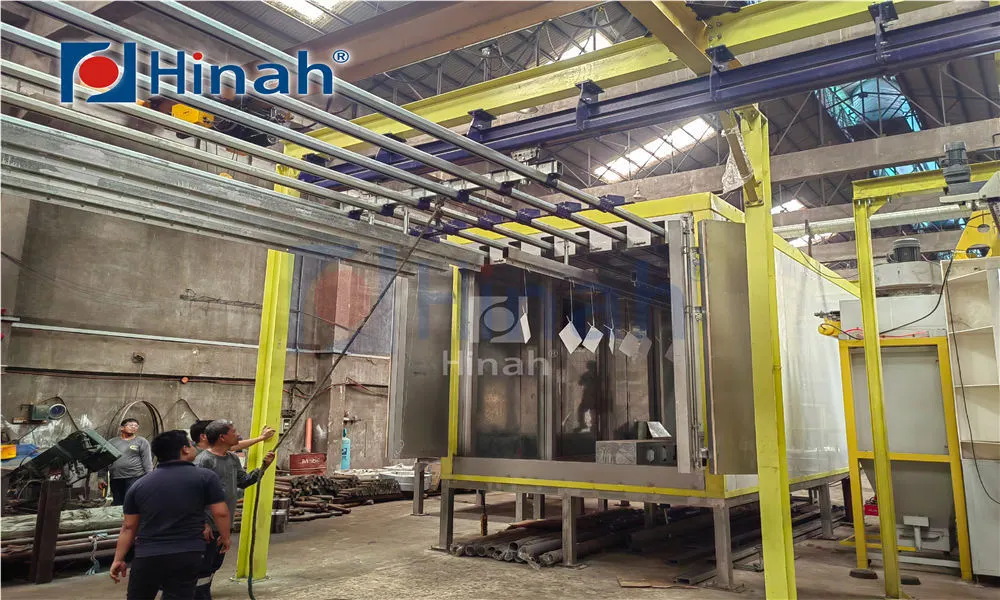
In today's competitive manufacturing landscape, achieving flawless, durable, and consistent finishes is non-negotiable. The shift from manual spraying to automated solutions is reshaping the industry. At the forefront of this revolution are powder coating robots. These advanced systems offer precision and efficiency that manual methods simply cannot match. Companies like HANNA are integrating these robotic solutions to meet rising quality demands and environmental standards. This article explores the concrete advantages driving their widespread adoption.
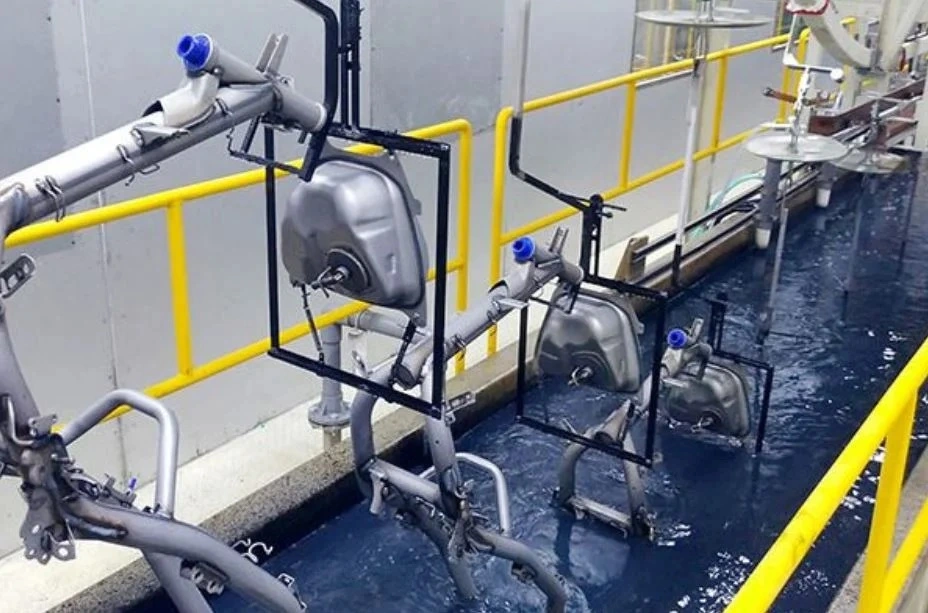
Modern production lines face immense pressure. They must deliver high-quality finishes on complex parts, reduce material waste, and protect worker health. Manual powder coating struggles with consistency, especially on intricate geometries. It is also labor-intensive and exposes operators to airborne particles. Powder coating robots eliminate these variables. They provide a programmable, repeatable process that ensures every part receives an identical coating layer.
The primary advantage of using robotic systems is the guarantee of a uniform finish. Powder coating robots are equipped with precise motion control and advanced spray gun triggering. They replicate the exact path, speed, and distance from the part for every cycle. This eliminates common human errors like uneven wrist movement or fatigue. The result is a perfect film thickness, with no runs, sags, or thin spots. For industries like automotive and aerospace, where coating specs are stringent, this consistency is vital.
Speed is a major competitive differentiator. Robotic arms work tirelessly at a constant, optimized pace. They do not require breaks, shift changes, or suffer from slowdowns. A powder coating robot can often coat parts faster than a human operator by following the most efficient path. Furthermore, they can be integrated into continuous conveyor systems. This allows for non-stop production, significantly increasing line output and allowing manufacturers to scale operations effortlessly.
Overspray is a major cost and environmental concern in powder coating. Manual spraying can have transfer efficiencies as low as 60-70%, meaning much powder misses the target. Powder coating robots, programmed for optimal gun trajectories and triggering, can achieve transfer efficiencies of 95% or higher. This drastic reduction in overspray means less powder purchased, less waste to reclaim, and lower operational costs. The ROI from material savings alone can justify the investment.
Powder coating environments pose health risks. Inhalation of fine powder particles and repetitive strain injuries from handling spray guns are real concerns. Deploying powder coating robots removes operators from direct exposure to the coating booth. They can supervise the process from a safe distance. This creates a safer workplace, reduces potential liability, and eliminates ergonomic issues associated with manual spraying.
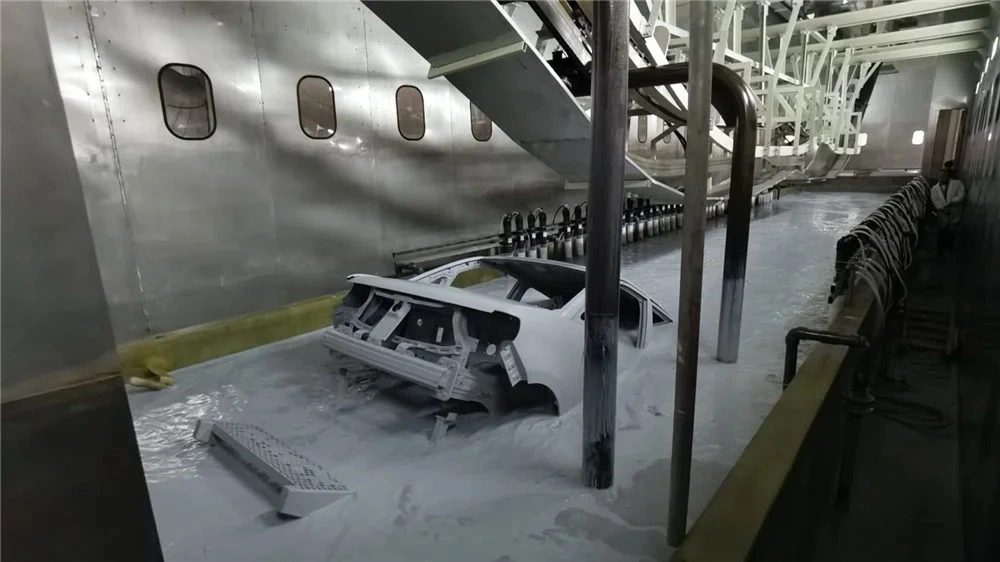
Today’s products come in diverse shapes and sizes. Coating a complex assembly with recesses, edges, and corners is challenging manually. Modern powder coating robots feature multi-axis movement, often 6-axis or more. They can manipulate the spray gun to any angle, ensuring complete coverage on the most complicated parts. With quick program changeovers, the same robot can handle a bicycle frame in the morning and a metal cabinet in the afternoon.
The modern factory is data-driven. Powder coating robots are intelligent nodes in a connected ecosystem. They can collect data on coating parameters, cycle times, and material usage. This data feeds into central monitoring systems for predictive maintenance and process optimization. Companies like HANNA design their systems for seamless integration, providing manufacturers with valuable insights to drive continuous improvement.
Environmental compliance is stricter than ever. The high transfer efficiency of robotic coating directly reduces VOC and particulate emissions associated with waste. Precise control also minimizes the need for rework, which consumes additional energy and materials. By implementing powder coating robots, manufacturers future-proof their operations against tightening environmental laws and bolster their sustainability credentials.
The transition to robotic automation in powder coating is no longer a luxury; it's a strategic necessity for manufacturers aiming for excellence. The benefits—from flawless quality and higher output to major cost savings and a safer workplace—are too significant to ignore. As technology advances, the capabilities of powder coating robots will only expand. Industry leaders like HANNA are committed to providing robust, intelligent robotic solutions that empower manufacturers to thrive in an demanding global market.
Q1: How do powder coating robots handle different colors or powder types?
A1: Modern robotic systems are designed for fast color changes. They often integrate with specialized powder booths featuring quick-clean functions or multiple feed systems. The robot's program automatically switches the powder pump and cleaning cycle, minimizing downtime between color changes to just a few minutes.
Q2: Is the programming for a powder coating robot difficult and time-consuming?
A2: Not with today's offline programming (OLP) software. Operators can create and simulate spray paths on a digital 3D model of the part offline, without stopping production. This makes programming intuitive and significantly faster. Brands like HANNA offer user-friendly interfaces and training to simplify this process.
Q3: What is the typical maintenance required for a powder coating robot?
A3: Maintenance is generally straightforward. It involves regular cleaning of the spray gun and applicator to prevent powder buildup, checking hose integrity, and lubricating robotic arm joints as per the manufacturer's schedule. Their sealed design protects internal components from the powder environment.
Q4: Can powder coating robots be retrofitted into existing coating lines?
A4: Yes, retrofitting is a common and cost-effective approach. Robotic integrators can design a cell that fits into your current layout, often utilizing your existing oven or conveyor. The key is a thorough evaluation of space, part flow, and booth specifications to ensure seamless integration.
Q5: Are robotic powder coating systems safe to operate alongside human workers?
A5: Absolutely. They are installed with comprehensive safety systems. These include physical safety fences, light curtains, and area scanners that instantly stop the robot if a person enters a defined zone. This allows for safe collaboration in the manufacturing space.