

The global powder coating market is projected to exceed USD 20 billion by 2030, driven by the shift toward solvent-free finishing. For fabricators and coaters, acquiring a powder coating plant for sale represents a capital decision that impacts efficiency, quality, and environmental compliance for decades. This guide delivers a technical deep‑dive into what constitutes a modern, high‑performance system—moving beyond brochures to the engineering realities that determine ROI.
1. Anatomy of a Modern powder coating plant for sale: Core systems & specifications
A complete line is an orchestra of interdependent modules. When evaluating equipment, scrutinize each subsystem's design parameters:
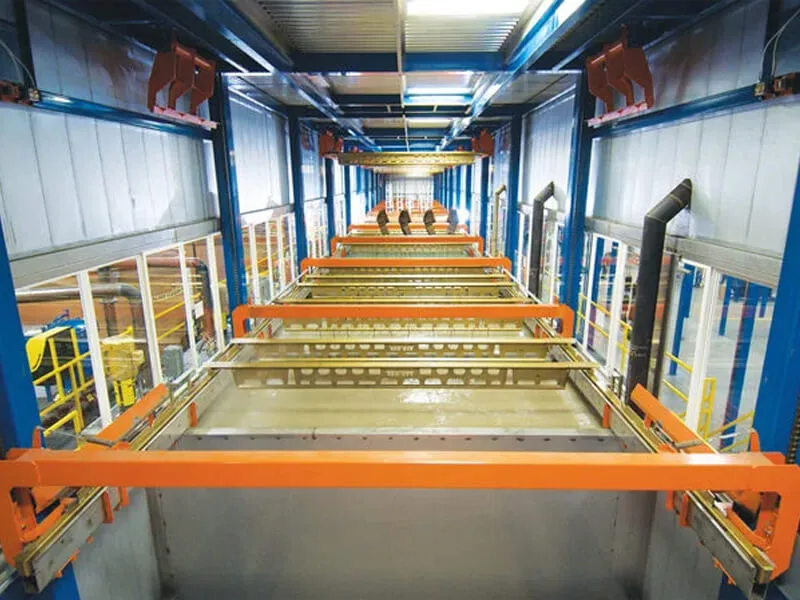
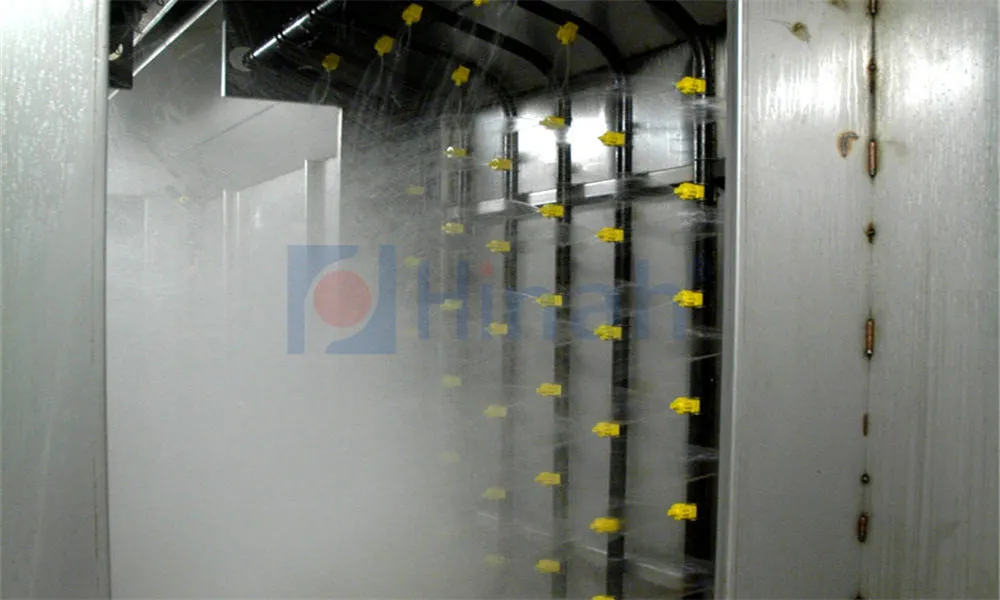
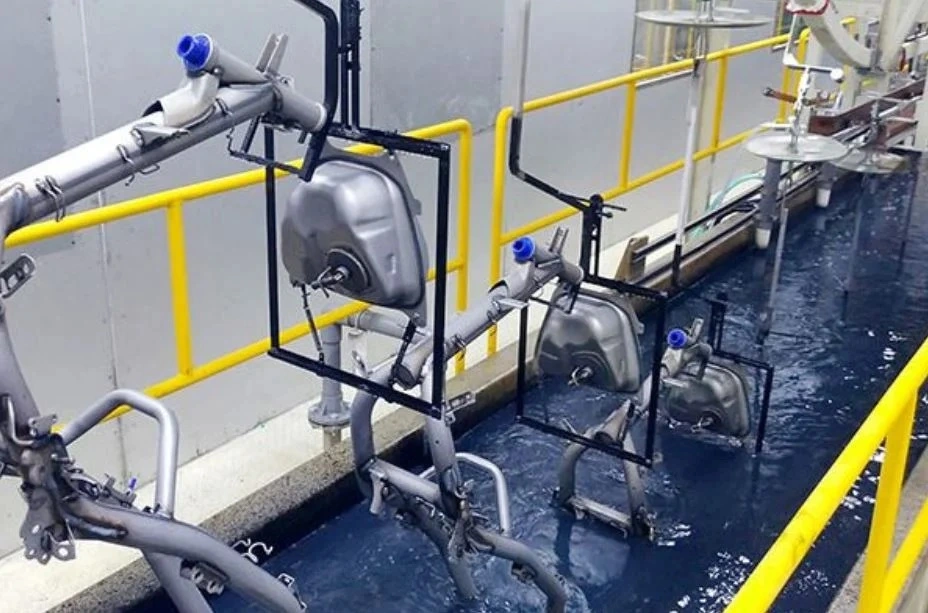
Pretreatment zone: the foundation of adhesion
Multi‑stage spray vs. immersion: For high‑volume mixed metals, spray systems with 7‑9 stages (alkaline clean, rinse, zirconium or silane conversion, final seal) offer throughput up to 6 m/min. Data point: Zirconium‑based pretreatments reduce energy costs by 30% compared to iron phosphate.
Water conservation: Look for counter‑flow rinsing and closed‑loop RO systems. A well‑designed plant reuses >80% of process water.
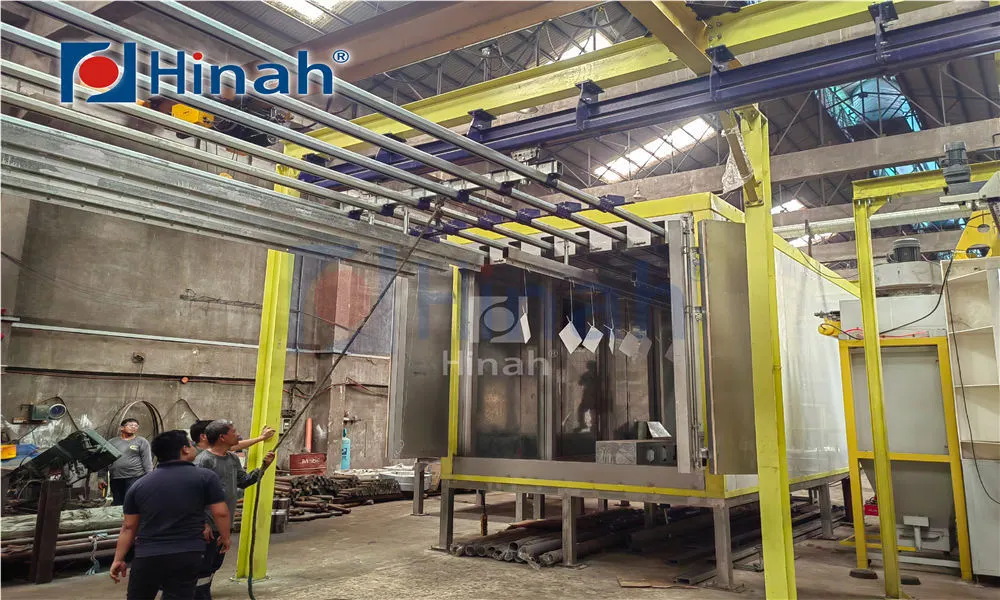
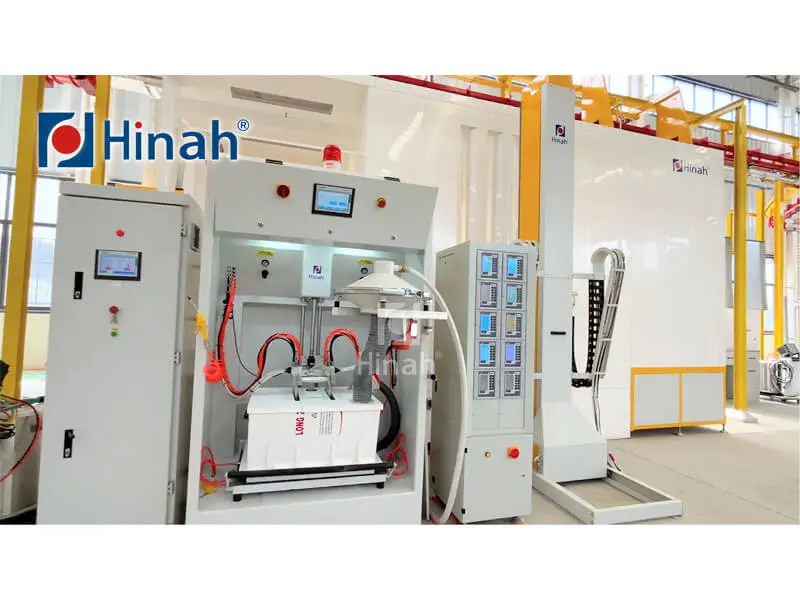
Powder booth & recovery: efficiency and color change
Cartridge vs. cyclone + final filter: Cyclone systems reclaim 95‑98% of overspray with minimal degradation – ideal for single‑color high volume. For frequent color changes, a compact modular booth with quick‑release cartridges can cut changeover time to <10 minutes.
Explosion venting & ATEX compliance: Mandatory for safety; ensure the plant meets local codes (NFPA 33 in North America, ATEX 137 in Europe).
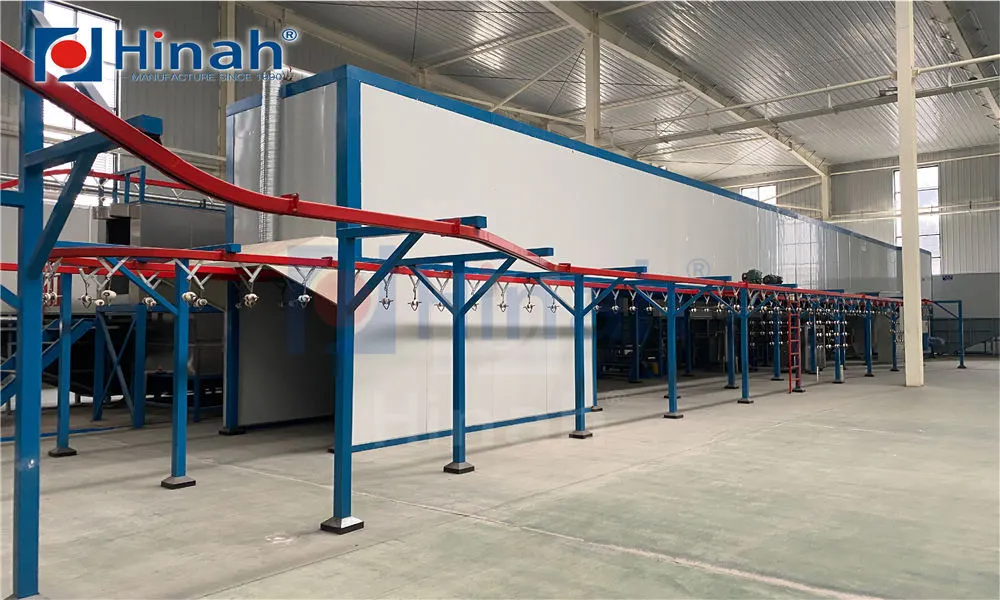
Curing oven: thermal uniformity & energy footprint
Convection vs. infrared + convection: For complex geometries, IR boosters at the entrance reduce soak time by 20‑25%. Key metric: temperature tolerance ±3°C across all zones guarantees consistent cross‑linking.
Insulation & air seals: Modern ovens achieve 85% thermal efficiency; always request CFD simulation data from the supplier.
Conveyor & controls: Industry 4.0 ready
Variable speed drives & PLC: The best lines integrate SCADA for real‑time OEE tracking. HANNA systems, for example, include remote monitoring modules that predict maintenance intervals – reducing unplanned downtime by 18%.
2. Industry‑specific configurations: automotive, architecture & general industry
A powder coating plant for sale must be matched to your end‑market:
Automotive components: Require high‑film build consistency (60‑120 µm) and edge coverage. Here, tribo or corona guns with optimized Faraday‑cage algorithms are essential.
Architectural aluminium: Demands AAMA 2604/2605 compliance. Look for multi‑stage chrome‑free pretreatment and quartz‑enhanced infrared ovens to handle thick extrusions without distortion.
General industry (heavy equipment, furniture): Flexibility matters – a modular plant that accepts parts up to 2 m x 3 m with quick racking systems maximizes utilization.
3. Solving operational pain points with engineering
Every coating shop battles three chronic issues: color‑change downtime, low transfer efficiency on complex parts, and energy waste. Here is how advanced lines – such as those engineered by HANNA – address them:
Rapid colour change: Closed‑loop powder feed with self‑cleaning sieves and dedicated recovery per colour reduces purge waste. HANNA’s latest booth design enables 8‑minute colour switches with <2% powder loss.
High first‑pass transfer efficiency: Optimized gun placement (reciprocators + fixed guns) combined with electrostatic simulation software lifts TE from 65% to >85% on re‑entrant profiles.
Energy‑saving oven zoning: Using variable frequency drives on recirculation fans and insulated panels with R‑value >16 cuts gas consumption by 25–30%.
4. ROI analysis: the economics of new vs. used equipment
When evaluating a powder coating plant for sale, calculate total cost of ownership over 10 years. A typical mid‑volume line (2 million ft²/year) involves:
Capital expenditure: USD 850k – 1.5M for a new turnkey line.
Powder savings: Modern recovery systems reclaim 98% of overspray → at USD 4/lb powder, annual savings exceed USD 120k compared to 85% recovery.
Labor efficiency: Automated gun movers and PLC‑controlled conveyors reduce manpower by 2 operators/shift → ~USD 90k/year saving.
Energy: High‑efficiency ovens and LED‑cured (where applicable) lower utility bills by USD 25k/year.
Payback periods for new lines typically range from 24 to 36 months. Used lines may have lower upfront cost but often incur 15‑20% higher maintenance and energy penalties.
5. How to select a trustworthy manufacturer
Beyond the iron, evaluate the supplier’s engineering depth and service footprint. HANNA provides a full process guarantee – from pretreatment chemistry compatibility to curing profiles – backed by >200 installations worldwide. Key vetting criteria:
Test lab facilities: Can they run your parts before you buy? A reputable vendor will provide coating thickness reports, mechanical tests, and cure simulations.
Spare parts & support: Look for regional warehouses and 24/7 remote diagnostics. HANNA’s IoT‑enabled controllers allow engineers to fine‑tune parameters remotely, minimising site visits.
Certifications: ISO 9001, CE, and UL listings are non‑negotiable for safety and quality.
6. Environmental compliance and future‑proofing
Stringent VOC regulations are pushing coaters toward zero‑HAP powders. A modern powder coating plant for sale should be designed for:
Low‑temperature cure powders (150°C or lower) to expand substrate options and save energy.
Modular expansion –预留 space for additional booths or ovens as production grows.
Integration with solar or heat‑recovery systems to meet net‑zero targets.
Frequently Asked Questions About Powder Coating Plants for Sale
Q1: What is the typical lead time for a new powder coating plant?
A1: Engineering and fabrication usually take 16–24 weeks, followed by 4–6 weeks for installation and commissioning. Some suppliers like HANNA offer modular designs that reduce on‑site assembly to <3 weeks.
Q2: Can a powder coating plant handle both small and large batches economically?
A2: Yes – if equipped with quick‑change booths and fast colour‑recovery systems. Look for designs with independent booth modules that allow you to run a high‑volume colour continuously while a second booth handles JIT small batches.
Q3: What floor space is required for a complete line?
A3: A typical mid‑size plant (pretreatment + booth + oven + cool-down) occupies 600–1000 m². Compact layouts with stacked ovens or serpentine conveyors can reduce footprint by 30%.
Q4: How often should a powder coating plant be maintained?
A4: Daily checks (booth filters, gun tips) and weekly deep cleaning of the recovery system. Major preventive maintenance – bearing lubrication, chain cleaning, oven seal inspection – should be scheduled every 2000 operating hours.
Q5: Are there financial incentives for buying energy‑efficient coating equipment?
A5: Many regions offer tax credits or grants for equipment that reduces VOC emissions or energy use. For example, the U.S. EPA’s ENERGY STAR program and local utility rebates can cover 10–30% of the premium for high‑efficiency ovens.
Q6: What is the difference between a cyclone and a cartridge booth?
A6: A cyclone separator recovers powder without filters – ideal for single‑colour lines because it minimises mechanical degradation. Cartridge booths are better for multiple colours as they allow faster cleaning; however, cartridge life depends on proper air‑to‑cloth ratio (typically 1.5:1).
making a data‑backed decision
Selecting a powder coating plant for sale is not merely a purchase – it is a long‑term partnership with a technology provider. By focusing on thermal uniformity, recovery efficiency, and automation readiness, you ensure that your line will deliver consistent quality for the next 15‑20 years. HANNA’s engineering team offers free line simulation and ROI modelling to help you validate the numbers. Contact them for a detailed proposal tailored to your production mix.