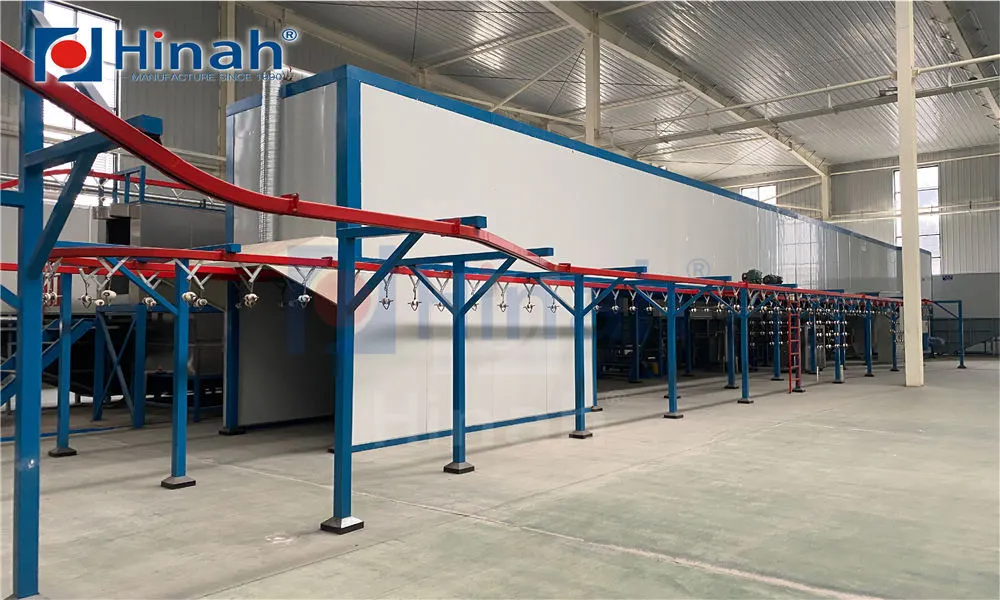
Selecting an industrial powder coating oven is a strategic decision that directly impacts line throughput, finish quality, and operational costs. Unlike liquid painting, powder coating relies on precise thermal curing to cross-link polymer chains. A poorly designed oven leads to under-cured surfaces (poor adhesion, chalking) or over-cured embrittlement. Based on 15+ years of field data, this guide examines the core engineering parameters that separate high-performance curing systems from energy-wasting alternatives. HANNA has integrated these principles into modular oven platforms that serve automotive, architectural, and general industry sectors globally.
A powder coating oven must elevate part temperature to a specific window (typically 180–200°C for 10–20 minutes of metal temperature) to initiate cross-linking. This thermosetting reaction transforms the powder film into a continuous, tough coating. Three critical sub-processes occur inside the oven:
Melt & flow: Powder particles soften and coalesce into a smooth film (80–120°C).
Gelation: Molecular chains begin linking; viscosity rises (130–160°C).
Cross-linking completion: Full chemical cure achieves rated mechanical and corrosion resistance (180–200°C).
Incomplete cure due to cold spots or insufficient dwell time forces rework or premature field failures. Conversely, excessive heat degrades color and reduces impact resistance. Therefore, the oven’s ability to maintain ±3°C uniformity across all part surfaces is non-negotiable. For operations handling mixed product sizes, a batch powder coating oven or continuous conveyor design must be matched to thermal load variability.
Data from over 200 installations show that 68% of curing defects originate from temperature non-uniformity exceeding ±8°C. Industrial powder coating ovens should employ balanced air recirculation systems with adjustable louvers. Computational fluid dynamics (CFD) modeling reduces dead zones. For example, a well-designed oven achieves temperature variance ≤ ±2.5°C after stabilization. Key metrics include air change rate (20–60 changes/hour) and nozzle velocity (5–15 m/s). Without proper airflow, heavy parts act as thermal sinks, delaying gelation in shadow areas.
Gas-fired convection ovens remain the industry standard for mixed loads because they deliver uniform heating via forced hot air. However, for high-speed lines (e.g., automotive wheels), infrared curing modules shorten dwell times by up to 70%. The choice depends on part geometry and powder chemistry. Hybrid systems combine IR boosters at the entrance with a convection holding zone — a solution offered by HANNA in their modular powder coating oven range. Electric ovens provide precise control for small batch work but incur higher operational costs above 200 kW.
Thermal efficiency directly affects ROI. A 100 mm thick mineral wool insulation (density 128 kg/m³) reduces skin temperature to ambient +15°C and cuts heat loss by 40% compared to 50 mm panels. Look for tongue-and-groove panel joints to eliminate thermal bridging. Energy recovery systems (exhaust-to-inlet air heat exchangers) can reclaim 50-60% of waste heat, lowering gas consumption by 15–25%.
Real-world powder coating oven challenges include:
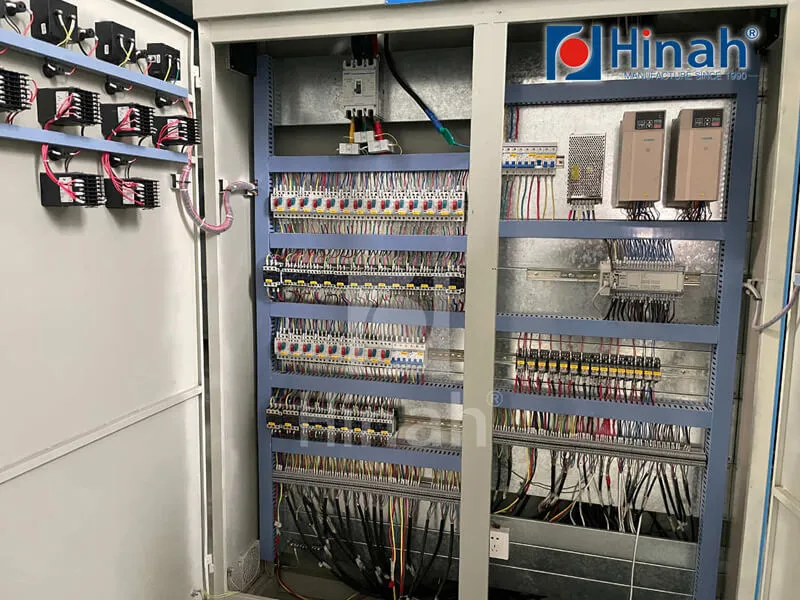
Pain point 1: Non-uniform part heating – Solution: Multi-zone PID controllers with independent burner modulation and high-turbulence airflow.
Pain point 2: High energy bills – Solution: VFD-controlled fans (saving 30% fan energy), improved door seals, and automated idle mode.
Pain point 3: Long color change downtime – Solution: Quick-clean oven designs with removable floor plates and smooth internal surfaces (no ledges).
Pain point 4: Poor data visibility – Solution: IoT-enabled temperature profiling with real-time alarms and batch traceability.
HANNA’s engineering team has addressed these by integrating smart oven controllers that self-tune to product load changes, reducing rework rates by over 45% in documented case studies.
HANNA designs its powder coating ovens around four pillars: thermal uniformity, energy optimization, modular scalability, and low maintenance. Their latest continuous ovens feature:
Dual-zone heating with cascading PID loops – uniformity ±1.5°C.
High-efficiency ribbon burners with 85+% thermal efficiency.
Fully welded interior liners for easy cleaning and NFPA 33 compliance.
Remote diagnostics via 4G gateway – reduces on-site service visits by 60%.
For businesses upgrading from outdated systems, HANNA provides retrofit packages including oven airflow redistribution kits and insulation upgrades that pay back within 18 months.
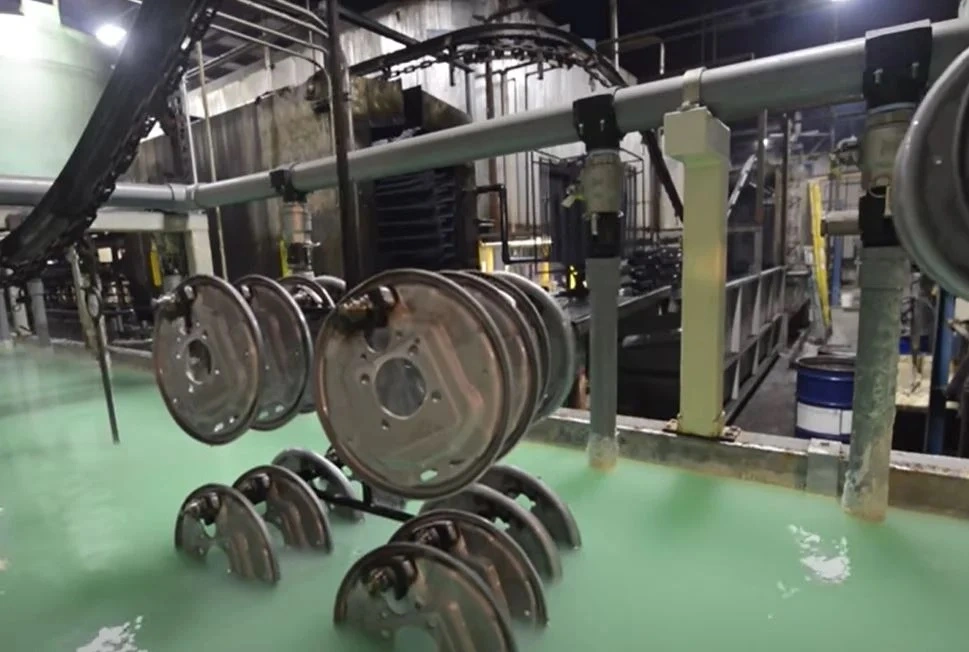
Case 1: A Tier-1 automotive supplier processing aluminum wheels replaced their aging direct-fired oven with a HANNA indirect gas-fired convection powder coating oven. Results: 22% lower gas consumption, zero rejects due to under-cure, and 15% faster line speed.
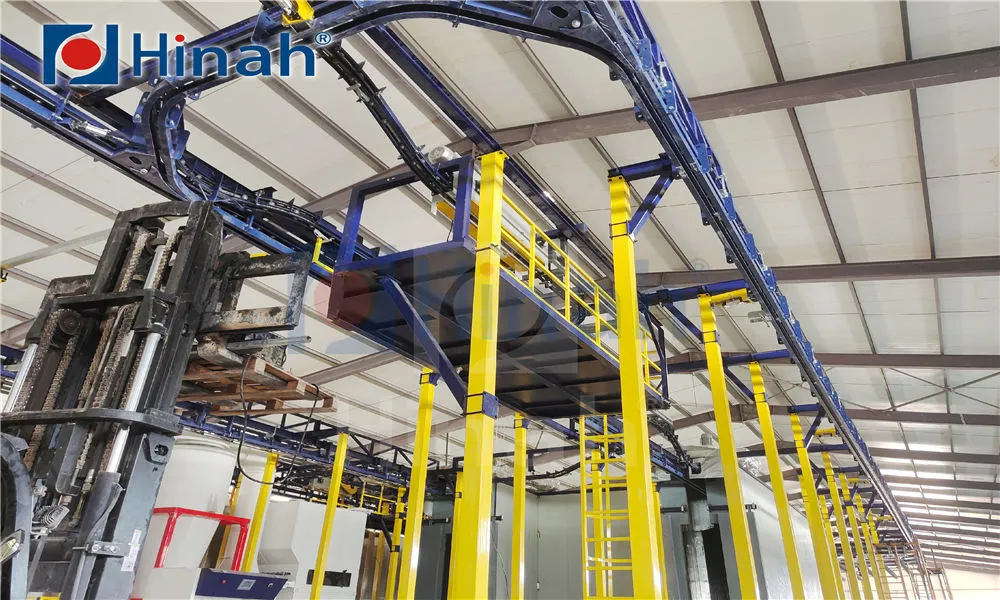
Case 2: An architectural extruder coating 8m aluminum profiles struggled with end-to-end temperature drop. After installing a HANNA oven with longitudinal air recirculation and side-mounted nozzles, the temperature gradient dropped from ±11°C to ±2.8°C, meeting AAMA 2604 standards.
Case 3: A general job shop using a batch oven reduced cure time from 35 to 22 minutes by adding IR booster zones at the oven entrance, increasing daily throughput by 40%.
To keep your powder coating oven running at peak efficiency, follow this quarterly schedule:
Inspect all thermocouples and replace any with drift > ±1.5°C.
Clean recirculation fan blades and housing to prevent imbalance and vibration.
Check door gaskets for hardening; replace if compression set exceeds 20%.
Measure oven stratification using a traversing thermocouple array (9-point test).
Calibrate gas train safety valves and purge timers per NFPA 86.
Neglecting these steps leads to a 5–8% annual efficiency loss. Modern predictive maintenance systems track fan motor current and bearing temperature, alerting operators before failures occur.
Q1: What is the ideal temperature uniformity specification for a
powder coating oven?
A1: For most thermoset powders (epoxy,
polyester, hybrid), aim for ±3°C (5.4°F) across the entire work zone after
stabilization. Premium ovens like those from HANNA achieve ±1.5°C. Measure
uniformity using a nine-point thermocouple grid during empty and loaded
conditions.
Q2: How do I calculate the required oven dwell time for my
parts?
A2: Dwell time depends on part thermal mass and powder TGIC
content. Use a “part temperature profiling” method: attach thermocouples to the
heaviest and thinnest sections. Run the oven at nominal setpoint; the time
needed for the coldest point to reach cure temperature (typically 180°C for 10
min) is your minimum dwell. Add 15% safety margin.
Q3: Can I convert my existing gas oven to electric infrared for
faster curing?
A3: Yes — hybrid conversion is feasible. Install
medium-wave IR emitters (2.5–3.5 μm) in the first zone to rapidly bring parts to
gel temperature, followed by the existing convection zone for hold. Ensure
electrical supply (400–480 V) and controller integration. HANNA offers retrofit
kits with zone partitioning and safety interlocks.
Q4: What is the typical air change rate for a convection powder
coating oven, and why does it matter?
A4: Recommended air changes:
30–60 per hour. Too few changes cause temperature stratification and
solvent/powder off-gas accumulation (fire risk). Too many changes waste energy.
Proper recirculation ensures every cubic meter of air passes through the heat
source multiple times, improving efficiency and uniformity.
Q5: How often should I replace oven door seals and fan
bearings?
A5: Silicone rubber door seals last 2–3 years under
continuous 200°C operation — inspect every six months for hardening. Fan
bearings (high-temp grease type) typically require replacement every
15,000–20,000 operating hours. Vibration monitoring alerts when bearing
clearance exceeds 0.05 mm.
Choosing the right powder coating oven involves balancing throughput, part geometry, energy source availability, and budget. HANNA provides free thermal process audits, CFD simulation reports, and ROI calculations. Whether you require a small batch oven or a 100-meter continuous line with integrated cooling tunnels, our engineering team delivers turnkey solutions. Send us your part drawings and production targets to receive a customized quotation within 48 hours.
Request your inquiry now → Visit https://www.autocoatinglines.com/ or email neil@autocoatinglines.com. Include your desired daily output, part size range, and existing utility setup.