Industrial finishing has undergone a paradigm shift with the adoption of robotic automation. Today’s painting robot is no longer a simple manipulator but a sophisticated cyber‑physical system that integrates real‑time sensing, fluid dynamics, and predictive analytics. Whether applied in automotive topcoating, aerospace primers, or general industrial liquid painting, the performance of a painting robot directly determines material utilisation, cycle time, and defect rates. Drawing from field data and HANNA‑engineered installations, this article breaks down six quantifiable metrics that separate high‑performance robotic painters from conventional automation.
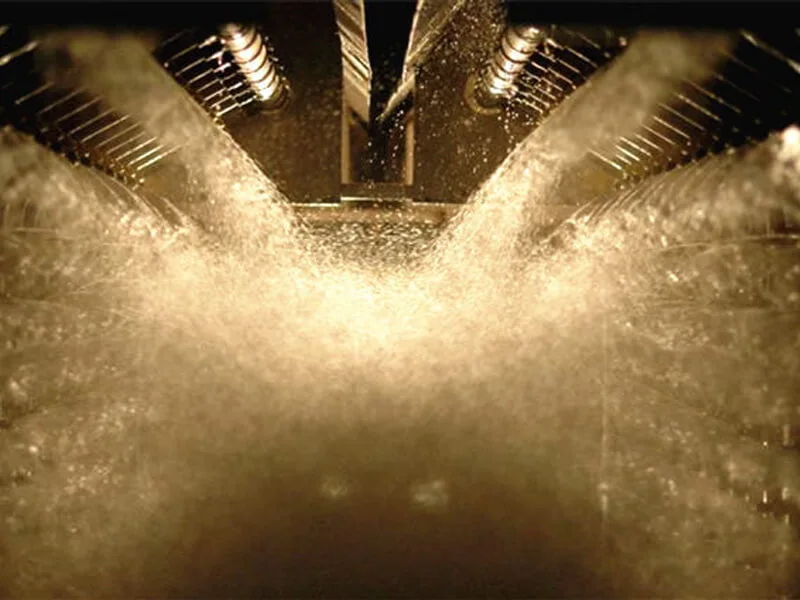
The heart of any painting robot is its applicator. Two dominant atomisation methods prevail:
Air‑spray guns (conventional or HVLP): Suitable for high‑viscosity materials but typically achieve transfer efficiencies (TE) of 30–40% on complex parts.
Electrostatic rotary bell applicators: High‑speed rotation (20,000–70,000 rpm) produces a finely atomised, charged cloud. TE can reach 75–85% on conductive substrates, reducing paint consumption by up to 30% compared to air spray.
Modern painting robots from HANNA integrate closed‑loop control of bell speed, shaping air, and high voltage (typically 60–90 kV) to maintain consistent film build even on complex geometries. Real‑time mass flow meters ensure that the applied film thickness stays within ±2 µm of the target—critical for OEM finish lines.
Repeatability is the raison d’être of robotic painters. A six‑axis painting robot typically offers a position repeatability of ±0.1 mm or better. However, path accuracy also depends on:
Kinematic calibration: Temperature‑compensated models adjust for thermal expansion during operation.
Offline programming (OLP) software: Enables simulation of spray paths, reachability, and collision avoidance before any physical teaching. OLP reduces programming time by 70–80% and optimises path smoothness, which directly affects orange peel and film uniformity.
In mixed‑model production, vision‑guided path adaptation further enhances accuracy. HANNA‑integrated systems use 3D part recognition to shift programmed paths in real time, accommodating part position variations up to ±50 mm without stopping the line.
For job shops and high‑mix assembly lines, colour‑change time is a direct productivity driver. A modern painting robot cell achieves colour changes through:
Closed fluid circuits with pigging technology: Compressed air‑driven pigs purge paint from the hose, reducing cleaning solvent use and waste.
Multi‑colour gear pumps or piston dosers: Deliver precise volumetric control (accuracy ±1%) and minimise flushing volume.
Fast‑switching applicators: Some rotary bells allow colour change in under 10 seconds by using an integrated cleaning nozzle.
Data from HANNA‑installed lines show that optimised colour‑change sequences can cut average change time from 90 seconds to 35 seconds, increasing OEE by 4–6% in facilities running 200+ colour changes per week.
Paint booths contain flammable vapours and powders, making safety certification non‑negotiable. A compliant painting robot must meet:
ATEX or NFPA 87 standards: Robot internals are pressurised (purged) to prevent ingress of explosive atmosphere; all motors and cables are rated for hazardous locations.
Stainless steel or PTFE sealed covers: Resist chemical attack and simplify cleaning.
Grounding and anti‑static features: Resistivity <1 MΩ to prevent charge accumulation.
Beyond safety, environmental regulations drive the use of waterborne and high‑solids coatings. Robotic systems must be compatible with these materials—often requiring stainless steel fluid paths and specialised seals. HANNA offers certified explosion‑proof painting robots with integrated zone‑2 pressurisation, validated for both solvent‑borne and waterborne applications.
To handle continuous motion lines, modern painting robots use conveyor tracking (interpolation with encoder feedback). Key performance indicators include:
Synchronisation error: Typically <2 ms, ensuring the spray pattern lands exactly where programmed even at line speeds up to 7 m/min.
Vision‑guided start‑of‑cycle: 2D/3D cameras detect part presence, orientation, and type, then trigger the appropriate program without stopping.
This integration enables “lights‑out” operation in high‑volume plants. For example, an automotive topcoat line using painting robot cells with vision tracking can process mixed car bodies (sedan, SUV, hatchback) randomly sequenced without mechanical changeovers.
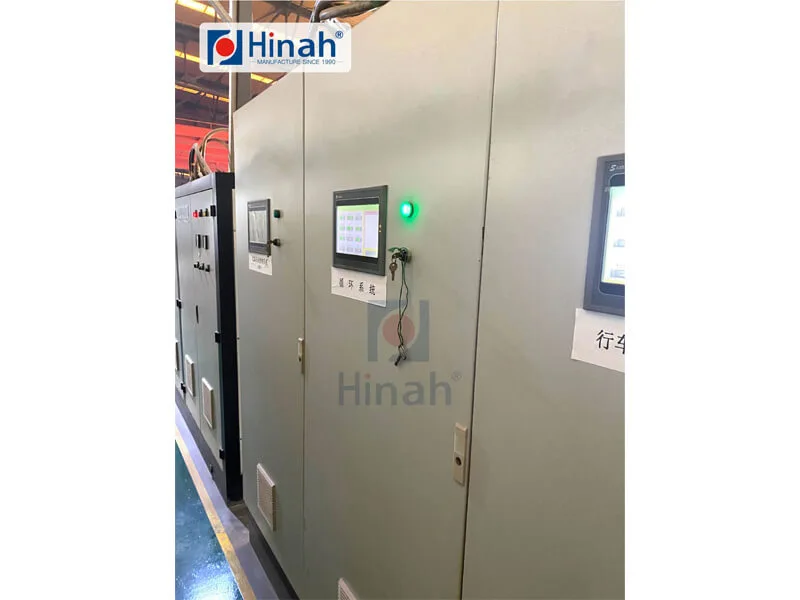
Unexpected downtime of a painting robot can cost thousands per hour. Modern systems embed sensors for:
Vibration analysis on wrist and base axes to detect bearing wear.
Current monitoring of servo drives to identify friction increases.
Fluid pressure/flow trends to anticipate pump diaphragm failure.
Data from these sensors feed cloud‑based analytics platforms. HANNA’s proprietary software generates maintenance alerts 2–3 weeks in advance, reducing unplanned stops by 35% and extending component life. Additionally, cycle‑by‑cycle data on paint usage, film thickness, and defect rates enable continuous process optimisation.
Q1: What is the typical cycle time improvement when switching from
manual spray to a painting robot?
A1: Based on HANNA retrofit data, cycle time reductions average
25–40% for complex parts. Robots maintain constant speed and path, eliminating
operator fatigue‑related slowdowns. In high‑volume automotive lines, robots
achieve 60–80 jobs per hour versus 30–40 with manual sprayers.
Q2: How do painting robots handle complex geometries like car
interiors or deep cavities?
A2: Modern painting robots use a combination of long‑reach arms
(often 7‑axis or rail‑mounted) and specialised applicators. For interior
painting, “dome” or “bell‑shaped” applicators with directional nozzles can
access confined areas. Offline programming simulates the exact spray pattern to
ensure coverage without overapplication.
Q3: What are the maintenance costs for a painting robot compared to
manual sprayers?
A3: While robotic systems have higher initial
investment, maintenance costs as a percentage of operating expense are typically
lower. Manual guns require frequent operator‑related repairs (dropping,
clogging) and consume more paint. Robotic painters need scheduled preventive
maintenance (greasing, seal replacement) costing roughly €2,000–€4,000 per year
per robot, but they reduce overall paint and rework costs significantly.
Q4: Can painting robots be retrofitted into existing paint
lines?
A4: Yes, most painting robots are designed
for retrofit. They can be mounted on existing pedestals, rails, or even mobile
platforms. The main challenges are ensuring adequate booth space,
explosion‑proofing compatibility, and integrating with existing conveyor
controls. HANNA offers turnkey retrofits with pre‑engineered
kits that reduce installation time to under two weeks.
Q5: What is the ROI period for an automotive painting robot
installation?
A5: For automotive tier‑1 suppliers, ROI typically
falls between 18 and 30 months. Key drivers: paint savings (20–30% less
material), reduced rework (defect rates drop from 5–8% to <2%), and labour
reduction (one robot replaces 2–3 manual painters per shift). Higher utilisation
(three shifts) shortens payback.
Q6: How do painting robots reduce paint waste and VOC
emissions?
A6: By achieving higher transfer efficiency (75–85% vs.
30–40% manual), robots apply more paint to the part and less to booth walls or
exhaust. This directly reduces paint consumption and the volume of VOC‑laden
exhaust air requiring treatment. Some installations report VOC emission cuts
exceeding 50% after robotic conversion.
Q7: What are the latest trends in painting robot control
systems?
A7: Industry 4.0 integration is paramount. Current trends
include digital twins for offline programming and simulation, AI‑based spray
pattern optimisation (adjusting parameters in real time based on film thickness
feedback), and collaborative robots (cobots) for small‑batch manual assist.
Painting robot controllers now also
feature edge computing to analyse process data locally, reducing cloud
dependency.
For detailed engineering assessments or to request a proposal for a custom‑integrated painting robot cell, visit HANNA’s official website.