
Selecting a curing oven for a powder coating line represents one of the most significant capital decisions in any industrial finishing operation. The powder coating oven price varies widely across manufacturers and configurations, yet the final number on a quotation sheet rarely tells the full story. Production managers, plant engineers, and procurement specialists must look beyond the base figure to understand what drives costs and how those costs translate into long-term performance.
This analysis examines the engineering, operational, and application-specific factors that influence powder coating oven price. From heating system selection to temperature uniformity requirements, each component adds measurable value—or introduces hidden expenses—that affects the total investment. The goal is to equip decision-makers with the knowledge needed to evaluate quotations accurately and choose equipment that aligns with production goals.
Several interdependent variables determine the final cost of a powder coating oven. Understanding these elements helps buyers compare proposals on an equal footing and avoid overpaying for features that do not serve their specific production needs.
The physical size of the oven directly correlates with material usage, heating capacity, and fabrication complexity. A batch oven designed for pallet-sized parts measuring 2.4 m × 1.8 m × 2.0 m requires significantly less steel, insulation, and burner power than a continuous tunnel oven spanning 18 m in length. The powder coating oven price for a small batch unit typically falls in a lower range, while large continuous systems command premium pricing due to the extended conveyor system, multiple heating zones, and increased structural demands.
Throughput expectations also shape the design. An oven that processes 200 parts per hour demands higher air circulation rates, more robust heating elements, and sophisticated temperature monitoring compared to a unit handling 40 parts per hour. The engineering effort required to maintain consistent thermal profiles across larger volumes adds to the manufacturing cost, which reflects in the final quotation.
The choice of heat source represents one of the largest cost differentiators in oven manufacturing. Three primary options dominate the industrial powder coating sector:
Gas-fired systems: These ovens use natural gas or propane burners with heat exchangers to warm circulating air. Gas-fired units generally offer lower operating costs in regions with affordable natural gas, but the initial equipment price is higher due to burner assemblies, gas trains, and exhaust flues. The powder coating oven price for gas-fired configurations includes additional safety interlocks and combustion controls.
Electric resistance heating: Electric ovens employ heating elements—typically nichrome or iron-chromium-aluminum alloys—mounted within the air circulation path. These systems have simpler construction and lower upfront costs compared to gas-fired units. However, electricity prices in many industrial regions make them more expensive to operate over time. The base equipment cost is attractive, but the total expenditure over several years of operation often exceeds that of gas systems.
Infrared (IR) heating: IR ovens use radiant panels or lamps to transfer heat directly to the coated substrate. This technology reduces cure times significantly and occupies less floor space. The equipment cost falls between electric resistance and gas-fired systems, but the real value lies in the energy savings from rapid heating and reduced air volume conditioning. IR systems excel in applications with consistent part geometries and high production speeds.
Each heating method influences the powder coating oven price differently, and the optimal choice depends on local energy tariffs, production schedules, and part complexity.
Insulation thickness and material composition directly affect both the purchase price and the operational cost of a curing oven. Mineral wool, ceramic fiber, and calcium silicate boards each offer different thermal resistance values (R-values) and price points. High-density mineral wool with a thickness of 150 mm provides excellent insulation but adds to the oven's weight and fabrication cost. Thinner insulation reduces the upfront price but allows greater heat loss to the surrounding environment, increasing fuel or electricity consumption over the equipment's lifespan.
Modern ovens often incorporate multi-layer insulation systems with reflective barriers to minimize radiant heat transfer. These advanced designs raise the initial powder coating oven price but deliver measurable reductions in energy usage—sometimes up to 15-20% compared to standard configurations. For production lines operating 24/7, the payback period from insulation upgrades can be surprisingly short.
Production workflow and part variety play decisive roles in choosing between batch and continuous oven designs. Each configuration carries a distinct cost structure that reflects its engineering complexity and operational capabilities.
Batch ovens are enclosed chambers where racks of coated parts are loaded and cured in a single cycle. These units suit job shops and facilities with frequent changeovers between different part types. The price of a batch oven includes the chamber structure, door seals, heating system, and a control panel. Manufacturers often offer standard sizes with fixed specifications, which keeps costs lower compared to custom-engineered solutions. However, batch ovens require manual loading and unloading, which adds labor costs and can create bottlenecks in high-volume operations.
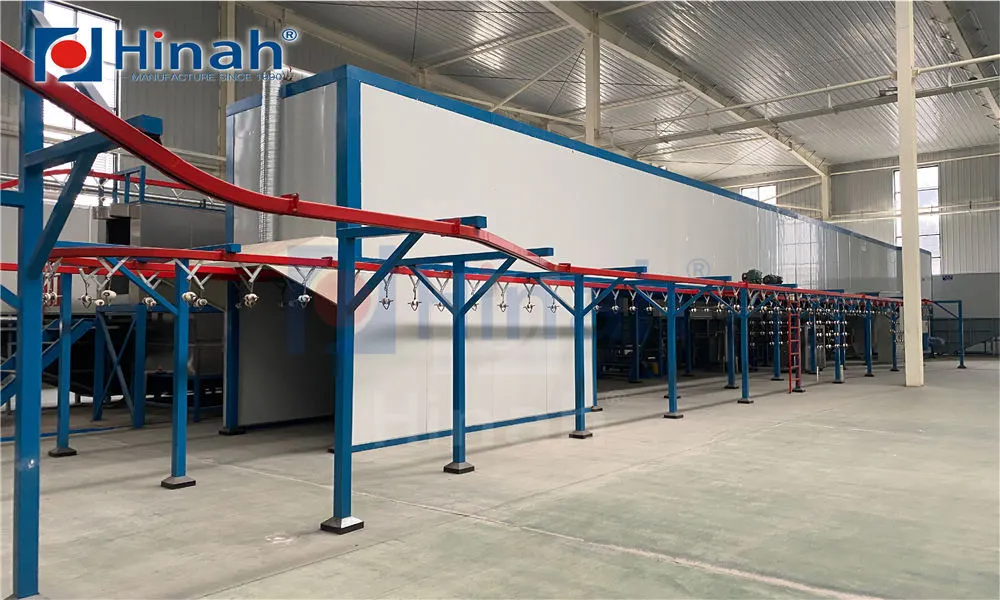
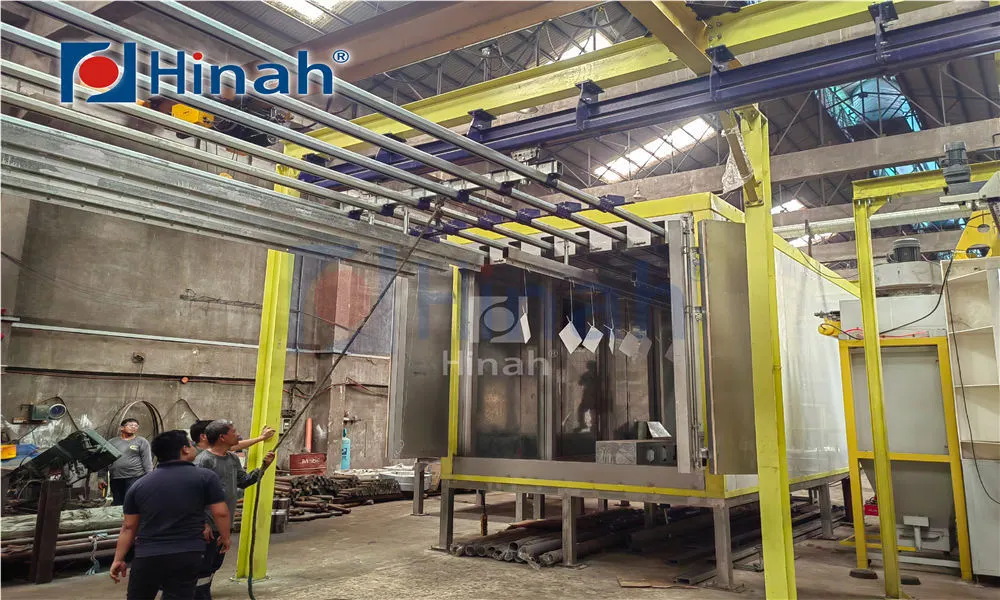
Continuous ovens incorporate an overhead or floor-mounted conveyor that transports parts through the heating zone at a controlled speed. These systems are designed for high-throughput production lines where parts flow consistently from pretreatment to coating application to curing. The price of a continuous oven includes the conveyor system, multiple heating modules, zoning controls, and often a cooling section at the exit. The engineering investment for uniform temperature distribution across a long tunnel is substantial, and the fabrication involves precise alignment of panels, air plenums, and recirculation fans. Consequently, continuous ovens command a higher initial price than batch systems of comparable volume.
For production managers evaluating powder coating oven price across both categories, the decision hinges on annual throughput, part size variation, and available floor space. A batch oven may appear more affordable on paper, but if the production schedule requires multiple daily cycles, the cumulative energy and labor costs can erode the apparent savings. Conversely, a continuous oven's higher upfront cost becomes justified when production volumes exceed a certain threshold—typically around 4,000 to 5,000 parts per shift.
The ability to maintain consistent temperature across the entire oven cavity is a hallmark of quality engineering. Thermal gradients—differences in temperature between the top and bottom or front and back of the oven—directly affect the curing reaction of powder coatings. Epoxy, polyester, and hybrid formulations each have specific cure schedules; deviations of ±5 °C can result in under-cured films with poor mechanical properties or over-cured surfaces that become brittle and discolored.
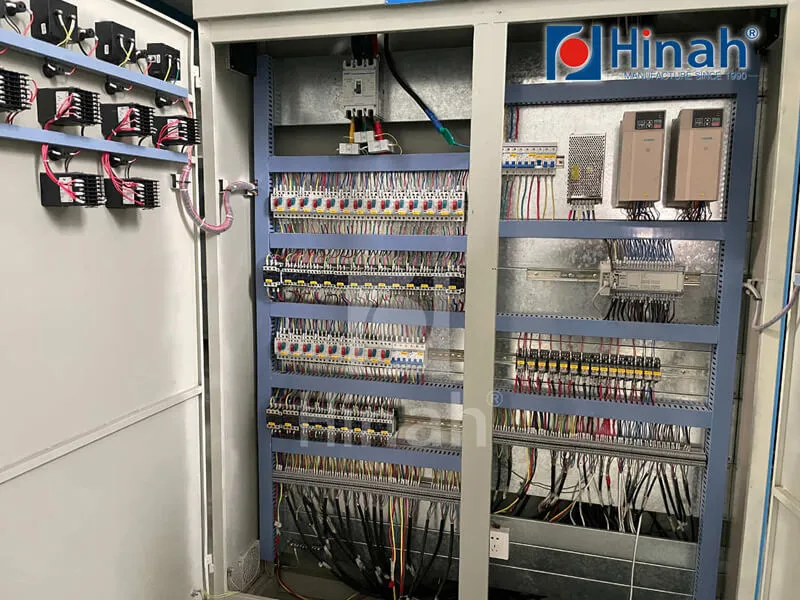
Achieving temperature uniformity of ±3 °C or better requires careful design of air distribution systems, including the placement of baffles, the sizing of recirculation fans, and the selection of heating element arrays. High-performance ovens incorporate multiple thermocouples placed strategically to monitor the thermal field continuously. The control system—often a programmable logic controller (PLC) with PID (proportional-integral-derivative) tuning—adjusts burner modulation or element firing to maintain the setpoint with minimal overshoot.
These precision features add to the powder coating oven price but provide tangible benefits. Consistent curing reduces rejects, improves coating adhesion, and ensures color consistency across batches. For manufacturers serving automotive, aerospace, or architectural markets where quality standards are stringent, the added investment in temperature control equipment pays for itself through reduced scrap rates and fewer customer complaints. The cost of rework or replacement due to inconsistent curing often far exceeds the incremental price of a well-instrumented oven.
Additionally, data logging capabilities have become a standard expectation in modern ovens. Recording time-temperature profiles for each batch provides traceability for quality audits and helps operators fine-tune the curing process for new coating formulations. This feature, while adding to the equipment cost, supports continuous improvement initiatives and aligns with the requirements of quality management systems such as ISO 9001.
The quoted powder coating oven price frequently excludes the costs associated with site preparation, rigging, and startup. Industrial ovens are heavy assemblies that require reinforced floors, adequate ventilation, and appropriate electrical or gas supply connections. Shipping a large oven often involves disassembly into panels and modules, with reassembly at the customer's facility. These activities demand skilled riggers and technicians, and the labor hours can add 8-15% to the total project cost.
Commissioning—the process of verifying that the oven operates according to design specifications—involves running temperature uniformity tests, calibrating sensors, and adjusting control parameters. Some manufacturers include a standard commissioning package with the oven purchase, while others bill it separately. Buyers should clarify what is included in the quotation and what constitutes an additional charge. A thorough commissioning procedure not only ensures proper operation but also serves as a baseline for future maintenance and troubleshooting.
Operator training is another cost element often overlooked. Even the most sophisticated oven cannot deliver optimal performance if the production staff lacks confidence in its operation. Effective training programs cover startup and shutdown sequences, alarm responses, routine calibration, and emergency procedures. While this investment appears as an add-on to the equipment price, it directly influences the long-term reliability and productivity of the curing line.
While the initial purchase price attracts the most attention, the energy profile of a powder coating oven determines its economic viability over a 10- to 15-year service life. Gas-fired ovens typically consume less energy per kilogram of processed parts compared to electric resistance systems, provided the gas price remains competitive. Infrared ovens offer the highest energy efficiency for certain applications because they heat the coating directly rather than warming the entire air volume.
The insulation design plays a pivotal role in energy retention. Ovens with high-quality thermal barriers lose less heat through the walls and roof, reducing the burner or element duty cycle. In cold climates, heat loss from a poorly insulated oven can increase annual fuel consumption by 20% or more. Conversely, an oven with superior insulation may have a higher purchase price but generates significant savings over its operating life.
Recirculation fan design also affects energy usage. Variable frequency drives (VFDs) on fan motors allow the airflow to be adjusted based on the thermal demand, reducing electricity consumption during periods of lower production. While VFDs add to the equipment cost, the energy savings can justify the investment within a few years of operation.
For production lines that run multiple shifts, the cumulative energy expenditure often equals or exceeds the purchase price of the oven within the first five years. Therefore, evaluating powder coating oven price solely on the equipment cost without considering energy performance leads to an incomplete financial analysis. Reputable manufacturers, such as HANNA, provide energy consumption data alongside their quotations, enabling buyers to project operating costs accurately.
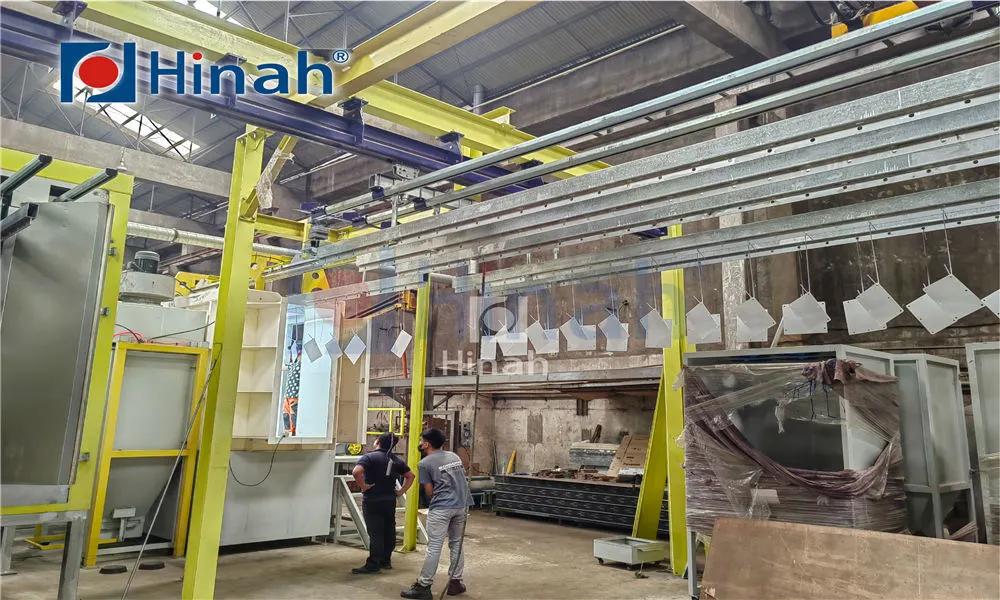
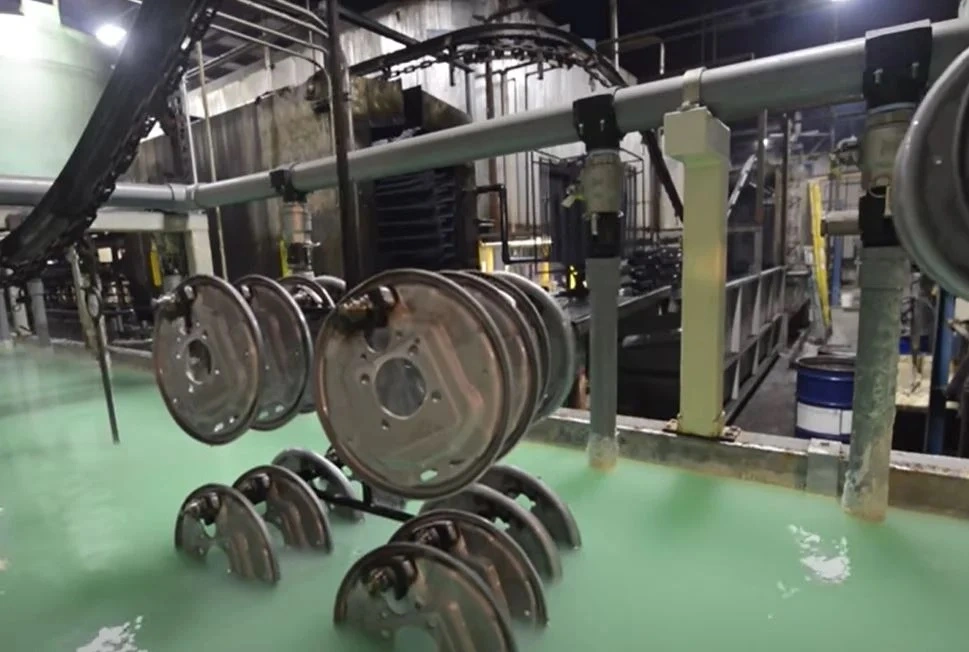
Different industries impose unique requirements on powder coating ovens, which in turn influence the equipment design and price. Automotive parts suppliers often require ovens that accommodate complex geometries—such as wheels, bumpers, and chassis components—with tight tolerance on temperature distribution to ensure coating thickness consistency. These applications demand custom racking systems, adjustable air nozzles, and sometimes multiple heating zones to handle varying mass-to-surface-area ratios.
The architectural aluminum sector requires ovens capable of curing long profiles—some exceeding 6 meters in length. These ovens are typically horizontal or vertical continuous designs with carefully controlled air curtains to prevent temperature stratification along the length of the profile. The engineering challenges associated with uniform heating over such distances contribute to a higher equipment price compared to standard-sized units.
General industrial applications—such as shelving, electrical enclosures, and agricultural equipment—often have more forgiving requirements. Standard batch or continuous ovens with moderate temperature uniformity (within ±5 °C) suffice for these products. Consequently, the powder coating oven price for general industrial use tends to be lower, as the manufacturer can leverage proven designs without significant customization.
When evaluating quotations, buyers should clearly define the range of part sizes, weights, and coating specifications that the oven must accommodate. This information enables the manufacturer to propose a configuration that meets the actual production needs without unnecessary over-engineering. HANNA offers engineering consultations to match oven specifications precisely to the customer's production environment, ensuring that the investment delivers maximum utility.
The material of construction also varies by application. Standard ovens use mild steel panels with a protective coating, while food-contact or medical applications may require stainless steel interiors to meet hygiene standards. Stainless steel fabrication increases the equipment price due to the higher material cost and more demanding welding procedures. Similarly, ovens intended for corrosive environments—such as coastal locations or chemical plants—may need special coatings or corrosion-resistant alloys, further affecting the price.
The following questions address common concerns among buyers evaluating powder coating oven investments. These answers provide clarity on pricing structures and help stakeholders make informed decisions.
Q1: What is the typical price range for a powder coating
oven?
A1: The price range varies significantly based on size,
heating type, and features. Small batch ovens for workshop use typically fall
between $15,000 and $40,000. Mid-range batch ovens with enhanced temperature
control and larger capacities range from $40,000 to $90,000. Continuous tunnel
ovens for high-volume production lines generally start around $120,000 and can
exceed $500,000 for large-scale systems with multiple zones and advanced
automation. These are approximate ranges, and actual quotations depend on
specific engineering requirements and market conditions.
Q2: How does oven size affect the powder coating oven
price?
A2: Oven size directly impacts material costs, fabrication
complexity, and heating power requirements. A batch oven with interior
dimensions of 1.5 m × 1.2 m × 1.8 m costs significantly less than a unit
measuring 3 m × 2.4 m × 2.4 m due to the exponential increase in panel area,
insulation volume, and burner capacity. Larger ovens also require more robust
structural supports and often need specialized shipping arrangements, which add
to the delivered cost.
Q3: What type of heating system is more cost-effective for powder
coating ovens?
A3: The cost-effectiveness depends on local energy
prices and production patterns. Gas-fired ovens generally offer lower operating
costs in regions with affordable natural gas, but the equipment price is higher
than electric alternatives. Electric resistance ovens have lower upfront costs
but higher energy consumption over time. Infrared ovens provide excellent
efficiency for high-speed lines with consistent parts but may not suit all
geometries. A comprehensive evaluation should consider both the initial purchase
price and projected energy expenses over the oven's service life.
Q4: How does temperature uniformity impact the overall value of a
powder coating oven?
A4: Temperature uniformity directly affects
curing consistency and coating quality. Ovens with tight uniformity (±3 °C or
better) produce fewer rejects, reduce rework costs, and maintain color
consistency across batches. While achieving high uniformity requires better air
distribution design and more sensors—which increases the equipment price—the
reduction in scrap and warranty claims often offsets the added investment within
the first year of production.
Q5: What additional costs should be considered beyond the initial
powder coating oven price?
A5: Buyers should account for site
preparation, electrical or gas supply upgrades, rigging and installation,
commissioning, operator training, and ongoing maintenance contracts. Ventilation
ducting, exhaust stacks, and fire suppression systems may also be required
depending on local safety codes. These ancillary costs can add 10-25% to the
total project expenditure, so it is prudent to request a comprehensive quotation
that includes all necessary components and services.
Q6: How do batch ovens compare to continuous ovens in terms of price
and performance?
A6: Batch ovens have lower initial prices and suit
operations with varied part sizes and frequent changeovers. Continuous ovens are
more expensive due to the conveyor system, multiple heating zones, and
engineering complexity. However, continuous ovens deliver higher throughput,
lower labor costs per part, and better energy efficiency at scale. The choice
depends on production volume, part variety, and available floor space. For
operations exceeding 5,000 parts per shift, a continuous oven often provides
better long-term value despite the higher upfront cost.
For detailed information about powder coating oven price and customized solutions for your production line, please reach out to our team through the contact channels available on our website. HANNA provides comprehensive engineering support and transparent quotations to help you select the optimal curing system for your finishing operations.