In any powder coating operation, the curing oven is where the transformation from powder to durable finish occurs. It is not merely a heating chamber; it is a precision thermal processor that dictates coating adhesion, hardness, gloss, and corrosion resistance. Selecting an engineered curing oven directly impacts first-pass yield, energy consumption, and overall production economics. HANNA has specialized in designing industrial curing systems that meet the rigorous demands of modern finishing lines.
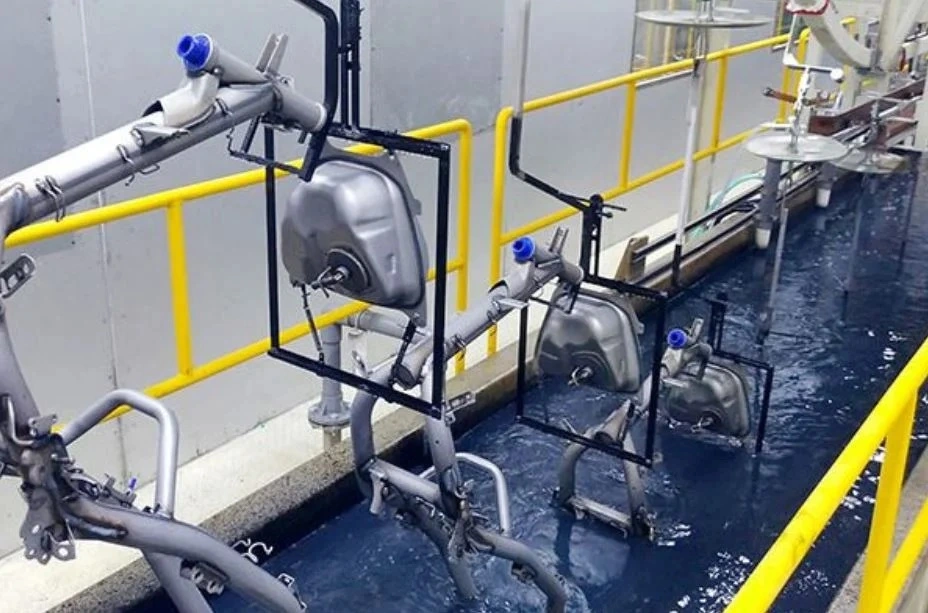
An industrial curing oven must deliver consistent thermal performance across diverse part geometries. Below are the critical engineering parameters that define a reliable curing system.
Powder coatings require precise time-at-temperature profiles—typically 10–20 minutes at 180–200°C metal temperature. Variations of more than ±3°C can lead to under-cure (poor adhesion) or over-cure (yellowing, brittleness). Advanced curing oven designs use computational fluid dynamics (CFD) to model airflow, ensuring high-velocity air impingement reaches all part surfaces. HANNA ovens incorporate adjustable louvers and baffles to fine-tune air distribution, guaranteeing uniformity even on complex, dense loads.
Heating represents a major operational cost. A well-insulated curing oven minimizes heat loss and reduces burner runtime. Key features include:
High-density mineral wool insulation (100–150 mm) with low thermal conductivity.
Direct-fired or indirect gas burners with modulation controls to match heat demand.
Heat recovery systems that recirculate exhaust air to preheat incoming fresh air.
Variable-frequency drives (VFDs) on recirculation fans to optimize airflow based on load.
These measures can cut gas consumption by 20–30% compared to conventional designs.
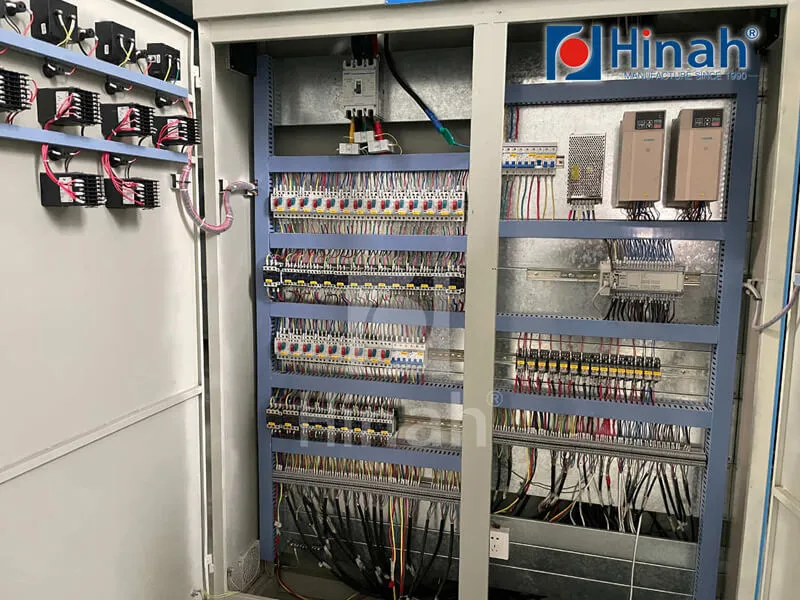
Modern curing ovens integrate PLC-based controls with touchscreen interfaces. Operators can set cure profiles, monitor zone temperatures, and log data for quality assurance. Curing oven controllers from HANNA include remote access capabilities, enabling predictive maintenance and real-time alarm notifications.
The versatility of a curing oven allows it to serve diverse manufacturing sectors. Each application imposes unique thermal requirements.
Automotive parts—wheels, chassis components, engine brackets—demand high mechanical strength and corrosion resistance. Cure cycles often include rapid heating zones followed by hold periods. Conveyorized ovens with multi-zone temperature control ensure that mixed loads (e.g., heavy castings and thin stampings) all reach the required metal temperature simultaneously.
Architectural coatings must meet Qualicoat standards, requiring strict cure schedules. Horizontal or vertical curing oven configurations are used to handle long profiles without sagging. Ovens must maintain uniform temperature across the entire length—often 6–10 meters—to avoid color variation.
Agricultural machinery, construction equipment, and large fabricated parts require ovens with wide openings and high load capacities (up to several tons). Batch ovens or walking-beam systems are common. The curing oven must accommodate thermal mass variations while ensuring complete cross-linking of thick-film powder coatings.
Even well-designed powder lines can suffer from curing-related defects. Here’s how modern oven technology addresses these issues.
Insufficient time at temperature is a leading cause of field failures. Real-time part temperature monitoring (using contact thermocouples or infrared sensors) validates that every part meets cure specifications. Curing oven designs with adjustable conveyor speed and multiple heat zones allow operators to fine-tune the profile for new products without physical reconfiguration.
Energy waste often stems from excessive air changes or idle periods. Modern ovens incorporate:
Auto standby mode that reduces temperature when the line is empty.
High-efficiency burner management with oxygen trim control.
Insulated doors and vestibules to minimize infiltration.
HANNA provides energy audits to identify savings opportunities in existing ovens.
Unplanned oven downtime can halt an entire finishing line. Preventive design features include:
Heavy-duty fans with external bearing lubrication points.
Easy-access filter banks to prevent contaminant buildup.
Modular panel construction for rapid replacement if needed.
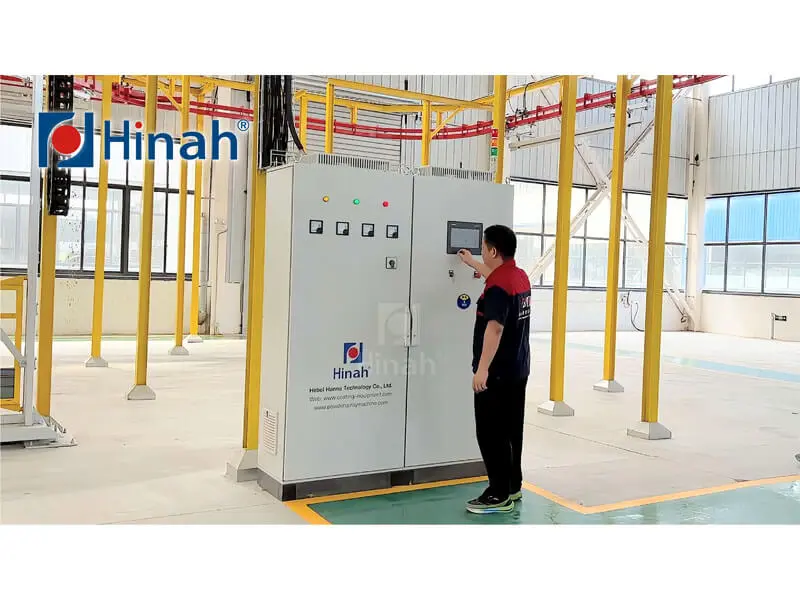
With over two decades of thermal engineering experience, HANNA delivers curing oven solutions that combine durability with precision. Every oven is built to withstand continuous industrial operation while maintaining tight temperature tolerances. Our integrated approach—from CFD simulation to on-site commissioning—ensures that your curing oven performs as an integral part of your powder coating system, not just a standalone component. Whether you need a high-volume conveyor oven or a flexible batch unit, HANNA engineers tailor the design to your production mix and floor space.
A1: A batch curing oven processes parts in discrete loads—ideal for job shops with varying part sizes and low to medium volumes. A continuous conveyor oven moves parts through a heated tunnel at a fixed speed, suited for high-volume, consistent production. HANNA offers both types, with the choice depending on your throughput requirements and part mix.
A2: Oven length is calculated as: conveyor speed (m/min) × required cure time (minutes) × 1.1 (safety margin for load transitions). For example, at 2 m/min with a 15-minute cure, the oven should be at least 33 m long. HANNA performs line simulations based on your part geometry and production targets to recommend optimal dimensions.
A3: Routine maintenance includes cleaning recirculation fans and filters, checking burner operation, inspecting insulation for damage, and verifying temperature sensor calibration. Curing oven manufacturers like HANNA provide detailed maintenance schedules and optional service contracts to ensure peak performance.
A4: Yes, retrofitting is possible. However, compatibility with upstream pretreatment and application equipment must be assessed. Factors such as conveyor height, oven footprint, and utility connections need evaluation. HANNA offers retrofit audits to integrate a new curing oven with your existing line while minimizing disruption.
A5: Uneven heating can cause gloss variations, orange peel, or color shifts. A well-designed curing oven with balanced airflow and precise temperature control ensures consistent cure across all parts. Additionally, rapid heating zones can help avoid solvent popping in thick films. HANNA ovens are engineered to deliver the thermal uniformity essential for superior finish quality.
A6: Essential safety features include high-limit temperature cutoffs, purge cycles before burner ignition, explosion-relief panels, and gas leak detection. Compliance with NFPA 86 or equivalent standards is mandatory. HANNA ovens are built to international safety codes and include full interlocking systems.
A7: Yes, industrial ovens are versatile. They can be used for drying water-based paints, curing liquid coatings, preheating substrates, or even annealing metals. However, temperature range and airflow must be adapted. Consult HANNA to discuss multi-purpose use of your curing oven.
Choosing the right curing oven is a strategic investment in product quality and production efficiency. With HANNA, you gain a partner who understands the thermal dynamics of finishing and delivers equipment that performs reliably for decades. Contact us to discuss your specific curing requirements.