Every powder coating professional knows that the heart of a great finish isn't just the gun or the powder—it's the environment where it all comes together. The right powder coating spray booth is arguably the most critical piece of operational infrastructure you can invest in. It's more than just a containment area; it's a controlled ecosystem that dictates your transfer efficiency, color change speed, operator safety, and overall material costs. Choosing the wrong booth can lead to contaminated finishes, excessive waste, and a constant battle against poor air quality. This guide will walk you through the key types, features, and considerations to help you select the ideal powder coating spray booth for your specific production needs, with insights into how HANNA designs booths that set the industry standard for performance and reliability.
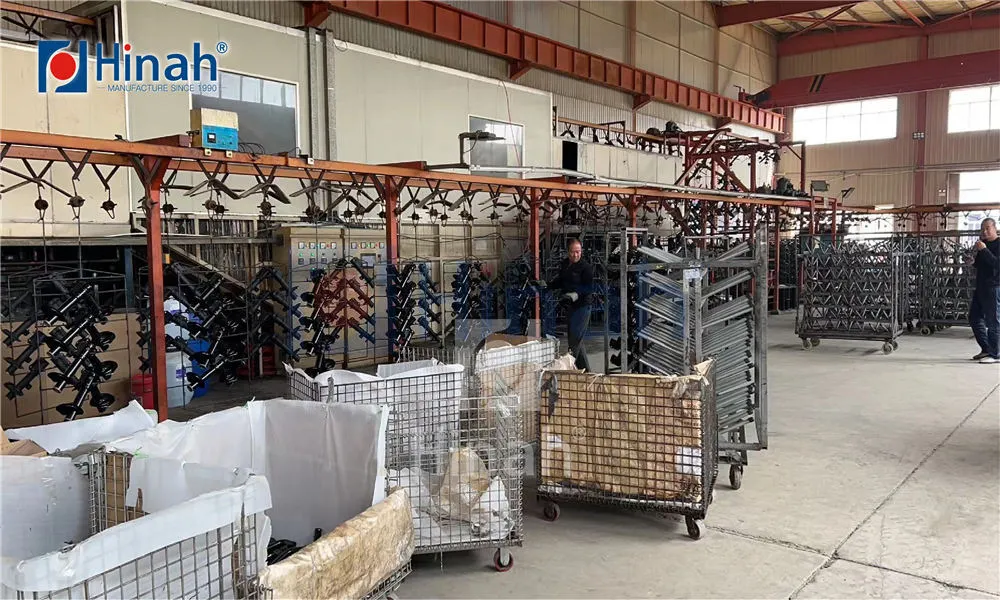
Think of a powder coating spray booth as a precision-engineered workspace. Its primary function is to contain the overspray—the fine powder that doesn't initially adhere to the part—in a safe and controlled manner.
A well-designed booth creates a consistent, laminar airflow. This airflow pattern pulls the overspray away from the operator and the part, preventing it from settling back onto the freshly coated surface, which could cause defects like back-ionization or orange peel.
Crucially, a modern powder coating spray booth is also a recovery system. It captures this overspray so it can be filtered and, in most cases, recycled back into the feed hopper. This reclamation process is a major driver of cost savings and material efficiency.
Finally, it provides a clean, well-lit, and safe environment for the operator. The booth structure protects the surrounding facility from powder contamination and helps manage fire risks through proper grounding and isolation.
Your first major decision is choosing between an open-face and a closed-face powder coating spray booth design. Each serves a different purpose.
An open-face powder coating spray booth is the most common configuration for manual application. It features a large, open front where the operator stands, with a rear wall containing the filtration and exhaust system. Air is drawn from the room, through the booth, and out the back.
This design offers excellent operator accessibility and visibility. It's ideal for shops with diverse part sizes and shapes. However, it requires the surrounding room to be very clean and well-ventilated to prevent airborne contaminants from being pulled into the spray area.
A closed-face powder coating spray booth (or "downdraft" booth) is fully enclosed, with the part loaded through a door. Air enters through filtered ceiling plenums and is exhausted through the floor.
This design offers the ultimate in cleanliness and is mandatory for high-volume, automated lines or applications requiring a pristine, ISO-classified environment. It minimizes external contamination but is more expensive and complex to install. HANNA offers robust solutions for both configurations.
The method by which your booth captures overspray is its defining technological feature. There are two dominant recovery system types, each with pros and cons.
Cartridge Filter Recovery is the modern standard for most operations. Overspray-laden air is pulled through a series of pleated cartridge filters. The powder builds up on the outside of the cartridges, and periodic pulses of compressed air knock it down into a collection hopper below.
This system offers very high filtration efficiency (often 99.9%+), excellent powder reclamation rates, and is excellent for frequent color changes. HANNA's cartridge systems feature high-ratio filters for longer life and intelligent pulse-jet cleaning for maximum recovery.
Cyclone Recovery uses centrifugal force to separate the heavier powder particles from the air stream. The air spirals inside a cone, throwing powder to the walls where it falls into a collection drum.
Cyclones are extremely durable and have low maintenance, as there are no filters to replace. They are best suited for single-color, high-volume production. Their recovery efficiency is slightly lower than a well-maintained cartridge system, and they are less suited for rapid color changes.
Not all booths are built the same. When evaluating a powder coating spray booth for sale, pay close attention to these critical construction and design elements.
Airflow and CFM: Consistent, uniform airflow is non-negotiable. Look for a booth designed to achieve an inward face velocity of 100-150 feet per minute. The fan and motor must be correctly sized to maintain this velocity. HANNA engineers each booth with computational fluid dynamics (CFD) modeling to ensure perfect airflow patterns.
Construction Materials: The interior should be smooth, non-porous, and electrically grounded. High-grade powder-coated steel or stainless steel panels are preferred. Avoid booths with exposed rivets, seams, or rough surfaces where powder can accumulate and cause contamination.
Lighting: You cannot coat what you cannot see. Integrated, sealed LED lighting systems are a must. They should provide bright, shadow-free illumination across the entire spray zone without creating hot spots where powder could accumulate.
Ease of Cleaning: Color change speed depends on how quickly you can clean the booth. Look for features like rounded corners, cleanable filter access doors, and a "clean sweep" floor design that funnels powder toward the recovery unit. HANNA booths are designed with maintenance time in mind.
The type of application you use directly influences the optimal powder coating spray booth design.
For a manual powder coating spray booth, operator ergonomics and accessibility are paramount. The booth opening should be wide and tall enough for comfortable movement. Gun holders, control panels, and grounding points should be within easy reach. Ample lighting is critical for the operator to see their work.
An automatic powder coating spray booth is built around the machines. It must accommodate the travel of reciprocators or robotic gun movers. The interior dimensions are calculated based on the part envelope and gun stroke. Downdraft airflow is almost always used to prevent powder clouds from interfering with the precise paths of the automatic guns.
HANNA specializes in designing integrated systems where the spray guns, booth, and recovery are perfectly matched, whether for a skilled artisan or a fully automated cell.
This is a safety and quality issue that cannot be overstated. Every component inside and around the powder coating spray booth must be properly grounded to prevent two dangerous issues.
First, it prevents static discharge, which could ignite a powder cloud. Second, it ensures the electrostatic charge from the spray gun is effectively transferred to the part. Poor grounding leads to poor wrap (the powder's ability to coat edges and recesses) and can cause back-ionization, where the built-up charge repels powder, creating a rough, pitted finish.
A high-quality powder coating spray booth will have dedicated ground points for the operator, the part rack, and the booth structure itself. HANNA systems include comprehensive grounding kits and detailed instructions to ensure a safe and effective Faraday cage environment.
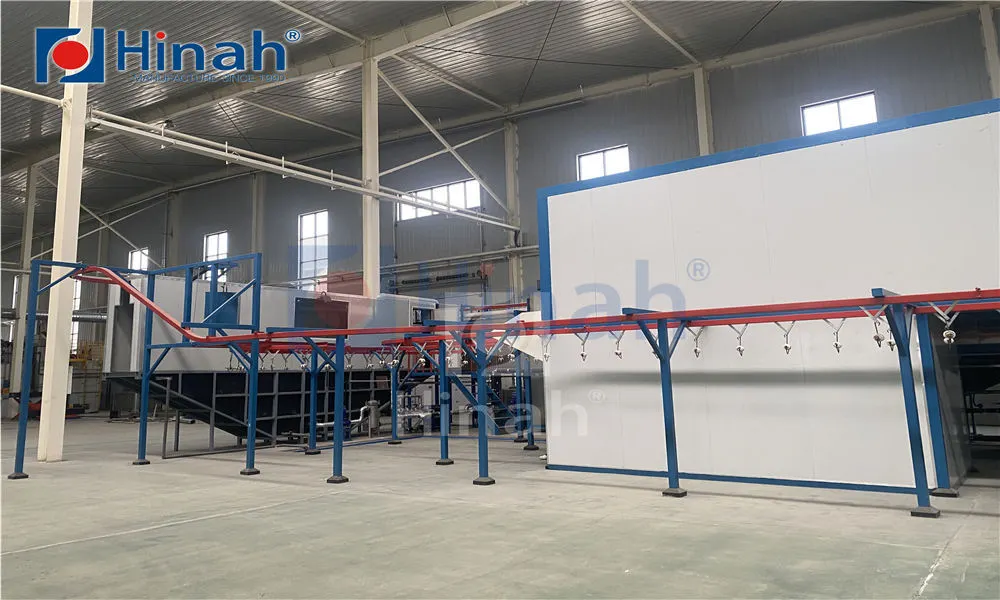
A powder coating spray booth is a dynamic piece of equipment that requires regular care. A disciplined maintenance routine ensures consistent quality and maximizes the lifespan of your filters and fans.
Daily tasks include a visual inspection of filters, cleaning the booth walls and floor with a dedicated brush or vacuum (never use compressed air inside the booth!), and checking that grounding connections are secure.
Weekly or per-color-change cleaning is more thorough. For cartridge systems, this involves running the pulse-cleaning cycle, vacuuming out the collection hopper, and wiping down all surfaces. The speed of this process is a key metric of a booth's design efficiency.
Filter replacement is not based on time, but on pressure drop. Monitors on the booth will indicate when the differential pressure across the filters is too high, signaling it's time for a change. Using high-quality, OEM filters like those from HANNA ensures performance and protects your fan motor.
Selecting a powder coating spray booth is a significant capital investment. Partnering with an experienced manufacturer like HANNA mitigates risk and ensures long-term value.
HANNA doesn't sell generic boxes. Every powder coating spray booth is application-engineered. We start with your parts, your production rate, and your facility to recommend the optimal size, recovery type, and airflow design.
We build for durability and efficiency. Our booths use heavy-gauge steel, industrial-grade fans, and the highest-quality filtration. This results in lower operating costs, less downtime, and a system that performs for decades.
Our support is comprehensive. From initial layout drawings and utility planning to on-site training and spare parts supply, HANNA is a partner for the life of your equipment. We ensure your powder coating spray booth delivers on its promise from day one.
Investing in the right powder coating spray booth is a direct investment in the quality of your finish, the efficiency of your operation, and the safety of your team. By understanding the different types, focusing on critical features like airflow and recovery, and choosing a partner committed to engineering excellence, you can transform your coating process. For a powder coating spray booth designed to meet the demands of modern production, explore the engineered solutions available from HANNA.
Q1: How often do I need to replace the cartridge filters in my powder coating spray booth?
A1: There's no fixed timeline. Filter life depends on powder usage, type of powder, and how often the pulse-cleaning system cycles. Replace filters when the differential pressure gauge indicates a sustained high reading (typically marked in red), or if you notice a visible drop in booth airflow. With normal use, quality filters can last 6 to 18 months.
Q2: Can I install a powder coating spray booth myself, or do I need professional installation?
A2: While smaller, modular booths can be assembled by a competent team, professional installation is highly recommended. Proper setup involves critical electrical grounding, balancing the exhaust fan, ensuring structural stability, and integrating it safely with your facility's ventilation. HANNA provides detailed installation guides and offers professional services to guarantee optimal and safe performance.
Q3: What is the minimum distance my powder coating spray booth should be from walls or other equipment?
A3: You must maintain adequate clearance for operator access, maintenance, and airflow. A minimum of 3 feet (1 meter) around all sides of the booth is a good rule of thumb. The exhaust plenum or fan assembly, in particular, needs space for ductwork connection and service access. Always consult the manufacturer's specific site preparation guidelines.
Q4: Is a powder coating spray booth explosion-proof?
A5: Standard powder coating spray booths are not inherently "explosion-proof" as defined by electrical code for Class II environments. They are designed as fire-retardant containment and recovery systems. All electrical components (lights, fans, controls) should be located outside the powder cloud area. Proper grounding, housekeeping, and preventing ignition sources are your primary defenses against fire risk.
Q5: How do I calculate the right size powder coating spray booth for my largest parts?
A5: The interior dimensions should be at least 2-3 feet wider and taller than your largest part on its rack. This allows space for the operator to move the gun effectively and ensures proper airflow around the part. Don't forget to account for the part's swing or rotation if using a turntable. HANNA's application engineers can provide precise sizing based on your part drawings.