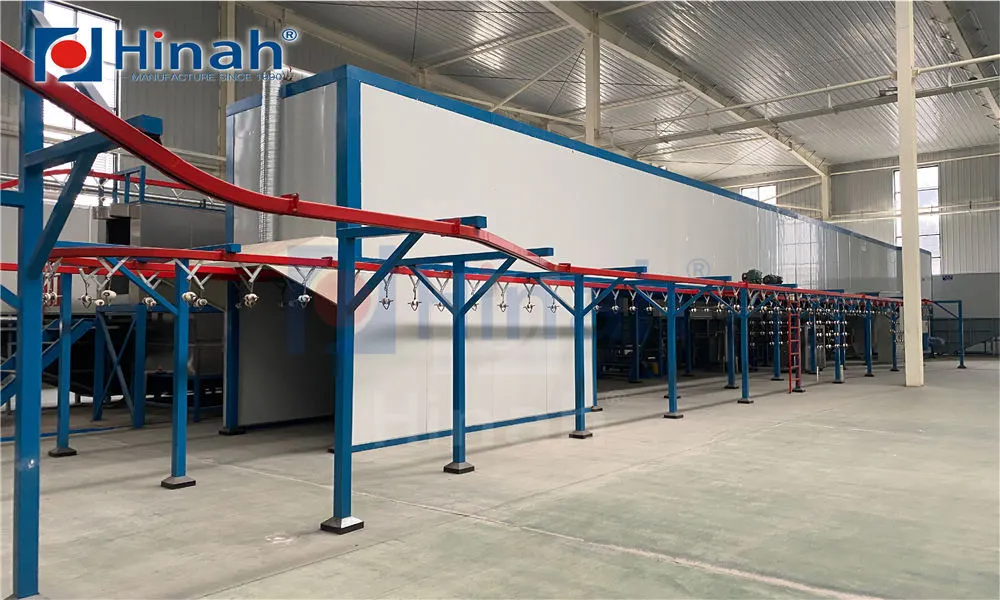

An industrial powder coating production line is a complete system for applying and curing dry powder coatings onto metal and other substrates. It automates the finishing process to achieve consistent, durable, and high-quality results. These systems are fundamental in manufacturing sectors like automotive, appliances, and construction. This article explains the core components, operation, and benefits of modern coating lines, featuring reliable technology from HANNA.
A powder coating production line is a series of connected workstations that prepare, coat, and cure products. It transforms raw parts into finished items with a protective and decorative layer. The line ensures efficiency and repeatability in high-volume manufacturing.
The primary purpose is to automate finishing for speed and quality. The standard process follows a logical sequence.
The basic stages are:
Pre-treatment: Cleaning and preparing the surface.
Drying: Removing moisture after pre-treatment.
Powder Application: Spraying the dry powder electrostatically.
Curing: Melting and fusing the powder in an oven.
Cooling & Unloading: Preparing parts for handling and packaging.
Investing in a well-designed powder coating production line is key to operational success.
Each component in the line has a specific function. Together, they create a seamless and efficient operation.
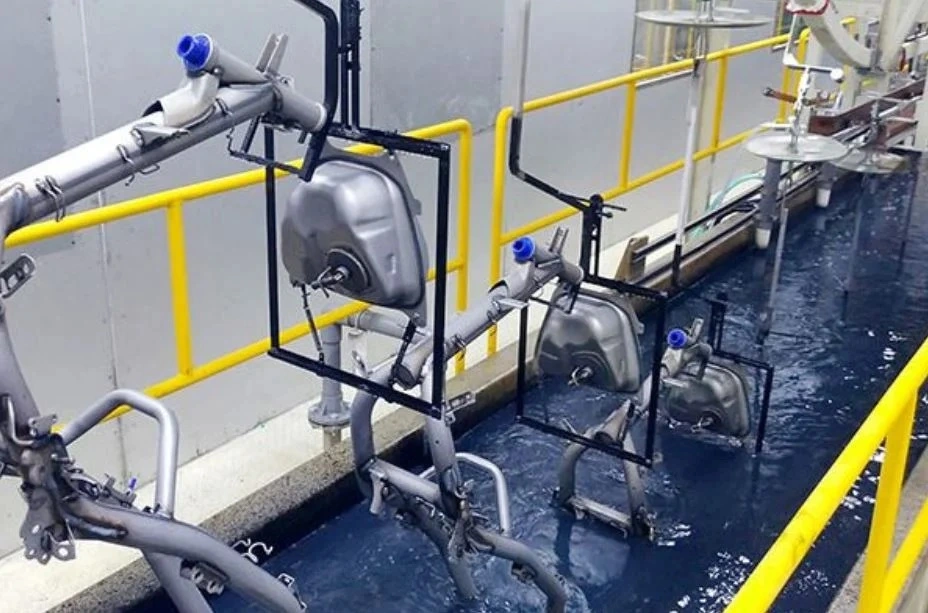
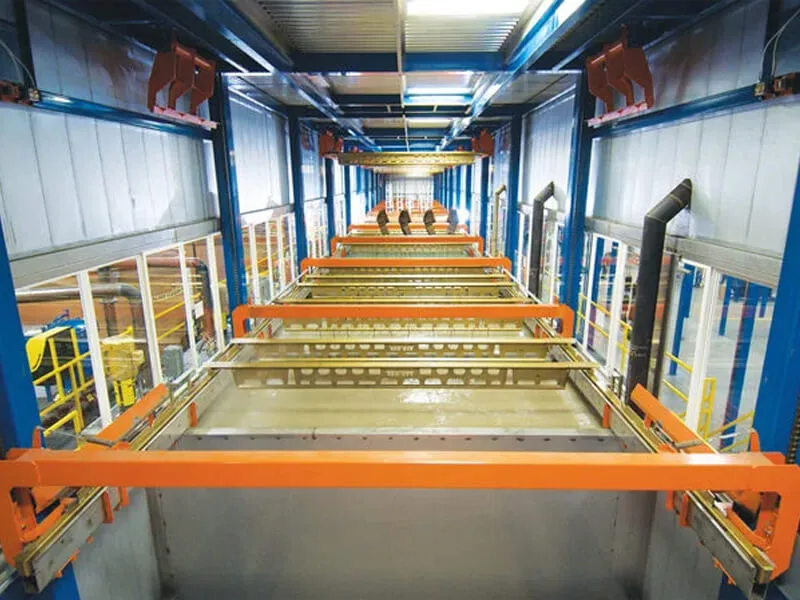
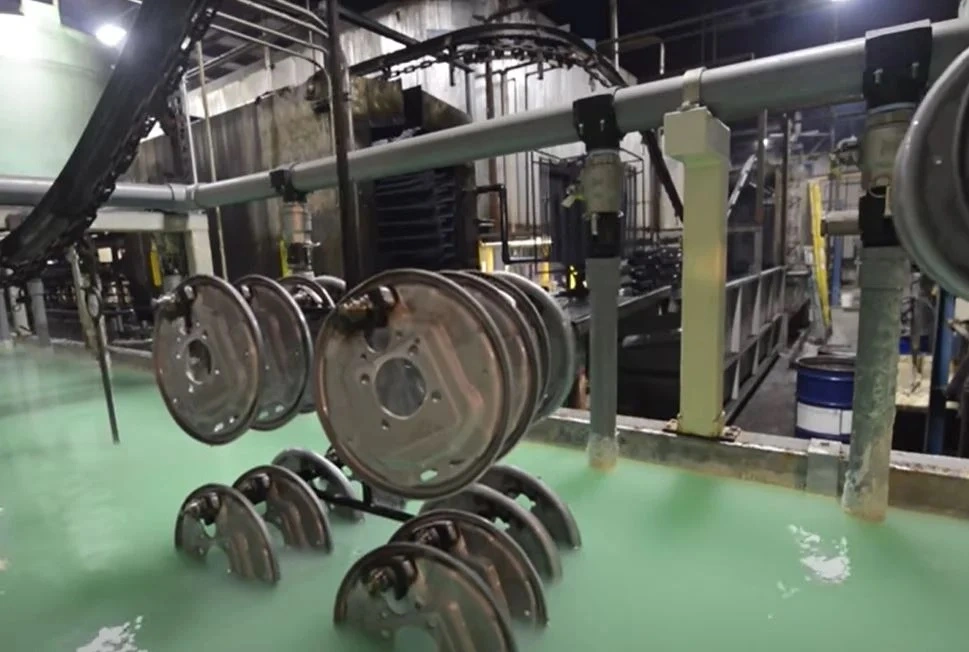
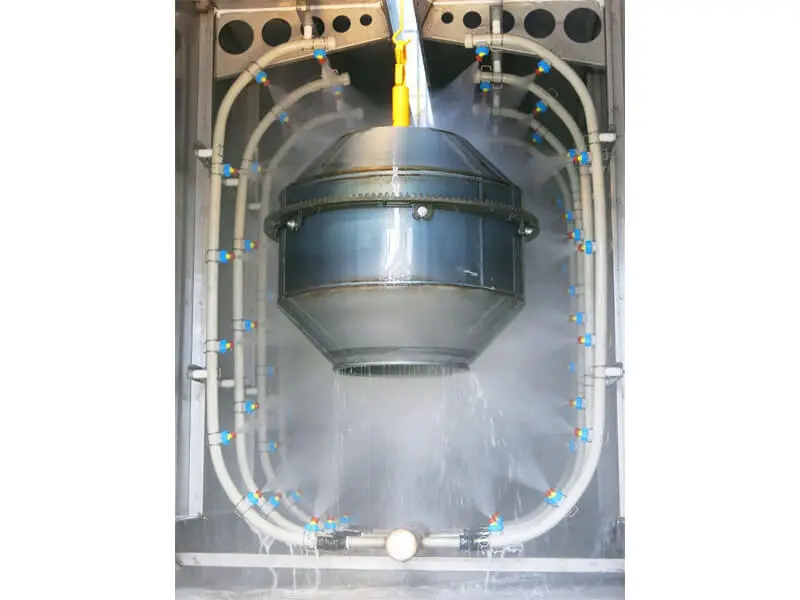
This is the first and most critical stage. It removes oils, dirt, and oxides to ensure proper powder adhesion.
Common pre-treatment methods include:
Spray Washers: Use chemical stages and rinses in an enclosed tunnel.
Immersion Tanks: Submerge parts in a series of chemical baths.
Conversion Coating: Applies a phosphate or chromate layer for corrosion resistance.
Proper pre-treatment directly impacts the final coating's durability and appearance.
The booth is where powder is applied to the parts. It contains the spray guns, recovery system, and powder supply.
Essential booth elements are:
Automatic Guns: Mounted on reciprocators for consistent application.
Manual Stations: For touch-up and complex geometries.
Powder Recovery System: Cyclones and cartridge filters reclaim overspray.
Feed Hopper: Supplies fresh and recycled powder to the guns.
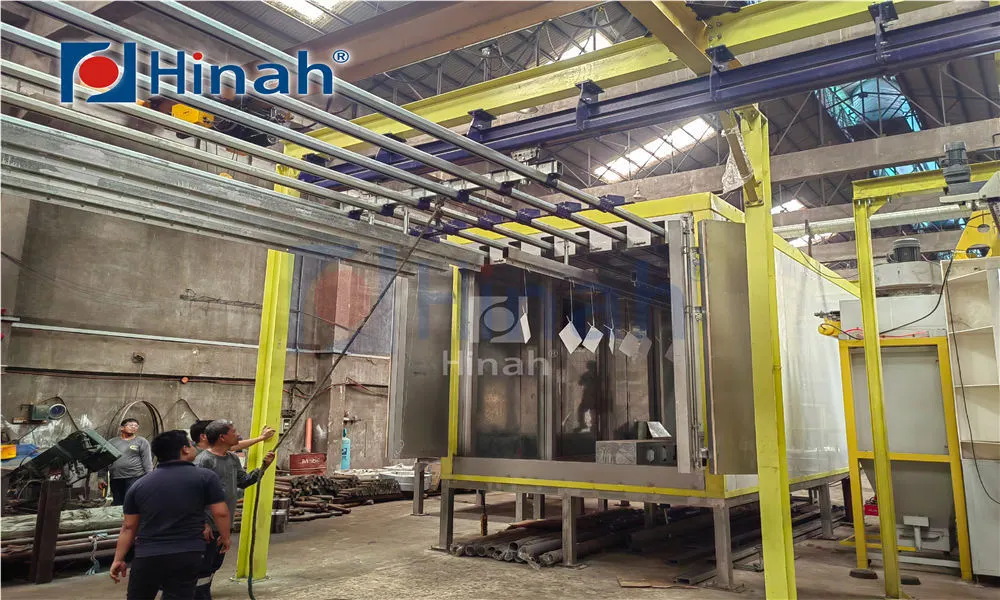
The oven provides the heat necessary to cure the powder. It initiates a chemical cross-linking reaction.
Oven types used in a powder coating production line include:
Convection Ovens: Use circulated hot air for even heat distribution.
Infrared (IR) Ovens: Use radiant heat for faster curing times.
Combination Ovens: Integrate IR and convection for optimal results.
Precise temperature and time control are critical for proper film properties.
The conveyor moves parts through all stages of the line. It is the backbone of the system.
Common conveyor types are:
Overhead Chain Conveyor: Most common, uses hooks or racks.
Monorail Conveyor: Offers more flexible pathing and transfer options.
Belt Conveyor: Used for flat or small parts in continuous ovens.
The choice depends on part weight, size, and production speed.
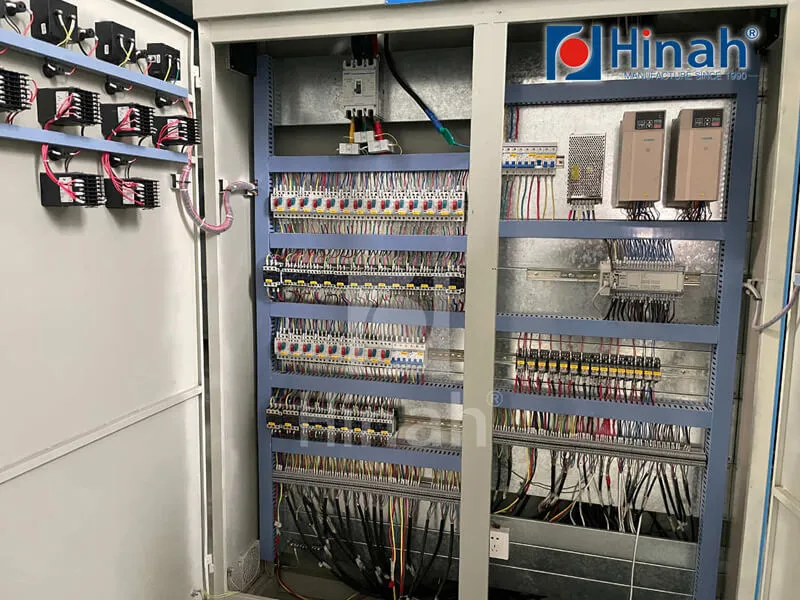
This is the brain of the operation. Modern PLC-based controls allow for automated process management.
Key functions include:
Monitoring and adjusting oven temperatures.
Containing conveyor speed and gun triggers.
Providing diagnostic information and safety interlocks.
Integration from suppliers like HANNA ensures reliable and user-friendly control.
Different production needs require different line configurations. The main categories are defined by automation level and workflow.
Manual lines rely heavily on operator skill for powder spraying. They are suitable for low-volume, high-mix production.
Automated lines use robotic or reciprocator-mounted guns. They are ideal for high-volume, consistent production.
The choice depends on:
Labor costs and availability.
Required production throughput.
Consistency and quality requirements.
Batch lines process parts in groups. The same area is used for multiple stages, often manually.
Continuous lines have a linear flow. Parts move non-stop through pre-treatment, coating, and curing zones.
For large-scale manufacturing, a continuous powder coating production line offers the highest efficiency.
Implementing a complete system provides significant advantages over disjointed or manual processes.
Major benefits include:
Higher Productivity: Automated, continuous processing increases output.
Superior Coating Quality: Consistent environment and control lead to uniform finishes.
Material Efficiency: Advanced recovery systems achieve over 95% powder utilization.
Reduced Labor Costs: Automation decreases the need for manual spraying.
Improved Workplace Safety: Enclosed systems contain dust and minimize operator exposure.
Environmental Compliance: Powder coating is a low-VOC process, and modern lines are designed for clean operation.
Choosing the correct system requires a careful analysis of your current and future needs.
Define your key operational parameters. This will guide the sizing and capability of the line.
Critical questions to answer:
What is the average and peak daily production volume?
What are the dimensions, weight, and material of your typical parts?
What is the required coating thickness and cure schedule?
How many color changes are needed per shift?
The physical layout of your plant is a major factor. A detailed floor plan is essential.
Considerations include:
Total available length, width, and ceiling height.
Location of utilities (power, gas, water, drain).
Access points for loading and unloading parts.
Future expansion possibilities.
Operating costs are heavily influenced by energy use. Look for features that reduce consumption.
Efficiency features to seek:
High-insulation value oven panels.
Heat recovery systems on ovens and dry-off units.
Energy-efficient burner systems and motors.
Water recycling in the pre-treatment system.
A powder coating production line from HANNA is engineered with these efficiencies in mind.
These production lines serve a wide range of industries that require durable and attractive finishes.
Lines coat wheels, chassis components, bumpers, and truck beds. They provide corrosion and chip resistance.
Used for aluminum extrusions, window frames, fencing, and roofing panels. They ensure weather resistance and color retention.
Refrigerators, washing machines, ovens, and small appliances all use powder coating lines for a durable, cleanable surface.
Farm machinery, construction equipment, and industrial tools are coated to withstand harsh environments.
Regular maintenance prevents downtime and ensures consistent coating quality across the entire line.
Focus on cleaning and visual inspection to catch issues early.
Key tasks include:
Cleaning powder spray guns and booth walls.
Checking and cleaning recovery system filters.
Inspecting conveyor chains for wear and proper lubrication.
Verifying oven temperature settings and burner operation.
Plan for comprehensive checks by qualified technicians. This extends the equipment's lifespan.
This includes:
Calibrating temperature sensors and oven controls.
Inspecting and servicing pumps and motors in the pre-treatment system.
Checking electrical connections and safety interlocks.
Following a strict maintenance schedule protects your investment in the powder coating production line.
A well-planned and efficiently operated powder coating production line is a significant asset for any metal finishing facility. It delivers high-quality, durable finishes while improving productivity and material use. Understanding the components, types, and selection criteria is the first step toward a successful investment. For reliable and high-performance systems, consider partnering with an experienced provider like HANNA. Their expertise can help you design and implement a powder coating production line that meets your specific industrial needs and drives long-term growth.
Q1: What is the typical lifespan of a powder coating production line?
A1: With proper maintenance, a well-built powder coating production line can last 15 to 20 years or more. Key components like ovens and conveyors are durable, while control systems may be upgraded over time to keep pace with technology.
Q2: How much floor space is needed for a standard continuous line?
A2: Space requirements vary greatly. A small to medium-sized continuous line might need a length of 30 to 60 meters (100 to 200 feet) and a width of 5 to 8 meters (16 to 26 feet). A detailed layout from a supplier like HANNA is essential for accurate planning.
Q3: Can a powder coating line handle different part sizes on the same run?
A3: Yes, but within limits. The line must be designed for the maximum part dimensions. Using adjustable hangers or fixtures allows for mixing parts of different sizes. However, drastic size differences can affect oven heating uniformity and conveyor balance.
Q4: What is the average powder utilization rate of a modern line?
A4: Modern lines with efficient recovery systems typically achieve powder utilization rates of 95% to 99%. This means almost all sprayed powder is deposited on the part or reclaimed for reuse, minimizing waste and material cost.
Q5: How long does it take to install and commission a new production line?
A5: The timeline depends on the line's complexity and size. From delivery to full operation, it can take anywhere from 4 to 12 weeks. This includes assembly, utility connections, calibration, and test runs with actual parts to ensure quality.