
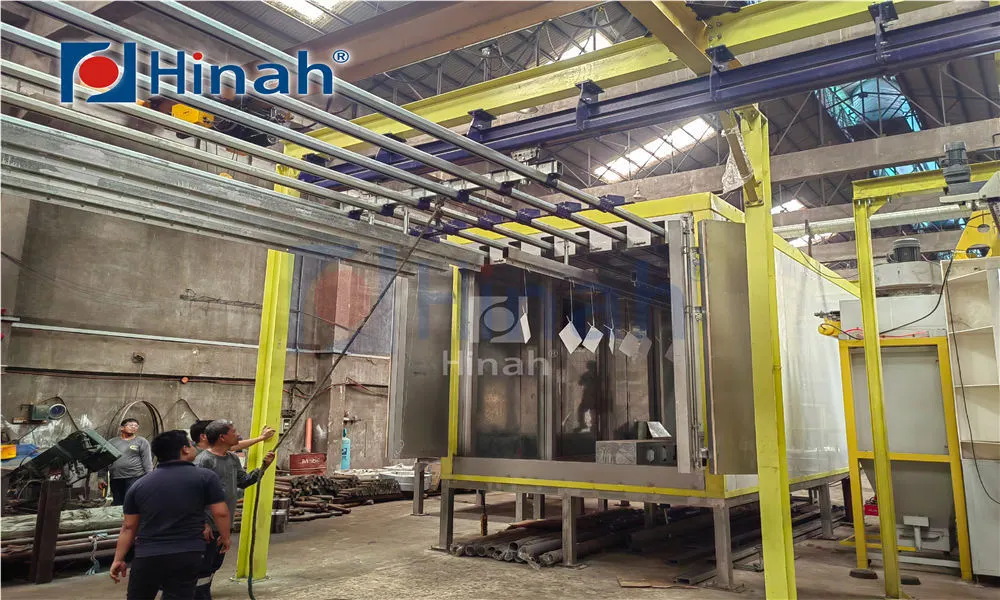
In the industrial finishing process, the spraying stage often gets all the attention. However, the true transformation of the product happens elsewhere. It happens inside the powder coating oven.
Regardless of how perfectly the powder is applied, the finish will fail if it is not cured correctly. The powder coating oven is the engine room of the coating line. It is where the powder turns from a dry dust into a durable, protective shell.
At HANNA, we understand that thermal dynamics are just as important as electrostatics. We design heating solutions that ensure every part, regardless of shape or thickness, receives the exact amount of energy needed for a perfect cure.
This guide explores the critical aspects of the powder coating oven, from fuel sources to airflow design, and why choosing the right equipment is vital for your business success.
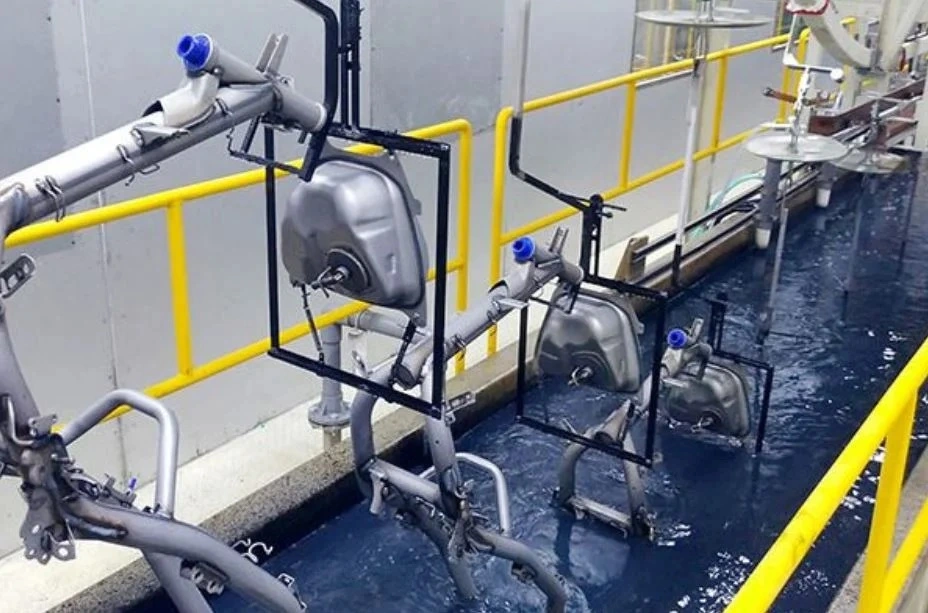
A powder coating oven is a thermally insulated enclosure designed to heat coated parts to a specific temperature for a set time. Unlike a paint drying booth which evaporates solvents, a powder coating oven triggers a chemical reaction.
When powder enters the oven, it goes through three stages: flow, gel, and cure.
First, the heat melts the powder particles. They flow together to form a smooth film. Finally, the polymer chains cross-link (cure), creating the hard finish we know.
If the powder coating oven fluctuates in temperature, this process is interrupted. The result can be "orange peel," poor adhesion, or gloss issues. Therefore, stability is the most important feature of any powder coating oven.
The design of a powder coating oven usually falls into two categories, depending on the production method.
A batch powder coating oven is a stationary unit. Parts are loaded onto a rack, wheeled into the oven, and the doors are closed.
This type is ideal for lower volumes or large, heavy parts. It offers flexibility. You can cure a batch of thin aluminum sheets at a lower temperature, then ramp up the powder coating oven for heavy steel beams in the next cycle.
HANNA batch ovens are designed with heavy-duty hinges and seals to prevent heat loss, making them economical for job shops.
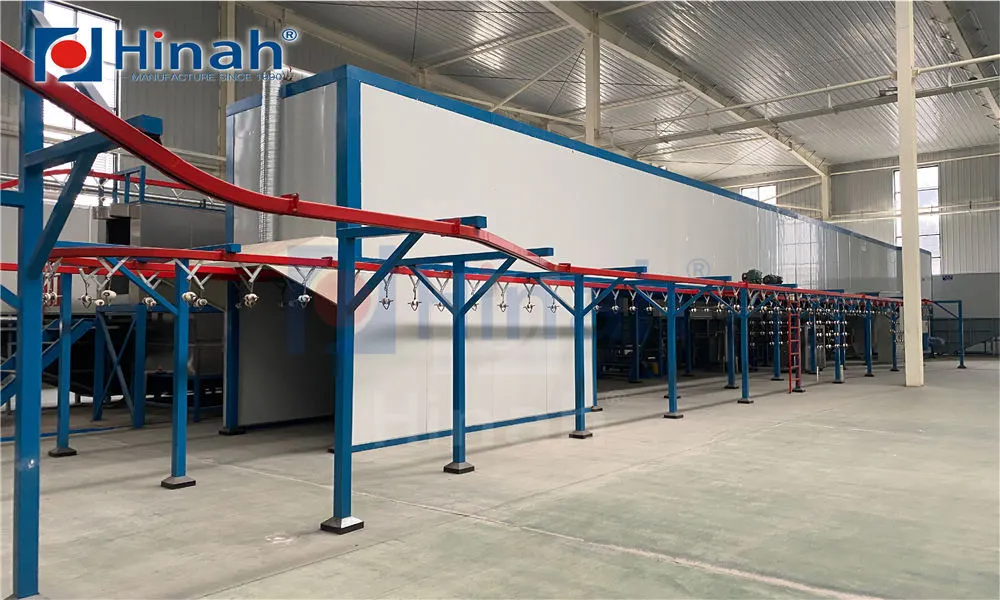
For high-volume production, a conveyorized powder coating oven is essential. Parts travel continuously through the heated tunnel.
These ovens are zoned. There is a heat-up zone and a holding zone. The speed of the conveyor determines the dwell time.
A HANNA conveyorized powder coating oven often features "air seals" at the entrance and exit. These are curtains of air that keep the heat inside the tunnel without physical doors, allowing for uninterrupted production flow.
One of the first decisions a buyer must make is the fuel source for their powder coating oven.
Electric Ovens: An electric powder coating oven uses heating elements. It is clean and easy to install. However, in many countries, electricity is expensive. These are usually best for small batch ovens.
Gas Ovens: A gas-fired powder coating oven (Natural Gas or LPG) is the industry standard for medium to large lines. Gas provides rapid heat-up times and is generally cheaper to run per hour.
Infrared (IR) Ovens: These use radiant energy to heat the part surface directly. They are often used as a "booster" before the main convection powder coating oven. This pre-gels the powder, preventing it from blowing off in the high-velocity air of the main oven.
Inside a convection powder coating oven, air movement is everything. You cannot simply stick a burner in a box and hope for the best.
Hot air rises. Without circulation, the top of the oven will be hot, and the bottom will be cool. This leads to uneven curing. The top of a part might be over-baked, while the bottom is under-cured.
HANNA engineers design every powder coating oven with a specific plenum structure. We use powerful circulation fans to force air through ducts that run the length of the oven.
This creates a uniform temperature profile. Whether the part is at the ceiling or the floor of the powder coating oven, it experiences the same heat. This is the mark of a quality machine.
A powder coating oven consumes energy. In a world of rising utility costs, efficiency is a major concern.
The quality of the wall panels matters. A cheap oven might use thin fiberglass. A HANNA powder coating oven utilizes high-density rock wool insulation, typically 150mm thick or more depending on the temperature requirement.
We also focus on "Through-Metal" reduction. In a panel design, if metal connects the inside skin to the outside skin, it acts as a thermal bridge. Heat escapes.
HANNA uses a tongue-and-groove panel design in our powder coating oven construction to minimize thermal bridging. This keeps the heat inside where it belongs and keeps the outer skin cool to the touch for safety.
How do you know what is happening inside your powder coating oven? You cannot see the heat.
Temperature profiling is the practice of running a data logger through the oven. Sensors are attached to the part itself.
The logger records the exact temperature of the metal as it travels through the powder coating oven. It tells you if the part reached the target temperature (e.g., 200°C) and how long it stayed there.
HANNA recommends profiling your powder coating oven monthly. It is the only way to verify that the burner modulation and airflow settings are correct.
When the powder coating oven is not working correctly, the defects are obvious to a trained eye.
Under-curing: The powder looks fine but chips easily. It creates a brittle finish. This means the powder coating oven was not hot enough or the line speed was too fast.
Over-curing: The color shifts. White turns yellow. The finish might become dull. This happens when the powder coating oven has hot spots or the line stopped with parts inside.
Gloss Reduction: Sometimes, exhaust gases from a gas burner can contaminate the air in the powder coating oven. This chemistry issue can kill the gloss level of high-gloss powders. HANNA uses indirect heat exchangers for clients who require pristine chemical environments.
A powder coating oven is a workhorse, but it requires care. Neglect leads to inefficiency and fire risks.
Fan Maintenance: The circulation fans operate in high heat. Bearings must be greased with high-temperature lubricants. If a fan fails, the powder coating oven will lose uniformity instantly.
Burner Tuning: A gas burner needs oxygen to burn cleanly. If the ratio is off, you waste fuel and create soot. The burner on your powder coating oven should be tuned by a professional annually.
Cleaning: Powder can flake off parts and accumulate on the floor. If this builds up, it becomes a fire hazard. A regular vacuuming schedule for your powder coating oven is mandatory.
Safety is non-negotiable. A powder coating oven is essentially a box of hot air and fuel.
Every HANNA powder coating oven comes equipped with explosion-relief panels. If pressure builds up inside, these panels release safely to prevent structural damage.
We also install purge timers. Before the burner lights, the fans must run to clear any residual gas from the powder coating oven. This prevents ignition explosions.
Furthermore, flame detection sensors monitor the burner. If the flame goes out, the gas valve shuts immediately.
One size does not fit all. A wheel manufacturer needs a different powder coating oven than a fence manufacturer.
HANNA specializes in custom engineering. We calculate the thermal mass of your heaviest part. We analyze your available floor space.
We can build a "Camel Back" powder coating oven. This design has the entrance and exit lower than the heating zone. Since heat rises, the heat stays trapped in the raised section. This design significantly reduces energy loss through the openings.
We also offer multi-pass ovens to save floor space. The conveyor loops back and forth inside the powder coating oven, allowing for long dwell times in a compact footprint.
The industry is moving toward Industry 4.0. The modern powder coating oven is becoming intelligent.
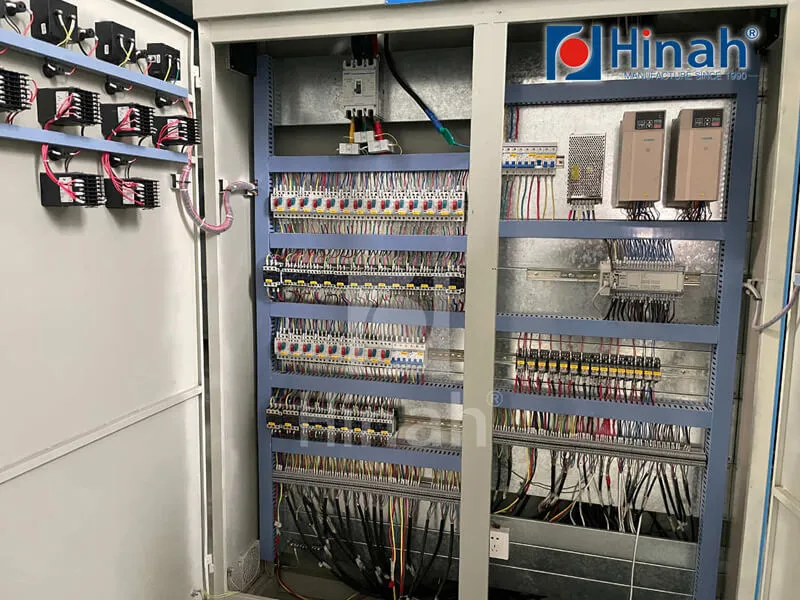
HANNA is integrating PLC controls that allow for remote monitoring. You can check the temperature of your powder coating oven from a smartphone.
Smart sensors can detect if the exhaust fan belt is slipping. They can alert maintenance before the powder coating oven fails. This predictive maintenance is the future of the finishing industry.
Buying a cheap powder coating oven is a false economy.
If the insulation is poor, you pay for it every month in your gas bill. If the airflow is uneven, you pay for it in rejected parts and rework.
A HANNA powder coating oven is an investment in consistency. It is built to run 24/7. We use premium steel, reliable motors, and world-class burners.
Your customers judge you by the finish on your product. That finish relies entirely on the performance of your powder coating oven.
The powder coating oven is the anchor of the finishing line. It dictates the speed of production and the quality of the final output.
From the precise modulation of the burner to the thickness of the insulation, every detail counts. A well-designed powder coating oven runs quietly, efficiently, and consistently.
HANNA is proud to be a leader in this field. We help manufacturers around the world achieve the perfect cure. Whether you are upgrading an old line or building a new facility, the powder coating oven is not the place to cut corners.
Trust in technology. Trust in experience. Choose a HANNA powder coating oven for superior results.
Q1: What is the typical temperature setting for a powder coating oven?
A1: Most standard powders cure between 180°C and 200°C (356°F - 392°F). However, the powder coating oven air temperature is usually set slightly higher to ensure the metal part reaches the target metal temperature (PMT) within the allotted time. Low-cure powders are available for sensitive substrates.
Q2: How long does a part need to stay inside the powder coating oven?
A2: This depends on the metal thickness. The "dwell time" typically starts once the part reaches the cure temperature, usually 10 to 20 minutes. A thick steel block takes much longer to heat up than a thin aluminum sheet, so it must stay in the powder coating oven longer to achieve the same cure.
Q3: Can I use an infrared (IR) oven instead of a convection powder coating oven?
A3: Generally, no. While IR is fast, it works by "line of sight." Complex parts with shadows or hidden areas won't cure evenly with IR alone. IR is best used as a pre-heating booster, while a convection powder coating oven is used to soak the part and ensure a complete cure on all surfaces.
Q4: Why is my powder coating chipping off after coming out of the oven?
A4: Chipping usually indicates under-curing. The powder did not cross-link fully. This means the part did not stay in the powder coating oven long enough, or the temperature was too low. Verify your oven settings with a temperature data logger to ensure the metal temperature is correct.
Q5: What is the difference between direct and indirect heating in a gas powder coating oven?
A5: In a direct-fired powder coating oven, the flame burns directly into the airstream. This is efficient but introduces combustion byproducts. In an indirect-fired oven, the flame heats a heat exchanger, and only clean hot air enters the oven. Indirect heating is preferred for colors sensitive to yellowing or gas fouling.