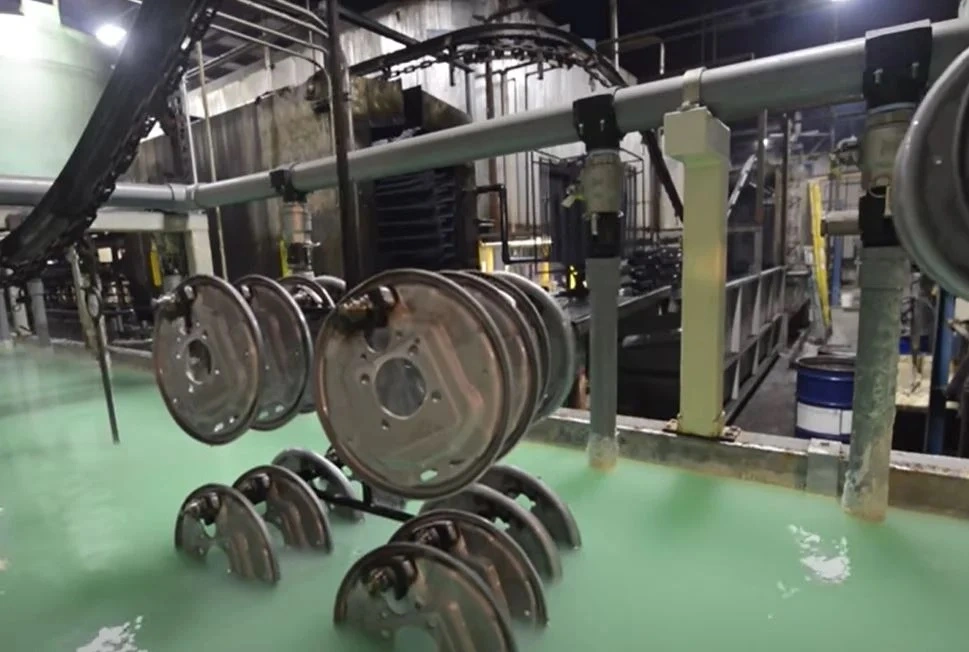
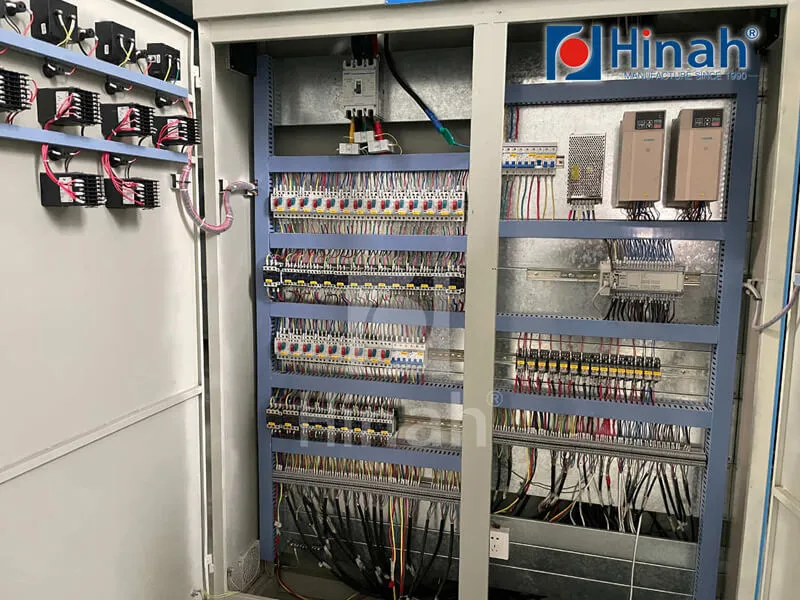
When evaluating a powder coating equipment sale, buyers often focus on price and delivery. However, experienced finishing engineers know that the line’s long-term performance hinges on hidden parameters: powder reclaim efficiency, oven temperature uniformity (±3°C or better), and conveyor load capacity. HANNA has structured thousands of quotes across 40 countries, and the difference between a profitable line and a constant rework generator lies in these technical details. This guide walks through the critical assessments any buyer should make before committing to a purchase.
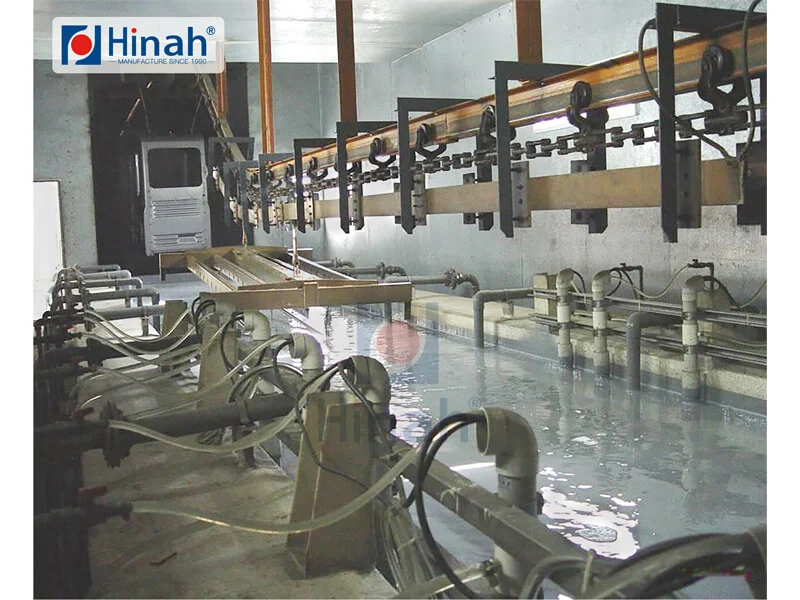
Many powder coating equipment sale proposals look adequate on paper but fail under real production loads. The key parameters to verify:
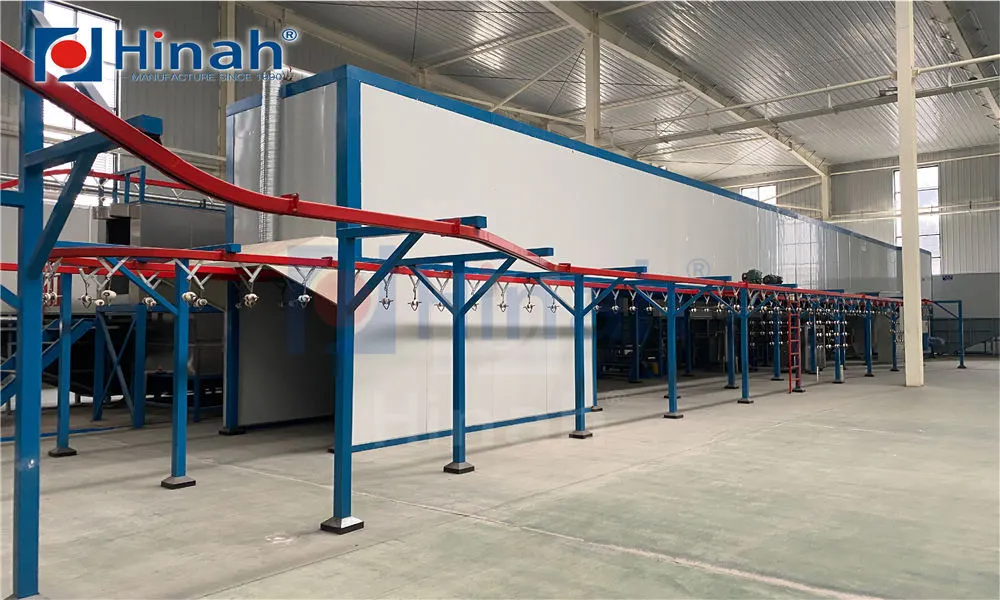
Conveyor hanging density: Calculate the maximum part width + 150 mm clearance on each side. For mixed sizes, the line must accommodate the largest part without slowing down smaller parts unnecessarily. HANNA uses variable-frequency drives on overhead monorails, allowing instant speed changes between 1.5–6 m/min.
Spray booth cross-section: A booth too narrow causes powder buildup on parts; too wide wastes conditioned air. For parts up to 1.2 m height, a 1.8 m wide booth is optimal. For tractor cabins (2.2 m height), a 2.4 m wide booth with dual cyclone recovery is mandatory.
Curing oven dwell time: Verify that the oven length (at the proposed conveyor speed) provides the required dwell at the part’s metal temperature, not just air temperature. For thick castings (15 mm wall), you need 25–30 minutes at 200°C. Many standard lines offer only 15 minutes, leading to under-cure.
A proper needs analysis includes a detailed part spreadsheet (dimensions, material thickness, desired coating thickness, production volume per shift). HANNA provides a free capacity simulation as part of any powder coating equipment sale consultation.
The reclaim system directly affects material cost and color change flexibility. Two dominant technologies exist, and the choice should depend on your color change frequency:
Multi-cyclone systems: Best for high-volume, single-color or few-color operations. They separate powder using centrifugal force, achieving 95–98% recovery of particles >10 µm. No filters to clean. However, cyclone systems have higher pressure drop (requiring 7.5–11 kW fans) and a larger footprint. Ideal for white goods, fence posts, and structural steel.
Cartridge filter booths: Superior for frequent color changes (5+ per shift). The compact filter elements (polyester or cellulose) can be pulse-cleaned automatically. However, filters need replacement every 1,000–2,000 hours. For a job shop running 20 colors per week, cartridge booths are more practical despite higher consumable cost.
In a recent powder coating plant installation, HANNA provided a hybrid solution: a primary cyclone for reclaim of the main color (70% of production) plus a cartridge booth for secondary colors. This reduced filter change frequency by 60% compared to a standalone cartridge booth.
Second-hand powder coating equipment sale can be attractive for startups, but hidden risks include:
Obsolete electrostatic generators: Older power supplies (pre-2010) lack current-limiting circuits, leading to Faraday cage issues and back-ionization. Modern IGBT-based generators provide 20–100 kV with microsecond response.
Worn conveyor chains: An overhead conveyor that has run 20,000+ hours often has elongated pitch (wear of 2–3% leads to jamming). Replacing chain is $80–150 per meter – a cost often omitted in used equipment quotes.
Non-compliant ovens: Many older ovens lack FM or EN 1539 safety systems (explosion relief, purge timers). Retrofitting can add $8,000–12,000.
If buying used, HANNA recommends a third-party inspection covering insulation resistance of oven heating elements, conveyor chain elongation measurement, and gun voltage calibration. For most mid-to-high volume applications, new equipment with a 5-year warranty provides lower total cost of ownership.
Purchase price is only 30–40% of the 5-year cost. The larger factors are:
Powder consumption: A line with 75% transfer efficiency uses 25% less powder than a 60% efficient line. For a shop using 500 kg/week at $6/kg, the annual saving is $39,000.
Energy cost: Ovens account for 60–70% of energy use. Gas-fired ovens with modulating burners and 150 mm insulation save 18–22% compared to on/off burner control with 100 mm insulation. HANNA’s ovens include a heat recovery exchanger that preheats combustion air, reducing gas consumption by 12%.
Labor efficiency: An automatic line with quick color change reduces operator intervention from 3 people to 1.5 people per shift. At $25/hour, the annual labor saving is $78,000 for two shifts.
HANNA provides a TCO calculator as part of every powder coating equipment sale proposal, showing projected costs over 5 years including consumables, maintenance, and utilities.
Equipment performance depends heavily on proper installation and operator skill. When negotiating a purchase, specify:
Commissioning timeline: A full line (pretreatment, oven, booth, conveyor) typically requires 10–14 days on-site. Ensure the supplier provides a project manager and two technicians.
Operator training: Minimum 3 days covering gun setup (kV, microamps, flow rate), conveyor speed adjustment, and color change procedures. HANNA includes a certification test for each operator.
Spare parts availability: Request a recommended spare parts kit (gun nozzles, pump diaphragms, conveyor wear strips, thermocouples). Lead time for critical parts should be <48 hours.
HANNA offers remote diagnostics via a VPN connection to the line’s PLC, allowing troubleshooting of 80% of issues without a site visit. This is included in the first two years of warranty.
Client: Aluminum extrusion coater
(Thailand)
Previous setup: Three manual spray booths, 12
operators per shift, powder utilization 54%, rejection rate 11% (mostly thin
coating on channel interiors).
Purchase decision: After
evaluating several powder
coating equipment sale offers, they selected HANNA’s automatic line
with 8 reciprocating guns, a multi-cyclone reclaim system, and a 24 m gas
oven.
Results after 8 months: Powder utilization increased
to 89%, rejection dropped to 2.8%, labor reduced to 4 operators per shift. The
line paid for itself in 14 months. The key was proper TCO analysis that
prioritized transfer efficiency over lower initial price.
Q1: What is the typical lead time for a complete powder coating line
purchase?
A1: For a standard automatic line (pretreatment washer,
dry-off oven, spray booth, curing oven, conveyor), lead time ranges from 10 to
18 weeks depending on customization. HANNA offers express delivery (8 weeks) for
pre-engineered lines with standard widths (1.6 m or 2.0 m booth).
Q2: Can I finance the equipment through the supplier?
A2:
Yes, many manufacturers including HANNA partner with leasing companies. Typical
terms: 20–30% down payment, 24–60 months, interest rates from 4–8% based on
credit. Operating leases with end-of-term return options are available for pilot
lines.
Q3: What is the expected lifespan of major
components?
A3: Conveyor chain (properly lubricated): 8–10 years;
Oven heating elements (gas burners): 15+ years; Spray gun electrodes and
nozzles: replace every 2,000–3,000 hours; Cyclone separator: 20+ years with no
moving parts. HANNA provides a wear parts schedule with each sale.
Q4: How do I verify the claimed transfer efficiency of a
system?
A4: Request a test report using the ASTM D5066 method
(weight of powder sprayed vs. weight deposited on part). A reputable supplier
should demonstrate ≥75% transfer efficiency for flat panels and ≥65% for
recessed parts. HANNA provides on-site demonstration at our test facility.
Q5: What documentation should I request before finalizing a
purchase?
A5: At minimum: (1) Certified electrical schematics; (2)
PLC program backup on USB; (3) Oven certification (temperature uniformity
report); (4) Conveyor load test report; (5) Spare parts list with manufacturer
part numbers; (6) Installation checklist. HANNA includes all these in the
delivery package.
Q6: Can I integrate new equipment with my existing pretreatment
system?
A6: Yes, if the existing washer provides adequate cleaning
(water break-free surface) and the conveyor height matches. HANNA supplies
interface brackets and speed synchronization modules. A site audit is
recommended to check for rust, nozzle clogging, or temperature control issues
before integration.
Q7: What training is provided after the equipment
sale?
A7: HANNA provides a 3‑day on-site program: Day 1 – safety and
daily maintenance; Day 2 – color change optimization and troubleshooting; Day 3
– quality control (film thickness measurement, adhesion testing). Remote
refresher training is available via video conference.
Selecting the right equipment from the many powder coating equipment sale options requires technical clarity, not just price shopping. HANNA offers a structured procurement process: we analyze your parts, propose three configurations (basic, optimized, premium) with clear TCO projections, and provide a test run at our facility before shipment. Our proposals include a performance bond guaranteeing first-pass yield and powder efficiency.
Request your personalized equipment package today: Send your part drawings, desired annual output, and current powder type. We will respond within 2 business days with a line layout, energy consumption estimate, and a fixed-price quotation.
Submit an Inquiry for HANNA Powder Coating Equipment