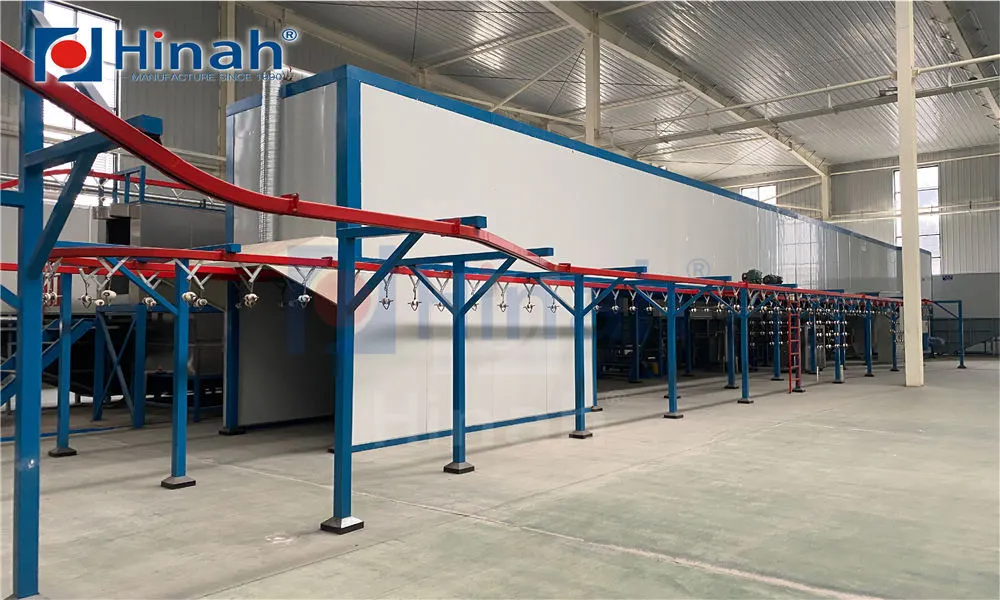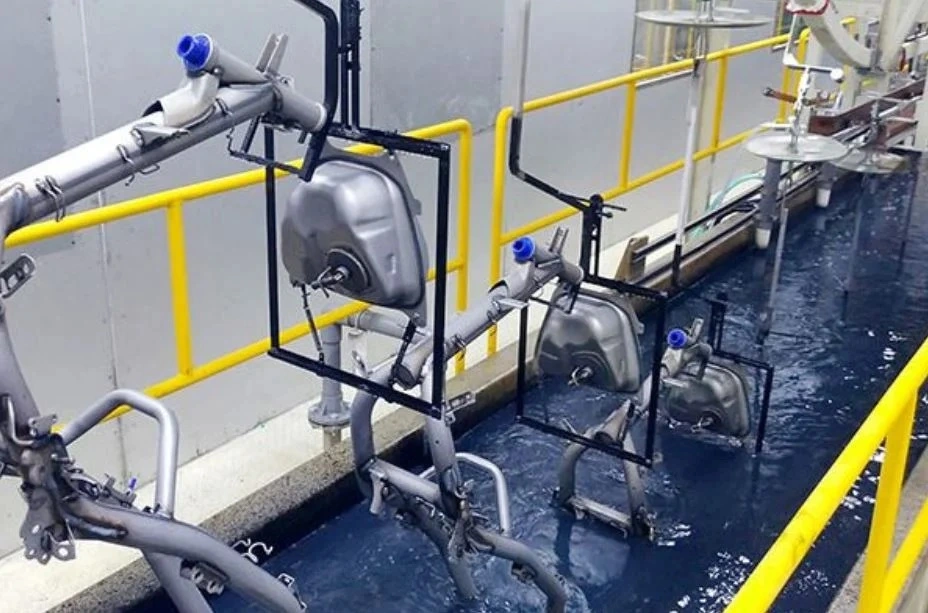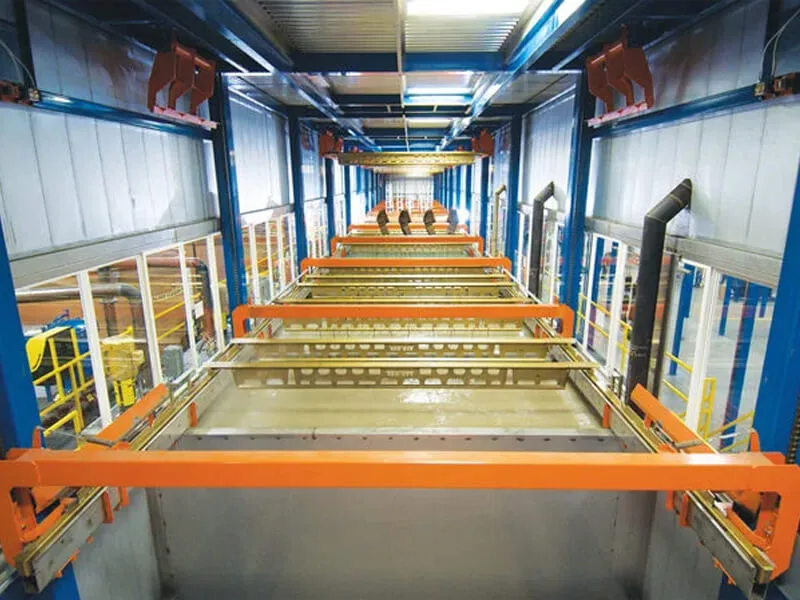

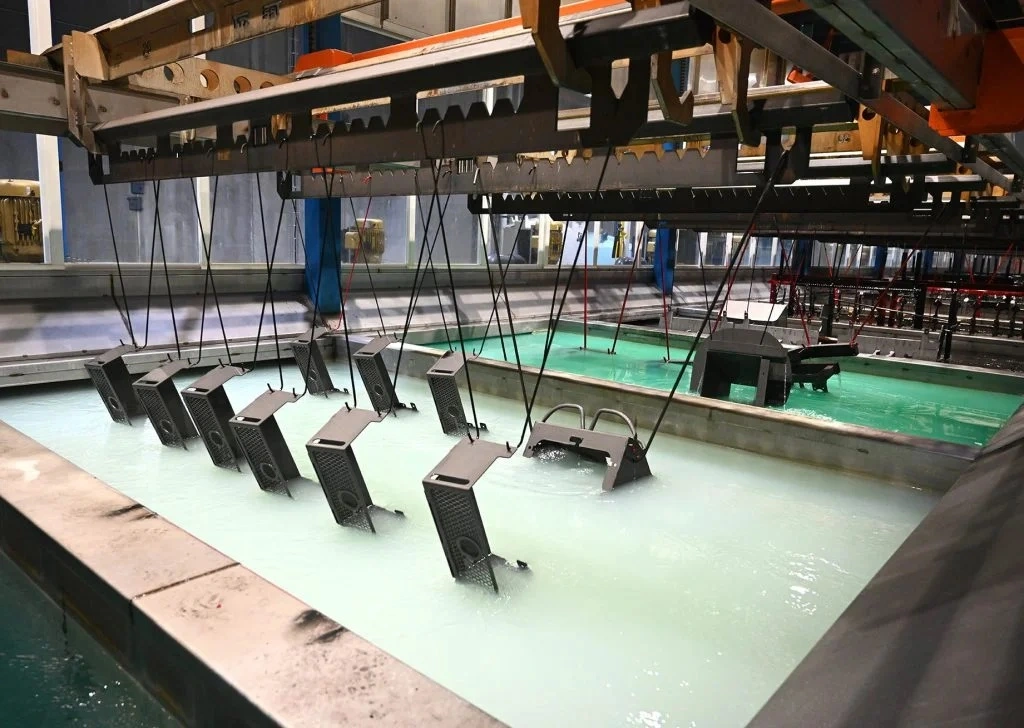
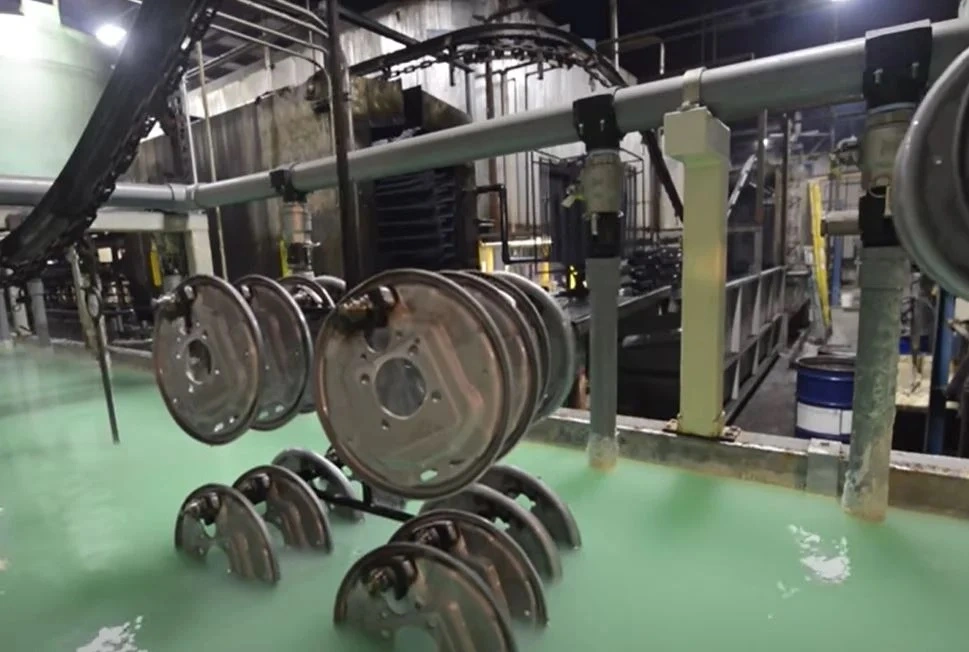

Unlike continuous tunnel ovens, a powder coating batch oven processes discrete racks or carts, making it ideal for job shops, custom coaters, and low-to-medium volume manufacturers. However, improper sizing or poor air circulation leads to under-cured parts (poor adhesion) or over-cured edges (brittleness). This guide compiles field data from 60+ batch oven installations, focusing on quantifiable metrics: temperature uniformity (∆T), heat-up ramp rate, and energy per kilogram of coated product. References to proven configurations from HANNA illustrate how modern controls solve classic batch oven pain points.
1. Core Technical Parameters of a Powder Coating Batch Oven
A powder coating batch oven must meet three interdependent specifications: temperature range (ambient to 250°C), uniformity (±5°C across load), and dwell time accuracy. Below are the subsystems demanding scrutiny during procurement.
1.1 Heating System: Gas vs. Electric – Selecting Based on Duty Cycle
Gas-fired batch ovens use either direct or indirect firing. Direct-fired (burner flame inside airflow) offers lower initial cost and faster heat-up, but risks contamination from combustion byproducts. Indirect-fired (heat exchanger) is mandatory for high-gloss or clear coat powders where NOx or sulfur compounds cause yellowing. Electric ovens with tubular heaters or infrared panels provide cleaner heat and zone control but have higher operating cost where electricity prices exceed $0.12/kWh. For batch powder coating plants with less than 2000 operating hours per year, electric is often preferred due to lower maintenance. HANNA’s gas-fired models include modulating burners (10:1 turndown) and oxygen trim to maintain efficiency above 82%.
1.2 Air Circulation & Uniformity Engineering
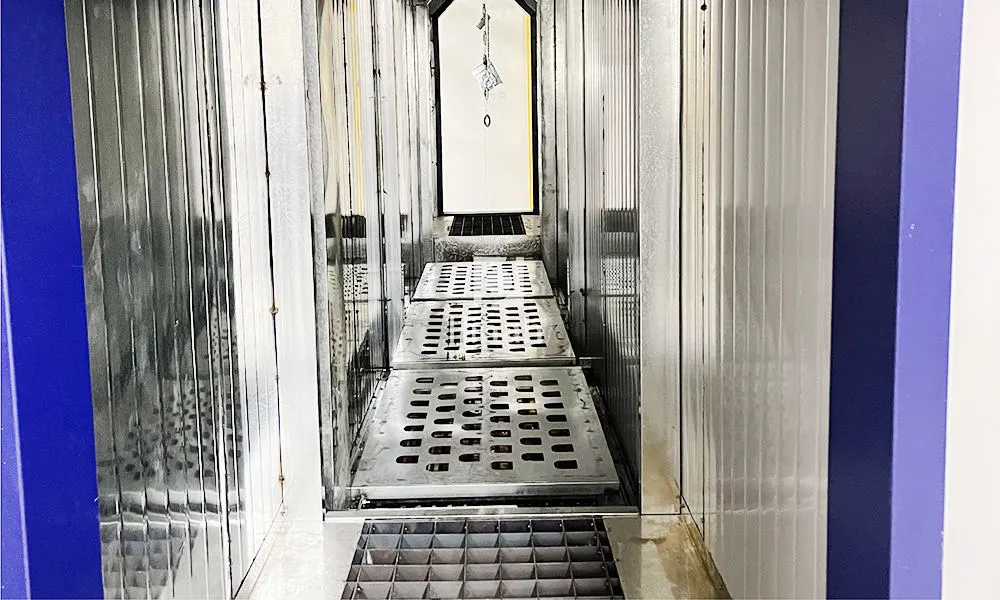
Recirculation ratio (air volume relative to oven chamber) should be 8–12 turnovers per minute. Axial fans with backward-curved blades generate static pressure sufficient to overcome powder-coated filter screens. Critical placement: supply plenums along the side walls and return grilles at the ceiling center. A well-designed powder coating batch oven achieves ∆T ≤ ±3°C at 190°C when measured across 9 points per ASTM D5374. Ask suppliers for a thermal map report from an empty chamber and from a loaded cart with representative part mass.
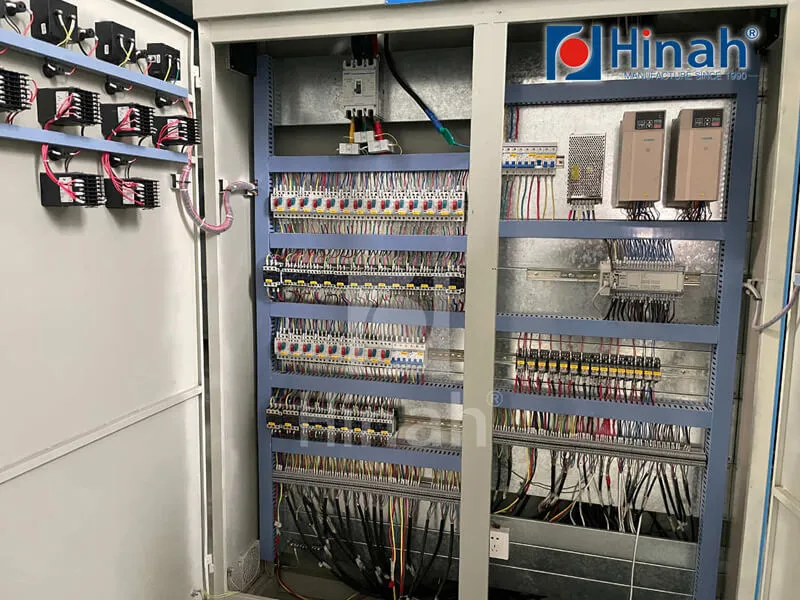
1.3 Control Systems & Data Logging
PID controllers with self-tuning algorithms maintain setpoint within 1°C. For Qualicoat or automotive compliance, the oven must record part temperature via trailing thermocouples (Type K, attached to the thickest section). Modern batch ovens include a touchscreen HMI that stores up to 500 curing profiles, each with ramp/soak segments. Alarm conditions: temperature deviation >5°C for longer than 2 minutes triggers an audible alert and automatically extends soak time. HANNA’s iBatch system sends SMS notifications if the oven fails to reach cross-cut temperature within the programmed window.
1.4 Insulation & Door Sealing – Heat Loss Prevention
Mineral wool insulation (density 128 kg/m³) with 150–200 mm thickness keeps external skin temperature below +15°C above ambient. Door seals: high-temperature silicone rope with a cam-lock closure mechanism. A poorly sealed powder coating batch oven can lose 15–20% of heat input through gaps. Verify that the supplier performs a door leak test using smoke or a thermal camera at maximum operating temperature.
2. Solving Frequent Operational Issues in Batch Ovens
Even from reputable manufacturers, certain problems recur. Below are root causes and corrective actions based on field service reports.
Under-cured centers of dense part loads: Caused by inadequate air velocity between parts. Solution: ensure minimum 50 mm clearance between racks. Use baffle plates to redirect airflow to the core. For heavy steel fabrications, preheating the oven to 150°C before loading reduces thermal shock.
Over-cured thin edges (color shift, brittleness): Occurs when the oven’s recovery time after door opening is too aggressive. Countermeasure: specify a ramp rate limiter – maximum 10°C/min rise after door closure. Also use shielded thermocouples on thin sections to modulate burner output.
Condensation on cold parts after loading: When a cold rack enters a hot oven, moisture evaporates then recondenses on powder film, causing pinholes. Pre-heat the part in a separate warming zone (40–50°C) for 5 minutes before coating. Some powder coating plants integrate an anteroom to this effect.
Uneven color across different zones of the same batch: Usually due to poor fan balance or blocked return filters. Measure air velocity at each supply nozzle – variation should be <15%. Clean or replace filters monthly (differential pressure >250 Pa indicates clogging).
Excessive energy consumption per batch: High cycle frequency with small loads wastes heat. Batch similar parts together and use insulated doors that close automatically. Also, install a variable frequency drive (VFD) on the circulation fan – reduce airflow by 30% during idle periods (between batches) to cut energy use by 40%.
3. Sizing a Powder Coating Batch Oven for Your Production Mix
Incorrect sizing is the most common mistake when selecting a powder coating batch oven. Use the following methodology.
3.1 Load Mass & Heat Absorption Calculation
Total heat required (kWh) = (mass of steel in kg × specific heat of steel 0.49 kJ/kg·K × temperature rise) + (mass of powder coating × specific heat) + (oven structure losses). For a typical 2000 kg steel load (racks + parts) heated from 20°C to 190°C, energy needed ≈ 166,600 kJ (46.3 kWh). Add 30% for losses → 60 kWh. With a 60 kW burner, theoretical heat-up time is 1 hour. Always oversize burner by 20% for aging and cold starts.
3.2 Chamber Dimensions & Cart Configuration
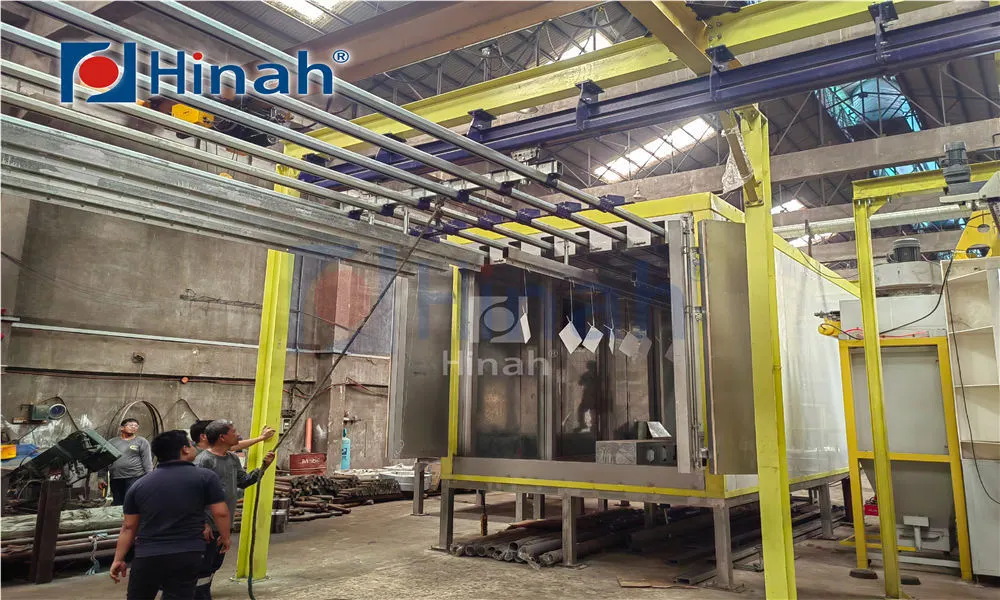
Internal width should be 300 mm wider than the widest cart to allow airflow around sides. Height: allow 500 mm clearance above the tallest part for ceiling plenum. Depth: cart length + 600 mm for door clearance. A powder coating batch oven with internal dimensions 3m W x 3m H x 4m D can handle up to four standard Euro pallet carts. HANNA offers modular panel systems that allow future expansion by adding sections.
3.3 Door Configuration – Swing vs. Vertical Lift
Swing doors (single or double) are simpler but require 1.5m clearance in front. Vertical lift doors (counterweighted or motorized) save floor space and provide better sealing but add cost. For high-cycle operations (more than 20 batches per day), a power lift door with safety light curtain reduces operator fatigue and speeds access.
4. Application-Specific Batch Oven Configurations
Different industries require tailored features beyond standard specs.
Automotive Restoration & Custom Wheels
Small batches with frequent color changes. The powder coating batch oven needs rapid heat-up (50 kW minimum for 2m³ chamber) and a cooling fan to bring parts down to handling temperature. Programmable profiles for different coating chemistries (epoxy primer, polyester topcoat, clear). Also, a viewing window with internal light to inspect flow-out without opening door.
Architectural Railings & Fencing
Long parts (up to 6m). Consider a horizontal split-door design or a walk-in batch oven with end doors. The oven must have side wall outlets to avoid direct radiant heat on slender profiles (prevents sagging). A powder coating plant handling such parts often pairs the batch oven with a manual booth and overhead I-beam for cart loading.
Heavy Fabrications & Agricultural Implements
Loads up to 5000 kg. Floor reinforcement required (minimum 500 kg/m²). The oven must have a pit-level or ramp access for forklift. Use high-velocity nozzles (up to 15 m/s) to penetrate dense arrays. Also, a two-zone control: upper and lower independent thermocouples to compensate for hot air stratification.
5. Energy Efficiency & Compliance Standards for Batch Ovens
Modern powder coating batch ovens must meet NFPA 86 (industrial ovens and furnaces) and local emission norms. Key strategies to reduce operating cost:
Install a heat recuperator: preheat combustion air using exhaust gases (typical savings 15–20%).
Use insulated door curtains (strip curtains) for frequent short openings – reduces heat loss by 30% compared to leaving door fully open.
Schedule batches: group parts with similar thermal mass and cure temperature to avoid re-tuning.
Monitor oxygen content in gas-fired ovens; excess air above 15% wastes fuel. Automatic O₂ trim maintains 3–5% excess.
HANNA batch ovens are certified to CE, UL, and CSA standards, and include a waste heat calculator in the HMI to track daily consumption per kilogram of coated output.
Frequently Asked Questions (FAQ) – Powder Coating Batch Oven
Q1: What is the typical temperature uniformity I should demand from a
powder coating batch oven?
A1: For most industrial powders
(polyester, epoxy, hybrid), uniformity of ±5°C across the entire work zone is
acceptable. For high-end automotive clear coats or thin-film (30µm)
architectural coatings, demand ±3°C. Ask the supplier for a thermal mapping
report following AMS 2750E or API 6A standards.
Q2: How long does a batch oven take to cure a full load of heavy
steel parts?
A2: The part metal temperature must reach 180–200°C and
hold for 10–15 minutes. For 500 kg of steel with 60 kW heating, expect 45–60
minutes ramp plus dwell. Use a trailing thermocouple on the thickest section to
confirm. A powder coating batch oven with forced
convection cuts ramp time by 25% compared to gravity circulation.
Q3: Can I cure both powder and wet paint in the same batch
oven?
A3: Not recommended. Solvent-based paints release flammable
vapors requiring explosion-proof electricals and purge cycles (NFPA 86 Class A).
Powder curing ovens are usually Class B (non-explosive). If you must use both,
the oven must be rated for the higher hazard class and include solvent detection
with automatic shutdown. HANNA offers dual-purpose ovens with certified safety
interlocks.
Q4: What maintenance schedule extends the life of a powder coating
batch oven?
A4: Weekly: inspect door seals for cracks, clean fan
intake filters. Monthly: measure temperature uniformity with a 9-point probe,
calibrate thermocouples against a NIST-traceable standard. Quarterly: check
burner nozzle and flame rod, lubricate fan bearings. Annually: have a certified
technician perform combustion analysis and insulation integrity scan. Following
this schedule keeps the oven operational for 15–20 years.
Q5: How do I calculate the required burner size for a new powder
coating batch oven?
A5: Use the formula: kW = (Volume in m³ × 0.3) ×
(Desired ramp time in hours⁻¹). For a 10 m³ oven needing ramp to 200°C in 0.5
hours: (10 × 0.3) × 2 = 6 kW? That’s too low. Correct industrial rule: 15–20 kW
per m³ of chamber volume for gas-fired, 20–25 kW per m³ for electric. So 10 m³
needs 150–200 kW. Always request a heat load simulation from the manufacturer
based on your specific part weight and rack design.
Specifying the Right Powder Coating Batch Oven for Your Workflow
A well-engineered powder coating batch oven delivers consistent cure, low rejects, and predictable energy bills. Prioritize suppliers that provide thermal mapping data, demonstrate ramp rate control, and offer remote diagnostics. HANNA has supplied over 200 batch ovens to job shops and OEMs, each with a signed performance guarantee on uniformity and heat-up time. Our technical team also assists with layout integration and operator training.
Ready to receive a detailed proposal and thermal simulation for your parts? Send us your maximum part dimensions, typical weekly batch count, and substrate types. We will provide a comparison of three oven configurations with firm ROI estimates.