
A bottleneck at the wash stage. Inconsistent cure times. Contamination falling onto freshly sprayed parts. If these issues sound familiar, your paint line conveyor might be the hidden culprit. This system is the central artery of any finishing operation. Its reliability and design directly dictate your throughput, product quality, and bottom line. Choosing the right paint line conveyor is a fundamental engineering decision with long-term consequences.
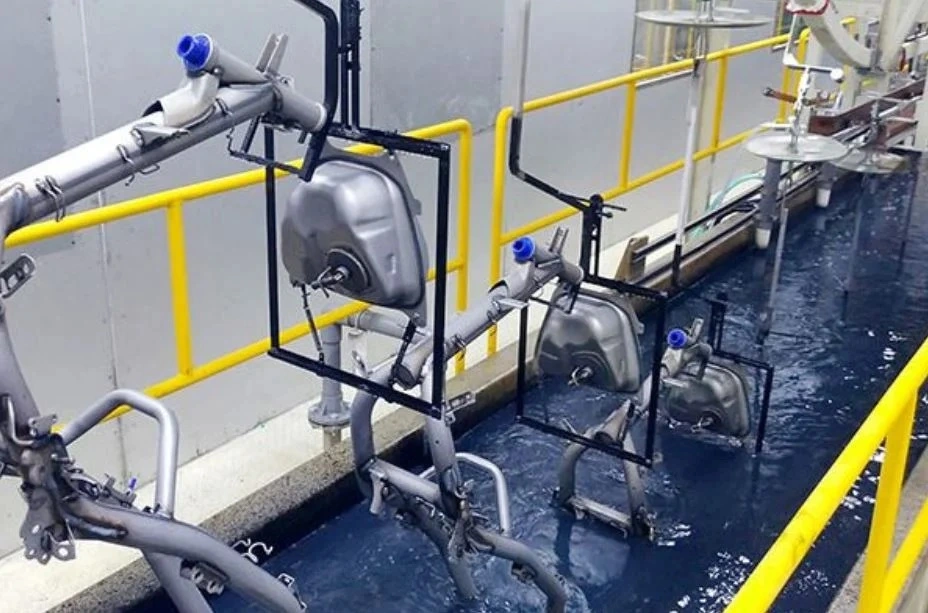
Think beyond simple transportation. The conveyor is the process orchestrator. It sets the immutable rhythm for your entire coating line.
Each component—washing, pretreatment, drying, coating, curing—requires precise dwell times. The conveyor’s speed controls this critical timing. A variance of just seconds can ruin a finish.
The system’s layout also determines your facility’s efficiency. A well-planned paint line conveyor maximizes space, ensures safe operator access, and creates a logical flow from load to unload.
No single design fits all applications. The choice depends on part size, weight, volume, and process. Manufacturers like HANNA engineer solutions for these specific needs.
Overhead Monorail Conveyors
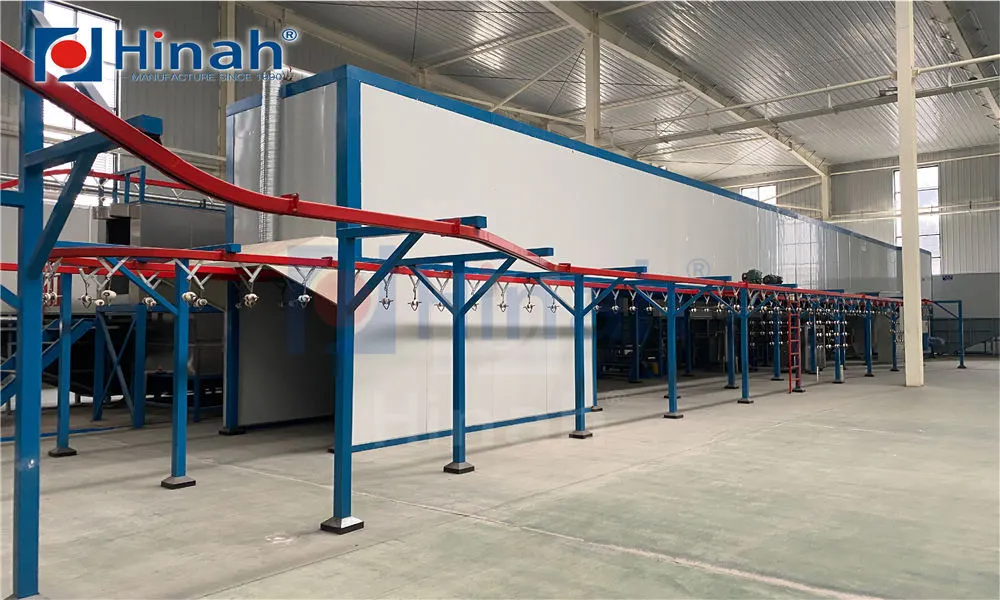
The industry workhorse for high-volume lines. An I-beam track runs near the ceiling, with trolleys carrying parts on hooks or fixtures.
It provides continuous movement, perfect for consistent throughput. The overhead design keeps floors clear. It efficiently transports parts through enclosed ovens and spray booths.
Power & Free Conveyors
These systems offer superior control. They use two tracks: a powered line for movement and a non-powered line where carriers can stop or accumulate.
This allows asynchronous processing. Parts can pause for manual work or different cure times without stopping the entire paint line conveyor. Ideal for complex production mixes.
Floor Conveyors
Used for extremely heavy or bulky items. Types include chain-on-edge or drag chain systems that run at floor level.
They handle objects like truck frames, heavy machinery, or large enclosures. The load weight is supported by the floor, not overhead structures.
EMS (Electrified Monorail Systems)
A high-tech option where each carrier has an independent motor and control. Carriers are programmed to move to specific stations.
This offers ultimate routing flexibility for highly automated, just-in-time manufacturing. It represents the pinnacle of paint line conveyor technology.
A successful system starts with meticulous engineering. These factors are non-negotiable during the design phase.
Load Capacity and Dynamics
The system must support your heaviest part and its fixture. HANNA engineers analyze more than weight. They assess the center of gravity and potential sway to ensure stable transport.
Precise Speed and Dwell Time Control
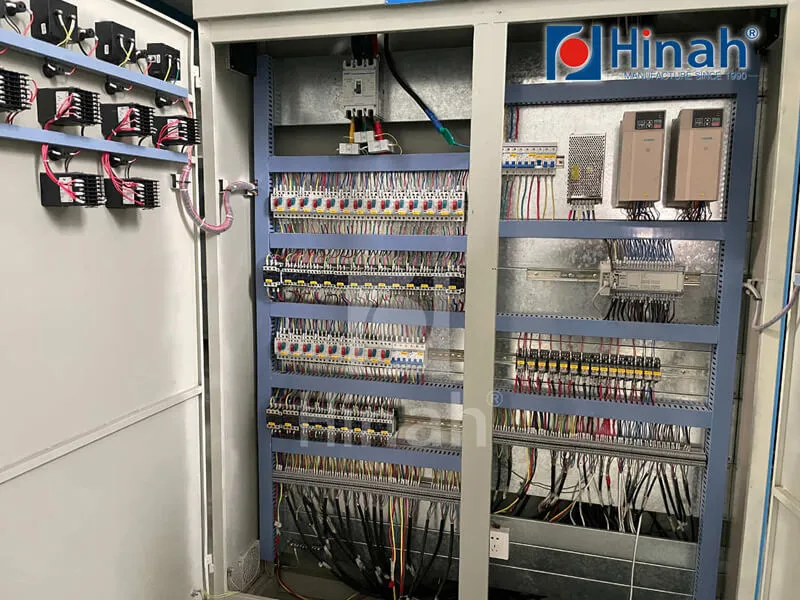
Conveyor speed is calculated backward from required dwell times, especially in cure ovens. Inaccuracy causes under-cured paint or energy waste. Modern systems use variable frequency drives (VFDs) for precise control.
Spatial Planning and Transitions
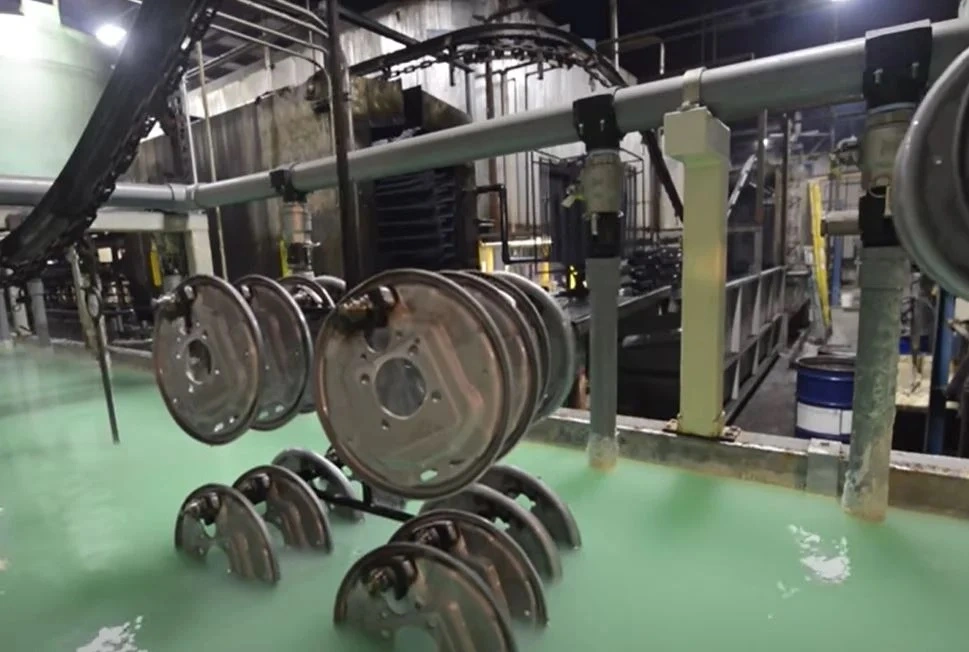
The path must navigate building constraints—columns, doors, ceiling heights. Vertical dips and horizontal curves must be engineered to prevent collisions, sway, or excessive wear.
Fixture and Hook Engineering
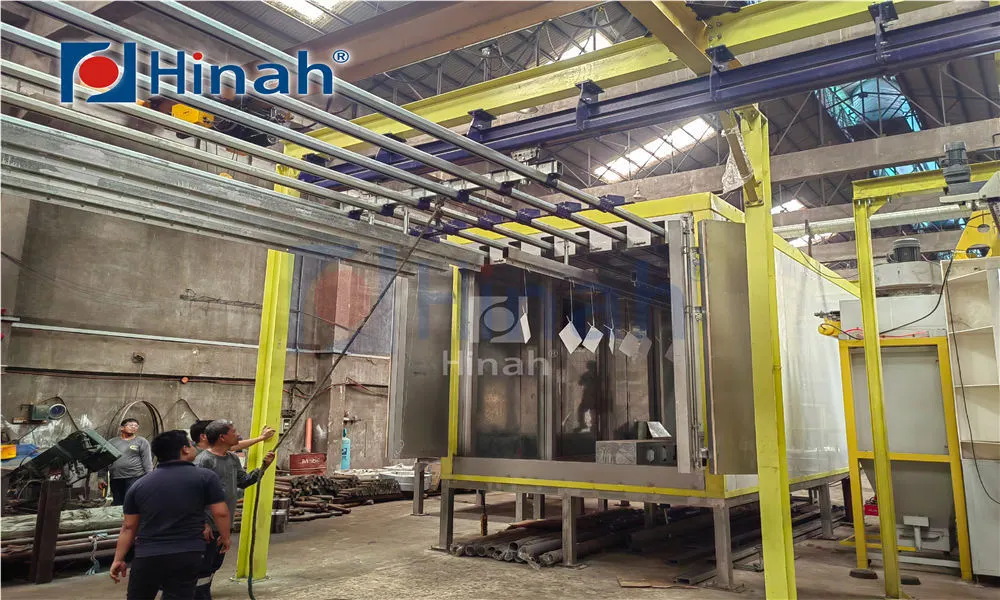
This is the critical interface. Fixtures must secure the part, allow complete coating coverage, and ensure proper grounding for electrostatic processes. They must also withstand repeated thermal cycling.
The conveyor is not a passive component. Its condition directly affects the final product's appearance and integrity.
Grounding Integrity for Electrostatic Application
For efficient electrostatic application, the part must be electrically grounded. The entire conveyor chain and hooks must maintain perfect electrical continuity. Worn or contaminated hooks cause poor transfer efficiency and uneven film build.
Stability and Vibration Control
Excessive movement during transport can cause runs, sags, or orange peel in liquid paints. A smooth, stable ride from a well-engineered paint line conveyor is essential for a flawless finish.
Contamination Prevention
Debris, old paint, or grease from the conveyor structure can fall onto parts. Quality designs incorporate drip pans and specify clean-running chains and lubricants. Regular cleaning is mandatory for a quality-focused shop.
These systems operate in harsh conditions. Proactive maintenance is far cheaper than catastrophic downtime.
Routine Inspection Schedule
Establish daily visual checks for worn hooks, loose pendants, and track alignment. Listen for unusual noises from drives or bearings. Weekly inspections should verify lubrication systems and chain tension.
Strategic Lubrication
This is the system's lifeblood. Use the correct lubricant—often a high-temperature, non-dripping type. Both over- and under-lubrication cause major problems. Follow the manufacturer’s schedule meticulously.
Component Replacement Planning
Don’t wait for failure. Plan for periodic replacement of high-wear items: drive chains, trolley wheels, and lift sections. Keeping critical spare parts on-site minimizes production interruptions.
At HANNA, we view the conveyor as the backbone of the integrated system. Our paint line conveyor solutions are built for precision and durability.
We focus on robust drives and sprockets designed for continuous operation. Our control interfaces allow seamless integration with oven and applicator controls. We design custom fixtures that optimize part presentation and grounding efficiency.
Our engineering team creates layouts that maximize your existing space while planning for future expansion. We build a foundation meant to last for decades.
Modern paint line conveyor systems are becoming data sources. Integration with plant-wide systems is now a standard expectation.
Speed and location data can feed into a Manufacturing Execution System (MES). This allows real-time tracking of batches. Predictive maintenance alerts based on motor load or vibration sensors prevent unscheduled stops.
HANNA’s systems can be equipped with these smart features. This transforms your conveyor from a simple mover into a hub of operational intelligence.
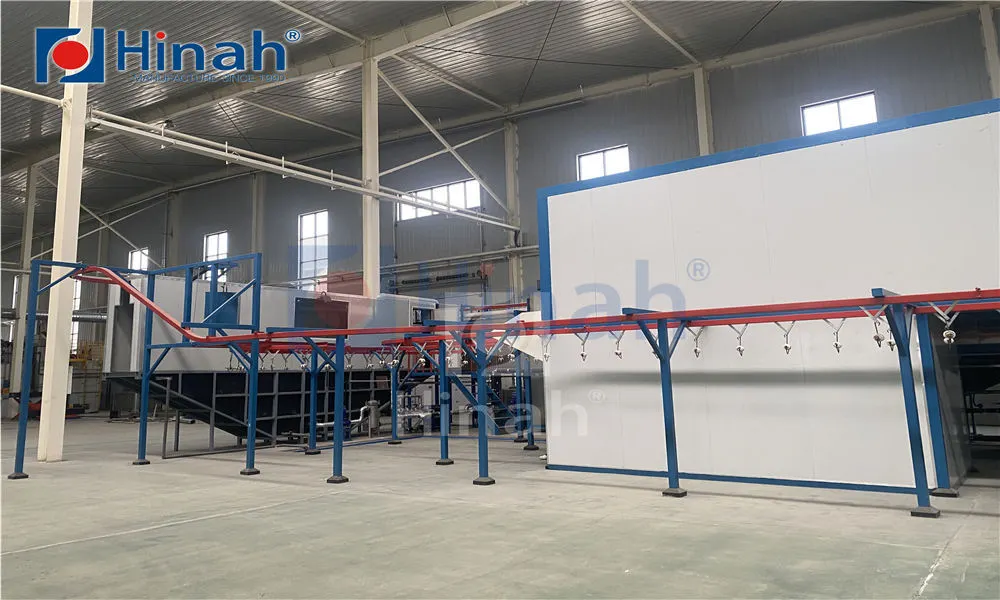
Spray guns and ovens receive most of the attention. But they cannot perform without precise, reliable movement underneath. The choice of your paint line conveyor sets the fundamental capability and rhythm of your production.
Investing in a properly engineered system from an experienced partner like HANNA delivers long-term returns. It reduces costly downtime, improves finish consistency, and adapts to future needs. It is the unshakeable foundation upon which coating quality and productivity are built.
Q1: We run both powder and liquid coatings. Does the conveyor type need to be different?
A1: The core conveyor type (e.g., overhead monorail) can often handle both. However, critical details change. For powder, grounding integrity is paramount, requiring specific hook cleaning and maintenance. For liquid, vibration control and drip containment become more critical. HANNA designs systems to accommodate these specific process requirements.
Q2: What is the single biggest cause of premature conveyor system wear?
A2: Improper lubrication is the most common culprit. Using the wrong lubricant type, applying it incorrectly, or failing to clean old lubricant first accelerates wear dramatically. Adhering strictly to the manufacturer's lubrication protocol is the best preventive measure.
Q3: Our facility has low ceiling clearance. Can we still install an effective overhead system?
A3: Yes, but it requires careful engineering. Low headroom often necessitates a more compact “drop” section into pretreatment tanks and ovens. It may also influence the choice between monorail and power & free. HANNA specializes in designing efficient layouts within spatial constraints.
Q4: How often should we professionally inspect our paint line conveyor?
A4: Beyond daily operator checks, a comprehensive professional inspection should be conducted annually. This should include detailed measurement of chain wear, structural bolt torque checks, drive motor alignment verification, and a full assessment of the electrical grounding continuity throughout the system.
Q5: Can we upgrade our decades-old conveyor with modern controls and smart features?
A5: Absolutely. Retrofits are common. Older mechanical drives can be replaced with modern VFD-driven units for precise speed control. PLC controls and IoT sensors for monitoring load, vibration, and temperature can often be added. HANNA frequently performs such upgrades to extend system life and capability.