
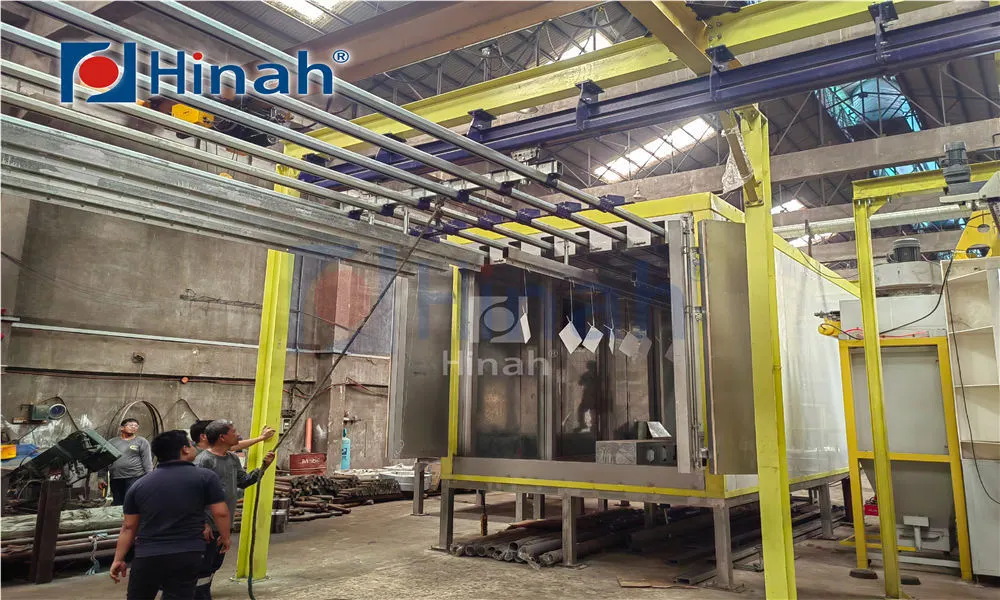
Modern manufacturing demands consistency, efficiency, and high quality in surface finishing. This is where Automated powder coating systems become essential. These systems replace manual labor with programmable machines to apply powder coatings with precision. They are designed to increase throughput, reduce material waste, and ensure uniform quality across every part. For manufacturers looking to upgrade their capabilities, understanding these systems is the first step. Leading providers in this field, such as HANNA, offer comprehensive solutions tailored to diverse industrial needs.
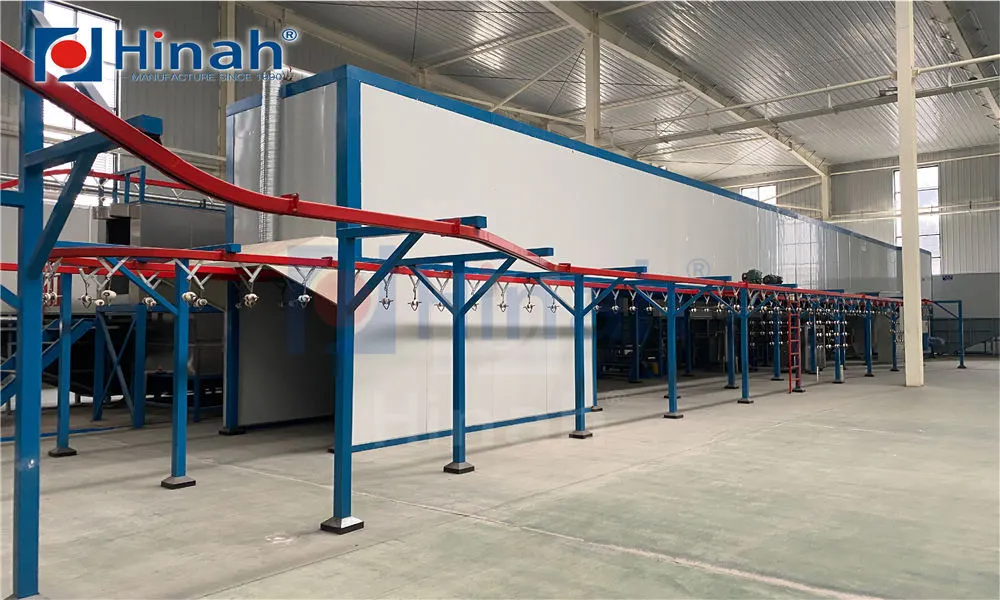
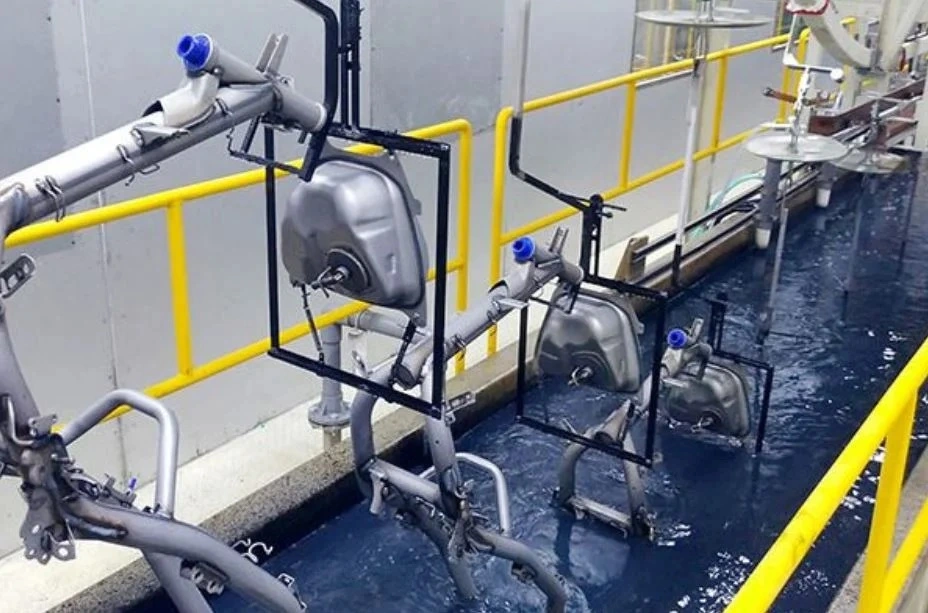
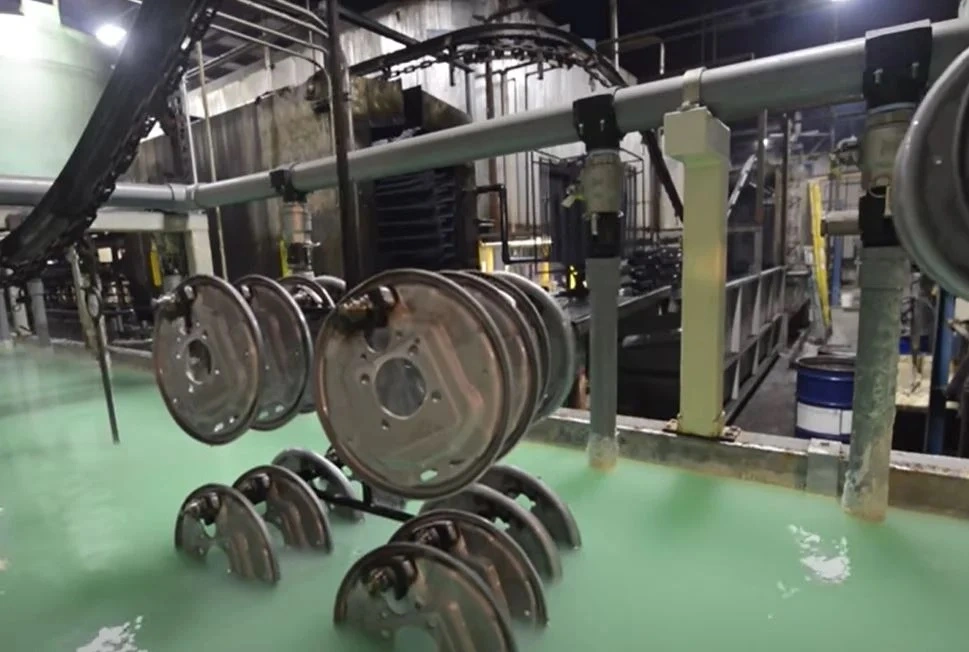
An Automated powder coating system is a fully integrated production line where the application process is controlled by programmable logic. It typically involves robotic arms or reciprocators that guide electrostatic spray guns along a predetermined path. Parts move through the system on an automated conveyor, passing through pretreatment, drying, coating, and curing stages with minimal human intervention.
A complete system consists of several synchronized components that work together seamlessly.
Together, these elements form a cohesive and highly repeatable Automated powder coating systems.
Investing in automation delivers measurable improvements across several critical operational areas. The transition from manual to automated spraying offers a strong return on investment.
Robots execute the same spray program identically for every part, eliminating human variability.
This level of repeatability is nearly impossible to achieve with manual operators over a full shift.
Automation allows the line to operate at its optimal speed continuously, without operator fatigue.
The result is a significant boost in the number of parts coated per hour.
While the initial investment is higher, automated systems save money in the long run through material efficiency and lower labor costs.
These savings directly improve the bottom line and justify the capital expenditure for an Automated powder coating system.
Successfully implementing an automated line requires careful planning. The system must be designed around your specific products and production goals.
How the system identifies and holds parts is fundamental to automation.
Proper fixturing ensures the robot can access all surfaces that require coating.
A key advantage of modern Automated powder coating systems is their flexibility.
This flexibility is crucial for job shops or manufacturers with diverse product lines.
At the heart of automation are the robots and the software that controls them. This technology defines the capability of the entire system.
Industrial robots provide unmatched precision and dexterity for coating complex parts.
This capability is essential for industries like automotive or aerospace, where part geometry is challenging.
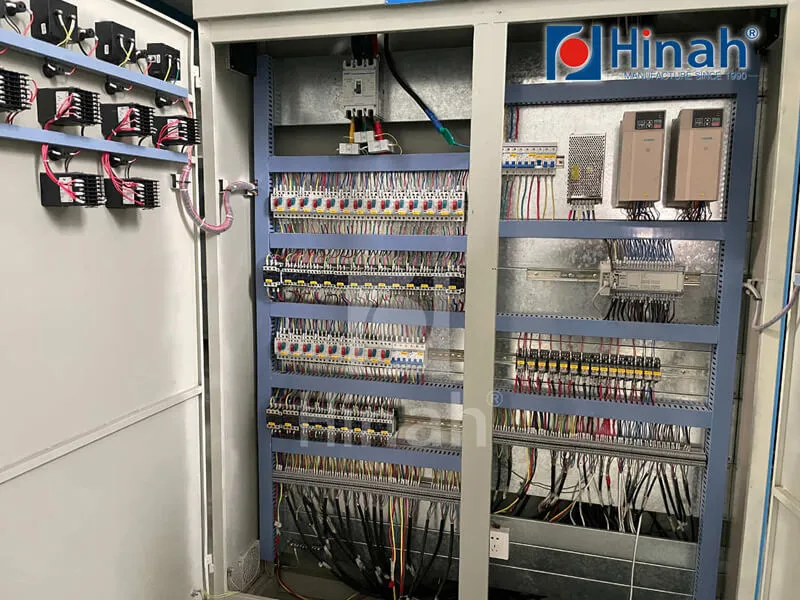
A sophisticated PLC and HMI (Human-Machine Interface) provide complete oversight and control.
This level of control transforms the coating process from an art into a repeatable science.
Designing and installing a reliable automated coating line is complex. Partnering with an experienced supplier like HANNA is critical for success.
A supplier with a proven track record brings invaluable knowledge to the project.
Choosing the right partner is as important as choosing the right equipment for your Automated powder coating system.
Automated powder coating systems represent the future of industrial finishing, offering unparalleled quality, efficiency, and cost control. By integrating robotics, precise control software, and efficient recovery technology, these systems provide a competitive edge in today's market. For manufacturers ready to scale their operations and improve their finish quality, investing in automation with a trusted partner like HANNA is a strategic move that delivers long-term value and positions the business for future growth.
Q1: What is the typical payback period for an automated powder coating system?
A1: The payback period varies based on production volume, labor costs, and material savings. For high-volume operations, it can often be between 18 to 36 months. Savings from reduced powder usage, lower labor costs, and decreased rework contribute to a relatively quick return on investment for an Automated powder coating system.
Q2: Can automated systems handle small batch sizes or frequent color changes?
A2: Yes, modern systems are designed for flexibility. Quick-color-change booths and purge systems allow for efficient switches between colors, sometimes in under 10 minutes. The ability to store multiple robot programs makes running small batches of different parts feasible and economical.
Q3: What maintenance is required for the robotic components?
A3: Robotic arms require periodic lubrication, calibration, and inspection of cables and joints. The spray guns and powder pumps need regular cleaning and replacement of wear items. A preventive maintenance schedule, often provided by the supplier, is essential to keep the system running smoothly and avoid unplanned downtime.
Q4: How does an automated system improve workplace safety?
A4: Automation enhances safety by reducing operator exposure to powder particles, repetitive motion injuries, and potential hazards near the coating booth. Operators primarily monitor the process from a control station, minimizing direct contact with the application environment.
Q5: Are automated powder coating systems suitable for coating very large or heavy parts?
A5: Absolutely. Automated powder coating systems can be scaled to handle large parts. This is achieved by using larger robots with extended reach, designing spacious booths and ovens, and employing heavy-duty conveyor systems capable of supporting significant weight. The system is always engineered around the specific dimensions and weight of the parts to be coated.