
An industrial Paint line system is an integrated series of processes designed to clean, coat, and cure parts on a continuous, automated basis. It is the backbone of high-volume finishing operations in sectors like automotive, aerospace, and appliance manufacturing. The efficiency and final finish quality depend entirely on the proper design and integration of each component. This guide breaks down the five essential parts of a modern system, drawing on the expertise of leading suppliers such as HANNA.
A complete Paint line system is more than just a spray booth and oven. It is a synchronized chain of specialized stations, each performing a critical function. Understanding these components is the first step in planning or optimizing a line.
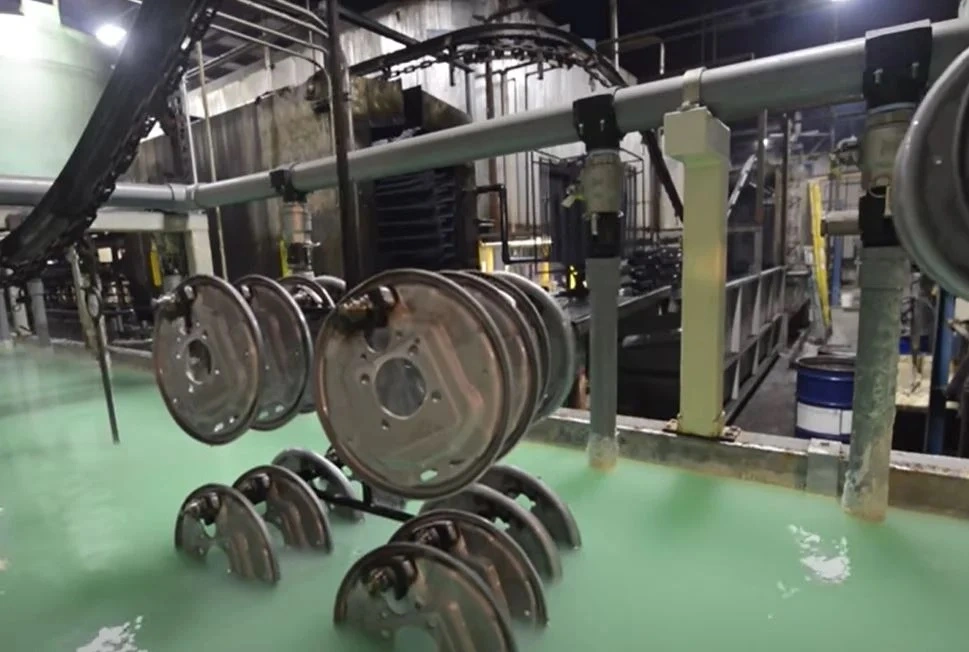
This initial stage is arguably the most important for ensuring coating adhesion and long-term corrosion resistance. It prepares the metal surface for the coating process.
Any failure in this stage will lead directly to coating failures, making it a cornerstone of the entire Paint line system.
After pretreatment, parts must be completely dried before any coating is applied. Moisture on the surface will cause serious defects in the final finish.
A well-designed drying stage is a simple but vital part of a reliable paint line system.
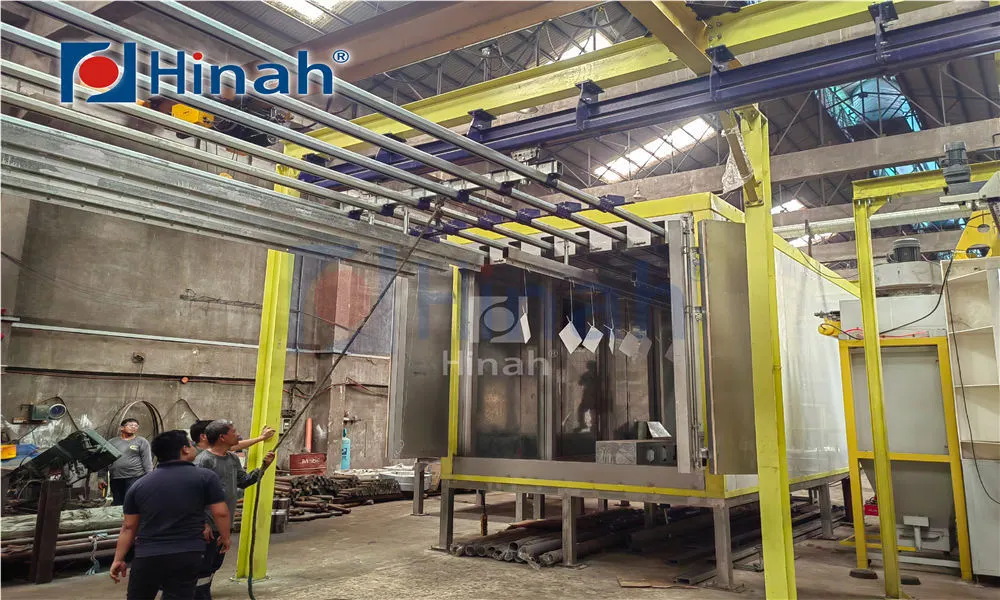
This is the controlled environment where liquid paint or powder coating is applied to the parts. The booth design varies significantly based on the coating technology used.
The booth must be tailored to the specific application method, whether manual, automatic electrostatic, or rotary atomizers.
The curing oven provides the precise thermal energy needed to cross-link and harden the applied coating. It solidifies the finish and develops its full physical and chemical properties.
This component is a major energy consumer, so modern systems from suppliers like HANNA focus heavily on heat recovery and efficiency.
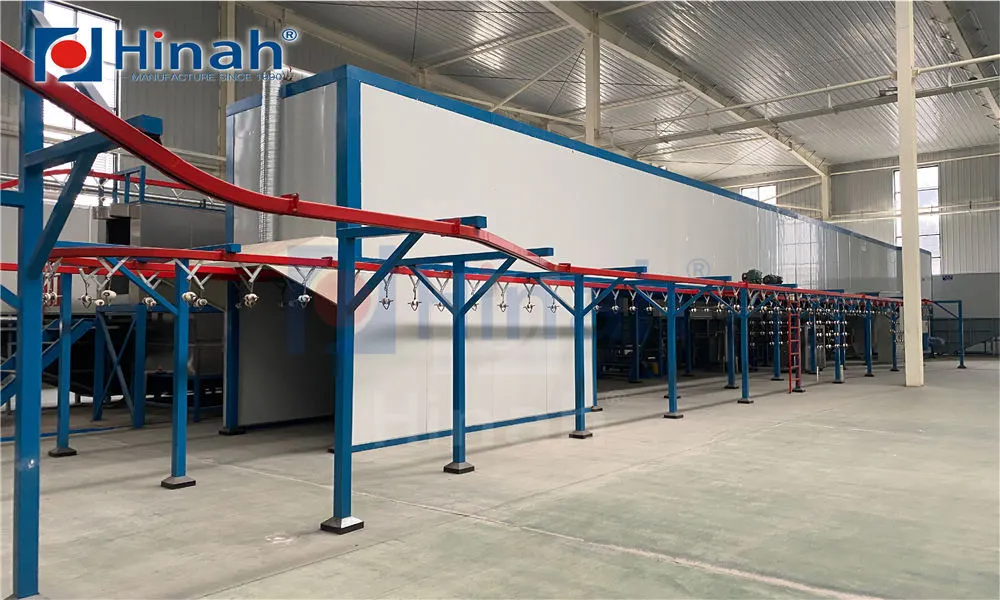
The conveyor is the central nervous system of the entire operation. It physically links all other components and dictates the production pace.
The integration of the conveyor with each process station is what transforms individual machines into a cohesive Paint line system.
Not all finishing lines are the same. The choice of system depends heavily on the coating material, production volume, and part characteristics.
These are the two primary technology paths, each with distinct process flows and equipment requirements.
The decision between liquid and powder dictates the design of the application and curing stages.
Designing an efficient paint line system requires careful planning. Several critical factors must be balanced to achieve the desired output and quality.
The system must be sized and specified to match your business needs.
A detailed process specification is the foundation for any successful project with a supplier like HANNA.
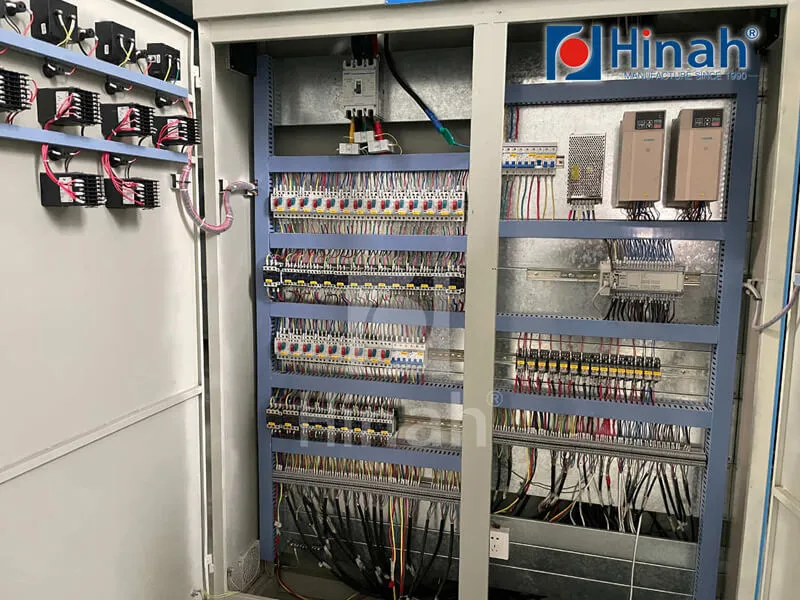
Modern industrial paint line systems rely heavily on automation for consistency, repeatability, and data collection.
A Programmable Logic Controller (PLC) with a Human-Machine Interface (HMI) is standard.
This level of control is what separates a basic line from a high-performance, modern Paint line system.
An effective industrial Paint line system is a masterpiece of process engineering, where pretreatment, application, curing, and material handling work in perfect harmony. Investing time in understanding each component and its interaction with the others is crucial for specifying, operating, and maintaining a successful line. By partnering with experienced and knowledgeable suppliers such as HANNA, manufacturers can ensure their system is designed for maximum quality, efficiency, and longevity, providing a solid foundation for their finishing operations.
Q1: What is the main difference between a batch system and a continuous paint line system?
A1: A batch system processes parts in groups or loads, moving them between stations manually or with a batch transfer system. A continuous Paint line system uses an uninterrupted conveyor to move parts sequentially through all stages without stopping, which is ideal for high-volume, consistent production.
Q2: How important is the pretreatment stage in a paint line?
A2: It is critically important. Pretreatment accounts for up to 70% of the long-term corrosion protection and adhesion of the final coating. Skipping or inadequately performing this stage is the leading cause of premature coating failure, such as blistering or peeling.
Q3: Can a paint line system be used for both liquid and powder coating?
A3: Generally, no. The application and recovery technology is fundamentally different. A line is typically designed for one or the other. However, the pretreatment and curing stages might have some overlap if parameters are similar, but the booth and application equipment are not interchangeable.
Q4: What are the biggest energy consumers in a typical paint line system?
A4: The two largest energy consumers are the curing oven (for natural gas or electricity to generate heat) and the pretreatment stage (for heating cleaning and rinse tanks). Modern designs from companies like HANNA focus on heat recovery and efficient burner technology to reduce these costs.
Q5: How long does it take to install and commission a new industrial paint line?
A5: For a custom, turnkey system, the timeline from order to full production typically ranges from 6 to 12 months. This includes detailed engineering, manufacturing of components, shipping, on-site installation, and process commissioning. The complexity and size of the Paint line system are the main variables.