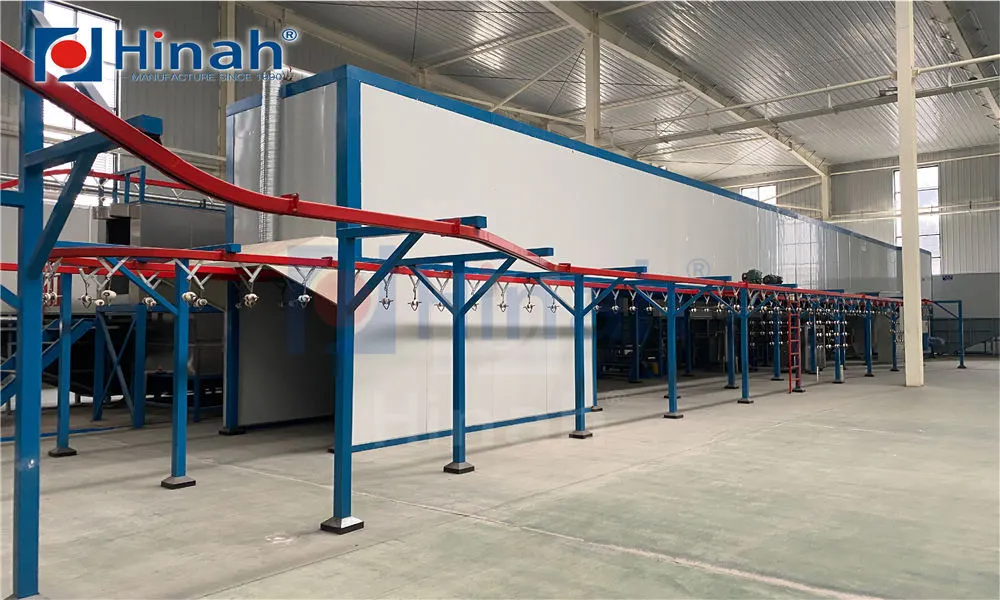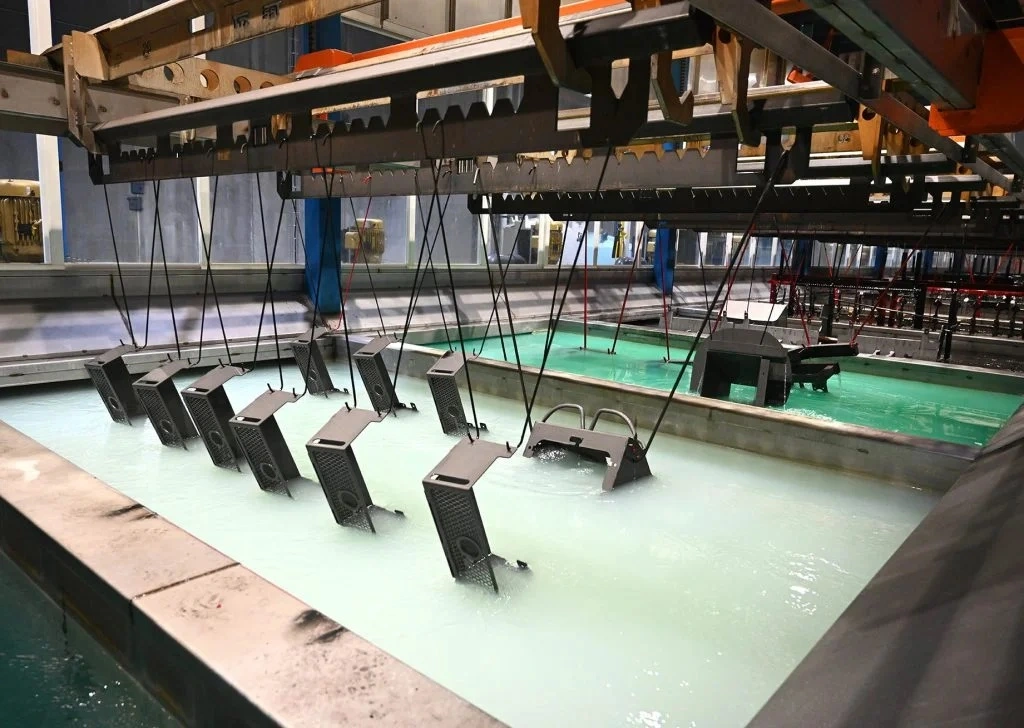
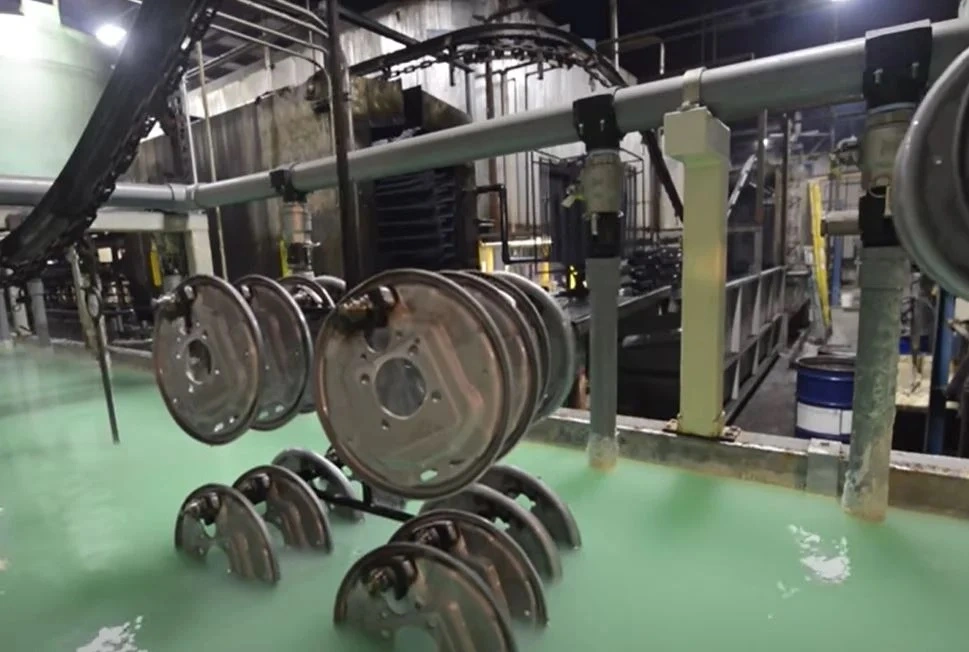
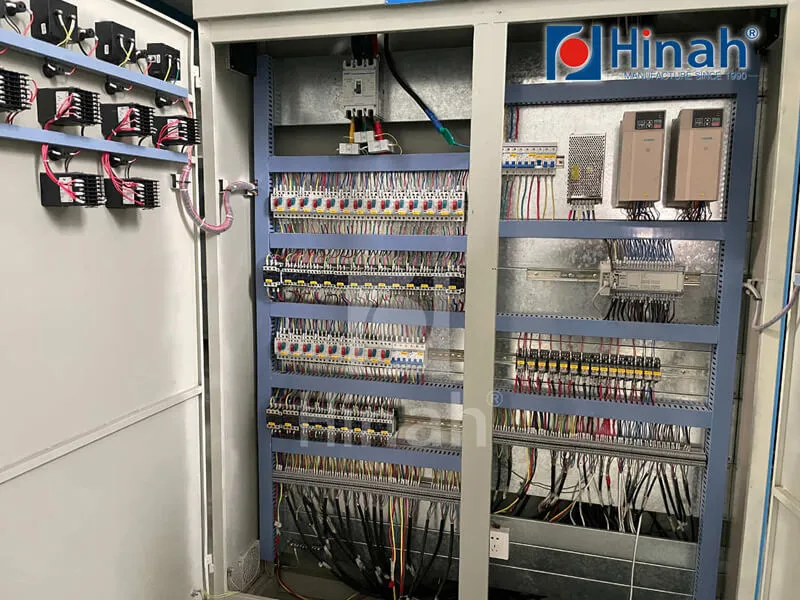

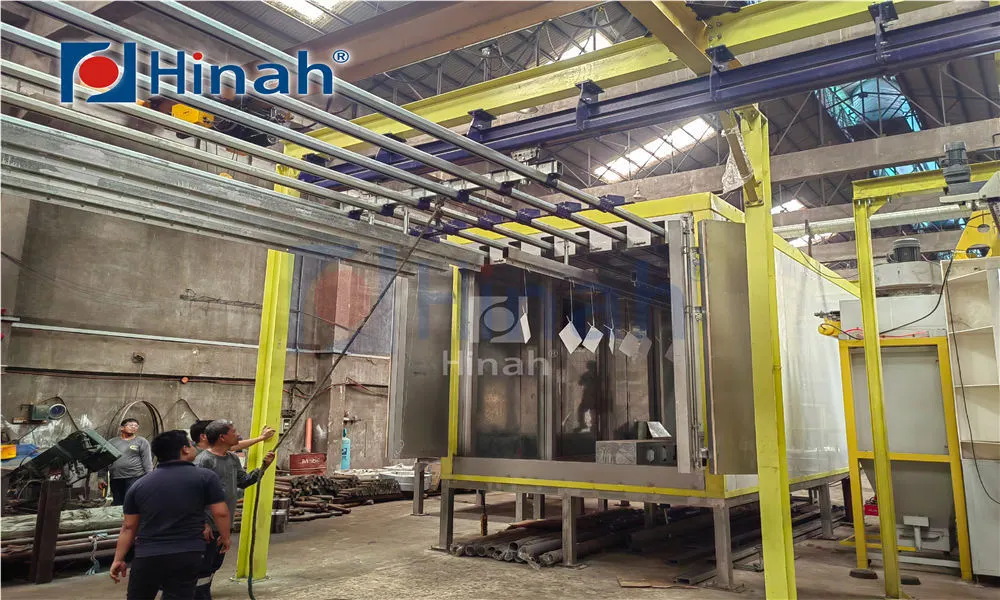
Industrial powder coating lines generate overspray, volatile organic compounds (VOCs) from curing ovens, and particulate matter that demands robust mitigation. Without properly designed Environmental protection equipment, manufacturers face regulatory fines, material waste exceeding 40%, and health hazards. This guide—drawing from two decades of powder coating plant integration—provides a technical roadmap for selecting, sizing, and operating emission control systems that align with EPA, EU, and local clean air standards.
HANNA has engineered more than 120 powder coating systems where closed-loop Environmental protection equipment reduces powder consumption by up to 95% and cuts oven exhaust VOCs below detectable limits. Below we examine each technology class, application-specific pitfalls, and performance verification protocols.
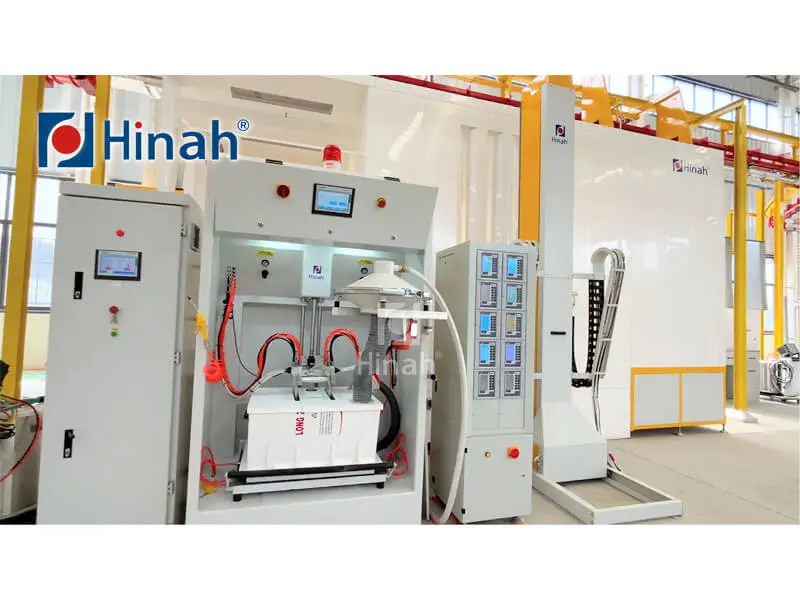
Many coating operators install generic dust collectors, only to encounter filter blinding, pressure drop spikes, and explosive dust hazards. Powder coating particles (20–80 µm) exhibit high electrostatic charge and tend to agglomerate. Standard baghouse filters lack the surface treatment needed for powder release, leading to frequent pulsing and shortened media life. Moreover, curing ovens release trace monomers, silicone-based additives, and combustion byproducts that require thermal or adsorptive treatment – not just particulate filters.
The core challenge is balancing airflow (typically 8,000–25,000 m³/h per booth) with capture velocity, while maintaining a stable negative pressure that doesn't disturb the powder cloud. High-efficiency Environmental protection equipment must address both fugitive emissions and process-integrated recovery.
Modern powder booths integrate a primary cyclone (pressure drop 800–1200 Pa) that separates 92–97% of reclaim powder by centrifugal force. The remaining fines (<5 µm) proceed to a secondary cartridge filter with nanofiber-coated pleated media. This two-stage Environmental protection equipment design achieves outlet emissions ≤3 mg/Nm³, far below OSHA PEL for nuisance dust (15 mg/m³). Key design parameters:
Cut point d50: Cyclone geometry tailored to powder density (1.2–1.6 g/cm³)
Air-to-cloth ratio: ≤0.8 m³/min·m² for extended cartridge life (typical 12–18 months)
Pulse-jet cleaning: Differential pressure triggered (800–1000 Pa) with oil-free compressed air
Explosion venting: NFPA 68 compliant rupture panels for combustible dust (Kst ≤200 bar·m/s)
While powder coatings are 99% VOC-free, thermoset powders release small amounts of blocked isocyanates and amine catalysts during crosslinking. Oven exhaust temperatures range from 150–220°C, making powder coating plant integration of a regenerative thermal oxidizer (RTO) the most reliable destruction method. RTO achieves 98–99% DRE (destruction removal efficiency) at 815°C with 90–95% primary heat recovery. For lower flow rates (below 5,000 m³/h), a direct-fired thermal oxidizer or zeolite rotor concentrator is more economical.
For facilities with stringent NOx limits, Environmental protection equipment can incorporate selective catalytic reduction (SCR) downstream of the RTO. HANNA recently commissioned a 40,000 m³/h RTO+SCR system for an automotive parts coater, reducing VOC from 320 mgC/m³ to below 5 mgC/m³ and NOx to <20 mg/m³.
Different production environments impose unique demands on Environmental protection equipment. Below are four common scenarios and their technical resolutions.
Aluminum extrusion profiles (length up to 7m): Horizontal booths with multi-cyclone arrays prevent powder accumulation inside hollow profiles. Automated traversing guns plus booth wall extraction maintain laminar flow, avoiding eddies that cause overspray escape.
Heavy machinery (crawler excavators, agricultural implements): High particle loading (up to 50 g/m³) requires a settling chamber before the cyclone to remove coarse fragments. Abrasion-resistant lining (alumina ceramic) extends equipment life by 300%.
Medical equipment (antibacterial coating): Absolute H14 HEPA filters (EN 1822) after the baghouse guarantee ISO Class 5 cleanroom air recirculation. HANNA integrates UV-C sterilization on recirculated air to prevent microbial growth in humid climates.
MDF (medium-density fiberboard) powder coating: Pre-dryer exhaust contains terpenes and formaldehyde. A wet electrostatic precipitator (WESP) combined with activated carbon injection achieves EU BAT compliant emission levels below 1 mg TEQ/m³.
Investing in high-specification Environmental protection equipment typically yields payback within 14–22 months, primarily from reclaimed powder. A mid-size powder coating plant spraying 120 kg/hour with 60% transfer efficiency generates 48 kg/hour overspray. A two-stage cyclone+cartridge system recovers 45 kg/hour (94%). At €6/kg powder cost, annual savings exceed €900,000 (8000 production hours). Secondary savings include:
Reduced hazardous waste disposal fees (powder waste classified as non-hazardous when recovered)
Lower insurance premiums due to explosion mitigation systems (ATEX / NFPA compliance)
Elimination of environmental penalties – typical fines range from €25,000 to €200,000 per violation
Extended booth cleaning intervals (from weekly to quarterly), reducing labor costs by 70%
Maintenance planning: Cartridge filters should be replaced every 18–24 months (€3,500–€8,000 per booth). RTO ceramic media requires inspection every 5 years; thermal degradation reduces efficiency by 3–5% annually if not cleaned. HANNA provides condition monitoring with differential pressure transmitters and predictive maintenance algorithms that alert operators before filter breakthrough.
Global emission limits are tightening. The EU Industrial Emissions Directive (IED 2010/75/EU) sets VOC emission limit values (ELV) for coating activities at 20 mg/Nm³ as total carbon for new plants. China's GB 16297-2023 mandates powder coating particulate emissions ≤10 mg/m³. In North America, EPA 40 CFR Part 63 Subpart DDDDD requires continuous parametric monitoring for capture systems. To remain compliant for the next decade, Environmental protection equipment must incorporate:
Modular design for future MACT (Maximum Achievable Control Technology) upgrades
Real-time emission reporting (Modbus TCP/IP to plant SCADA)
Redundant filter sections for online maintenance without shutdown
Non-methane hydrocarbon (NMHC) continuous analyzer readiness
Furthermore, carbon footprint regulations (CBAM in EU, SEC rules in US) will soon require reporting of fugitive emissions from coating lines. Equipment that recirculates up to 85% of booth air reduces both natural gas consumption for tempering and direct CO₂ equivalents. For a typical 3-booth plant, this translates to 270 tons CO₂/year savings – meeting Scope 2 reduction targets without carbon credit purchases.
Legacy Environmental protection equipment operated as a standalone silo. Modern powder coating plant designs unify emission control with production KPIs. For example, a smart controller can reduce extraction fan speed by 35% during color change or maintenance breaks, slashing energy consumption. Vibration sensors on fan bearings and thermocouples in RTO combustion chambers trigger remote alerts to service teams. HANNA offers a cloud-based analytics dashboard that correlates powder feed rate with filter pressure drop, identifying optimal pulse-jet intervals automatically.
One documented case: a farm equipment manufacturer reduced filter consumption by 58% and compressed air usage by 34% within six months after implementing AI-driven cleaning cycles. The same system predicted a bearing failure in the ID fan ten days before downtime, avoiding a €180,000 production loss.
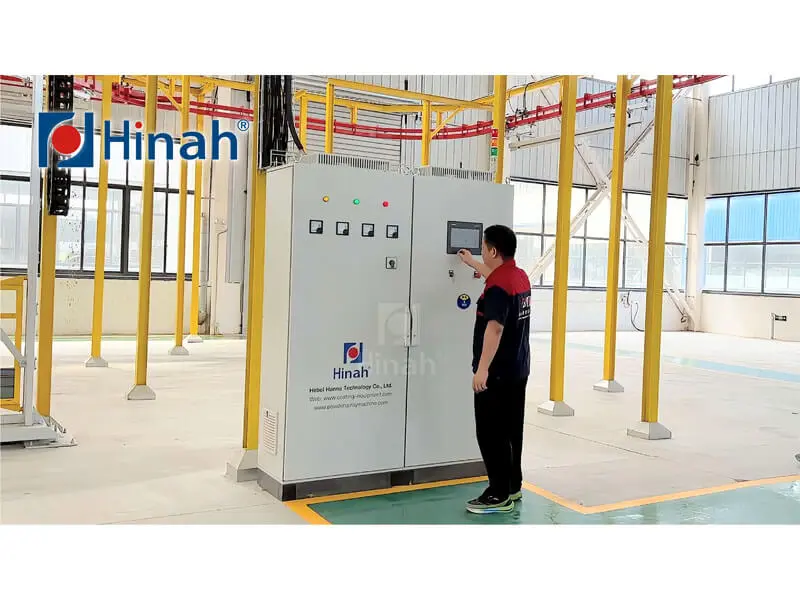
Field experience shows that 80% of performance issues with new Environmental protection equipment originate from duct design and damper timing. Use the following checklist during FAT (factory acceptance test) and SAT (site acceptance test):
Duct velocity: Maintain 18–22 m/s for horizontal runs; below 15 m/s leads to powder settling.
Branch balancing: Manual volume dampers with pressure-independent regulators (accuracy ±5%).
Spark detection system: Required when duct connects to a grinding/polishing operation. Extinguishing system with water mist or CO₂.
Rotary airlock seal: Leakage rate <0.5% at 5 kPa differential to prevent fine dust escape.
Stack height: Must exceed nearby building height by at least 2.5m to comply with dispersion modeling (US EPA 40 CFR 51.100).
After installation, validate performance with isokinetic stack sampling (US EPA Method 5 for particulates, Method 25A for VOCs). A third-party certified lab should verify that outlet concentrations meet permit limits at 100%, 75%, and 50% production load.
Q1: Can I recirculate air from the environmental protection equipment
back into the plant to save heating costs?
A1: Yes,
but only if the system includes HEPA filtration (≥99.97% at 0.3 µm) and
continuous CO monitoring. OSHA 29 CFR 1910.94(c) allows air recirculation when
the concentration of any contaminant is reduced to <5% of the permissible
exposure limit. Many automotive plants recirculate 70–85% of air after a
validation period, cutting winter heating bills by 35–50%.
Q2: What is the typical pressure drop across a new vs. end-of-life
cartridge filter in powder booth service?
A2: New
cartridges start at 250–350 Pa. As the surface cake builds, differential
pressure rises. Pulse cleaning should trigger at 800 Pa. When the system reaches
1200 Pa within one shift after pulsing, filter replacement is due. Ignoring this
leads to fan motor overload and possible duct collapse.
Q3: How often should I test the explosion protection system on my
dust collector?
A3: NFPA 69 requires functional
testing of explosion isolation valves and vent panels every 12 months. Use a
non-destructive pressure pulse test (0.5 bar) to verify valve closure within 50
ms. Replace burst panels every 5 years even without activation due to metal
fatigue. HANNA provides on-site
testing with certified technicians.
Q4: For a hybrid powder line (both conventional and tribo guns), does
the environmental protection equipment need different filter
media?
A4: Tribo-charged powder particles carry
opposite surface charge compared to corona-charged powder. While both are
captured effectively by standard polyester/cellulose blend media, the release
behavior differs. Use a conductive (stainless steel fiber) filter if you
frequently alternate between chemistries – it prevents static charge buildup
that can cause powder clinging and bridging in the hopper return line.
Q5: What is the typical lead time for a custom RTO + cyclone system
for a new powder coating line?
A5: From signed
order to commissioning: 28–34 weeks. Engineering and 3D modeling (4 weeks),
fabrication of RTO chamber and ceramic bed (12 weeks), cyclone and duct
fabrication (6 weeks), PLC control panel (6 weeks), FAT (1 week), shipping &
installation (3 weeks), SAT & training (2 weeks). Expediting options exist
but increase cost by 25–30%.
Selecting and integrating Environmental protection equipment requires deep process knowledge – from aerodynamic modeling of overspray to ceramic media selection for thermal oxidizers. HANNA offers turnkey engineering, manufacturing, and remote performance monitoring across 35 countries. Our team provides a guaranteed emission permit pass and a 24-month warranty on filter media efficiency.
Submit your line parameters (booth dimensions, powder type, production hours, local emission limits) for a no-obligation technical proposal. Each proposal includes CFD simulation of airflow, ROI calculation based on your utility rates, and a 3D layout drawing.
Contact HANNA today:
Email:
sales@autocoatinglines.com
Web: https://www.autocoatinglines.com/
Request a quote: Environmental protection equipment inquiry form">Environmental protection equipment inquiry form