In the competitive world of metal finishing, consistency is the currency of success. Manual spraying works well for small batches or complex prototypes, but when volume increases, human variables become a liability. This is where automated powder coating changes the game.
Transitioning to automation is not just about buying robots. It is about restructuring your production flow to achieve higher throughput, lower material waste, and a finish quality that does not fluctuate between Monday morning and Friday afternoon.
Whether you are looking to upgrade an existing line or build a new facility from the ground up, understanding the mechanics and economics of an automated powder coating system is essential. This guide covers everything from technical components to calculating your return on investment.
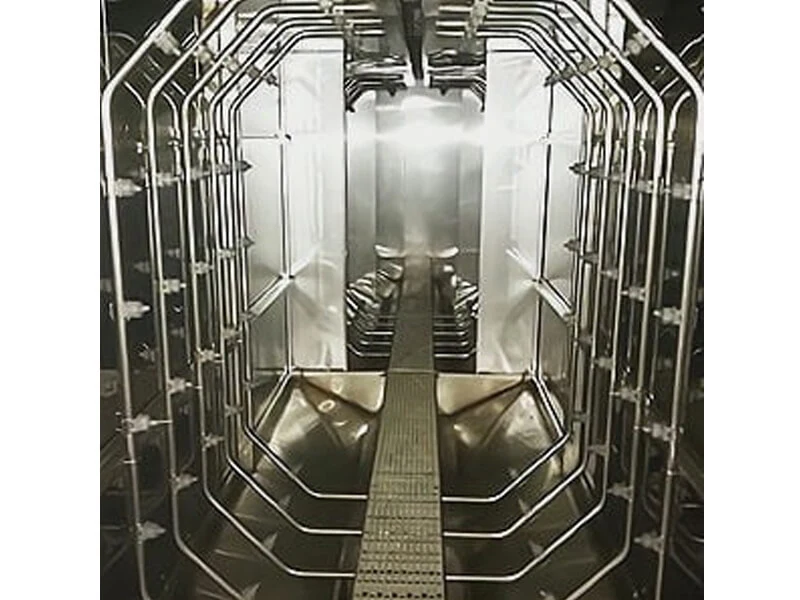
Labor shortages are hitting the manufacturing sector hard. Finding skilled sprayers who can maintain a consistent gun distance and travel speed for eight hours a day is becoming impossible.
An automated powder coating system eliminates the fatigue factor. A reciprocator does not get tired. It does not rush the job to go on a lunch break. It applies the exact same film thickness to the first part of the day as it does to the last.
For business owners, this means predictability. You can accurately forecast your powder consumption and production time. This level of control is why industry leaders turn to brands like HANNA to engineer systems that remove human error from the equation.
A standard manual booth is simple. An automated powder coating line is an ecosystem. To make it work, several components must communicate perfectly.
First, you have the reciprocators. These are the robotic arms or vertical lifts that move the guns up and down. They must be smooth and stable. Jerky movements lead to striping on the parts.
Second, you have the automatic guns. unlike manual guns, these are designed for continuous operation. They often feature different charging technologies to ensure powder wraps around the back of the part efficiently.
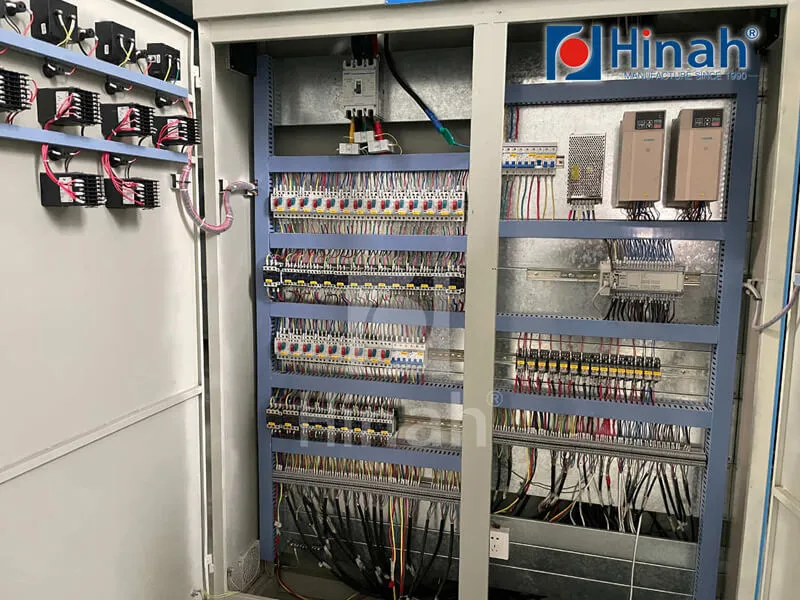
Third, you have the control center. This is the brain of the operation. Modern systems allows you to save "recipes." If you are painting a flat panel, you select Preset A. If you are painting a wire mesh fence, you select Preset B. This adjusts voltage, current, and powder flow instantly.
The biggest hidden cost in any paint shop is waste. In a manual process, transfer efficiency (how much powder actually sticks to the part) can be as low as 40-50% depending on the operator's skill.
High-end automated powder coating equipment can push transfer efficiency significantly higher. Because the gun distance is fixed and the spray pattern is optimized, less powder ends up in the filters and more ends up on the metal.
Over a year, saving 15% on powder usage can pay for a significant portion of the equipment upgrade. HANNA focuses heavily on this metric, designing guns that maximize the electrostatic charge to ensure the powder is attracted to the grounded part, not the booth floor.
No two factories are alike. A "cookie-cutter" solution rarely works for industrial applications. You need a custom automated powder coating setup that fits your available floor space and product mix.
For example, if you coat long aluminum profiles, you need a horizontal arrangement with guns positioned to cover the vertical faces. If you coat complex automotive wheels, you might need a multi-axis robot rather than a simple vertical reciprocator.
HANNA specializes in this type of customization. We analyze the shape of your parts and the speed of your conveyor. We then determine the exact number of guns required to coat the product in a single pass without slowing down the line.
Time is money. A manual operator can only move so fast. An automated powder coating system allows you to ramp up your conveyor speed.
When you install automatic guns, you are effectively multiplying your workforce. A system with 8 or 12 automatic guns can coat surface areas in minutes that would take a manual team hours.
However, speed requires balance. The oven must be long enough to cure the parts at that increased speed. This is why buying an automated powder coating system usually involves reviewing your entire finishing line, including pretreatment and curing capacity.
One of the trickiest aspects of powder coating is the Faraday Cage effect. This happens when you try to spray into a corner or a recessed area. The electrostatic field repels the powder, leaving the corners bare.
Skilled manual sprayers know how to wiggle the gun to overcome this. In automated powder coating, we solve this through technology.
Modern controllers regulate the current (microamps) and voltage (kilovolts) automatically. When the gun approaches a deep recess, the system can lower the voltage to prevent back-ionization and allow the powder to penetrate the corner. HANNA systems are equipped with advanced logic to handle these complex geometries without manual intervention.
In the past, automation was only for companies that sprayed one color all day, like white refrigerators. Today, job shops need to switch colors five or ten times a shift.
An automated powder coating booth must be easy to clean. We use non-conductive plastic materials (like PP or PVC) for the booth walls. Powder doesn't stick to these walls as much as it does to steel.
Combined with a cyclone recovery system, a modern automated powder coating line can change colors in under 15 minutes. This flexibility allows you to take on smaller orders without losing money on downtime.
When a client complains about paint peeling, how do you prove it wasn't your fault?
With manual spraying, you have no data. With an automated powder coating system, you have a digital record. You can track exactly what settings were used on that specific batch.
This data is crucial for ISO certification and high-level automotive or aerospace contracts. HANNA control panels provide clear visibility into the system's performance, alerting you if a gun is misfiring or if air pressure has dropped, ensuring you catch defects before the parts enter the oven.
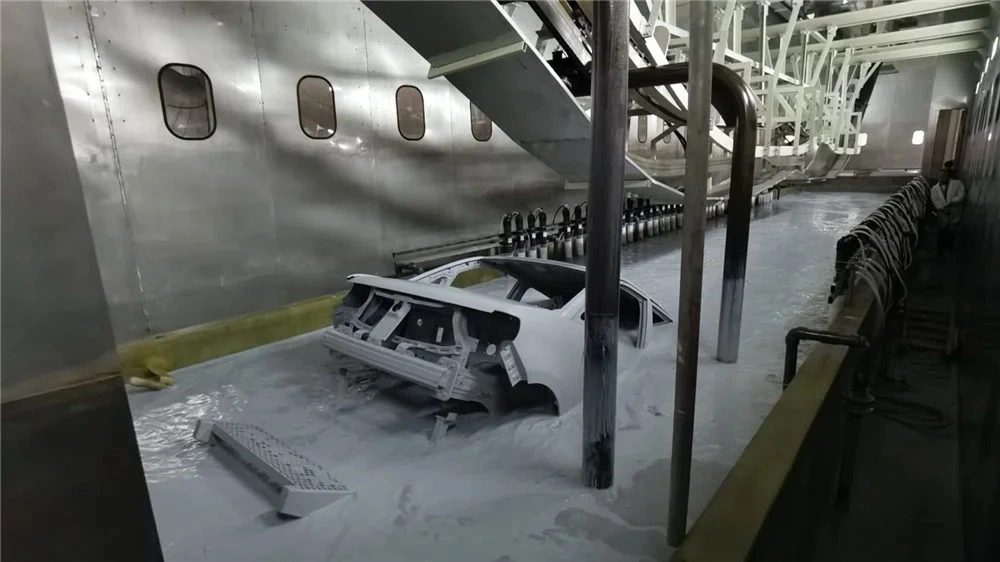
Automation reduces labor, but it shifts the focus to maintenance. Instead of hiring sprayers, you need a technician who understands the equipment.
An automated powder coating gun has wear parts. Electrode tips, spray nozzles, and powder hoses wear out over time due to the abrasive nature of the powder.
If you neglect maintenance, the consistency advantages disappear. A worn nozzle will spit powder. A clogged venturi will cause surging.
We recommend a strict maintenance schedule. HANNA designs its equipment with "quick-disconnect" features, making it easy to swap out wear parts during a shift change without tools.
The price tag of a fully automated powder coating line is significant. It includes reciprocators, a control cabinet, multiple guns, a central powder hopper, and often a new booth.
However, do not look at just the purchase price. Look at the cost per part.
Labor Savings: You might replace three sprayers with one line supervisor.Rejection Rate: Automation reduces re-work by 80% or more.Material: Saving 10-20% on powder adds up to thousands of dollars a month.
When you factor these in, the ROI for an automated powder coating system is often less than two years.
There are many suppliers in the market, from expensive European brands to cheap, unsupported options. HANNA occupies the sweet spot of industrial reliability and value.
We understand that an automated powder coating line is the heart of your factory. If it stops, your business stops. That is why we use globally sourced electrical components and heavy-duty mechanical structures.
Our team doesn't just sell you a catalogue item. We engineer the layout. We calculate the airflow. We ensure that the automated powder coating equipment we install is tailored to your specific voltage, space, and production goals.
The industry is moving toward "Smart Factories" or Industry 4.0. Automation is the prerequisite for this.
Once you have an automated powder coating system, you can eventually integrate it with loading robots, automatic profile scanners, and cloud-based monitoring systems.
Sticking to manual spraying is a limit on your growth. Automation breaks that ceiling, allowing you to bid on contracts that require high volumes and strict quality assurances.
Manual sprayers are exposed to powder dust and repetitive strain injuries. automated powder coating keeps the operator out of the booth.
The operator stands at the control panel, far away from the spray cloud. This creates a safer, cleaner work environment, which helps in retaining staff. Furthermore, automated systems with proper filtration ensure your facility meets environmental regulations regarding dust emissions.
Q1: Can I retrofit an automated powder coating system into my existing manual booth?
A1: Yes, in many cases you can. If your booth has conveyor slots and enough depth, we can cut openings for the reciprocators. However, manual booths often lack the airflow required to contain the larger powder cloud generated by multiple automatic guns. It is best to consult with HANNA engineers to see if your current airflow is sufficient for automated powder coating or if a booth modification is needed.
Q2: How many guns do I need for my automated line?
A2: This is calculated based on line speed and part geometry. A general rule for vertical profiles is one gun for every 30-50cm of vertical height, on both sides. So, a 1.5-meter tall part might need 3 to 4 guns per side (6-8 total). However, complex shapes with deep recesses may require more guns to ensure full coverage at speed.
Q3: How difficult is it to learn the control system for automated powder coating?
A3: Modern systems are designed to be user-friendly. The HANNA control interface uses touchscreens with visual icons. While the underlying technology is complex, the daily operation is simple. We provide training to teach your operators how to create recipes, adjust voltage, and perform cleaning cycles. Usually, an operator becomes proficient within 3 to 5 days.
Q4: Does automated powder coating use more compressed air than manual spraying?
A4: Yes, significantly more. Each automatic gun requires clean, dry compressed air for atomization, transport, and electrode rinsing. Plus, the reciprocators need air (or electricity) to move. Before installing an automated powder coating line, you must verify your air compressor's capacity. You will likely need to upgrade your air dryer system as well, as moisture is the enemy of automation.
Q5: Can an automated system handle very complex parts with deep Faraday areas?
A5: Yes, but it may require a "hybrid" approach. For extremely complex parts (like intricate automotive frames), we often set up the automated powder coating guns to do 90% of the work, and have one manual "touch-up" station at the end of the booth to hit the difficult corners. This maximizes speed while ensuring quality. However, with the latest HANNA control technology, the need for manual touch-up is constantly decreasing.