
In the competitive world of manufacturing, the finishing stage often dictates the final throughput. You can fabricate parts at lightning speed, but if your painting process is slow or inconsistent, your delivery times suffer. This is why forward-thinking facility managers are increasingly investing in an automated paint line.
Moving from manual application to automation is a significant leap. It changes how you manage labor, how you calculate material costs, and how you promise quality to your clients. An automated paint line is not just a conveyor belt; it is a synchronized system of chemical, mechanical, and electrical engineering designed to produce a perfect finish every time.
At HANNA, we specialize in helping businesses make this transition. We understand that buying an automated paint line is a massive capital expenditure. It requires careful planning and a partner who understands the nuances of industrial coating. This article explores the technical and commercial aspects of automation, ensuring you have the knowledge to make the right choice.
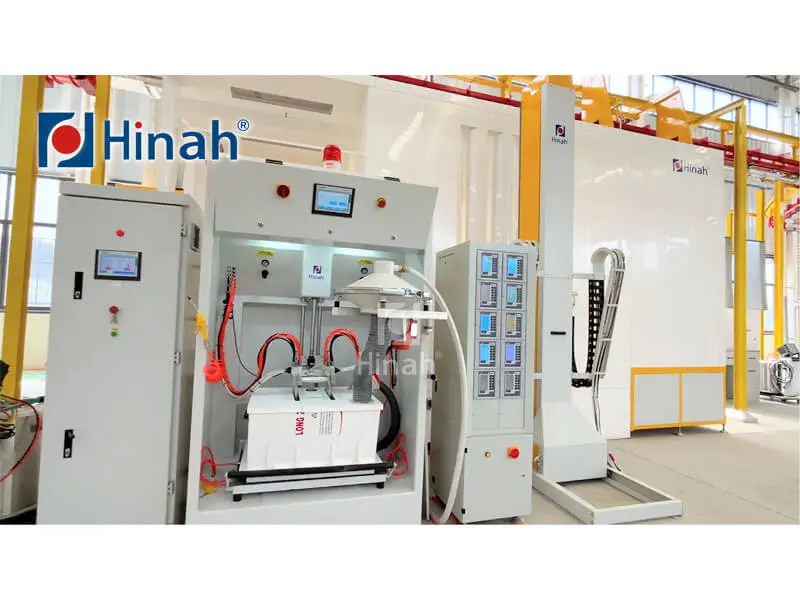
Why spend the money? This is the first question every CFO asks. The answer lies in the hidden costs of manual painting. Manual labor is expensive and variable. A painter might be tired on Friday afternoon, leading to thin coverage or runs. An automated paint line does not get tired.
Consistency is the primary driver. An automated paint line applies the exact same millage of coating to the first part of the day and the last. This consistency reduces your rejection rate. If you currently have a rejection rate of 5-10%, automation can bring that down to near zero.
Material savings are also substantial. Robots and reciprocators are programmed to trigger only when a part is in front of the gun. They do not overshoot. In a manual booth, up to 50% of the paint can be wasted. An efficient automated paint line optimizes transfer efficiency, saving thousands of dollars in raw materials annually.
A functional automated paint line is composed of several critical stations. Each must work in harmony with the others.
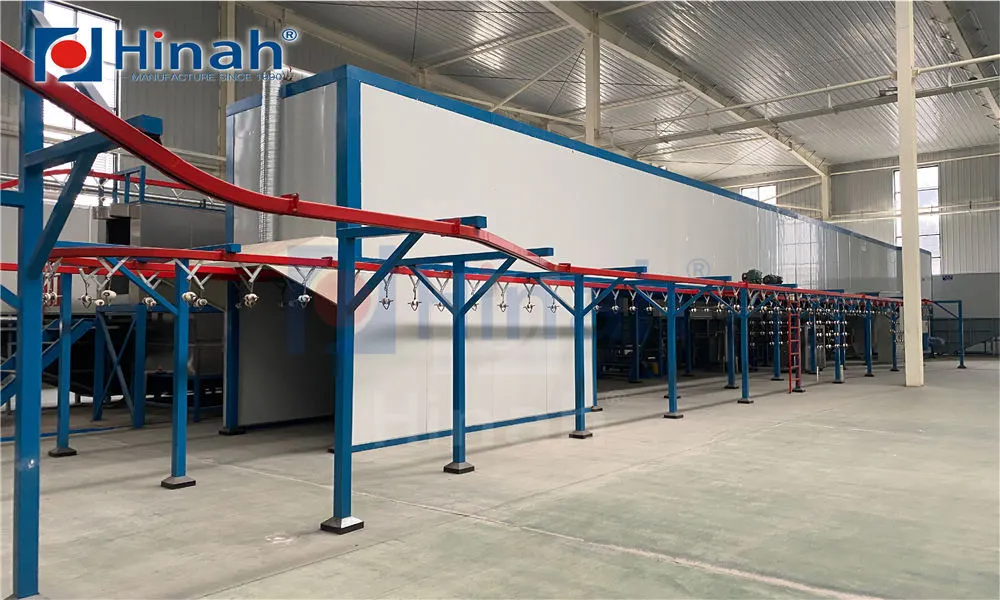
The conveyor is the spine of the operation. Whether it is an I-beam or a specialized enclosed track, the conveyor on an automated paint line must be robust. It carries the weight of your production. HANNA uses heavy-duty chains and high-quality bearings to ensure smooth movement. Jerky movement leads to poor coating quality.
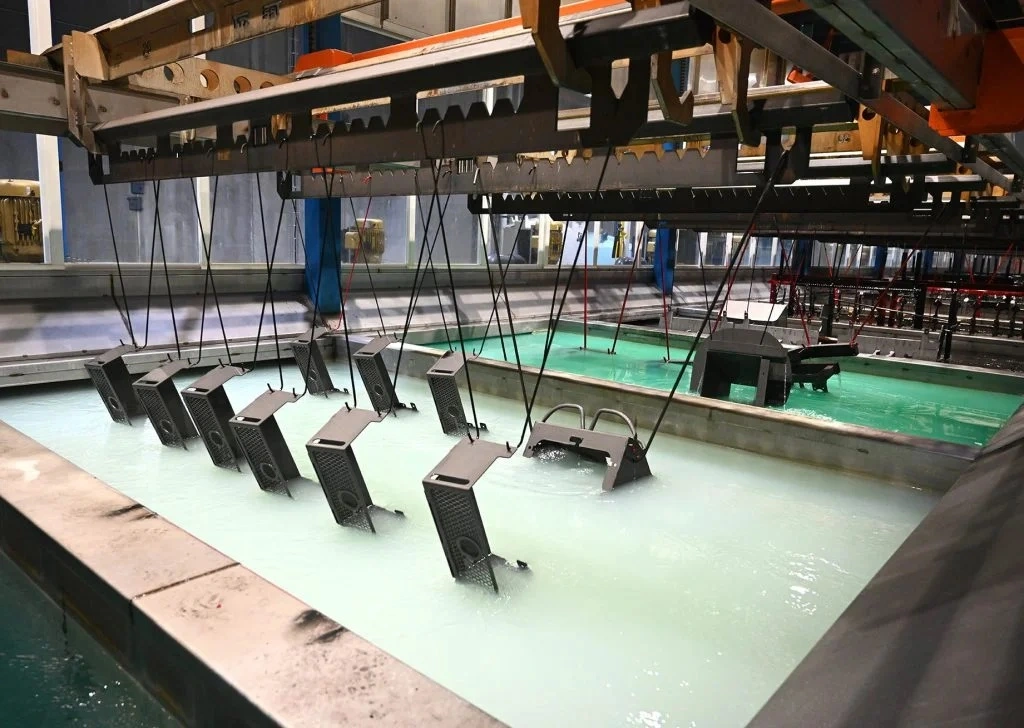
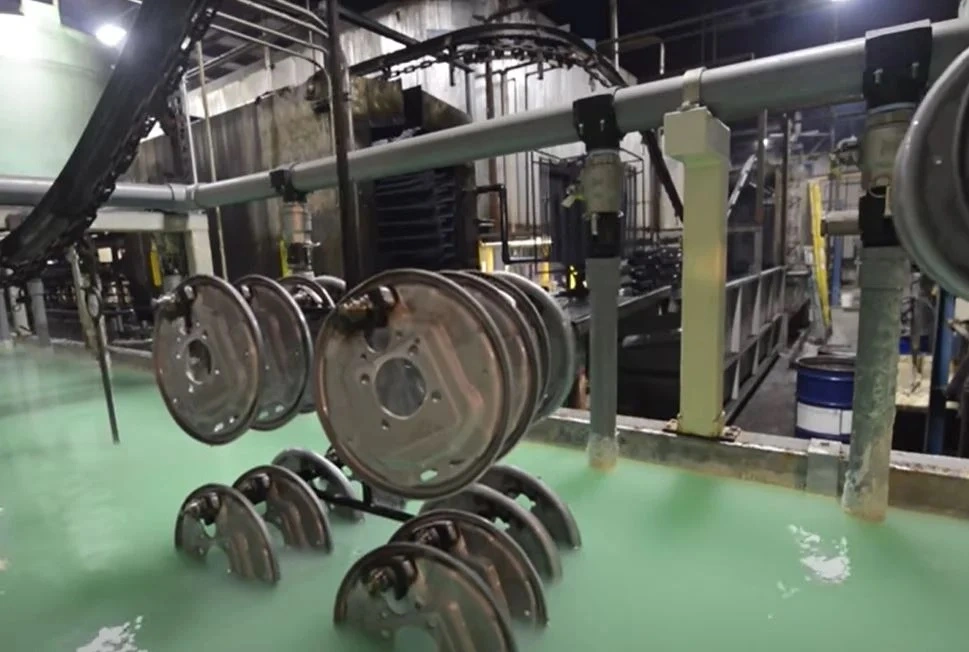
You cannot paint dirty metal. The pre-treatment section of an automated paint line is where the surface is prepared. This usually involves a multi-stage spray washer. It removes oil, grease, and shop dust. It also applies a conversion coating, like phosphate or zirconium, to ensure adhesion. If the automated paint line fails here, the paint will peel later.
After washing, parts must be bone dry. The drying oven on an automated paint line evaporates moisture. If water remains in the seams of a part, it will boil out during the curing process, causing defects. HANNA designs these ovens with high-velocity air nozzles to strip moisture quickly.
This is where the visible work happens. In an automated paint line, the booth houses the automatic guns or bells. Airflow management is critical here. The air must move fast enough to contain the overspray but slow enough not to disturb the spray pattern.
The final stage of the automated paint line is the curing oven. This is where the liquid paint dries or the powder melts and cross-links. Temperature uniformity is non-negotiable. HANNA ovens use precise airflow to ensure top-to-bottom heat consistency.
When we discuss an automated paint line, we must distinguish between wet paint and powder. The machinery looks similar, but the technology differs.
A liquid automated paint line often requires a water curtain or dry filter booth to catch sticky overspray. It also requires a flash-off zone where solvents can evaporate before the part enters the oven. This adds length to the line.
A powder coating automated paint line uses electrostatic attraction. The overspray is dry and can be recycled. This makes powder lines generally more cost-effective regarding material usage. However, liquid lines are still necessary for certain plastics or specific automotive finishes. HANNA engineers and builds both types of systems, tailored to your substrate.
The "auto" in automated paint line comes from the movement of the guns. There are two main ways to achieve this: reciprocators and multi-axis robots.
Reciprocators are vertical lifts. They move the guns up and down. They are perfect for flat panels, extrusions, and simple box shapes. A standard automated paint line usually features two reciprocators, one on each side of the booth.
Robots offer more flexibility. If you are painting complex geometries, like engine blocks or bicycle frames, a reciprocator might miss the deep recesses. A robotic automated paint line can articulate the gun to reach inside corners. While robots are more expensive, they offer a versatility that simple lifts cannot match.
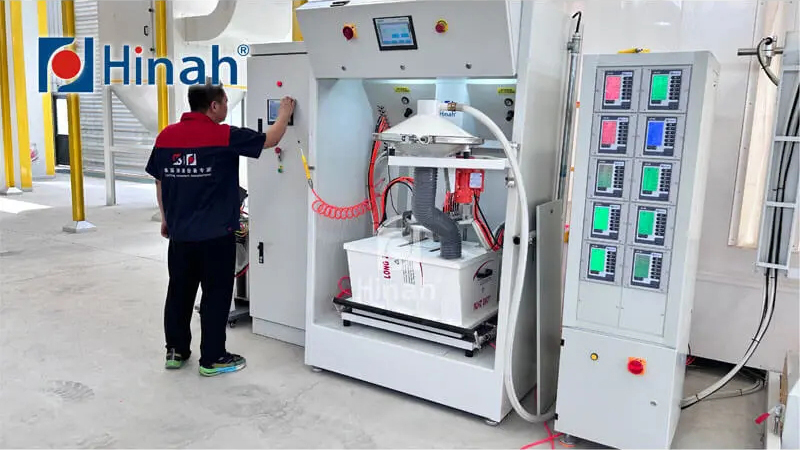
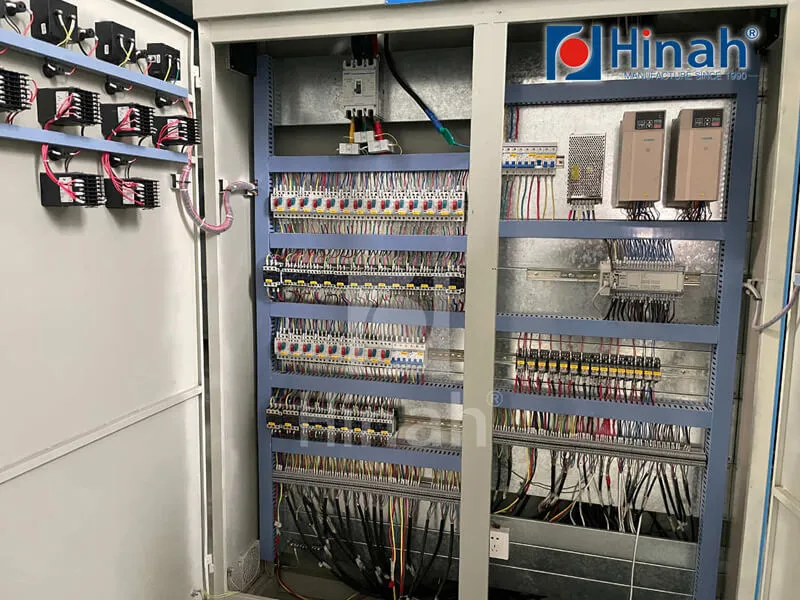
Hardware is useless without software. The control panel is the brain of your automated paint line. Modern systems use PLCs (Programmable Logic Controllers) to manage the entire process.
HANNA systems feature centralized touchscreens. From one location, the operator can see the temperature of the oven, the speed of the conveyor, and the settings of the spray guns.
Recipe management is a key feature of a smart automated paint line. You can save settings for "Part A" and "Part B." When you switch production, the operator simply selects the new recipe. The conveyor speed adjusts, and the gun voltage changes automatically. This reduces setup time and prevents human error.
One of the biggest challenges in installing an automated paint line is space. Factories are often crowded. A straight-line layout might require 100 meters of space, which you may not have.
This is where HANNA engineering shines. We design the automated paint line to fit your building. We frequently use U-turns and multi-pass ovens to condense the footprint.
We can route the automated paint line overhead to save floor space for assembly or storage. The loading and unloading zones are placed exactly where your logistics flow requires them. A well-designed layout improves worker efficiency and safety.
Energy consumption is a major operating cost. An automated paint line runs large motors and heats massive ovens. If the design is inefficient, your electricity and gas bills will destroy your margins.
HANNA focuses on energy retention. Our ovens use high-density rock wool insulation to keep the heat inside. We utilize air curtains at the entrance and exit of the automated paint line to prevent heat from escaping into the factory.
Variable Frequency Drives (VFDs) are used on our fans and motors. A VFD allows the motor to ramp up slowly and run at the exact speed needed. This uses significantly less electricity than motors that run at 100% capacity all the time. An energy-efficient automated paint line is a green choice and a financial necessity.
How fast can you go? The speed of an automated paint line is determined by the curing time. If the paint needs 20 minutes at 200 degrees, and you want to run the conveyor at 2 meters per minute, your oven needs to be 40 meters long.
When sizing your automated paint line, HANNA engineers calculate the required throughput. We look at your peak production times. We design the line to handle your busiest months, not just your average days.
High-speed lines often require automatic gun triggering. Sensors detect the part and turn the guns on and off in milliseconds. This ensures that even at high speeds, the automated paint line delivers precise coverage without waste.
An automated paint line is a complex machine. Like a car, it needs maintenance. If you ignore it, it will break down.
The conveyor chain stretches over time. The nozzles on the washer clog. The filters in the booth fill up. A robust maintenance schedule is essential for any automated paint line.
HANNA designs equipment with maintenance in mind. We place access doors in convenient locations. We use automatic lubricators for the conveyor chain. We provide detailed manuals with every automated paint line to help your team perform daily and weekly checks.
Preventative maintenance prevents unplanned downtime. In a high-volume shop, if the automated paint line stops, the whole factory stops. Reliability is our priority.
The market is full of traders and middlemen. HANNA is a manufacturer. When you buy an automated paint line from us, you are dealing with the source.
We have a dedicated team of engineers who specialize in finishing technology. We do not just sell a standard box. We customize every automated paint line to the specific needs of the client.
Our build quality sets us apart. We use thicker steel for our oven panels. We use branded electrical components from Siemens and Schneider. We build an automated paint line that is meant to last for decades, not just the warranty period.
Global support is vital. We have experience shipping and installing worldwide. Whether you are in Asia, Europe, or the Americas, HANNA can deliver and commission your automated paint line.
When comparing quotes for an automated paint line, do not look at the bottom line only. A cheaper line often uses inferior burners that consume more fuel. A cheaper line often has poor powder recovery, wasting material.
The Total Cost of Ownership (TCO) includes the purchase price plus the operating costs over ten years. A HANNA automated paint line might cost slightly more upfront than a budget competitor, but the efficiency savings pay that difference back quickly.
Reliability also has a monetary value. How much does it cost you if your automated paint line is down for three days waiting for a part? Investing in quality ensures uptime.
Technology moves fast. The automated paint line you buy today needs to be relevant in ten years. HANNA integrates scalable control systems.
You can add more guns later. You can integrate IoT sensors to monitor efficiency remotely. We build our systems with modularity in mind. As your business grows, your automated paint line can grow with you.
We also stay ahead of environmental regulations. Our systems are designed to meet strict emission standards. Investing in a compliant automated paint line now saves you from costly upgrades when regulations tighten in the future.
The decision to install an automated paint line transforms a company. It moves you from a job shop mentality to a manufacturing powerhouse. It signals to your customers that you are serious about quality and capacity.
However, the success of the project depends on the equipment you choose. You need a partner who understands the chemistry, the physics, and the economics of finishing.
HANNA is that partner. We have the experience and the technology to build the perfect automated paint line for your needs. Do not settle for inefficiency. Contact HANNA today and let us help you streamline your production.
Q1: How much space is typically required for a full automated paint line?
A1: Space requirements vary based on the process and production volume. A compact automated paint line with a loop conveyor can fit in 300 to 500 square meters. However, high-speed lines with long curing ovens often require 1,000 square meters or more. HANNA can design multi-level or U-turn layouts to fit tight factory footprints.
Q2: Can an automated paint line handle both steel and aluminum parts?
A2: Yes, the application and curing sections work for both. The main difference is in the pre-treatment. An automated paint line designed for mixed metals will use a chemical stage that is compatible with both, or have separate stages that can be bypassed. HANNA engineers can configure the washer to handle multiple substrates.
Q3: What is the typical lead time for manufacturing and installing an automated paint line?
A3: Because every system is custom-engineered, the timeline is usually 3 to 4 months for manufacturing. Shipping and installation take additional time. A realistic schedule for a complete automated paint line project, from signed contract to first production run, is typically 5 to 6 months.
Q4: Does the automated paint line come with fire suppression systems?
A4: Safety is critical. Most local codes require fire suppression, especially for liquid paint lines or powder booths. HANNA can integrate fire detection and suppression systems (like CO2 or IR sensors) into the automated paint line design to ensure compliance with your local safety regulations and insurance requirements.
Q5: How many operators are needed to run an automated paint line?
A5: One of the main benefits is labor reduction. A standard automated paint line typically requires 2 to 4 people: one or two for loading parts, one for unloading, and one skilled line supervisor to monitor the control panel and chemical levels. This is significantly fewer than the team required for manual spraying.