
In modern industrial finishing, the paint baking oven represents the single most critical variable between a durable, defect-free coating and costly rework. For powder coating operations, the curing stage transforms thermoplastic powder into a cross-linked, thermoset film with superior mechanical and chemical resistance. Without precise thermal management, even the best-applied powder fails to meet adhesion, hardness, or corrosion standards. This guide examines engineering principles, industry-specific pain points, and measurable solutions — all backed by HANNA‘s decades of expertise in integrated coating line design.
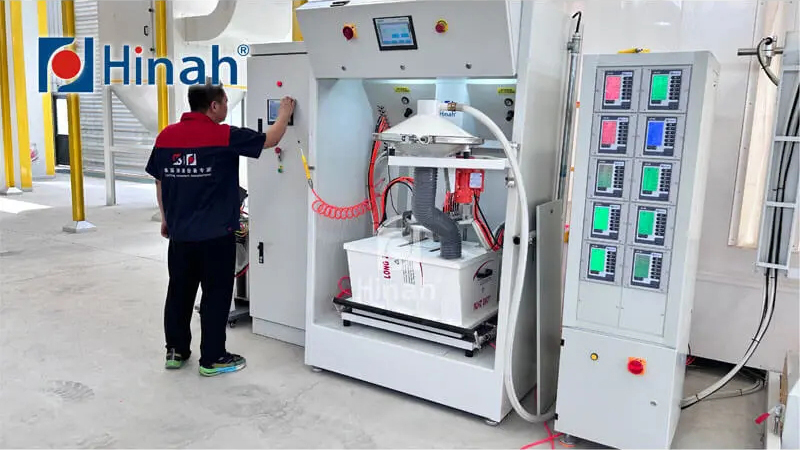
Unlike liquid paints that rely on solvent evaporation, powder coatings require a controlled thermal cycle to initiate chemical cross-linking. The paint baking oven must raise the substrate temperature to the specified cure window (typically 180–200°C for standard polyester-epoxy hybrids) and maintain that temperature for a precise dwell time — usually 10–15 minutes at metal temperature. Key performance indicators include:
Ramp-up rate (°C/min): Affects flow and levelling before gelation.
Temperature uniformity (±3°C or better): Prevents under-cure (poor adhesion) or over-cure (brittleness, discoloration).
Energy efficiency (kJ/kg of coated part): Directly impacts operational cost per square meter.
Inadequate oven performance leads to rejected batches, re-stripping, and lost production hours. HANNA has documented cases where upgrading an aging oven reduced rejection rates from 8.2% to 0.9% within three months.
Designing or retrofitting a paint baking oven requires analyzing several interdependent variables. Below are the core engineering parameters that define performance.
Modern curing ovens combine forced hot air convection and medium-wave infrared (IR) emitters. Convection ensures uniform heating of complex geometries (e.g., hollow profiles, recessed areas), while IR accelerates ramp-up for flat or dense parts. The optimal mix depends on part mass, surface color, and line speed. For high-mix low-volume job shops, powder coating plant integrators often recommend modular oven sections with independent zone control.
High-velocity nozzles (15–25 m/s) break the boundary layer on part surfaces, improving heat transfer coefficient (h) to 40–60 W/m²·K. However, excessive turbulence can disturb uncured powder. Properly designed plenums and baffles achieve a balance — a hallmark of HANNA‘s oven air distribution systems.
Mineral wool panels with 150–200 mm thickness reduce external skin temperature to < ambient +15°C, cutting standby losses by up to 30%. Double-sealed labyrinth joints between oven modules prevent air leakage, a common source of temperature stratification.
Despite apparent simplicity, many finishing lines struggle with chronic curing defects. Below are four frequent problems and proven countermeasures using advanced paint baking oven technologies.
Pain point: Edge over-cure and center under-cure
Occurs
in ovens with poor air turnover. Solution: Multi-zone PID
controllers with separate thermocouples at load edges and center, coupled with
variable-frequency drive (VFD) fans that adjust airflow based on real-time load
density.
Pain point: High energy consumption ( >0.8 kWh/m²
)
Solution: Recuperative heat exchangers that
preheat fresh make-up air using exhaust gases, plus insulated shuttle doors for
batch ovens. Powder coating plant retrofits with direct gas-fired ribbon
burners have achieved 22% energy reduction.
Pain point: Incomplete cure on thick metal substrates (e.g., cast
iron)
Solution: Cascaded temperature profiling: a
short IR boost (30 seconds) followed by extended convection hold ensures core
temperature reaches Tg without surface degradation.
Pain point: Cross-contamination from previous coating
chemistries
Solution: Self-cleaning oven liners
with catalytic converters that oxidize volatile residues; weekly bake-out cycles
at 350°C for 2 hours.
Regulatory pressure and rising fuel costs make efficiency a top priority. A well-tuned paint baking oven can reduce natural gas consumption by 15–25% compared to a poorly maintained unit. Key strategies include:
Variable air-fuel ratio control: Oxygen trim systems maintain λ=1.05–1.1 for complete combustion, minimizing unburnt fuel.
Heat recovery from cooling zone: Exhaust air from the forced cooling tunnel (still at 70–90°C) can be redirected to preheat the oven’s entry vestibule.
Low-mass conveyor belts: Perforated stainless steel mesh reduces thermal inertia, allowing faster temperature response during production gaps.
For facilities using powder coatings with volatile organic compounds (VOCs) below 0.1% by weight, thermal oxidizers are rarely needed. However, when curing hybrid or special-effect powders that emit small amounts of blocked amines, a compact catalytic oxidizer integrated with the oven exhaust can maintain compliance without excessive fuel use. Powder coating plant engineers at HANNA routinely perform thermographic audits to identify and seal invisible heat leaks.
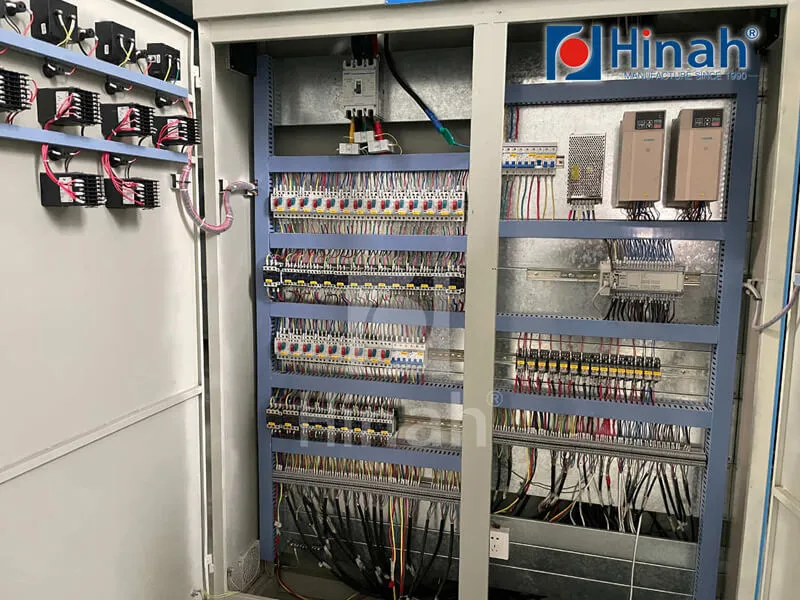
The paint baking oven does not operate in isolation. Seamless integration with pretreatment, powder application booths, and conveyor systems is essential. Modern paint baking oven controls communicate via OPC UA or Profinet with the central line PLC. This enables:
Dynamic dwell time adjustment based on real-time conveyor speed (compensating for manual loading delays).
Recipe-based curing parameters: 50+ profiles for different powder families (epoxy, polyester, polyurethane, fluoropolymer).
Predictive maintenance alerts for recirculation fan bearings, burner flame sensors, and door seals.
Case example: A tier-1 automotive supplier reduced unplanned oven downtime by 74% after implementing powder coating plant SCADA integration from HANNA, which flagged a gradual degradation in airflow months before failure.
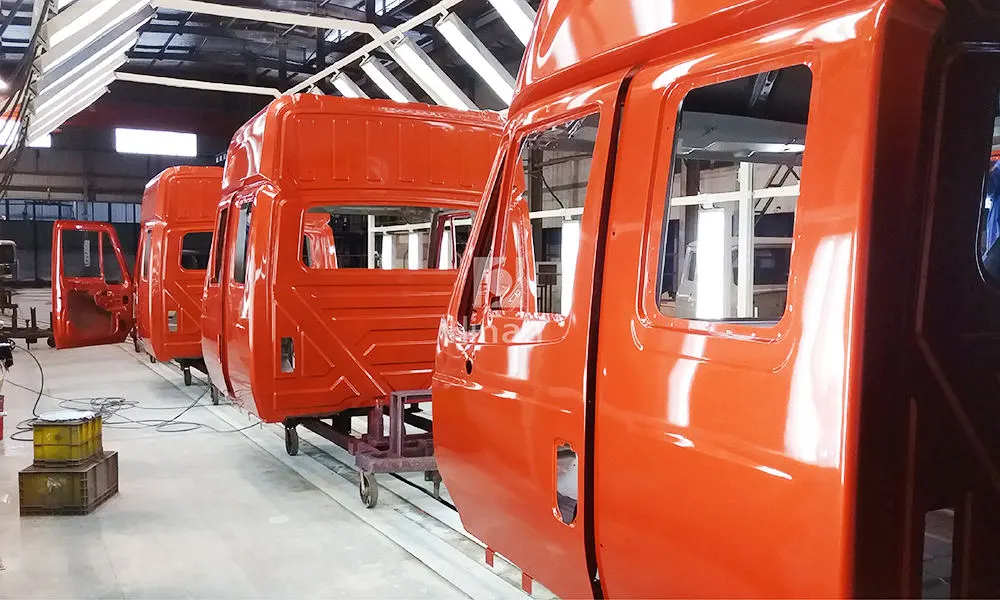
Industry 4.0 is reshaping thermal process control. Next-generation paint baking oven systems incorporate:
Wireless part temperature sensors: Passive RFID tags with thermistors that travel with the rack, transmitting real-time metal temperature to the controller.
Digital twin simulation: Predictive modeling of thermal lag for new part geometries before physical production.
Edge computing for cure assurance: Machine learning algorithms that correlate oven zone temperatures with downstream coating adhesion test results, automatically adjusting setpoints.
Early adopters report 30% shorter changeover times between product families and near-zero over-cure events. HANNA’s 2025 roadmap includes AI-assisted oven balancing, which self-tunes airflow dampers every 15 minutes based on load variation.
A1: For most industrial applications, the acceptable tolerance is ±3°C across the entire work zone once stabilized. For aerospace or automotive exterior parts (Class A surfaces), a stricter ±1.5°C is required. This is achieved with staggered burner firing, adjustable louver dampers, and periodic thermal mapping according to AMS 2750E or CQI-12 standards. Inferior ovens often exhibit ±8°C or more, leading to patchy gloss and poor impact resistance.
A2: HANNA recommends a full thermal uniformity survey every 6 months for high-volume lines, and annually for batch operations. Additionally, daily checks include verifying setpoint vs. actual on the control panel, listening for abnormal fan noise (bearing wear), and inspecting burner flame color (blue = efficient, orange = sooting). Quarterly, clean or replace thermocouples and check insulation integrity at access doors.
A3: Yes — hybrid retrofits are common. Typically, you add medium-wave IR emitters in the first zone (length: 2–3 meters) to boost ramp-up while retaining gas convection for the soak zone. However, electric power requirements (often 150–300 kW for a 5 m section) may need a new distribution panel. Powder coating plant specialists can perform a feasibility study, including return on investment (ROI) based on line speed increase.
A4: Orange peel is rarely caused by the oven alone. More often, it stems from insufficient powder flow (too low melt viscosity) or improper film thickness. However, an oven with excessive vertical temperature gradient (top vs. bottom >6°C) can cause uneven gelation, freezing the orange peel pattern. Check airflow balance — high velocity aimed directly at parts can also disrupt levelling. Use a differential thermocouple array to diagnose gradients.
A5: With proper care — including annual refractory inspection, conveyor lubrication, and fan balancing — a steel-encased convection oven lasts 20–25 years. Burner components and thermocouples need replacement every 5–8 years. Infrared emitter panels typically degrade after 10,000–15,000 operating hours. HANNA provides refurbishment kits for older ovens to restore efficiency without full replacement, extending service life to 30+ years.
Every production environment has unique constraints — part geometry, throughput targets, available footprint, and budget. Generic oven solutions often underperform. HANNA offers custom engineering, thermal simulation reports, and turnkey installation for paint baking oven systems that meet ISO 9001 and IATF 16949 standards. Our team can integrate your new oven with existing pretreatment or powder booths, or design a complete line from receiving to packaging.
For a no-obligation technical consultation, detailed quotation, or site energy audit, please contact our industrial solutions desk. Include your desired line speed, part dimensions, and coating specifications for a prioritized response.
Send your inquiry to HANNA engineering or use the live chat for immediate assistance.