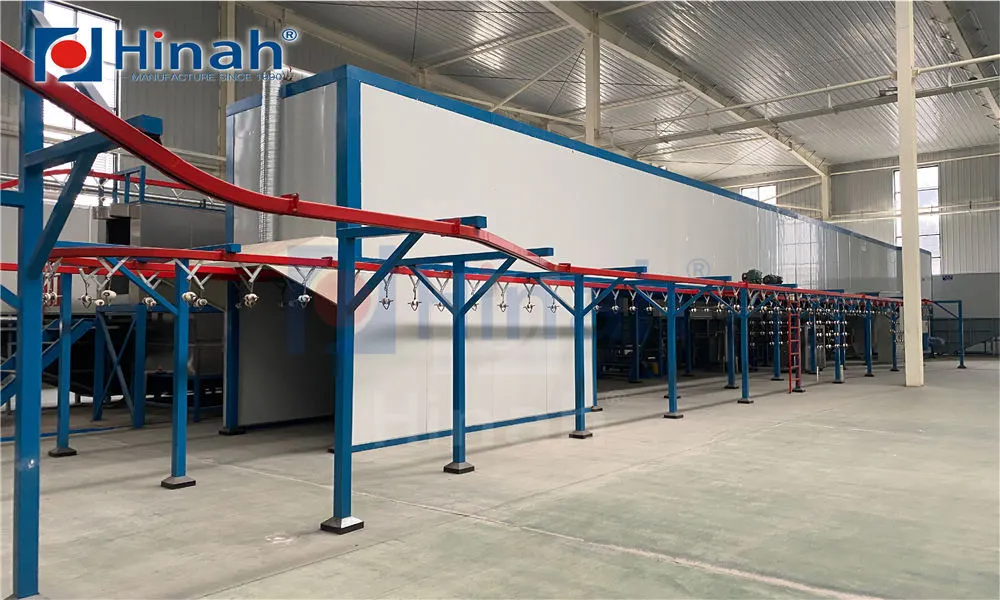

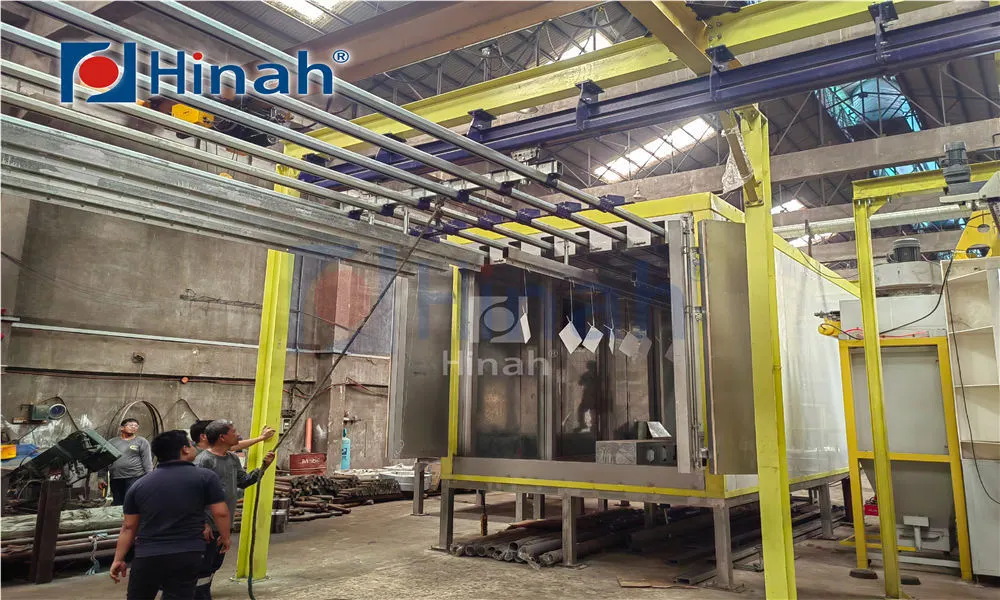
If you run a powder coating line, you know the finish is only as good as the cure. The conveyor curing oven is not just a box that heats parts; it’s the precision heartbeat of your entire operation. Getting it wrong means adhesion failures, color inconsistency, and wasted product. For manufacturers partnering with systems providers like HANNA, understanding the engineering behind a reliable conveyor curing oven is key to unlocking consistent, high-quality results day after day.
This piece breaks down the non-negotiable elements of oven performance. We’re moving beyond basic specs to the practical factors that determine success on your shop floor.
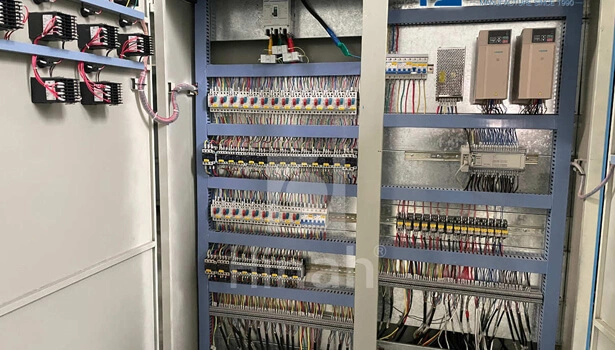
At its core, a conveyor curing oven applies controlled, consistent heat to a coated part. This heat triggers a chemical cross-linking reaction in the powder coating, transforming it from a porous film into a continuous, durable finish.
The process is deceptively simple. Parts enter on a conveyor, travel through a heated zone for a set time (the “cure schedule”), and exit ready for handling. But the magic—and the challenge—lies in the consistency of that environment. Every square inch of every part must see the exact same time-at-temperature.
That’s where engineering matters. A HANNA-designed system focuses on eliminating cold spots and maintaining uniform air flow.
The choice of heat technology shapes everything.
Infrared (IR) ovens use radiant energy, like the sun. They heat the coating and part surface directly and quickly. They’re excellent for simple, uniform shapes and can be very energy-efficient. However, complex geometries can lead to shadowing and uneven cure.
Convection ovens heat the air, which then transfers heat to the parts. This is the most common industrial conveyor curing oven. Heated air is circulated with powerful fans, enveloping parts of all shapes for consistent results. The trade-off is longer heat-up and cure times compared to IR.
Many modern lines, including hybrid solutions from HANNA, use a combination: IR for rapid heat-up and convection for a sustained, uniform soak.
This is arguably the most critical engineering aspect. In a convection oven, heat means nothing without movement.
Turbulent, high-velocity air flow is the goal. Strategically placed baffles and high-volume fans create a “wind storm” inside the chamber. This ensures heated air is forced into every cavity and around every corner of the part load.
A poorly designed airflow system creates dead zones. Parts in these zones under-cure, leading to soft coating and poor adhesion. HANNA engineers use computational fluid dynamics (CFD) modeling to optimize airflow patterns before an oven is ever built.
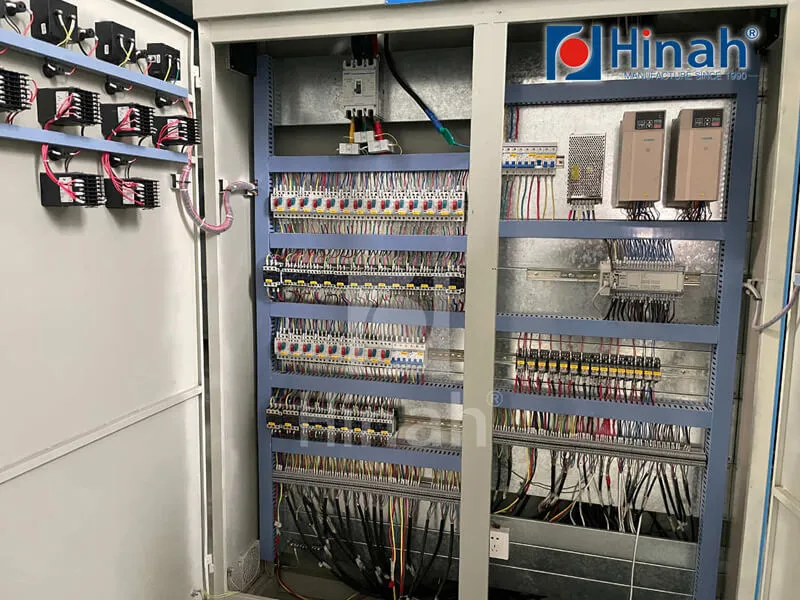
A top-tier conveyor curing oven is not a single-temperature chamber. It’s divided into distinct zones, each with precise control.
Typically, you have a pre-heat zone, a main cure zone, and sometimes a cooling zone. The pre-heat zone brings the part mass up to temperature gradually, preventing off-gassing that can cause pinholing. The main zone holds the precise Metal Temperature (PMT) required by the coating manufacturer.
The ability to profile the oven—to map the actual temperature of a part as it travels through—is essential. Using data loggers, technicians can verify the part itself reaches and holds the correct PMT for the correct minutes. This data is the blueprint for quality.
Operating costs are dominated by the energy needed to heat the oven. The source—natural gas, electric, or oil—impacts both cost and control.
Gas-fired convection ovens are most common for high-volume lines due to lower fuel costs. Modern direct-fired or indirect-fired systems offer excellent efficiency and control.
Electric ovens offer very precise, clean heat and are often used for smaller lines or where gas is unavailable. Heat recovery systems, which capture exhaust heat to preheat incoming air, are a smart feature offered by efficiency-focused companies like HANNA to significantly reduce energy bills.
The oven doesn’t work in isolation. The conveyor system—whether overhead monorail, power-and-free, or belt—must be perfectly synchronized.
The line speed sets the dwell time inside the oven. A variation in speed directly causes under or over-cure. Load density, or how parts are spaced on the conveyor, dramatically affects airflow. Overloading the line creates shadows and blocks air circulation.
Spacing parts correctly is a simple but vital step. A well-designed conveyor curing oven will have guidelines for maximum load density to maintain performance.
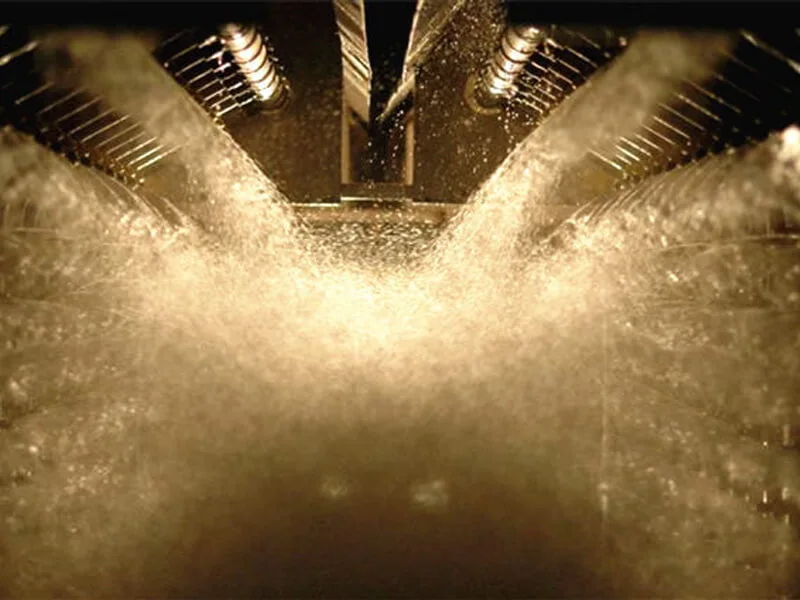
Even the best oven will fail without routine care. Buildup of powder overspray on filters and ducts restricts airflow. Dirty burners or heating elements reduce efficiency. Calibration drift in thermocouples leads to inaccurate temperature readings.
A weekly check of filters and a monthly verification of temperature sensors are minimum requirements. An annual full inspection by a specialist, such as HANNA’s service team, can prevent catastrophic downtime and protect your finish quality.
Not all products are created equal. Curing a dense aluminum extrusion requires different thermal management than curing a thin-gauge steel cabinet. Heavy parts act as a heat sink, needing longer dwell times.
Some coatings, like low-temperature cure powders, require exceptionally tight temperature control (±5°C) to avoid yellowing or over-cure. Discussing your specific product mix with your oven supplier ensures the system is tailored, not just generic.
In summary, selecting and operating a conveyor curing oven is a deep technical exercise. It balances heat technology, mechanical engineering, and process control. The goal is absolute uniformity. For companies that depend on flawless finishes, partnering with an experienced provider like HANNA, who views the oven as an integrated system, is the surest path to reliability and quality. It transforms the oven from a utility into a strategic asset for your coating line.
Q1: What is the single most important measurement for cure quality?
A1: The Part Metal Temperature (PMT). The air temperature in the oven is less critical than the actual temperature achieved by the metal part itself. You must verify the PMT meets the coating manufacturer’s specified range for the required dwell time using a temperature profiling device.
Q2: How can I reduce the energy consumption of my existing conveyor curing oven?
A2: Several steps can help: Install or clean heat-exchanger systems to recover exhaust heat. Ensure all door seals and insulation are intact. Optimize your line load density to avoid running the oven half-empty. Regularly clean filters to maintain proper airflow. A professional audit, like those HANNA offers, can identify the biggest opportunities.
Q3: Why do I see color or gloss variations from parts in the center of the load versus the edges?
A3: This is a classic sign of uneven airflow or temperature distribution within the conveyor curing oven. Parts on the edges may be exposed to higher radiant heat from the walls or different air velocity. Re-profiling the oven and reviewing the load spacing is the first step. You may need to adjust baffles or fan balances.
Q4: How often should I perform a temperature profile on my oven?
A4: At a minimum, profile the oven quarterly. Profile it whenever you change coating chemistries, alter line speed, significantly change part mass, or after any major maintenance. It’s also good practice after seasonal changes that affect ambient plant temperature.
Q5: What’s the main risk of running a conveyor curing oven at too high a temperature to increase line speed?
A5: Over-curing. This can cause discoloration (yellowing of whites/clears), reduced gloss, embrittlement of the coating leading to poor impact resistance, and in severe cases, thermal warping of the substrate itself. It’s a shortcut that sacrifices long-term durability for short-term throughput. Always follow the coating manufacturer’s cure schedule.