
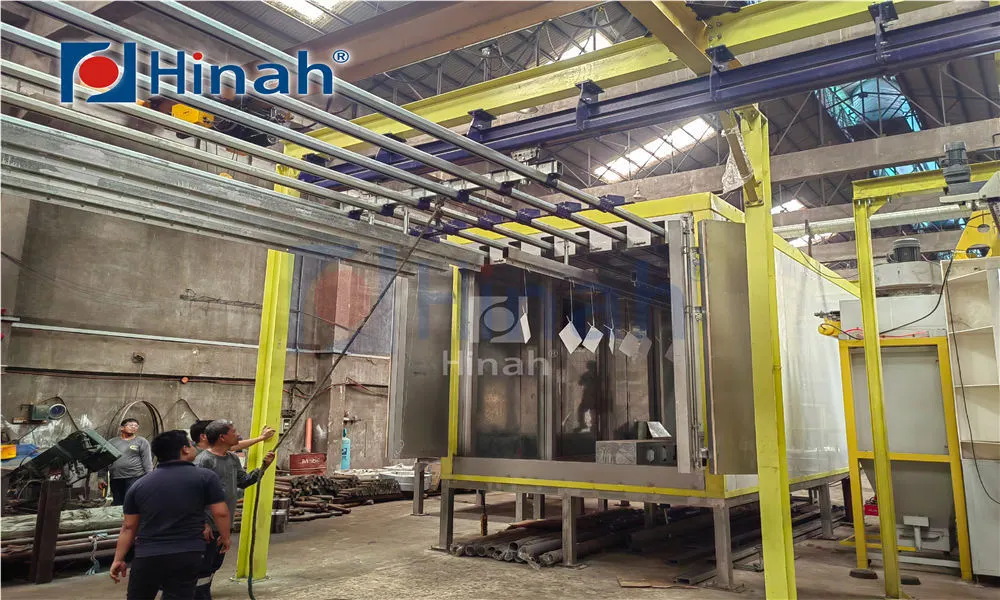
In high-volume industrial finishing, the synergy between the powder coating machine and oven determines not only final coating quality but also operational cost, energy consumption, and compliance with environmental standards. Over the past decade, manufacturers in automotive, architectural aluminum, and heavy machinery sectors have shifted from viewing these as separate units to treating them as an integrated process system. This article delivers a data-driven analysis of how modern equipment design, precise thermal management, and real-time process controls enable first-pass yields exceeding 95%—while minimizing rework and carbon footprint.
Drawing from field data and engineering principles, we examine the key technical parameters that separate world-class coating lines from those plagued by orange peel, inconsistent gloss, or Faraday cage penetration. As a specialist with over 15 years in powder coating engineering, I will walk you through the fundamental interactions between application hardware, curing thermodynamics, and intelligent automation—all backed by measurable performance metrics. Throughout this guide, HANNA’s integrated solutions will be referenced as a benchmark of modular, high-efficiency system design, illustrating how strategic equipment choices translate to long-term reliability.
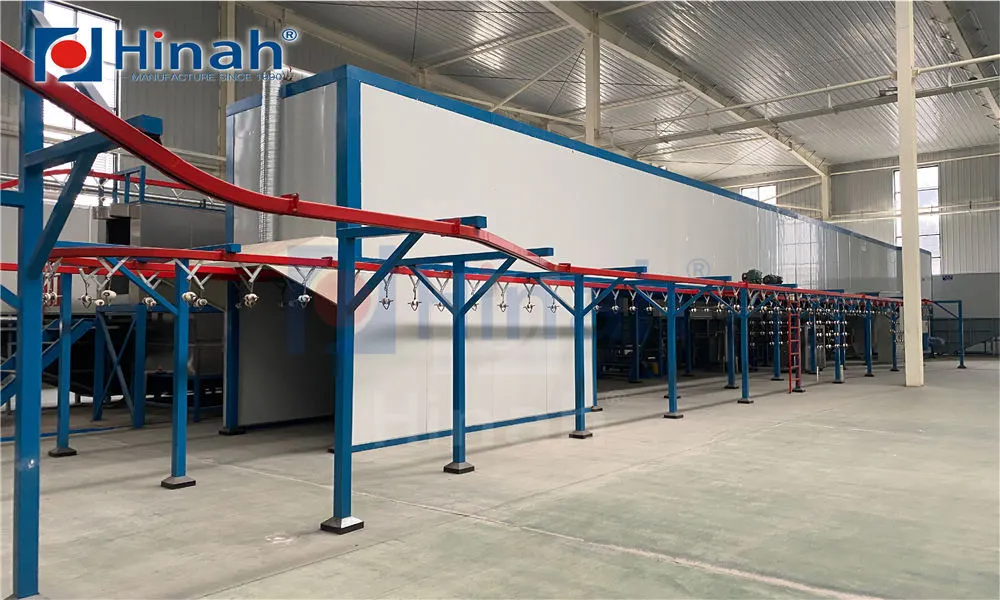
Many facilities invest heavily in a state-of-the-art powder booth but neglect the curing oven, or vice versa. The result is a systemic imbalance: a high-transfer-efficiency gun cannot compensate for a poorly insulated oven with thermal gradients exceeding ±10°C. Conversely, an ultra-precise oven cannot correct uneven film thickness from inconsistent electrostatic charging. The powder coating machine and oven must be engineered with matched throughput capacities, cure schedules, and material handling speeds.
Industry data indicates that mismatched line speeds between application and curing zones account for up to 18% of rejects in continuous coating lines. For instance, if the conveyor speed is set to maximize powder deposition but the oven dwell time falls short of the required thermal ramp rate for crosslinking polyester resins (typically 10–12 minutes at 200°C metal temperature), under-cure defects occur. Conversely, slowing the line to meet oven capacity reduces throughput and raises energy cost per part. Modern integrated lines from HANNA address this with synchronized variable-frequency drives (VFDs) and real-time oven load feedback, ensuring that the entire system operates within the optimum process window.
Today’s powder coating machines incorporate digital controls, high-efficiency corona or tribo guns, and advanced reclaim systems. Key technical considerations include:
Electrostatic Field Uniformity: Modern generators maintain kV/µA curves that automatically adjust to part geometry, reducing the Faraday cage effect. This results in 15–25% improvement in first-pass transfer efficiency (TE), lowering powder consumption by up to 12% annually.
Fluidized Bed vs. Dense-Phase Feed: Dense-phase technology reduces air consumption by 30–40% while delivering consistent powder density to the gun tip—critical for achieving film thickness variations below ±5µm on complex parts.
Powder Recovery Efficiency: Cyclone + cartridge filter combinations now achieve 98% recovery rates with automatic color-change functionality. Color change time under 10 minutes becomes achievable, enabling high-mix low-volume (HMLV) production without cross-contamination.
When these application features are paired with an equally smart oven system, the total cost of ownership decreases significantly. HANNA’s powder coating lines, for example, integrate closed-loop feedback from booth sensors to adjust gun parameters based on oven load, ensuring that film thickness targets align with curing requirements—eliminating the common problem of “fat edge” and sagging on edges.
The curing oven is where the powder undergoes melting, flow-out, and chemical crosslinking. Three design principles directly impact coating performance and energy costs:
Pure convection ovens offer uniform heating for bulky parts but suffer from longer ramp times. Infrared (IR) ovens provide rapid heating for thin-gauge metals but can cause shadowing on complex geometries. Modern hybrid designs combine short-wave IR at the entry zone to instantly initiate gelation, followed by convection zones to complete the cure without thermal shock. This hybrid approach reduces overall oven length by up to 30% while cutting natural gas consumption by 25%.
ISO 1461 and Qualicoat standards demand documented cure schedules. A high-performance powder coating machine and oven system includes multi-channel thermal profilers that track part temperature in real time. Temperature uniformity should be maintained within ±5°F (±2.8°C) across the oven cross-section. Any deviation leads to under-cured areas (poor adhesion, failed impact resistance) or over-cured areas (color shift, reduced flexibility). Advanced ovens now feature self-tuning PID controllers with zone segmentation, allowing independent temperature control for different part families.
Energy accounts for 40–60% of powder coating operating costs. High-density mineral wool insulation (6-inch thickness) reduces heat loss by 35% compared to standard 4-inch panels. Additionally, heat recovery wheels or exhaust-to-fresh-air heat exchangers can reclaim up to 50% of waste heat, preheating incoming fresh air and reducing burner runtime. Such features are standard in HANNA’s modular oven designs, often achieving payback periods of less than 18 months in high-throughput facilities.
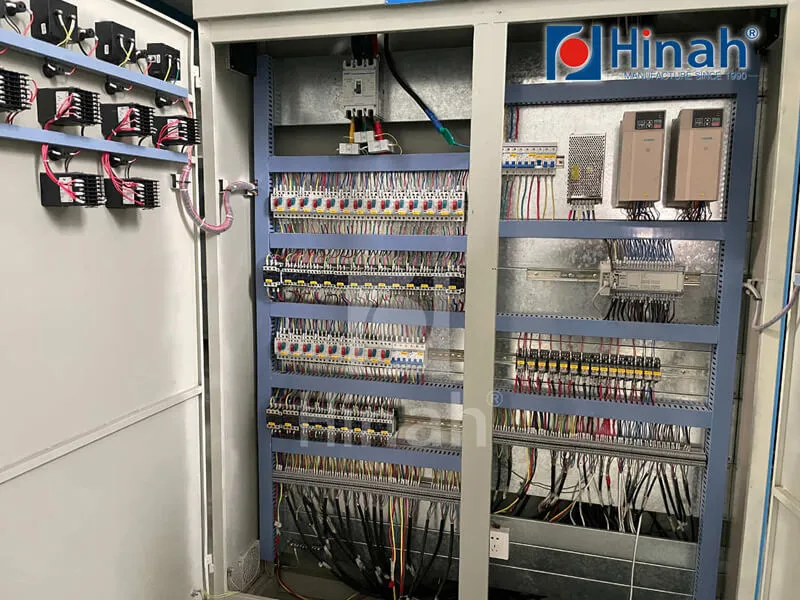
Smart factories demand that the powder coating machine and oven are connected via industrial IoT platforms. Key capabilities include:
Predictive Maintenance: Vibration sensors on fan motors, pressure sensors on powder pumps, and thermocouple arrays on oven zones feed data into a centralized SCADA system. Anomaly detection algorithms can predict nozzle wear or oven heater degradation 200 hours before failure.
Recipe Management: For manufacturers running hundreds of SKUs, digital recipe storage ensures that gun parameters (kV, µA, flow rate) and oven zone setpoints are automatically recalled per part number. This reduces setup errors by over 90%.
Energy Monitoring: Sub-metering of gas and electricity per shift enables precise calculation of kWh per square meter coated. Best-in-class lines achieve values below 1.2 kWh/m².
These digital tools shift maintenance from reactive to proactive, ensuring that the entire finishing line maintains high overall equipment effectiveness (OEE), often exceeding 85% in properly automated systems.
Even with premium equipment, operators encounter defects. Below is a systematic approach linking issues to either application or curing stage:
Orange Peel / Poor Flow: Usually indicates under-cure or incorrect ramp rate. Verify oven temperature profile; ensure metal temperature reaches the powder manufacturer’s specified time-at-temperature. Also check powder particle size distribution (PSD)—excessive fines can affect flow.
Pinholing / Outgassing: Occurs when trapped volatiles escape during cure. Preheating parts to 80–100°C before coating allows gases to escape, or utilize a “hold zone” in the oven at 150°C for 2 minutes before final ramp.
Faraday Cage Penetration: Insufficient coating on recessed areas. Use tribo guns for complex geometries or adjust electrostatic settings to lower kV and increase powder velocity. Also consider dual-gun positioning.
Color Shift Across Batch: Over-cure due to uneven oven temperature or extended dwell. Implement continuous oven profiling and ensure thermocouples are placed on representative parts.
Integrating the powder coating machine and oven with a central quality management database allows operators to correlate defect data with specific production parameters, rapidly identifying root causes and reducing scrap rates below 2%.
Global regulations like the EU’s Industrial Emissions Directive and EPA’s NESHAP for coating operations impose strict limits on volatile organic compounds (VOCs) and particulate emissions. Powder coating inherently produces zero VOCs, but energy consumption and dust emissions remain under scrutiny. Modern powder coating machine and oven designs address this with:
High-efficiency particulate air (HEPA) final filters on booth exhaust to ensure outlet particle counts below 0.5 mg/m³.
Low-NOx burners in curing ovens, reducing nitrogen oxide emissions by up to 70% compared to standard ribbon burners.
Waste heat recovery that reduces overall CO₂ footprint—a growing requirement for LEED-certified facilities and ESG reporting.
Leading equipment providers, including HANNA, offer environmental impact assessments as part of system design, helping customers anticipate regulatory changes and future-proof their finishing operations.
Market volatility demands coating lines that can adapt to varying part sizes, throughputs, and coating chemistries (e.g., low-cure powders, anti-microbial coatings). A modular approach—where the powder booth, curing oven, and conveyor are designed as independent yet interoperable modules—offers the highest long-term ROI. Key advantages:
Scalable Oven Sections: Additional convection modules can be added to increase dwell time without replacing the entire oven.
Quick-Color-Change Booths: Modular booth sections with integrated reclaim bins enable color changes under 10 minutes, reducing downtime.
Retrofit-Ready Controls: Open-architecture PLCs allow future integration of AI-based process optimization or robotic part handling.
Investing in a scalable system ensures that the powder coating machine and oven infrastructure remains competitive for 15–20 years, avoiding costly capital replacement cycles.
Q1: What is the ideal cure schedule for polyester TGIC and TGIC-free powder coatings?
A1: For standard polyester TGIC powders, typical cure conditions are 200°C (392°F) metal temperature for 10 minutes. TGIC-free (primarily HAA) systems often cure at 180°C (356°F) for 15–20 minutes, depending on substrate thickness. Always use a thermal profiler to confirm that the entire part reaches the required temperature for the specified time, not just air temperature. Thick aluminum extrusions may require longer soak times due to thermal mass.
Q2: How do I decide between infrared (IR) and convection curing ovens for my powder coating line?
A2: IR ovens are best for flat parts, thin metals, and applications requiring rapid color change, as they offer fast ramp-up and minimal thermal inertia. Convection ovens are superior for complex geometries, heavy-gauge parts, and when absolute temperature uniformity is critical. Many high-volume operations use a combination: IR at the entrance for rapid gelation, followed by convection for full cure—this provides speed and uniformity while reducing floor space by up to 30%.
Q3: What are the most common signs that my curing oven is underperforming?
A3: Key indicators include: (1) inconsistent gloss levels on parts from the same batch; (2) poor adhesion in cross-hatch tests; (3) increased orange peel texture; (4) higher gas consumption per unit of production; (5) zone temperature variances exceeding ±5°C during steady-state operation. Regular oven profiling and burner modulation checks can identify issues early.
Q4: How can I improve first-pass transfer efficiency (TE) beyond 65%?
A4: Achieving TE above 70–75% requires a systems approach: use dense-phase powder pumps to ensure stable powder flow; optimize grounding of parts (resistance to ground below 1 MOhm); select guns with adjustable electrostatic parameters; and maintain proper booth airflow (0.4–0.6 m/s face velocity). Additionally, reclaim systems that classify powder fines from good powder can prevent over-spray recirculation issues.
Q5: What preventive maintenance is critical for powder coating machines and ovens?
A5: For powder coating machines: weekly cleaning of gun nozzles, daily check of grounding continuity, and monthly calibration of kV output. For ovens: quarterly inspection of burner nozzles, semi-annual replacement of air filters, and annual thermal profiling to detect insulation degradation. Following a digital maintenance schedule reduces unexpected downtime by up to 40%.
Q6: How does humidity affect powder coating application and cure?
A6: High humidity (above 60%) can cause powder clumping in feed lines, reduce electrostatic charge acceptance, and increase the risk of surface moisture leading to outgassing defects. Low humidity (below 30%) increases static buildup, causing safety hazards and inconsistent powder cloud. Maintain booth environmental conditions between 40–55% relative humidity at 20–25°C for optimal application stability.