
Starting or upgrading a finishing line is a major decision. The quality of your final product depends heavily on two critical pieces of equipment: the place where you apply the powder and the place where you cure it. Many facility managers look for a combined solution, often searching for a powder coating booth oven package to streamline their purchase.
At HANNA, we understand that these two components are the lungs and heart of your production line. If one fails, the other cannot function. A high-performance booth with a weak oven creates a bottleneck. A powerful oven with a dusty booth results in contaminated parts.
Finding the right powder coating booth oven setup requires understanding how they interact. It is not just about dimensions; it is about workflow, airflow, and energy consumption. This article breaks down what you need to know before signing a check. We will look at the technical specs, the layout strategies, and why buying them as a synchronized system is often the smartest move.
When you buy a powder coating booth oven from a single source, you ensure compatibility. The production speed of the booth must match the curing capacity of the oven. If your sprayer can coat 100 parts an hour, but your oven can only cure 50, your line stalls.
In a well-designed powder coating booth oven system, the track layout is seamless. Racks flow from the application stage directly to the curing stage without awkward turns or cooling periods that could allow dust to settle.
HANNA engineers often design the powder coating booth oven layout to share support structures or control panels where possible. This saves floor space. It also simplifies the electrical installation, as the powder coating booth oven components are wired to handle the specific load of your facility together.
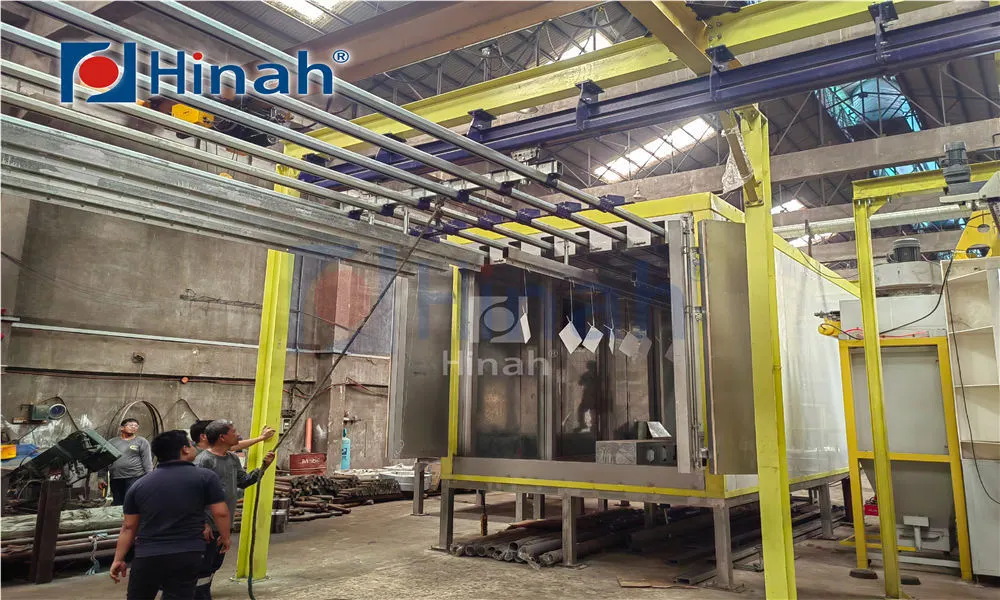
The first half of your powder coating booth oven combination is the spray booth. Its job is containment and recovery. A cheap booth allows powder to drift into the shop. This is a health hazard and a waste of money.
In a professional powder coating booth oven setup, the booth should have a robust recovery system. Whether you choose cyclonic recovery or cartridge filtration depends on how often you change colors.
Airflow is king here. The fan in your booth must provide enough face velocity to capture the overspray. When we configure a powder coating booth oven package, we calculate the fan size based on the booth opening. If the air movement is too slow, the powder falls to the floor. If it is too fast, it pulls powder off the part before it sticks.
Lighting is another overlooked aspect of the powder coating booth oven duo. The booth must be bright (at least 800-1000 lux) so operators can see into corners. Poor lighting leads to thin spots, which the oven will then bake into permanent defects.
The second half of the powder coating booth oven equation is the curing oven. This is where the magic happens. The powder melts, flows, and cross-links into a durable finish.
Temperature uniformity is the most critical metric for this part of the powder coating booth oven. You need the air to be consistent from top to bottom. HANNA uses mixing fans and strategically placed plenums to ensure there are no cold spots.
Insulation thickness directly impacts the operating cost of your powder coating booth oven. We typically recommend 150mm thick walls with high-density rock wool. If the oven loses heat, your burner burns more gas. Over five years, an inefficient oven can cost you double its purchase price in wasted fuel.
The burner technology in your powder coating booth oven also matters. We prefer Riello burners for their reliability. They fire up quickly and maintain a steady curve, which is essential for gloss retention and color stability.
One of the first choices you face is the workflow style. Are you moving parts by hand or by chain?
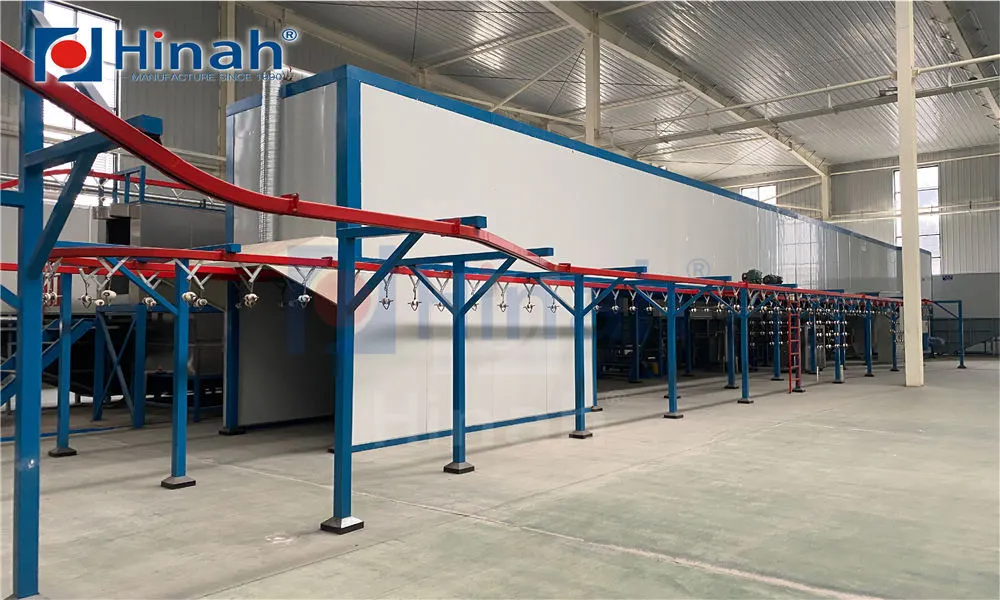
A batch powder coating booth oven is ideal for job shops. You have a standalone booth and a standalone oven. You roll a rack in, spray it, roll it out, and push it into the oven. This powder coating booth oven style is flexible. You can paint a giant gate in the morning and a thousand small brackets in the afternoon.
A conveyorized powder coating booth oven is for high volume. The parts hang on a continuously moving line. They pass through an automated booth and travel directly into a tunnel oven. The price of a conveyorized powder coating booth oven is higher, but the labor cost per part drops significantly.
HANNA helps clients calculate the ROI to see which powder coating booth oven style fits their business model. If you process less than 500kg of metal a day, a batch powder coating booth oven is usually sufficient.
Energy costs are rising globally. Your powder coating booth oven will likely be the biggest energy consumer in your factory.
Modern designs focus on recycling heat. In the booth, we recycle the air after filtering it, so you don't pump expensive heated shop air outside. In the oven, high-quality seals prevent heat leakage.
When selecting a powder coating booth oven, ask about the motor efficiency ratings. Variable Frequency Drives (VFDs) on the exhaust fans allow you to dial down the power when the powder coating booth oven is idling.
Gas vs. Electric is another debate in the powder coating booth oven world. Electric ovens are cheaper to build but often more expensive to run. Gas ovens cost more upfront but are cheaper to operate in most regions. We analyze your local utility rates to recommend the right energy source for your powder coating booth oven.
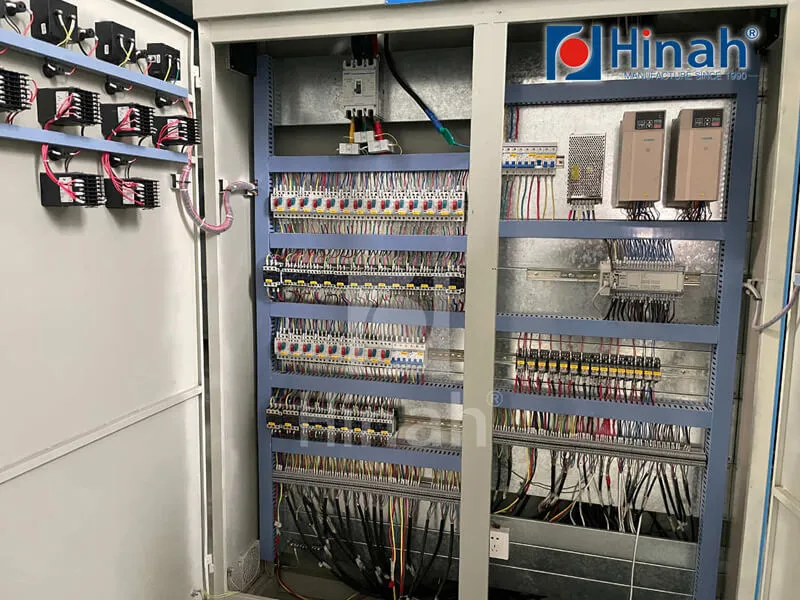
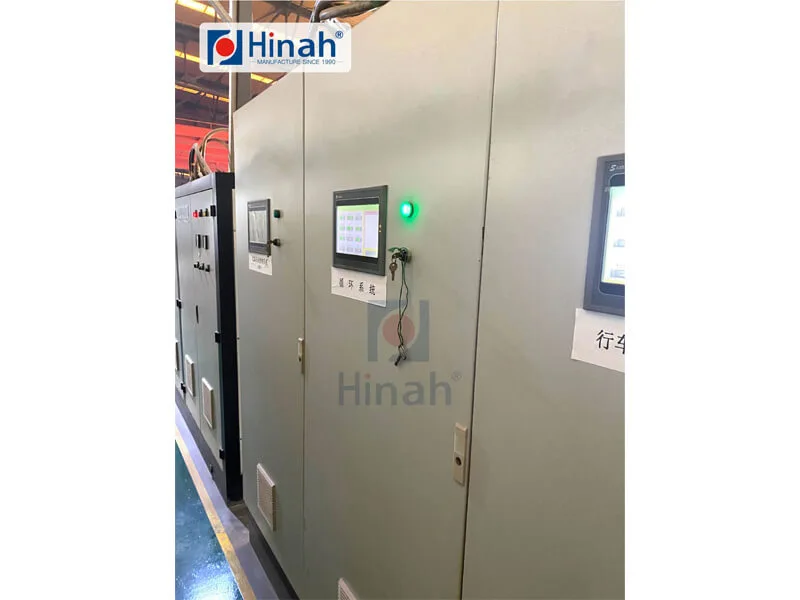
The brain of your powder coating booth oven is the control panel. In the past, these were simple switches. Today, they are sophisticated PLCs.
A good powder coating booth oven controller lets you set recipes. You might have a "Gloss Black" recipe that sets the oven to 200°C for 15 minutes, and a "Matte Grey" recipe that sets it to 190°C for 20 minutes.
Safety interlocks are non-negotiable. The powder coating booth oven must shut down the burner if the circulation fan fails. It must stop the conveyor if the booth fans trip. HANNA integrates these safety protocols into every powder coating booth oven we build to protect your staff and your facility.
Installing a powder coating booth oven is a construction project. It is not plug-and-play.
You need to verify your ceiling height. The powder coating booth oven needs clearance for exhaust stacks. You need to check your gas line pressure. Often, the factory supply isn't enough for a large industrial burner.
Floor level is also vital. If your floor is uneven, the doors of the powder coating booth oven won't seal properly. This leads to heat leaks. We provide detailed foundation drawings to ensure your site is ready before the powder coating booth oven arrives.
Buying from a brand like HANNA means you get support during this phase. We guide you through the logistics of offloading and assembling the powder coating booth oven components.
A powder coating booth oven is a significant investment. You want it to last 20 years. Maintenance is the key.
For the booth side of the powder coating booth oven, filter changes are routine. If filters clog, airflow drops, and powder escapes. You should also clean the hopper and the gun regularly.
For the oven side of the powder coating booth oven, you must inspect the fan belts and the burner. A yellow flame indicates a dirty burner that generates soot. This soot can contaminate the parts inside the powder coating booth oven.
We recommend a quarterly "deep clean" of the entire powder coating booth oven system. Vacuum the booth walls, wipe down the oven interior, and grease the door hinges.
The biggest mistake is undersizing the powder coating booth oven. Buyers look at their current biggest part and buy a system that just fits. Six months later, they get a contract for slightly larger parts and have to turn it down. Always size your powder coating booth oven with roughly 20% extra capacity.
Another mistake is ignoring airflow balance. If your building has negative pressure, it will suck dirt into the powder coating booth oven. You may need a make-up air unit to keep the room pressurized.
Lastly, do not buy based solely on the lowest price. A cheap powder coating booth oven usually cuts corners on steel thickness or insulation density. You pay for it later in warped walls and high gas bills.
At HANNA, we design the powder coating booth oven as a cohesive unit. We don't just grab a booth from supplier A and an oven from supplier B. We manufacture both.
This gives us control over the quality. We ensure the white powder coat on the outside of the powder coating booth oven matches your shop’s aesthetic. More importantly, we ensure the control logic works together.
Our powder coating booth oven systems are modular. This means if you start with a batch system, we can often help you expand it later. We use bolted construction rather than welded, which makes installation and future modification of the powder coating booth oven much easier.
Technology is moving toward automation. We are seeing more demand for robotic spraying integrated into the powder coating booth oven.
Data tracking is also growing. Managers want to see a graph of the oven temperature on their phone. They want to know how many hours the booth ran today. The modern powder coating booth oven is becoming a smart device.
HANNA is at the forefront of this, integrating IoT (Internet of Things) features into our premium powder coating booth oven lines. This helps with preventative maintenance, alerting you before a part fails.
The decision to invest in a powder coating booth oven transforms your business. It allows you to control your quality and your schedule. You no longer rely on subcontractors.
However, the market is flooded with options. From DIY kits to high-end automated lines, the range of powder coating booth oven choices is vast. Success comes from defining your needs clearly. Know your part size, know your desired throughput, and know your budget.
Trust a manufacturer who understands the entire process. A HANNA powder coating booth oven is built with the operator in mind. We combine durability, efficiency, and safety.
If you are ready to take your production to the next level, evaluate your space and contact us. The right powder coating booth oven is waiting to become the backbone of your factory.
Q1: How much space do I need for a standard batch powder coating booth oven setup?
A1: A typical mid-sized batch powder coating booth oven setup requires a footprint of at least 40 to 60 square meters (roughly 400-600 sq ft). You need space for the booth, the oven, and, crucially, the staging area where racks are loaded and cooled. You must also allow for 1 meter of clearance around the powder coating booth oven for maintenance access and airflow.
Q2: Can I install a powder coating booth oven in a residential garage?
A2: It is difficult and often illegal due to zoning laws. A professional powder coating booth oven requires significant electrical power (often 3-phase) and gas connections. Furthermore, fire codes usually require industrial suppression systems and specific ventilation stacks that are hard to permit in a residential zone. Small hobbyist ovens exist, but a HANNA industrial powder coating booth oven is designed for commercial factory floors.
Q3: How do I clean the oven part of the powder coating booth oven system?
A3: Cleaning the oven is vital to prevent cross-contamination. You should vacuum the floor of the oven regularly to remove fallen powder before it chars. Do not use water or solvents inside a hot oven. For the powder coating booth oven walls, you can wipe them down with a damp cloth when the unit is cold. Periodic inspection of the exhaust duct is also necessary to prevent residue buildup.
Q4: What is the typical warranty on a HANNA powder coating booth oven?
A4: We typically offer a 12-month warranty on the main components of the powder coating booth oven, such as the motors, burners, and electrical panels. The structural steel usually lasts for decades. We also provide lifetime technical support to ensure your powder coating booth oven continues to run efficiently long after the warranty period expires.
Q5: Should I choose an electric or gas burner for my powder coating booth oven?
A5: This depends on your local utility costs and the size of the oven. For small ovens (under 2 meters), electric is often simpler and cheaper to install. For large industrial powder coating booth oven systems, natural gas or LPG is almost always more economical to operate. Gas heats up the large volume of air much faster, making the powder coating booth oven more productive for high-throughput lines.