
Expanding your finishing capabilities or setting up a new line requires significant capital. The heart of this investment is your industrial powder coating equipment. Making the right choice isn't just about buying a booth and an oven. It's about selecting a integrated system that will deliver consistent quality, maximize throughput, and control operational costs for a decade or more.
A common mistake is focusing solely on the initial price tag. The real cost lies in production bottlenecks, excessive powder waste, and energy inefficiency. To avoid these pitfalls, you need to ask detailed, operational questions before signing any order. The answers will guide you to the industrial powder coating equipment that fits your specific process, not just your floor space.
Before you look at a single catalog, define what you need the equipment to do. This goes beyond simple dimensions.
First, consider your product mix. What is the largest part you will coat? What is the heaviest? Your industrial powder coating equipment must accommodate these extremes with room for proper airflow and gun manipulation. Next, analyze your daily and weekly production volume. This determines your required line speed and cure cycle time.
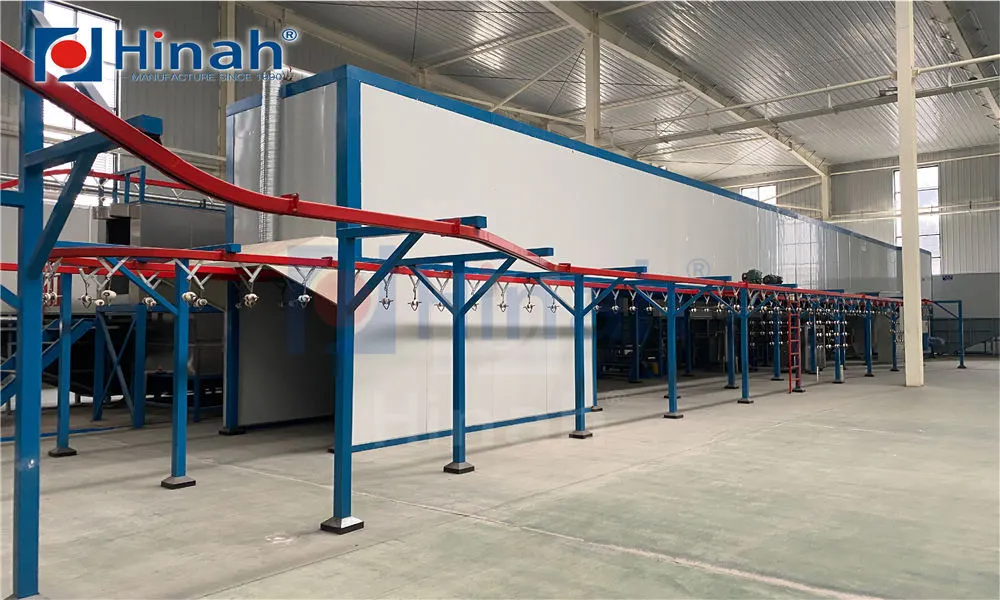
Think about workflow. Will you use a batch process or a continuous conveyor? Batch ovens and manual booths work for job shops. High-volume production demands an automated conveyor system integrating pretreatment, coating, and curing. Your workflow dictates the type of system you need.
A complete system is a chain of interconnected stages. The weakest link determines your final finish quality and speed.
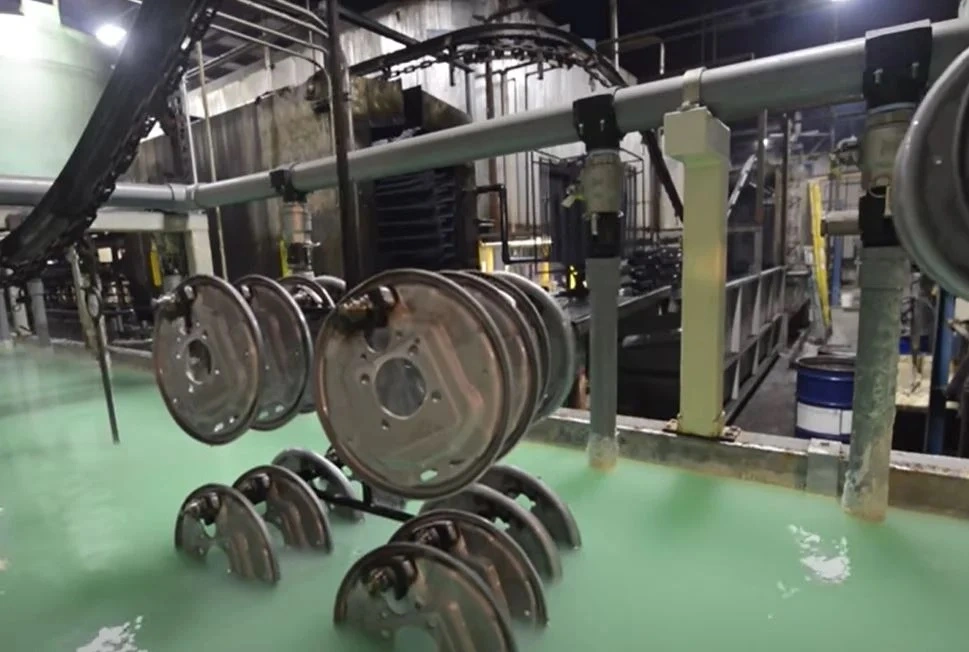
Pretreatment is non-negotiable. It cleans and prepares the metal substrate. Options range from manual wash stations to automated multi-stage spray washers with iron or zinc phosphate. Skipping proper pretreatment leads directly to adhesion failure.
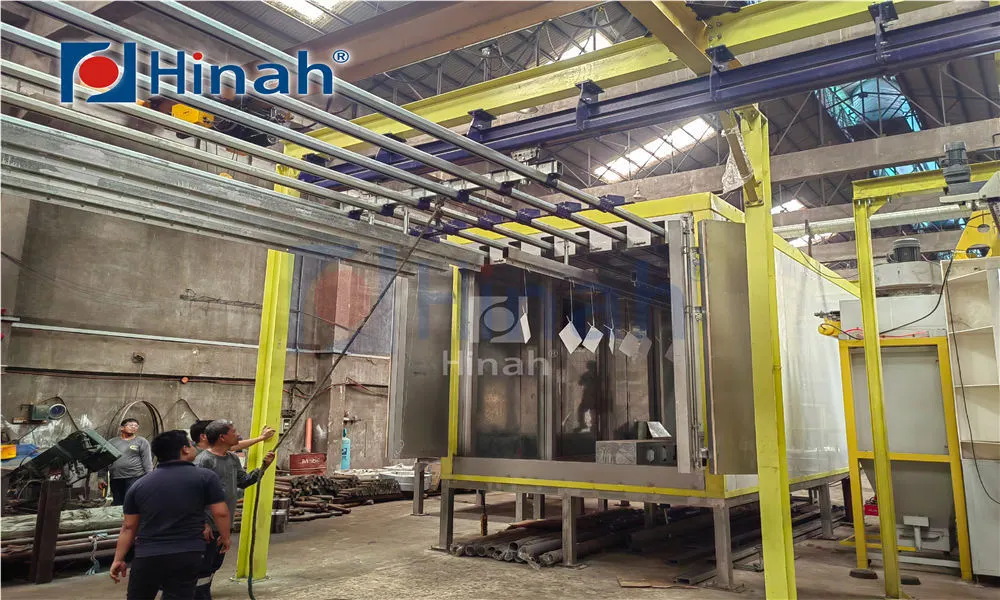
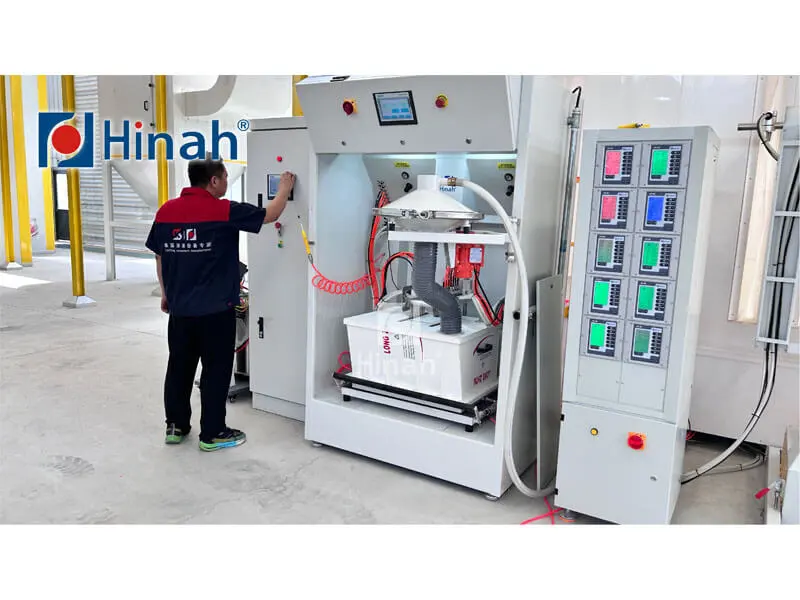
The application booth is where precision happens. For industrial powder coating equipment, recovery efficiency is king. Look for a booth with a recovery system that delivers over 99% efficiency. This reclaims unused powder, saving material costs. Consider your color-change needs. A HANNA booth with a quick-color-change cartridge system minimizes downtime.
The curing oven must be precisely engineered. It's not just about heat; it's about uniform air flow and temperature consistency. Infrared ovens offer fast cure times for simple parts. Convection ovens provide the most consistent, reliable cure for complex shapes and heavy racks. The right choice depends on your product.
The purchase price is a one-time event. Your utility bill is a monthly forever cost. Older or poorly designed industrial powder coating equipment can be a massive energy drain.
Examine oven insulation. High-quality mineral wool or modern ceramic fiber insulation retains heat better. Look at burner technology. High-velocity burners heat the oven faster and maintain temperature with less fuel. Efficient booth designs use variable frequency drives (VFDs) on fans to match airflow to production needs, cutting electricity use.
An energy audit of a proposed system can reveal long-term savings. A HANNA system, for example, is often designed with total cost of ownership in mind, using features like thermal oxidizer heat recovery to slash gas consumption.
Modern industrial powder coating equipment is defined by its control systems. Automation increases consistency, reduces labor costs, and minimizes human error.
Basic automation includes reciprocators that move spray guns up and down. Advanced systems feature multi-axis robots for coating complex geometries with unmatched uniformity. Automatic gun triggering saves powder by only spraying when a part is detected.
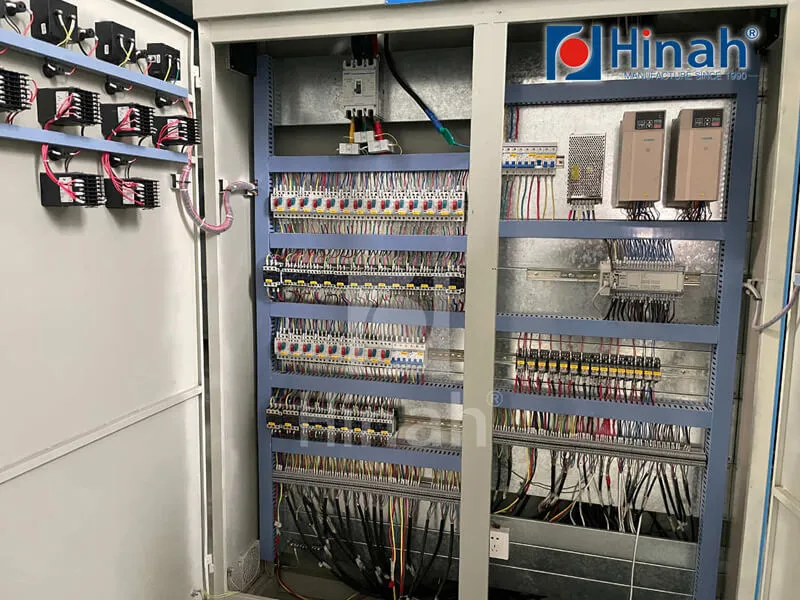
The control panel is the brain. Modern PLC-based systems offer precise recipe control, diagnostic alerts, and production data logging. They allow you to replicate perfect settings every time, for every part number. Ensure your supplier provides thorough training on these controls.

The best technical specifications are worthless without reliable support. Your equipment partner is as important as the machinery itself.
Investigate the supplier's reputation. Do they offer comprehensive installation and startup services? Is there readily available technical support by phone? Ask about the availability of spare parts. A global company like HANNA typically maintains extensive spare part inventories and has trained technicians on call.
Request site references. Speak to other customers who have similar lines. Ask about reliability, support response times, and the overall performance of their industrial powder coating equipment. A good partner will be with you for the long term, helping with maintenance planning and future upgrades.
Selecting the right industrial powder coating equipment is a strategic business decision. It impacts your product quality, your production capacity, and your profitability for years. By moving beyond basic specifications and asking detailed questions about workflow, efficiency, automation, and supplier support, you make an informed investment.
Focus on building a complete, integrated system tailored to your needs. Partner with a manufacturer who views your success as their own. This approach transforms your finishing department from a cost center into a reliable, efficient, and competitive asset.
Q1: What is the typical lead time for new industrial powder coating equipment?
A1: For standard configurations from major manufacturers like HANNA, expect 12 to 20 weeks from order to shipment. For fully custom, large-scale automated lines, lead times can extend to 6-9 months. This includes engineering, fabrication, and factory acceptance testing. Always confirm timelines early in the planning process.
Q2: How much facility preparation is needed for a new powder coating line?
A2: Significant preparation is required. You need a level, reinforced concrete floor capable of supporting the oven and conveyor. Requirements include adequate 3-phase electrical service, high-volume natural gas supply, plumbing for pretreatment, and robust exhaust venting. Your equipment supplier should provide detailed facility requirement documents.
Q3: Can I automate an existing manual powder coating line?
A3: Yes, it is often possible. Manual booths can be upgraded with automatic guns and reciprocators. Batch ovens can be linked with a simple conveyor. However, there are limits. A full assessment by an engineer from your equipment provider can determine the feasibility and cost-effectiveness of retrofitting automation to your current industrial powder coating equipment.
Q4: What are the most common maintenance requirements for this equipment?
A4: Daily: Check and clean booth filters, inspect gun tips. Weekly: Clean spray guns thoroughly, check conveyor lubrication. Monthly: Inspect oven burners and calibration, check pretreatment chemical levels and spray nozzles. Annually: Perform a full system inspection, including electrical components and safety interlocks. A planned maintenance schedule is crucial.
Q5: How do I determine the right oven size and BTU rating for my parts?
A5: This requires a thermal calculation. Factors include the total mass of your heaviest part rack, the line speed, the desired cure temperature, and the oven's insulation value. Reputable industrial powder coating equipment manufacturers have engineering software to perform this calculation. Never guess; an undersized oven will become your biggest production bottleneck.