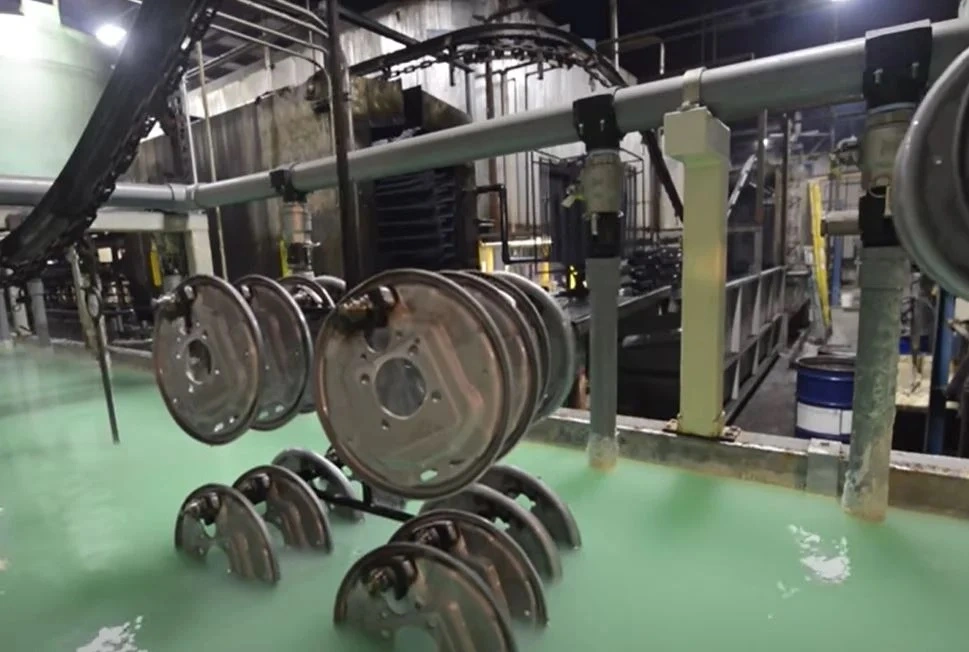
A smooth, efficient finishing line hinges on one often-overlooked component: the powder coating conveyor. It’s the central artery of your entire operation. If it fails, everything stops.
Choosing the wrong system leads to bottlenecks, maintenance headaches, and damaged products. The right powder coating conveyor becomes an invisible workhorse, seamlessly moving parts through pretreatment, application, and curing without a hitch.
At HANNA, we’ve seen how conveyor design directly impacts line speed, finish quality, and profitability. It’s not a one-size-fits-all decision. Here are the five most critical factors to evaluate for your next system.
Your conveyor must handle the weight and shape of your specific parts, both today and in the future.
Start with maximum load. Calculate the weight of your heaviest fixture and part combination. Then, add a safety margin. Overloading a conveyor stresses the chain, drives, and structure, leading to premature wear.
Part geometry is equally important. Long, tall, or asymmetrical parts can cause swinging or instability. This affects spray consistency in the booth and can create safety hazards. HANNA engineers analyze your part mix to recommend the correct trolley spacing, hook design, and I-beam size for stable transport.
The two main categories serve different purposes. Your choice depends on floor space, part handling, and process flow.
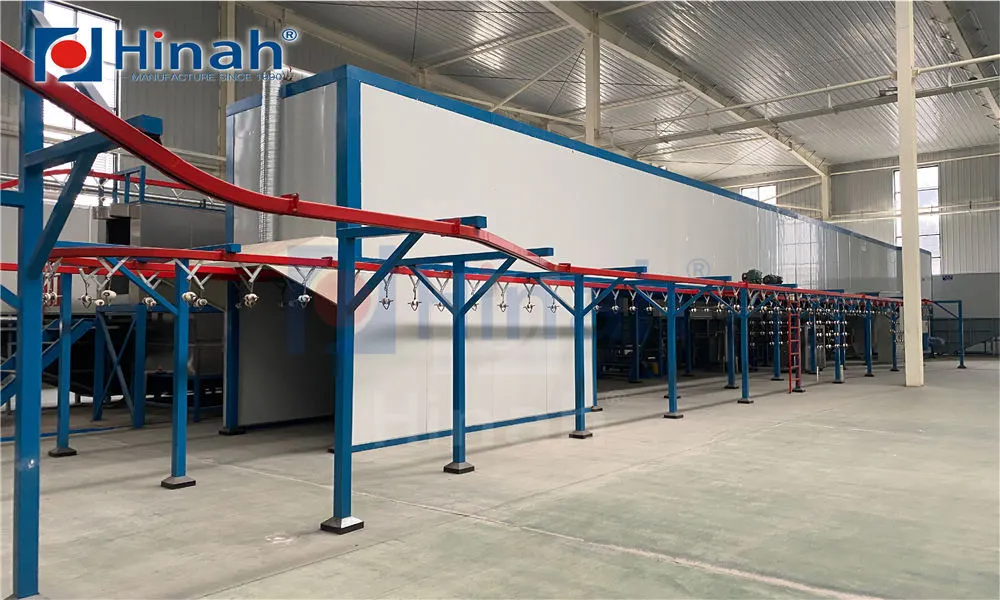
Overhead Monorail Conveyors are the industry standard for high-volume, continuous production. They utilize ceiling space, freeing the floor for operators and equipment. They are ideal for a linear process flow. Modern systems from HANNA feature enclosed-track designs that protect the chain from contamination.
Floor Conveyors (like Power & Free or Belt Systems) offer more flexibility. They allow for accumulation, indexing, and variable routing. This is useful for batch processing, different curing times, or where ceiling mounting is impossible. They typically require more floor space and a higher initial investment.
A powder coating conveyor operates in one of the toughest industrial environments. It faces humidity, chemical mists, heat, and abrasive dust daily.
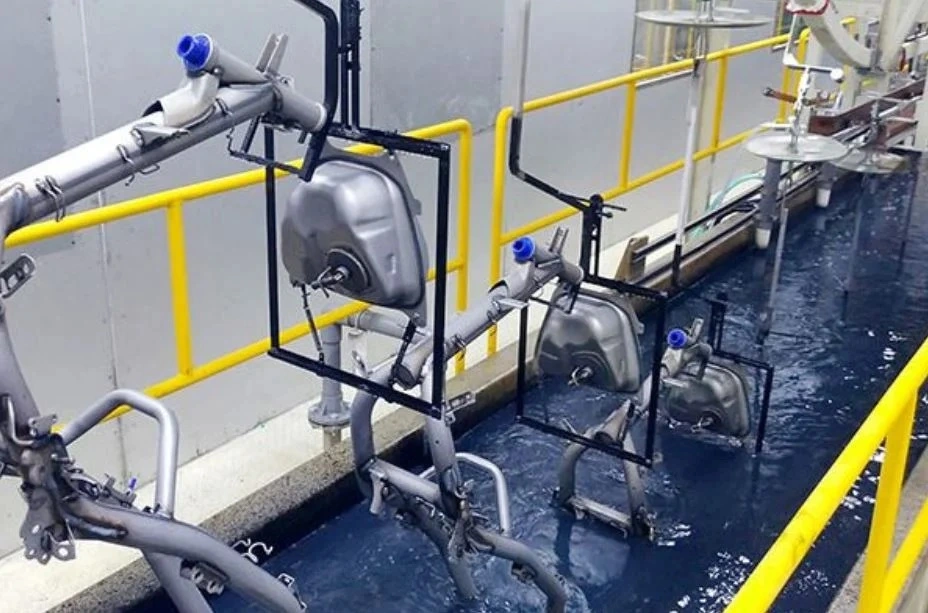
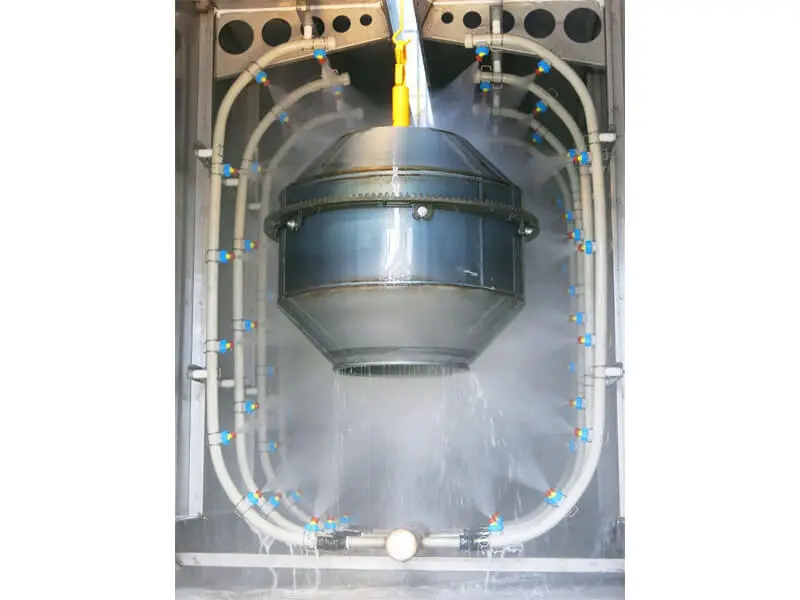
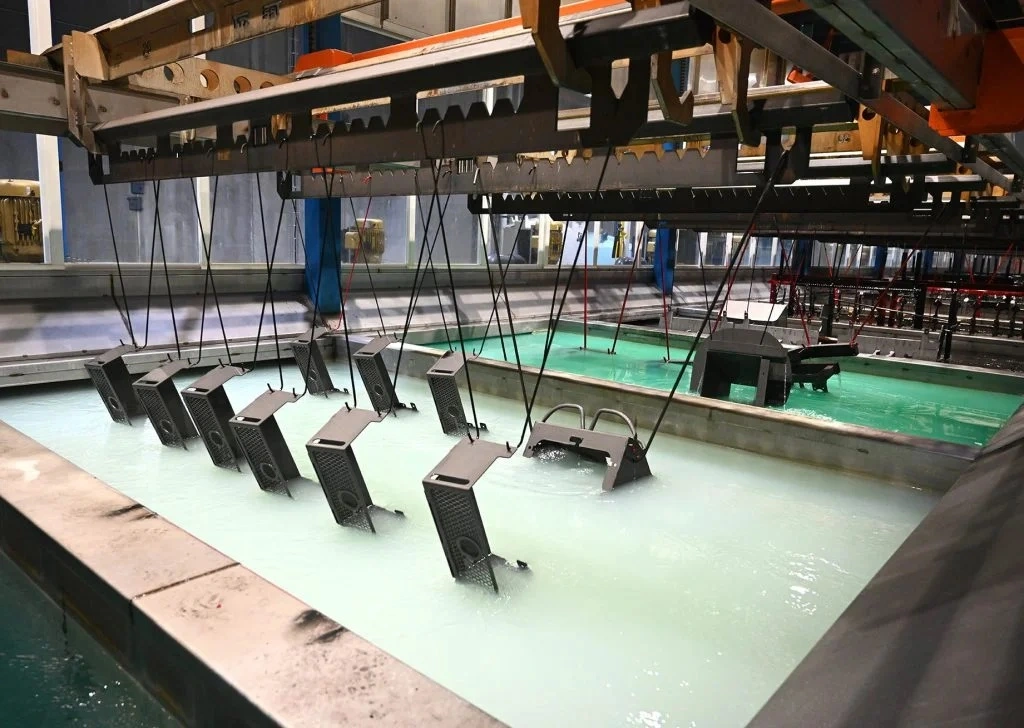
Pretreatment stages expose the chain and trolleys to acidic and alkaline chemicals. A standard, uncoated carbon steel chain will corrode quickly. HANNA specifies and supplies chains with appropriate coatings, such as zinc plating or stainless-steel components, to resist corrosion.
The curing oven presents the heat challenge. Temperatures can exceed 400°F (204°C). Standard greases will bake off, and metal expands. We use high-temperature lubricants and account for thermal expansion in the track design to prevent binding or failure inside the oven.
The motor and controls are the heart of the system. They determine speed accuracy, starting torque, and energy use.
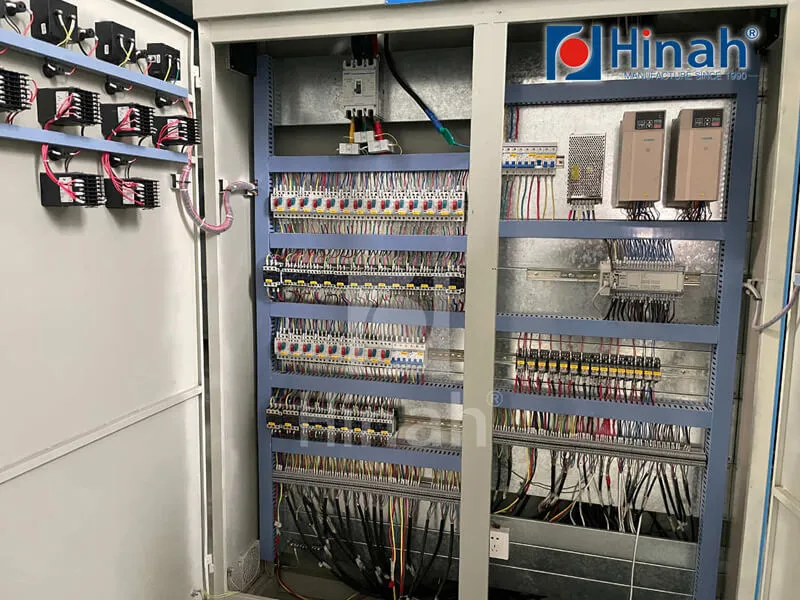
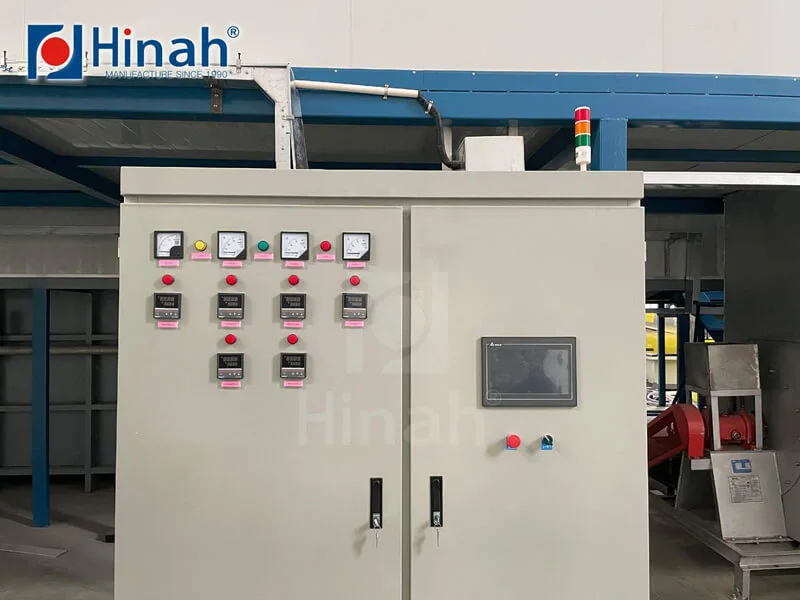
A variable frequency drive (VFD) is essential. It allows for smooth speed adjustments to match your process needs. For a powder coating conveyor, consistent speed in the spray booth is critical for uniform film build. A VFD provides this precision.
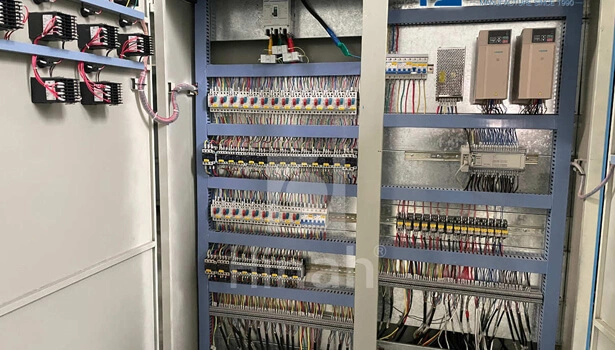
Look for systems with integrated control panels. The best designs, like those from HANNA, allow the conveyor drive to communicate with the oven controls and spray equipment. This enables automated line stops if oven temperature drops or synchronization for indexing applications.
Consider the long-term care of the system. A design that ignores maintenance will cost you dearly in downtime.
Easy access to the chain for inspection and lubrication is a must. Enclosed tracks should have clean-out ports and easy-open sections. Drive units and take-up assemblies should be positioned for simple service.
Calculate Total Cost of Ownership (TCO). A cheaper, lightly-built conveyor may have a lower initial price but higher long-term costs from frequent repairs, higher energy consumption, and shorter lifespan. A robust, well-engineered HANNA system is designed for years of reliable service with minimal maintenance, offering a better TCO.
Selecting the conveyor is only the first step. Proper installation is critical for performance and longevity.
A qualified supplier like HANNA doesn’t just sell hardware. We provide full engineering support for layout, load calculations, and integration points. Our teams handle professional installation, ensuring perfect alignment and tension.
We also train your maintenance staff on proper lubrication schedules and inspection routines. This proactive care prevents 90% of potential issues and maximizes your system's uptime.
Never underestimate the strategic importance of your powder coating conveyor. It is the backbone that determines your line's capacity, reliability, and flexibility. By focusing on these five factors—load capacity, type, construction, drives, and maintenance—you invest in the smooth flow of your entire operation.
Partner with a company that understands the system as a whole. Contact HANNA today for a consultation. Let our engineers help you specify the optimal conveyor system that will drive your productivity for the next decade.
Q1: How often does a powder coating conveyor chain need lubrication?
A1: Lubrication frequency depends on the environment (heat, chemicals) and hours of operation. A general rule is every 80-160 hours of runtime. HANNA provides specific schedules based on your system. Using an automated lubrication system is highly recommended for consistency and to reduce labor.
Q2: Can I upgrade or extend my existing overhead conveyor system?
A2: Often, yes. The feasibility depends on the original design's capacity and the condition of the drive motor. HANNA frequently assists clients with line extensions, speed increases, or adding new spurs. An engineering assessment is the first step to determine what is possible and cost-effective.
Q3: What is the typical lifespan of a well-maintained overhead powder coating conveyor?
A3: With a robust design, proper installation, and a disciplined maintenance program, a high-quality system from a provider like HANNA can last 15-25 years or more. The chain and trolleys are wearable components and will need periodic replacement, but the main I-beam structure lasts indefinitely.
Q4: How do I calculate the required line speed for my production?
A4: You need two figures: your desired throughput (parts per hour) and the required process time in each zone (especially cure oven). Line Speed (ft/min) = [Oven Length (ft) + Spacing] / [Cure Time (min)]. HANNA application engineers help with this critical calculation to ensure your conveyor meets output goals.
Q5: What safety features are crucial for a powder coating conveyor system?
A5: Key safety features include emergency stop cables running the length of the line, overload protection on the drive motor, proper guarding around pinch points and drive units, and clearly marked maintenance lockout/tagout points. HANNA designs and installs systems to meet all applicable OSHA and local safety standards.