If your powder-coated finish is peeling, chipping, or showing inconsistent texture, the culprit often isn't the powder itself. The problem usually lies at the heart of the process: the industrial curing oven. This isn't just a hot box; it's the precision-controlled stage where chemistry happens. Getting it wrong means wasted product, energy, and profit. Getting it right ensures durability, appearance, and customer trust.
At HANNA, we've seen how the right oven is the final, non-negotiable link in a reliable coating chain. It's the difference between a quality product and a reject.
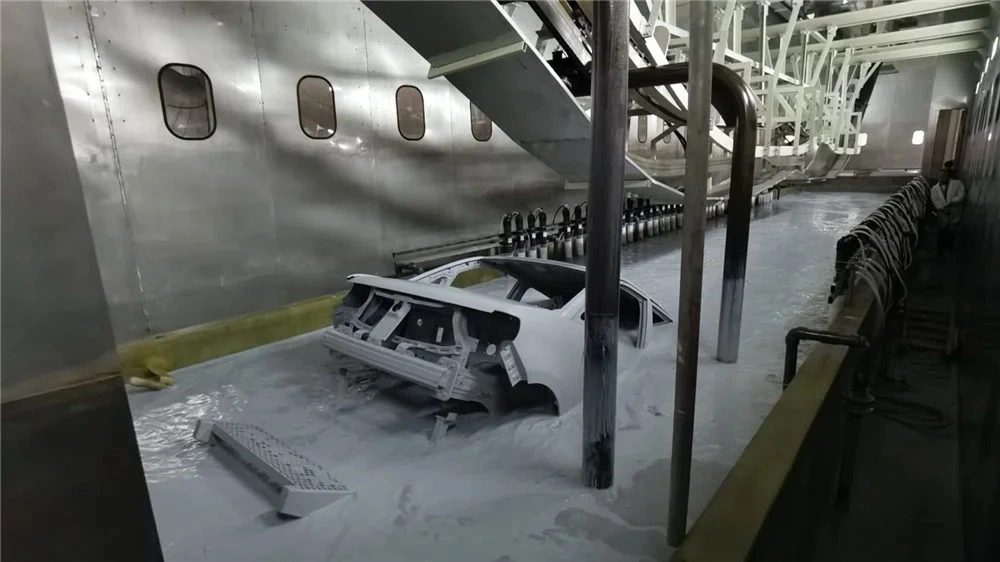
Not all ovens work the same. The choice depends on your production volume, part geometry, and energy goals.
Convection ovens are the industry standard. They use heated air, circulated by powerful fans, to transfer heat to the part. This "indirect" method provides excellent temperature uniformity, which is critical for complex parts with thick and thin sections. It's a consistent, reliable workhorse.
Infrared (IR) ovens use radiant energy, heating the part's surface directly like the sun. They offer incredibly fast heat-up times. They excel with simple, flat parts and are often used in hybrid "combination" systems. However, shadowing can be an issue with complex 3D shapes.
The right industrial curing oven type balances speed, uniformity, and operational cost.
The internal design dictates performance. A poorly designed oven will create hot and cold zones, leading directly to under- or over-cured parts.
Airflow is everything. Properly engineered plenums, baffles, and fan placements ensure turbulent, uniform air movement. Every part, whether in the front or back of the load, must see the same temperature. HANNA designs for this from the initial blueprint.
Insulation quality directly impacts your energy bill and shop floor conditions. High-density mineral wool panels with robust exterior skins contain heat efficiently. A well-insulated oven maintains temperature with less energy and keeps ambient workspace temperatures manageable.
This is the single most important spec on any oven data sheet. Temperature uniformity refers to the temperature variation across the entire work zone during operation.
For most powder coatings, a uniformity of ±5°C (±9°F) at the set point is considered the minimum for consistent cure. High-quality ovens from suppliers like HANNA can achieve ±3°C (±5°F) or better. This tight tolerance is what guarantees every part, in every corner of the rack, meets the exact same specification.
Never compromise on this number. It's the foundation of quality.
With rising energy costs, an efficient oven pays for itself. Modern designs incorporate several key features.
High-efficiency burners with precise turndown ratios match heat output to demand. Heat recovery systems can capture waste heat from the exhaust stack and use it to preheat incoming combustion air. Well-sealed doors and vestibules prevent massive heat loss during loading and unloading.
Investing in an efficient industrial curing oven reduces your cost per part and improves your environmental footprint.
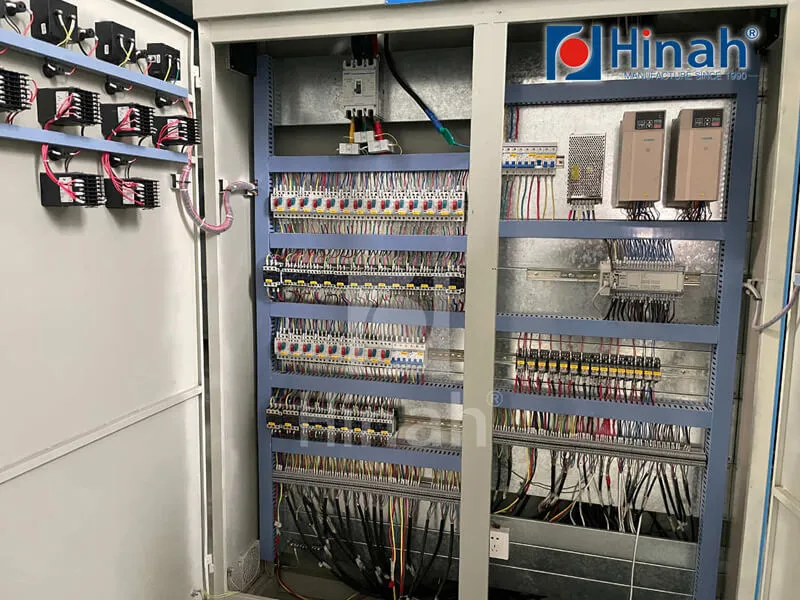
A simple thermostat isn't enough. Modern ovens need intelligent, programmable logic controllers (PLCs).
A good system offers precise setpoint control, detailed temperature profiling, and data logging. The ability to store and recall recipes for different parts is essential. Integration with the broader paint line conveyor system allows for synchronized speed and temperature control.
Remote monitoring is becoming standard. This allows managers to check cure status and energy consumption from anywhere, facilitating predictive maintenance.
An industrial oven is a serious piece of equipment. Safety cannot be an afterthought.
Proper ventilation and exhaust are critical to remove volatile components released during curing, even with powder. Automatic purge cycles, flame supervision systems on gas burners, and over-temperature safety cut-offs are mandatory. These features protect both your workforce and your facility.
An oven is a major capital expense. Planned maintenance extends its life by years.
Regular tasks include checking and calibrating temperature sensors, cleaning air intake and exhaust plenums of any debris, inspecting door seals for integrity, and verifying burner operation. A simple logbook tracking these activities prevents major downtime.
A drop in uniformity or a rise in energy use is often the first sign of a maintenance need.
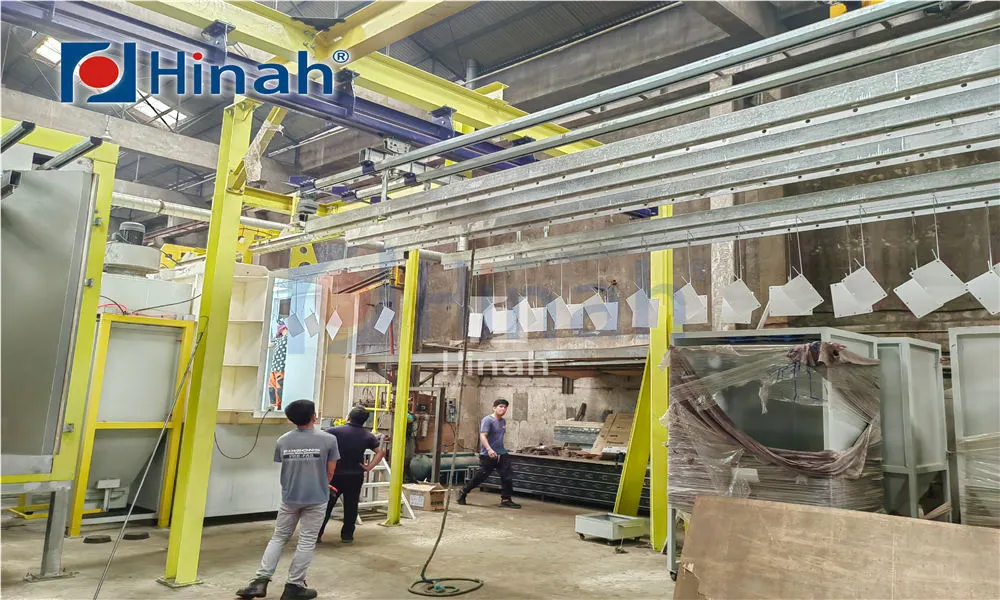
The cheapest oven often becomes the most expensive one. Look for a partner with deep application knowledge.
A good supplier will ask detailed questions about your parts, powder type, production rate, and facility constraints. They should provide a detailed thermal profile of your specific part load during testing. They should offer clear service and support terms.
At HANNA, we view the industrial curing oven as the critical final step in a integrated system. Our approach is to engineer it as a matched component to your pretreatment and application stages, not an isolated unit.
This integrated philosophy ensures your finish is as durable and consistent as the equipment that creates it.
Q1: What is the difference between cure time and dwell time in an industrial curing oven?
A1: Dwell time is simply the total time the part spends inside the oven. Cure time (or "time at temperature") is the portion of dwell time where the part's metal temperature is at or above the powder manufacturer's specified cure temperature. Proper profiling determines the needed dwell time to achieve the required cure time.
Q2: How often should I verify the temperature uniformity of my oven?
A2: It is recommended to perform a full temperature uniformity survey (using data loggers on a test rack) at least annually. More frequent checks (quarterly or biannually) are advised for critical applications or if you notice quality inconsistencies.
Q3: Can I cure different powder types in the same oven?
A3: Yes, but careful management is required. Different powders have different cure schedules (time/temperature). You must reprogram the oven's recipe for each powder. Crucially, you must ensure no cross-contamination by thoroughly cleaning application equipment and lines when switching powder chemistries.
Q4: Why is my oven using more gas/electricity than before?
A4: Increased energy consumption typically points to degraded insulation, failing door seals, dirty burners or heat exchangers reducing efficiency, or a calibration drift causing the system to overheat to reach the setpoint. A systematic maintenance check usually identifies the cause.
Q5: What are the signs of an under-cured or over-cured powder coating?
A5: Under-cured coating is soft, has poor adhesion, and fails mechanical tests like impact or bend tests. It may have a dull appearance. Over-cured coating can become brittle, discolor (yellowing), or lose gloss. Both defects stem from incorrect time/temperature in the industrial curing oven.