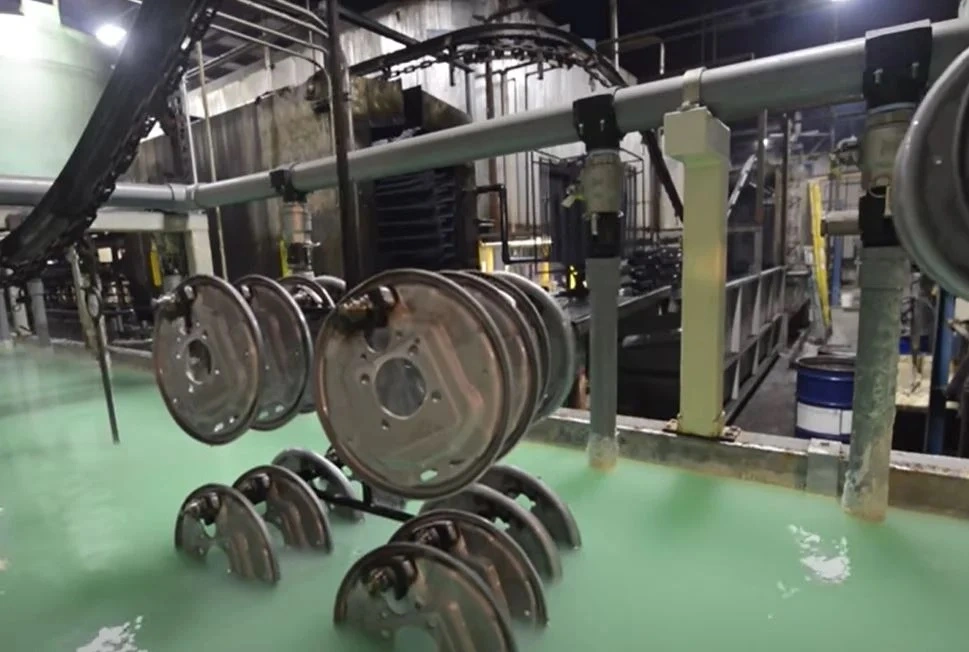
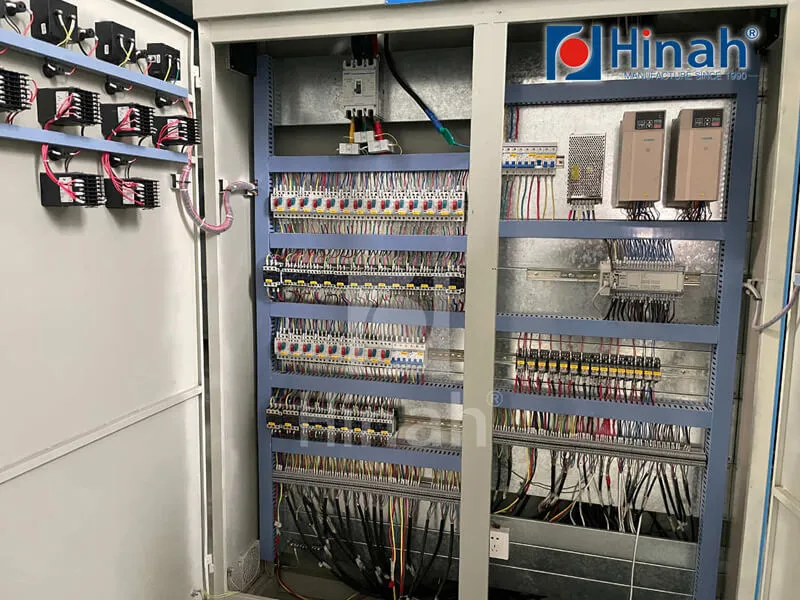

Every durable finish on metal products, from garden furniture to automotive components, starts with a crucial step: curing. The equipment that makes this possible is often the unsung hero of the production line. We’re talking about the powder paint oven. This is where the magic happens, transforming a layer of dry powder into a tough, seamless, and attractive coating.
While the powder application process gets a lot of attention, the curing stage inside a reliable powder paint oven is what ultimately determines quality, durability, and efficiency. At HANNA, we’ve spent decades engineering ovens that deliver consistent results, reduce energy costs, and fit seamlessly into your workflow. Let’s break down what makes this piece of equipment so vital.
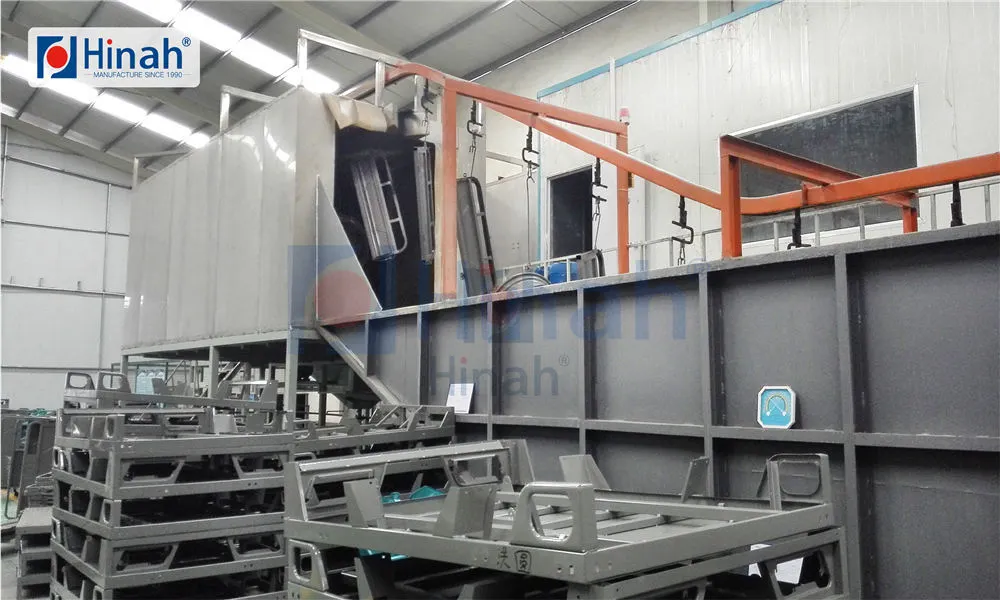
A powder paint oven is not merely a hot box. It’s a precisely controlled thermal chamber designed to initiate a chemical crosslinking reaction. After powder is electrostatically applied to a grounded part, the part enters the oven.
The heat causes the powder particles to melt first. They then flow together to form a continuous film. Finally, at the correct temperature and for the precise amount of time, the polymers in the powder chemically crosslink.
This curing process is irreversible. It creates a finish that is resistant to chipping, scratching, corrosion, and chemicals. The precise control offered by a modern HANNA oven ensures this reaction completes perfectly every time.
Not all finishing lines are the same, so oven design varies. Choosing the right type is critical for your output and product mix.
Convection Ovens are the most common. They use heated air, circulated by fans, to transfer heat to the parts. This method provides excellent temperature uniformity, even for parts with complex geometries or dense racks. HANNA’s convection systems are known for their efficient air flow design.
Infrared (IR) Ovens use radiant energy to directly heat the part and the powder coating. They cure coatings very quickly and are often used for flat, simple shapes or as a boost zone in a hybrid system. Heat-up time is a key advantage.
Combination Ovens merge IR and convection technologies. They might use IR for rapid heat-up and convection for soak-time and uniformity. This can offer a balance of speed and consistent quality.
Batch Ovens (Walk-in / Batch) are perfect for low-to-medium volume production or large, bulky items. Parts are loaded, cured, and unloaded in cycles. They offer great flexibility.
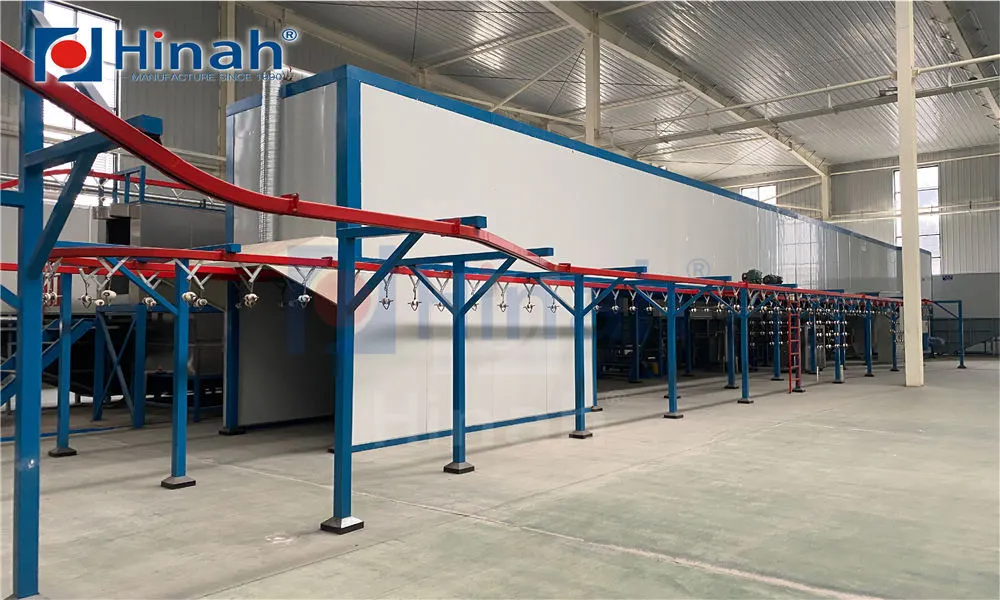
Continuous Ovens (Conveyorized) are designed for high-volume production. Parts move through on a conveyor at a controlled speed, ensuring a consistent cure time. They integrate directly into automated powder coating lines.
The upfront cost of a good oven is an investment that pays off quickly. Here’s how.
Superior Finish Quality: Consistent, even heat prevents defects like orange peel, blistering, or incomplete cure. This reduces rework and scrap rates significantly.
Operational Efficiency: Modern ovens, like those from HANNA, are engineered for energy efficiency. Features like improved insulation, recirculated airflow, and heat recovery systems cut utility costs. Faster cure times also increase throughput.
Environmental Compliance: Powder coating is already a cleaner process than liquid painting. An efficient powder paint oven further reduces the carbon footprint of your operation by minimizing energy waste.
Long-Term Durability: A robustly built oven withstands the demands of an industrial environment. HANNA uses quality materials and components to ensure years of reliable service with minimal downtime.
Wherever metal needs a lasting finish, a powder paint oven is at work.
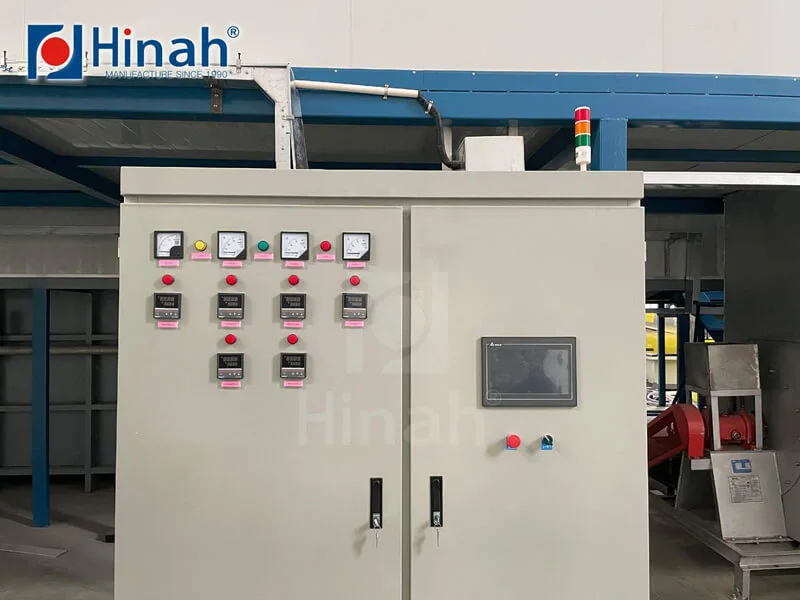
Don’t just buy a generic oven. Specify one that matches your needs.
Proper setup and care extend your oven’s life and performance.
Installation should be handled by professionals to ensure correct utility hookups, ventilation, and placement within the production line. HANNA provides comprehensive support during this phase.
For maintenance, a simple routine is key. Regularly clean the oven interior to prevent powder buildup, which can affect air flow and become a fire risk. Inspect and clean fan blades. Check door seals for heat leaks. Calibrate temperature sensors annually.
Schedule professional servicing periodically to inspect burners, electrical elements, and control circuitry. Keeping a log of all maintenance activities helps track performance and plan for parts replacement.
At HANNA, we don’t just sell ovens; we provide finishing solutions. Our approach is consultative. We analyze your specific parts, production goals, and facility constraints before recommending a design.
Our ovens are built with durability and operator ease in mind. We focus on energy-smart designs that reduce your operating costs from day one. From compact batch ovens to fully integrated conveyorized systems, we offer scalability.
Our global support network means you get timely service and access to genuine parts. When you choose a HANNA powder paint oven, you’re investing in partnership for the long term.
In the end, the success of your powder coating operation hinges on the performance of your powder paint oven. It’s the critical factor that locks in the properties of the coating, defining how your product will look, feel, and endure in the real world.
Investing in a well-designed, reliable system from an experienced partner like HANNA is a strategic decision. It enhances product quality, boosts production efficiency, and contributes to a more sustainable operation. When evaluating your finishing line, remember that the oven is not just a piece of heating equipment—it’s the foundation of your final product’s integrity.
Q1: What is the main purpose of a powder paint oven?
A1: The main purpose of a powder paint oven is to cure the applied powder coating. By applying controlled heat, it melts the powder particles, allows them to flow into a smooth film, and then triggers a chemical reaction (crosslinking) that creates a hard, durable, and protective finish.
Q2: What's the difference between a convection oven and an infrared (IR) oven for powder coating?
A2: Convection ovens cure using heated air circulated around the parts, offering excellent uniformity for complex shapes. Infrared ovens use radiant energy to heat the parts and powder directly, offering much faster cure times but are best for simpler, less shadowed geometries. Many systems use a hybrid of both technologies.
Q3: How do I determine the right size and type of oven for my business?
A3: Consider your part dimensions, production volume, part geometry, and available space. For low-volume or large parts, a batch oven is ideal. For high-volume, consistent-sized parts, a conveyorized continuous oven is better. Consulting with an expert like HANNA is crucial, as they can analyze your specific needs and recommend an optimized solution.
Q4: How energy-intensive is operating a powder paint oven?
A4: Curing is the most energy-intensive step in powder coating. However, modern ovens from manufacturers like HANNA are designed with efficiency in mind. Features like high-quality insulation, recirculated hot air, heat recovery systems, and precise controls can significantly reduce energy consumption compared to older, poorly insulated models.
Q5: What safety features are important in a powder paint oven?
A5: Key safety features include over-temperature protection to prevent runaway heating, properly sized and clear ventilation/exhaust systems, well-insulated exterior surfaces to prevent burns, emergency stop buttons, and safety interlocks on doors. Always ensure the oven complies with local and national industrial safety standards.