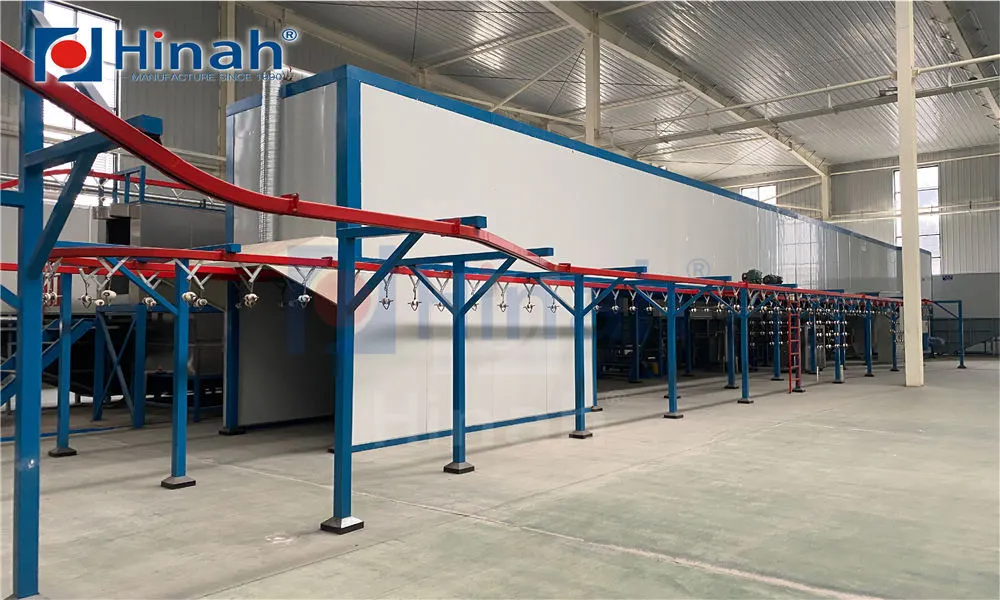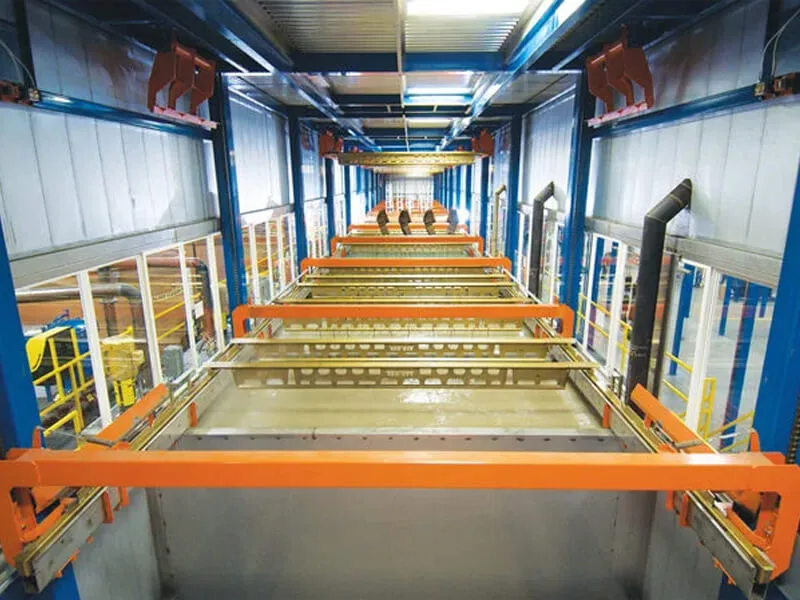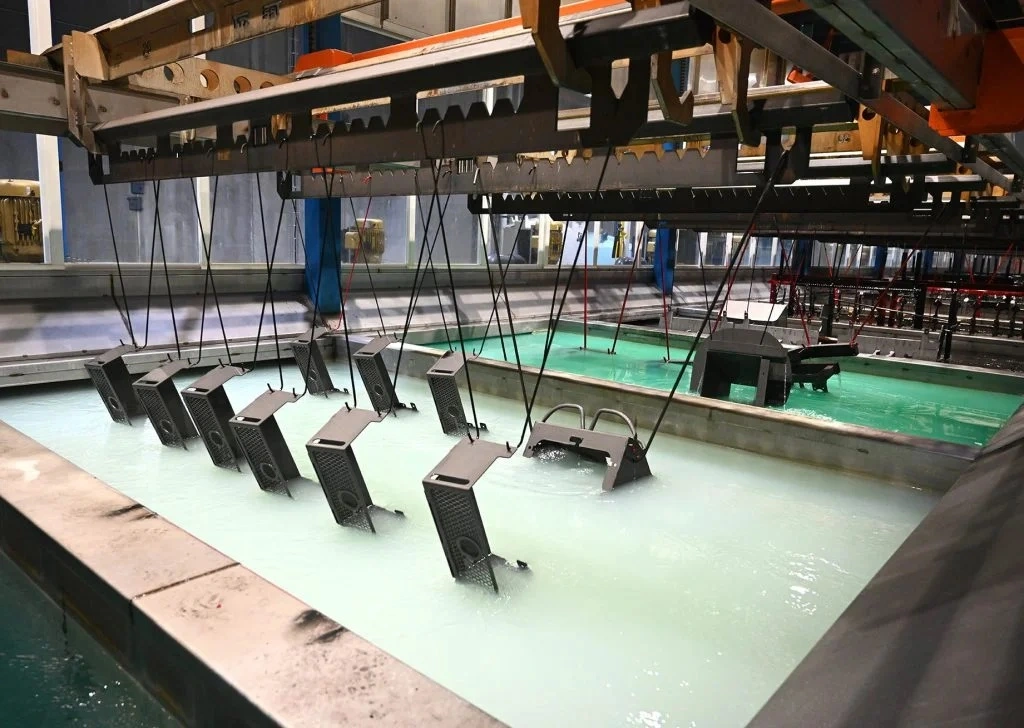
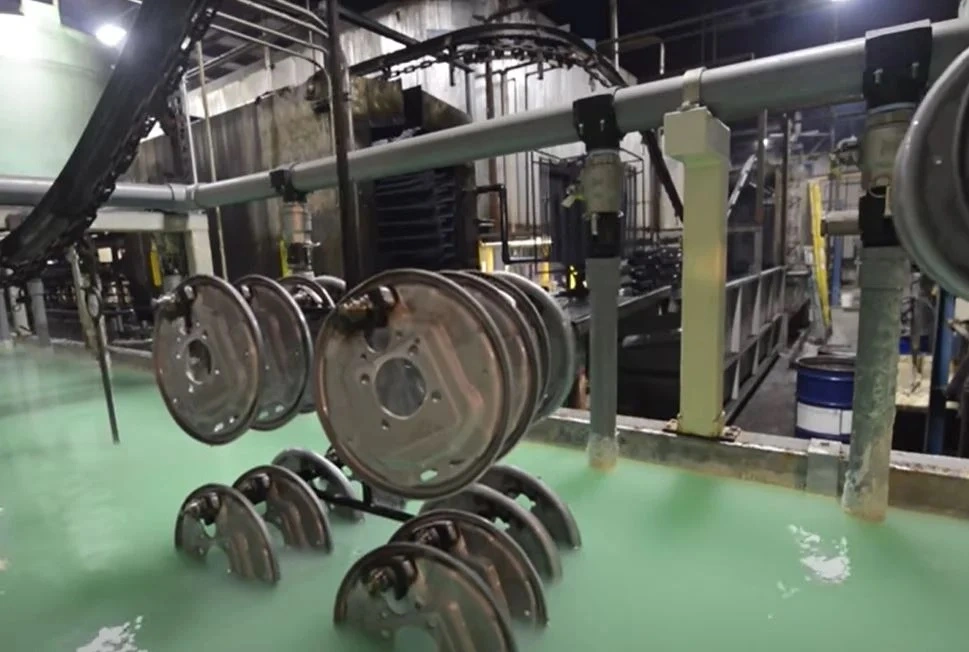
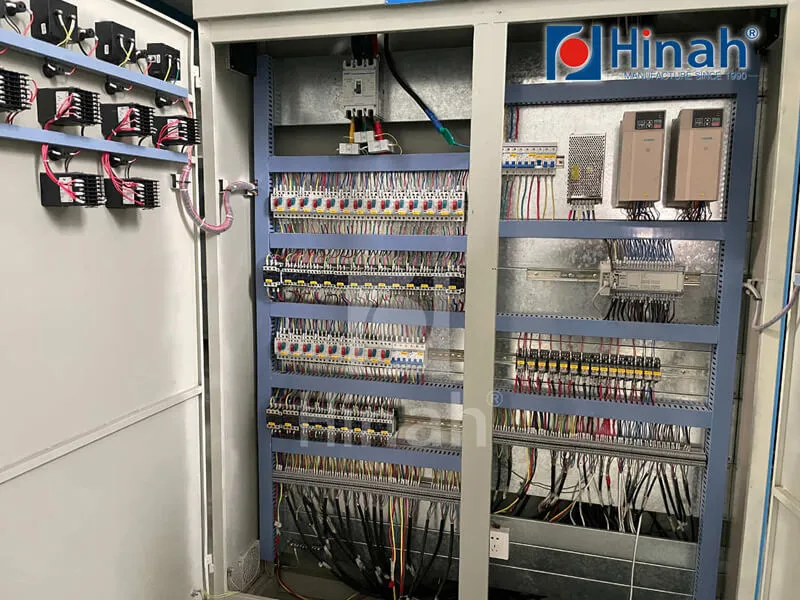

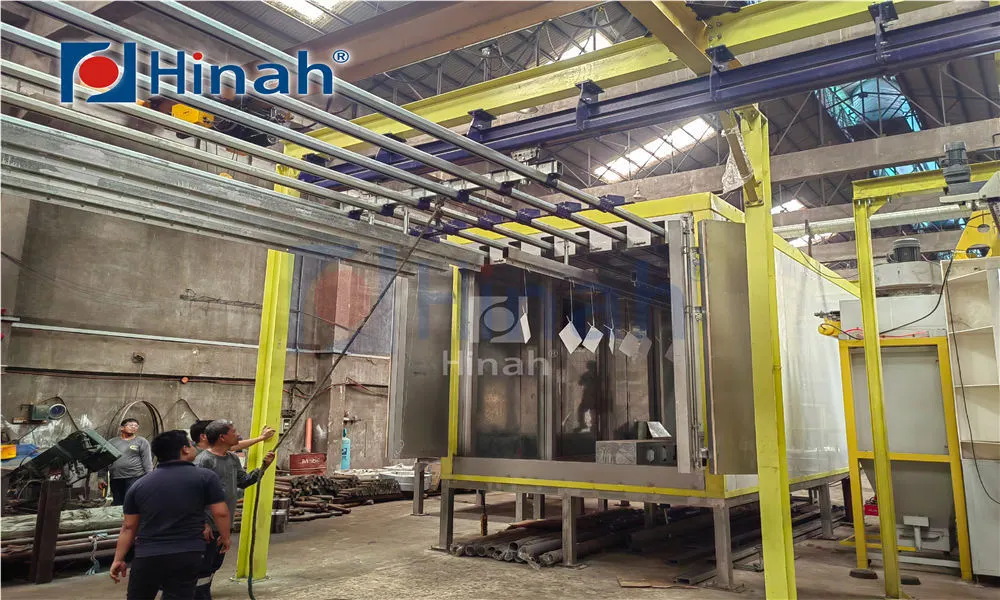
When people hear “powder coating,” they often picture just the spray booth. But that’s only one piece. A complete powder coating plant is an integrated system, a production line where raw metal parts enter and finished, durable coated products emerge. It’s the backbone of a modern, efficient finishing operation. Understanding how a full powder coating plant works is the first step to improving your product quality and your bottom line.
This integrated system methodically prepares, coats, and cures parts. Each stage is critical. Skipping steps or using mismatched components leads to coating failures, rejects, and wasted money. A well-designed powder coating plant from a provider like HANNA ensures consistency, maximizes material use, and minimizes energy costs.
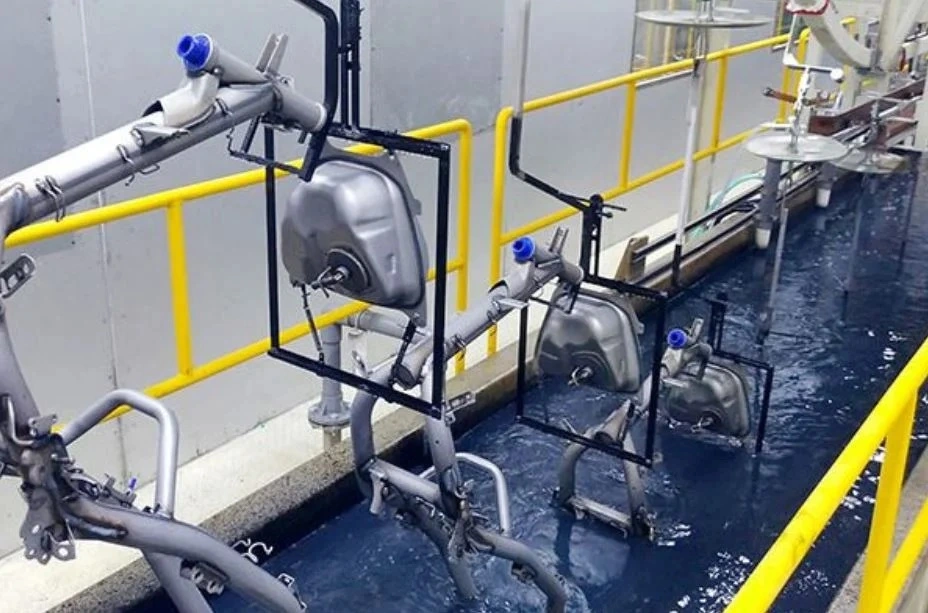
A standard powder coating plant is a sequential process. It’s typically arranged in a straight line or a “U” shape, with a conveyor moving parts through each stage.
Stage 1: Pre-treatment
This is the most crucial step for adhesion and longevity. Parts are cleaned and chemically treated. A typical multi-stage washer might include cleaning, rinsing, iron or zinc phosphate conversion coating, a final rinse, and a demineralized water rinse. This creates a clean, reactive surface for the powder to bond to.
Stage 2: Drying (After Pre-treatment)
After the chemical wash, parts must be completely dry before powder application. A short, low-temperature drying oven removes all moisture. Any water left on the part will cause defects during curing.
Stage 3: Powder Application & Recovery
This is the most visible stage. Parts enter an enclosed spray booth. Operators or automatic guns apply the electrostatically charged powder. Up to 70% of powder can overspray. A high-efficiency recovery system, using filters or cyclones, captures this overspray. It’s then sieved and mixed with virgin powder for reuse. This is where a quality system like HANNA’s pays off, with recovery rates often exceeding 98%.
Stage 4: Curing
Parts enter a curing oven. Here, the powder melts, flows, and chemically crosslinks into a solid film. Temperature uniformity and accurate dwell time are non-negotiable. Convection ovens, using heated air, are the industry standard for consistent results on complex parts.
Stage 5: Conveyor System
The conveyor is the artery of the entire powder coating plant. Overhead monorail conveyors are common, but Power & Free systems offer more flexibility. The conveyor design dictates the line speed, part spacing, and overall plant layout.
You can’t buy a washer from one company, an oven from another, and a booth from a third and expect seamless performance. An integrated powder coating plant is designed as a single unit.
The conveyor speed is synchronized across all stages. The oven heat profile is calculated based on the washer’s output. The booth airflow is designed for the line’s throughput. This harmony prevents bottlenecks and ensures every part receives identical treatment. Disjointed systems create chaos, hot spots, and quality nightmares.
Investing in a powder coating plant is a major decision. Answering these questions upfront guides the design and prevents costly mistakes.
What are you coating?
The size, shape, weight, and material of your parts determine everything. Large structural beams need massive ovens and heavy-duty conveyors. Delicate aluminum extrusions require gentle handling and precise temperature control.
What is your required output?
You must define your parts-per-hour capacity. This sets the line speed, which in turn sizes the ovens, washer, and booth. Don’t just think about today’s volume—plan for reasonable growth.
What are your quality and finish requirements?
A basic protective coat for indoor furniture is different from an architectural Class 4 finish for building facades. Higher quality standards demand cleaner environments, superior pretreatment, and more precise application equipment.
What space do you have available?
A powder coating plant needs a significant footprint. You need space for the line itself, plus areas for part loading/unloading, maintenance access, and powder storage. Ceiling height for conveyor loops is often a critical factor.
At HANNA, we don’t just sell ovens and booths. We engineer complete powder coating plant solutions. Our process starts with a detailed consultation. We analyze your parts, your goals, and your constraints.
We then design a system where every component is matched. Our energy-efficient ovens are sized for your specific parts and throughput. Our pretreatment systems are built with durable, corrosion-resistant materials. Our powder application centers are designed for maximum operator efficiency and powder utilization.
The result is a powder coating plant that works reliably from day one, producing consistent quality while keeping your operating costs in check.
Seeing others stumble can help you avoid pitfalls.
Undersizing the Oven
This is a frequent error. An oven that’s too small or under-powered cannot bring parts to the correct temperature for the full cure time. The result is under-cured, weak coatings. Always size for your largest, heaviest part at the desired line speed.
Neglecting Pre-treatment
Trying to save money here is false economy. Inadequate cleaning or chemical treatment is the leading cause of powder coating adhesion failure. The best powder applied over a dirty surface will peel off.
Ignoring Maintenance Access
Equipment needs cleaning and service. If you can’t easily access filters, burner assemblies, or spray nozzles, maintenance won’t get done. This leads to gradual performance decline and sudden breakdowns. Good design includes easy access.
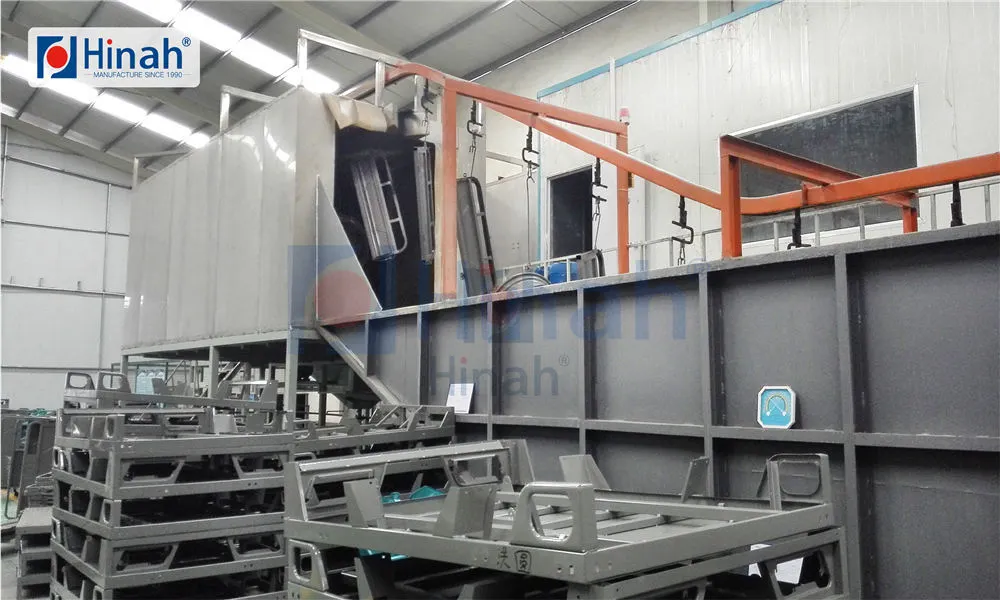
A powder coating plant is a capital investment that defines your finishing capability for years. It’s a production tool that impacts your product quality, your environmental footprint, and your profitability.
Choosing a well-designed, integrated system from an experienced partner is the surest path to success. It transforms powder coating from a necessary step into a competitive advantage, delivering durable, attractive finishes efficiently and consistently.
Q1: What is the difference between a batch oven and a continuous powder coating plant?
A1: A batch oven is like a standalone kitchen oven. You load a rack of parts, close the door, cure them, and unload. A continuous powder coating plant is a moving assembly line. Parts on a conveyor move uninterrupted through all stages (wash, dry, spray, cure). Continuous plants are for higher, steady production volumes.
Q2: How much electricity and gas does a typical powder coating plant consume?
A2: Consumption varies enormously based on plant size, insulation, and throughput. The curing oven is the biggest energy user. A modern, well-insulated plant from a provider like HANNA is designed for efficiency, using features like heat recovery to significantly reduce ongoing utility costs compared to older, poorly sealed systems.
Q3: Can I powder coat different types of parts on the same line?
A3: Yes, but with planning. You can coat different sizes and shapes. However, major changes in part mass (e.g., switching from thin sheet metal to heavy castings) may require adjustments to oven temperature or line speed to ensure proper curing. The plant should be designed for the full range of parts you intend to run.
Q4: What kind of facility upgrades are needed to install a plant?
A4: Typical requirements include a reinforced concrete floor, high-capacity electrical supply (3-phase), natural gas line, compressed air supply, adequate exhaust ventilation, and often a raised ceiling height. A professional powder coating plant supplier will provide a detailed site requirements list.
Q5: How long does it take to install and commission a new powder coating plant?
A5: For a complete turnkey system, the process from finalized design to full production typically takes 5 to 9 months. This includes manufacturing, shipping, on-site installation, mechanical/electrical hookup, and final commissioning where the system is tested with your actual parts.